
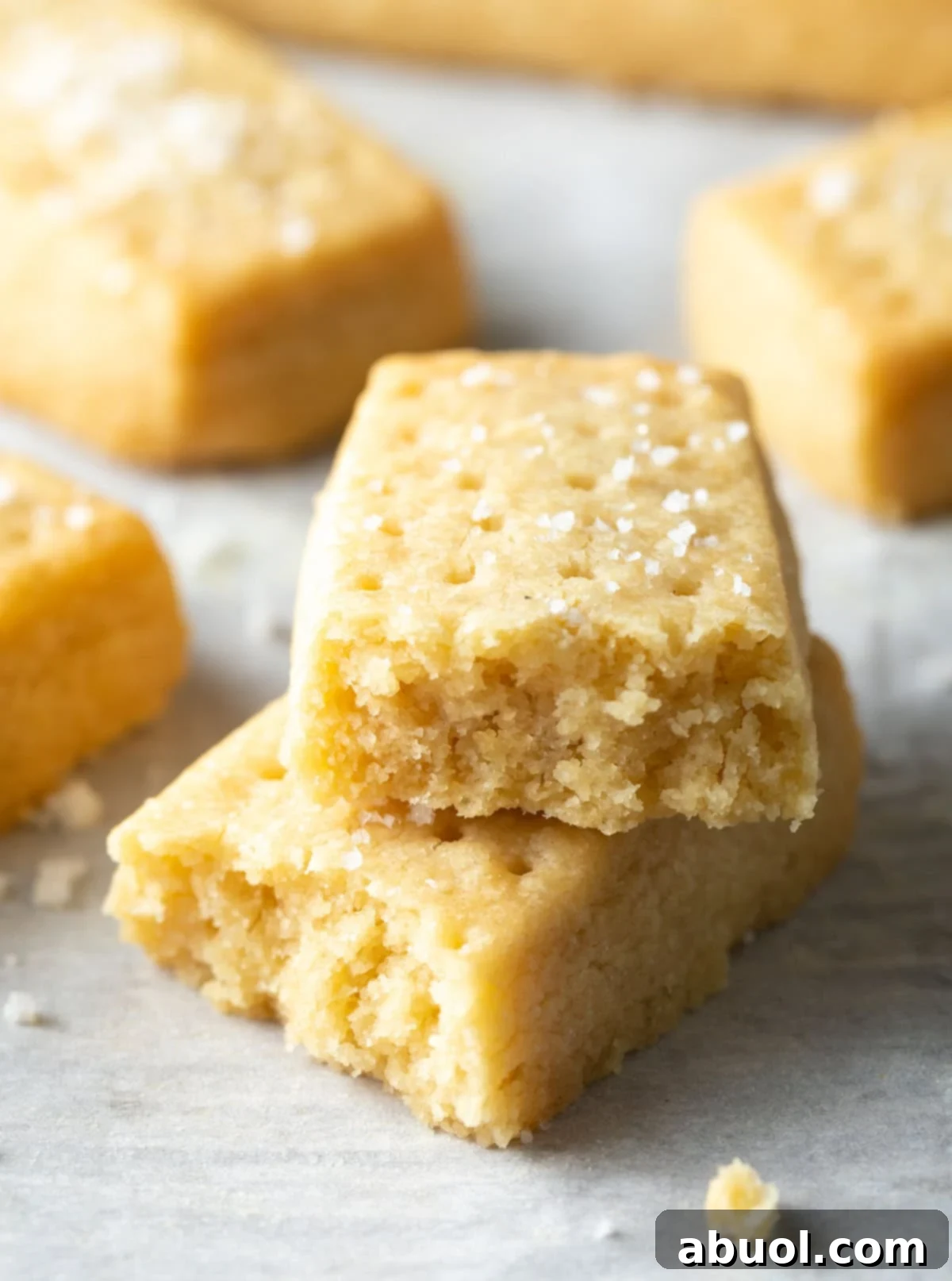
Scottish Shortbread Cookies – Discover the ultimate guide to crafting authentic, melt-in-your-mouth Scottish shortbread from scratch. This remarkably easy recipe yields a traditional buttery, tender, and crumbly cookie that’s perfect on its own or beautifully enhanced with your favorite delightful additions. Prepare to bake a classic treat that embodies comfort and elegance, ideal for any occasion.
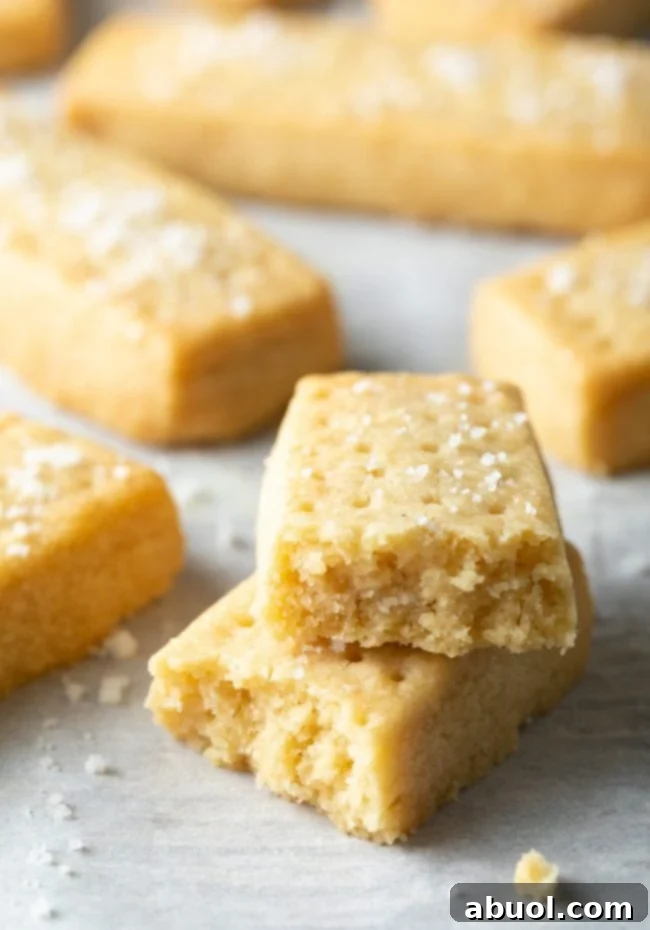
What is Scottish Shortbread? A Timeless Classic
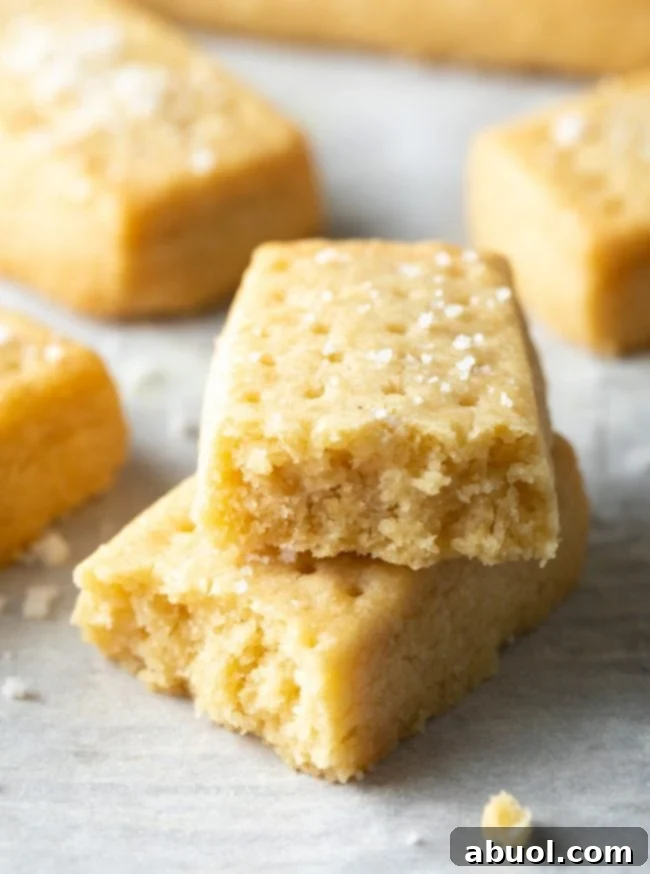
Simple yet profoundly satisfying, Scottish Shortbread stands as the quintessential shortbread cookie, revered for its rich buttery flavor and unique crumbly texture. This iconic British biscuit, deeply rooted in Scottish culinary tradition, is historically prepared with just three fundamental ingredients: high-quality butter, fine sugar, and all-purpose flour. Its minimalist composition allows the exceptional quality of each ingredient to shine through, creating a truly unforgettable dessert.
While often compared to other butter cookies, Scottish shortbread possesses distinct characteristics that set it apart. American butter cookies typically feature a thinner, crispier profile, offering a light snap with each bite. In contrast, traditional Scottish shortbread is celebrated for its substantial thickness and a dense, almost sandy crumble that melts in your mouth. Although the core ingredients are similar, the precise ratios and preparation techniques employed in Scottish shortbread baking lead to a richer, more luxurious texture and a truly distinct culinary experience.
Our recipe honors the tender, slightly crumbly texture that defines these beloved biscuits. However, we’ve introduced a few thoughtful enhancements to elevate the classic taste, transforming it into an even more delectable treat for the holidays or any special gathering. These subtle additions layer depth and nuance, ensuring that while the spirit of traditional Scottish shortbread remains, each bite offers an exciting, refined flavor profile.
Essential Ingredients for Perfect Scottish Shortbread
As noted, many traditional Scottish shortbread recipes are lauded for their simplicity, relying solely on butter, flour, and granulated sugar. While this classic trio forms a magnificent base, a few strategic ingredient swaps and additions can dramatically enhance the final product, introducing layers of flavor that truly distinguish our recipe. For an unparalleled taste, we advocate for incorporating light brown sugar instead of white granulated sugar, a subtle splash of pure vanilla extract, and a touch of sea salt.
The choice of sugar is pivotal; light brown sugar contributes a gentle caramel note and extra moisture, resulting in a more tender and complexly flavored cookie. A hint of vanilla extract, though optional, deepens the overall aroma and adds a warm, inviting sweetness. When it comes to salt, my secret for the best shortbread lies in using high-quality salted butter (such as Kerrygold), which provides a foundational savory balance, then finishing the cookies with a delicate sprinkle of Fleur de Sel immediately after baking. This flaky sea salt offers a delightful textural contrast and bursts of briny flavor that cut through the richness of the butter, elevating the entire experience.
Here are the key ingredients you’ll need, along with our recommended additions for superior flavor:
- Salted Butter: Ensure it’s softened to room temperature for optimal creaming. High-quality butter is essential here as it’s the star flavor.
- Light Brown Sugar: Packed firmly to ensure accurate measurement and rich flavor.
- All-Purpose Flour: The structural foundation of your shortbread.
- Vanilla Extract: An optional but highly recommended addition for depth of flavor.
- Fleur de Sel: For that perfect finishing touch of flaky, gourmet saltiness.
Beyond these foundational ingredients, Scottish shortbread is wonderfully versatile, serving as a blank canvas for various “add-ins” to match your palate or seasonal theme. Feel empowered to experiment with nearly any extra goodie you envision!
Creative Shortbread Add-Ins to Try
Once you’ve mastered the classic recipe, unleash your creativity with these delightful additions:
- Mini Chocolate Chips: For a universally loved sweet treat.
- Cocoa Nibs: Offering a sophisticated crunch and deep chocolate flavor without excessive sweetness.
- Toffee Chips: Lending a chewy, caramelized dimension.
- Fresh Chopped Herbs: Rosemary or lavender can introduce an unexpected, aromatic twist.
- Citrus Zest: Brighten your shortbread with the vibrant notes of lemon or lime zest.
- Cinnamon: A warm spice that complements the buttery richness beautifully.
- Instant Coffee Granules: For a subtle, sophisticated mocha undertone.
These suggestions are merely starting points. Don’t hesitate to share your favorite add-ins in the comments below!
Crafting Your Own Buttery Scottish Shortbread: A Step-by-Step Guide
Making traditional Scottish shortbread dough is a straightforward process, requiring minimal effort and just one bowl. The key to its signature tender, crumbly texture lies in careful preparation and adherence to specific techniques.
First, prepare your electric mixer. In the bowl, combine the thoroughly softened salted butter with the light brown sugar. Using the paddle attachment, cream these two ingredients together on high speed until the mixture becomes light, fluffy, and notably pale. This creaming step is critical; it incorporates air into the butter, which is essential for achieving the desired delicate texture of the shortbread. Do not rush this process; allow it to cream for at least 3-5 minutes, scraping down the sides of the bowl as needed to ensure even mixing.
Once the butter and sugar mixture is perfectly creamed, pause to scrape down the sides of the bowl with a rubber spatula, ensuring all ingredients are fully integrated. Reduce your mixer speed to low. Gradually add the vanilla extract, if using, allowing it to blend briefly. Then, slowly incorporate the all-purpose flour, adding it in increments until just combined. The moment the last of the flour disappears into the dough, turn off the mixer. Over-mixing at this stage can develop the gluten in the flour, leading to a tougher cookie, which is the opposite of the tender shortbread we desire.
Transfer the dough onto a lightly floured surface. Using your hands, gently press and shape the dough into a cohesive rectangle. Wrap it tightly in plastic wrap, ensuring no air can dry it out. This chilling phase is crucial for the dough to firm up, making it easier to roll and cut, and preventing excessive spreading during baking. Refrigerate the dough for a minimum of 1 hour. You can even prepare the dough a day in advance and keep it chilled for up to 24 hours; however, any longer and the dough may begin to dry out and lose its ideal consistency.
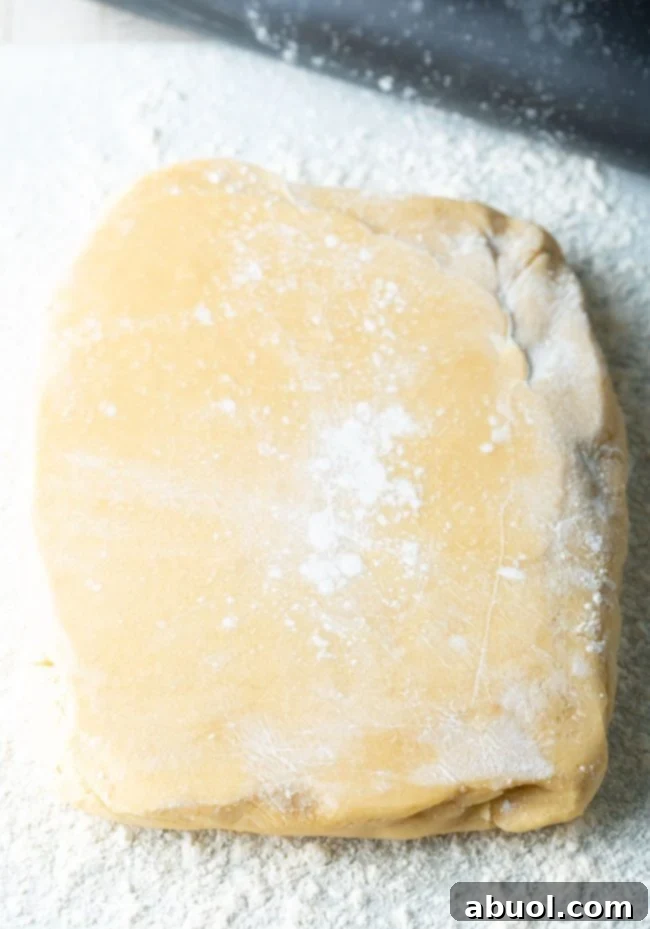
When you’re ready to bake your exquisite Scottish Shortbread, begin by preheating your oven to a precise 325 degrees F (160 degrees C). Line two large baking sheets with parchment paper; this prevents sticking and ensures even baking and easy cleanup. A clean, thoroughly floured work surface is essential for the next step.
Place your chilled dough block in the center of the floured area. Using a rolling pin, roll the dough out evenly to a thickness of approximately ½ inch. It’s important to maintain a consistent thickness across the entire sheet for uniform baking. Continue to lightly flour your counter and rolling pin as necessary to prevent the dough from sticking. This careful handling ensures the dough remains supple and manageable.
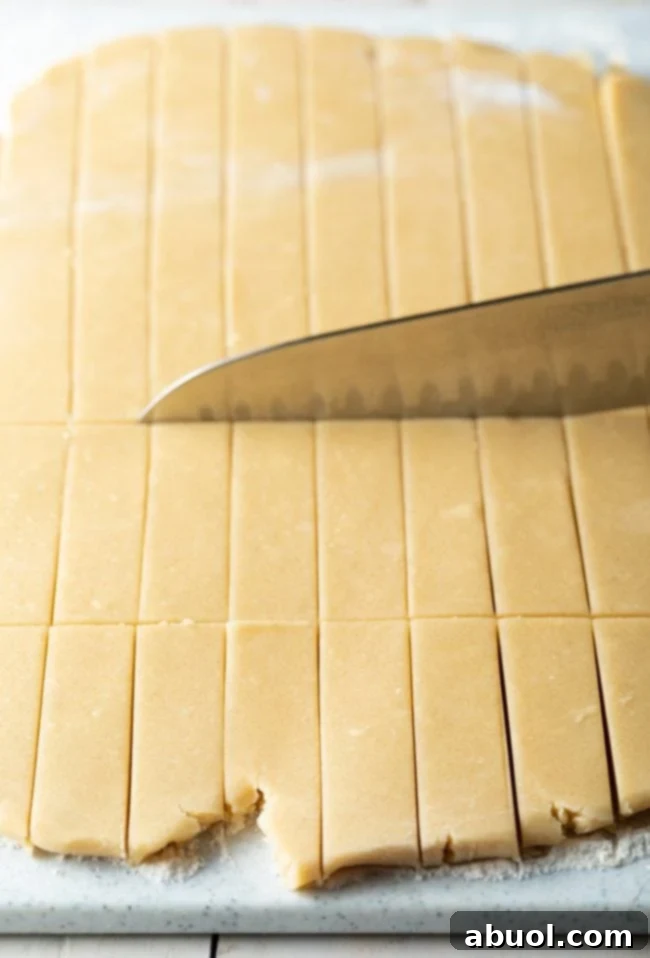
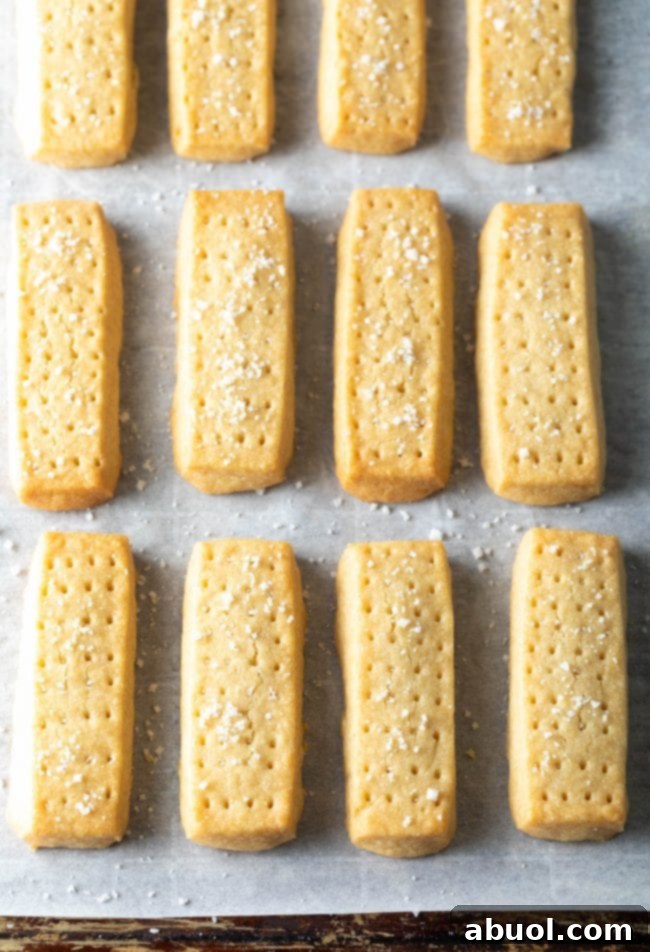
With the dough rolled to perfection, it’s time to cut your shortbread. Employ a large, sharp chef’s knife or a pizza cutter to slice the dough into uniform 2 ½ x 1-inch pieces. Precision here contributes to a professional-looking finish and consistent bake times. Carefully transfer these delicate pieces to your prepared baking sheets, ensuring they are spaced about 1 ½ inches apart to allow for proper air circulation during baking and prevent them from merging.
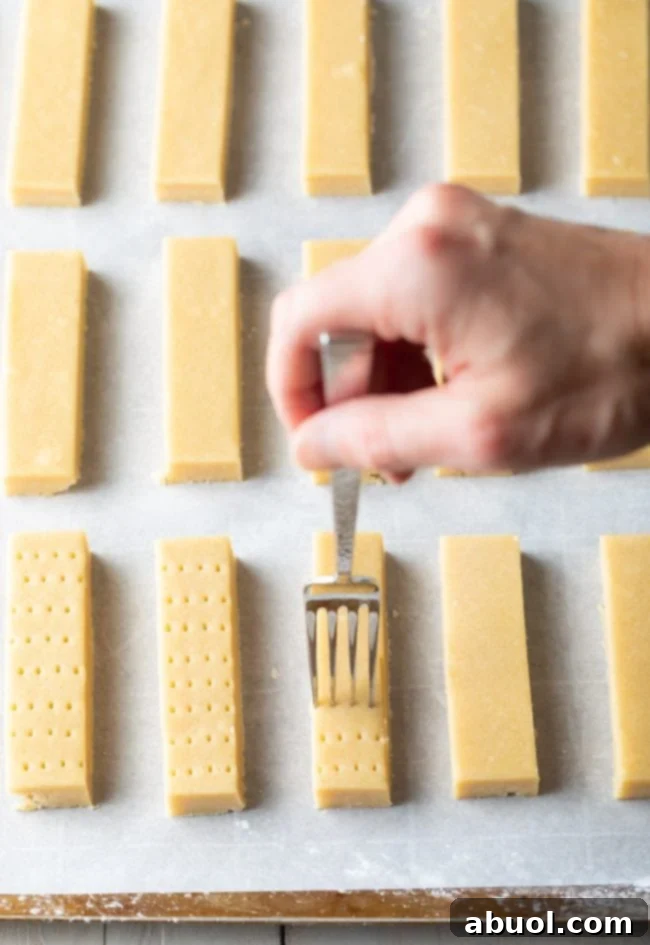
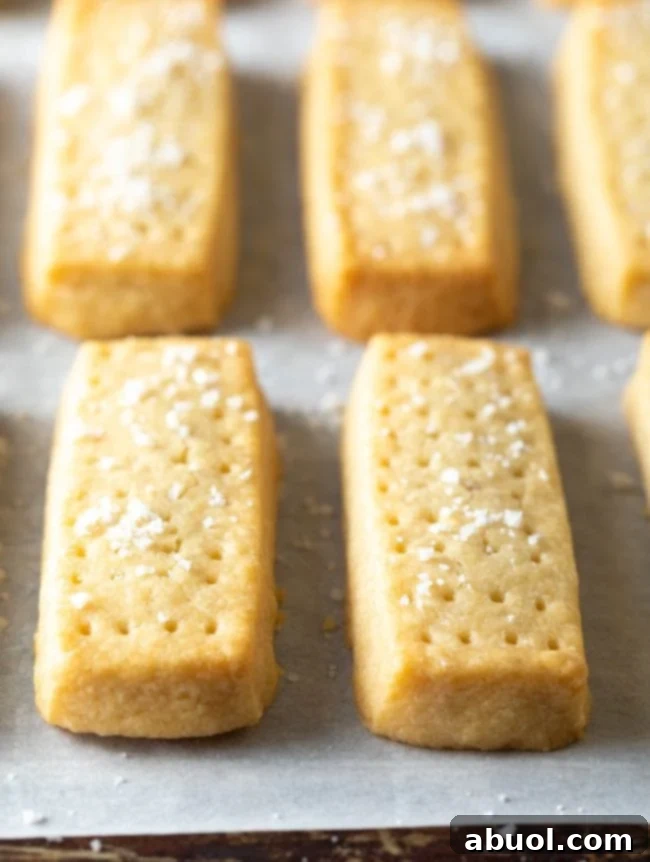
Before baking, take a fork and gently poke holes across the surface of each cookie. This technique, known as “docking,” is more than just decorative; it plays a vital role in the shortbread’s structure. The pricked holes allow steam to escape during baking, which prevents the cookies from bubbling up and helps them maintain their uniform shape and characteristic dense crumb. Be mindful not to poke too deeply, just enough to create small perforations.
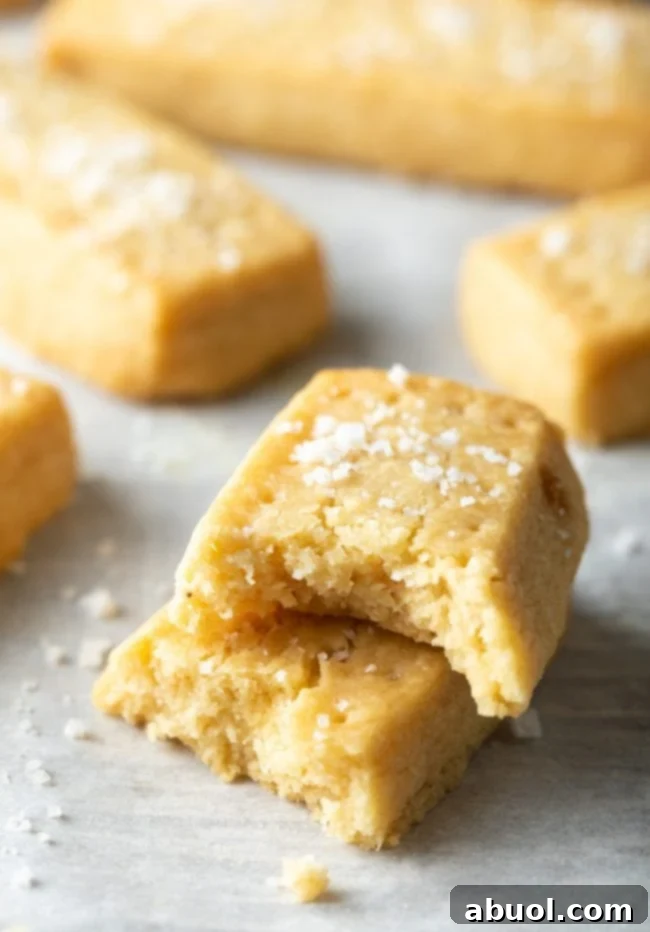
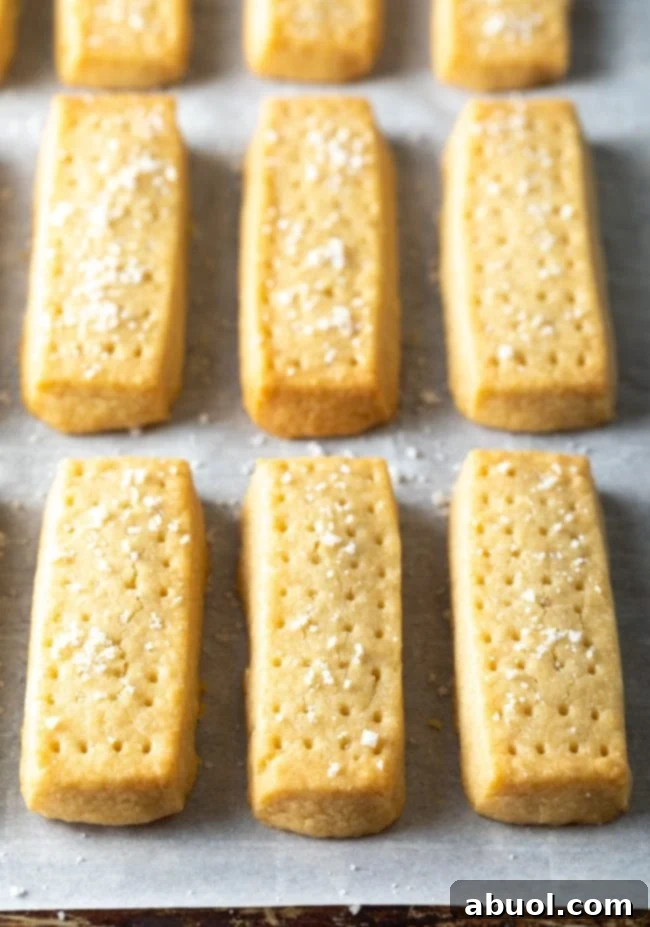
Bake the shortbread cookies for 20-22 minutes, or until their edges turn a beautiful golden brown. The center should remain pale, indicating a soft, tender interior. Upon removing the baking sheets from the oven, immediately sprinkle the tops of each warm cookie with a generous pinch of Fleur de Sel. The residual heat will help the salt adhere and slightly melt, enhancing the flavor profile. Allow the cookies to cool on the baking pans for about 5 minutes before carefully transferring them to a wire rack or serving platter to cool completely. These simple cookies are truly perfect for the holidays, special occasions, or simply enjoying with a warm beverage. Serve them as they are, or elevate them further by dipping them in rich chocolate or drizzling with decadent caramel sauce for an even sweeter indulgence.
The Secret to Shortbread’s Structure: Why Docking is Essential
The practice of poking holes in shortbread cookies, often referred to as “docking,” is a time-honored tradition with a crucial functional purpose. These small perforations act as vents, allowing steam that builds up within the dough during baking to escape efficiently. Without these escape routes, the steam would cause the shortbread to puff up unevenly and potentially create unwanted air pockets, leading to a less dense and crumbly texture. The result would be a cookie that is too flat and lacks the signature tender, melt-in-your-mouth quality that Scottish shortbread is famous for.
Therefore, when following this best shortbread cookie recipe, do not skip this seemingly small but incredibly significant step. Docking ensures that your shortbread maintains its desired uniform shape, its characteristic thick profile, and its beloved dense, slightly crumbly consistency. It’s a simple technique that guarantees the authentic Scottish shortbread experience you’re aiming for.
Storing Your Homemade Scottish Shortbread for Lasting Freshness
Proper storage is key to preserving the exquisite taste and texture of your homemade Scottish shortbread biscuits. Once completely cooled, store them in an airtight container at room temperature. They will remain wonderfully fresh and delicious for up to a week. If you plan to stack the shortbread cookies, it’s advisable to place a piece of parchment paper between each layer. This simple trick prevents them from sticking together and helps maintain their delicate texture, ensuring each cookie remains as perfect as the first.
For longer storage, Scottish Shortbread freezes exceptionally well. Arrange the cooled cookies in a single layer on a baking sheet and freeze until solid. Once frozen, transfer them to an airtight freezer-safe container or a heavy-duty freezer bag, with parchment paper between layers to prevent sticking. They can be stored in the freezer for up to 3 months. When you’re ready to enjoy them, simply thaw at room temperature. The shortbread will regain its original buttery flavor and crumbly texture, ready to be savored.
Delightful Serving Suggestions for Scottish Shortbread
These easy-to-make shortbread cookies are undeniably delightful on their own, offering a pure, unadulterated buttery pleasure. However, their rich yet simple flavor profile makes them an incredibly versatile companion for a variety of sweet and savory pairings. Unleash your inner connoisseur with these inspired serving suggestions:
- Classic Tea Time: Pair your shortbread with a steaming cup of Earl Grey, Darjeeling, or a robust Scottish breakfast tea for a truly authentic experience.
- Citrusy Brightness: Dip your shortbread into some vibrant homemade lemon curd. The tartness of the lemon beautifully complements the shortbread’s richness, creating a harmonious balance of flavors.
- Chocolate Indulgence: For chocolate lovers, consider a warm Nutella fondue or a rich chocolate ganache for dipping. The creamy chocolate against the crumbly cookie is pure bliss.
- Coffee Companion: Enjoy a piece with your morning latte or an afternoon cup of freshly brewed coffee. The bitterness of the coffee creates a wonderful contrast with the sweet, buttery cookie.
- Seasonal Accents: During the holidays, serve shortbread alongside spiced ciders or eggnog. In warmer months, pair them with fresh berries and a dollop of whipped cream.
- Ice Cream Topping: Crumble shortbread over your favorite vanilla or caramel ice cream for an added layer of texture and buttery flavor.
- Cheese Board Addition: For a sophisticated twist, include shortbread on a dessert cheese board, alongside mild cheeses like Brie or goat cheese and some fruit preserves. The shortbread acts as a delightful, sweet biscuit.
- Caramel Drizzle: A simple drizzle of warm caramel sauce transforms shortbread into an even more decadent dessert.
No matter how you choose to enjoy them, these homemade Scottish shortbread cookies are sure to impress and satisfy.
Explore More Classic Cookie Recipes
If you’ve fallen in love with the simplicity and deliciousness of Scottish shortbread, you might enjoy exploring other beloved cookie recipes from our collection:
- Best Peanut Butter Cookies Recipe
- Oatmeal Cream Pie Cookies
- Caramel Shortbread Recipe
- Cornmeal Cookies
- The Best Sugar Cookie Recipe
- Cream Cheese Cookies
- Chocolate Dipped Lace Cookies
- Haystack Cookies Recipe (Birds Nest Cookies)
- Linzer Cookies (Cookie Cutter Christmas Cookie)
- Italian Wedding Cookies
- Mexican Cookies (Biscochitos)
- Lemon Crinkle Cookies
- Toffee Chocolate Chip Cookies
Find detailed nutritional information, including calories, protein, cholesterol, sodium, carbohydrates, and fiber percentages, in the printable recipe card below.
Scottish Shortbread Recipe
The best and easiest recipe for making classic Scottish shortbread cookies, perfect for customizing with your favorite extra goodies!
Prep Time: 15 minutes
Cook Time: 20 minutes
Total Time: 35 minutes
Servings: 32 cookies
Ingredients
- 2 cups salted butter, softened (1 pound)
- 1 cup light brown sugar, packed
- 4 ¼ cups all-purpose flour
- ½ teaspoon vanilla extract (optional)
- Fleur de Sel, for sprinkling
Instructions
- Set out an electric stand mixer. To the bowl, add the softened butter and brown sugar. Cream on high until light and fluffy, about 3-5 minutes. Ensure sufficient creaming time for optimal cookie texture.
- Scrape the bowl with a rubber spatula. Turn the mixer to low. Add the vanilla extract, then slowly incorporate the all-purpose flour. Mix just until combined; avoid over-mixing the dough.
- Press the dough into a rectangular shape and wrap it tightly in plastic wrap. Chill in the refrigerator for at least 1 hour to firm up.
- When ready to bake, preheat your oven to 325 degrees F (160 C). Line 2 large baking sheets with parchment paper.
- Thoroughly flour a clean work surface. Place the chilled dough in the center and roll it out into an even sheet, approximately ½ inch thick. Flour the counter and rolling pin as needed to prevent sticking.
- Using a large chef’s knife or pizza cutter, cut the shortbread dough into 2 ½ x 1-inch pieces. Carefully transfer these pieces to the prepared baking sheets, spacing them about 1 ½ inches apart.
- Use a fork to gently poke holes (dock) over the surface of each cookie. This helps release steam, allowing the cookies to hold their shape better during baking.
- Bake for 20-22 minutes, or until the edges are lightly golden. While still warm, sprinkle the top of each cookie with Fleur de Sel. Cool on the baking sheets for 5 minutes before transferring to a platter or wire rack to cool completely.
Notes
Keep Scottish shortbread cookies stored in an airtight container at room temperature for up to a week. For freshest results when stacking, place a piece of parchment paper between the layers.
Scottish Shortbread can be frozen for up to 3 months in an airtight container or freezer bag. Thaw at room temperature before serving.
Nutrition Information (per 1 cookie serving)
Calories: 188kcal, Carbohydrates: 19g, Protein: 2g, Fat: 12g, Saturated Fat: 7g, Cholesterol: 31mg, Sodium: 104mg, Potassium: 30mg, Fiber: 1g, Sugar: 7g, Vitamin A: 355IU, Calcium: 12mg, Iron: 1mg
Course: Dessert, Snack
Cuisine: American, British, Scottish
Author: Sommer Collier