
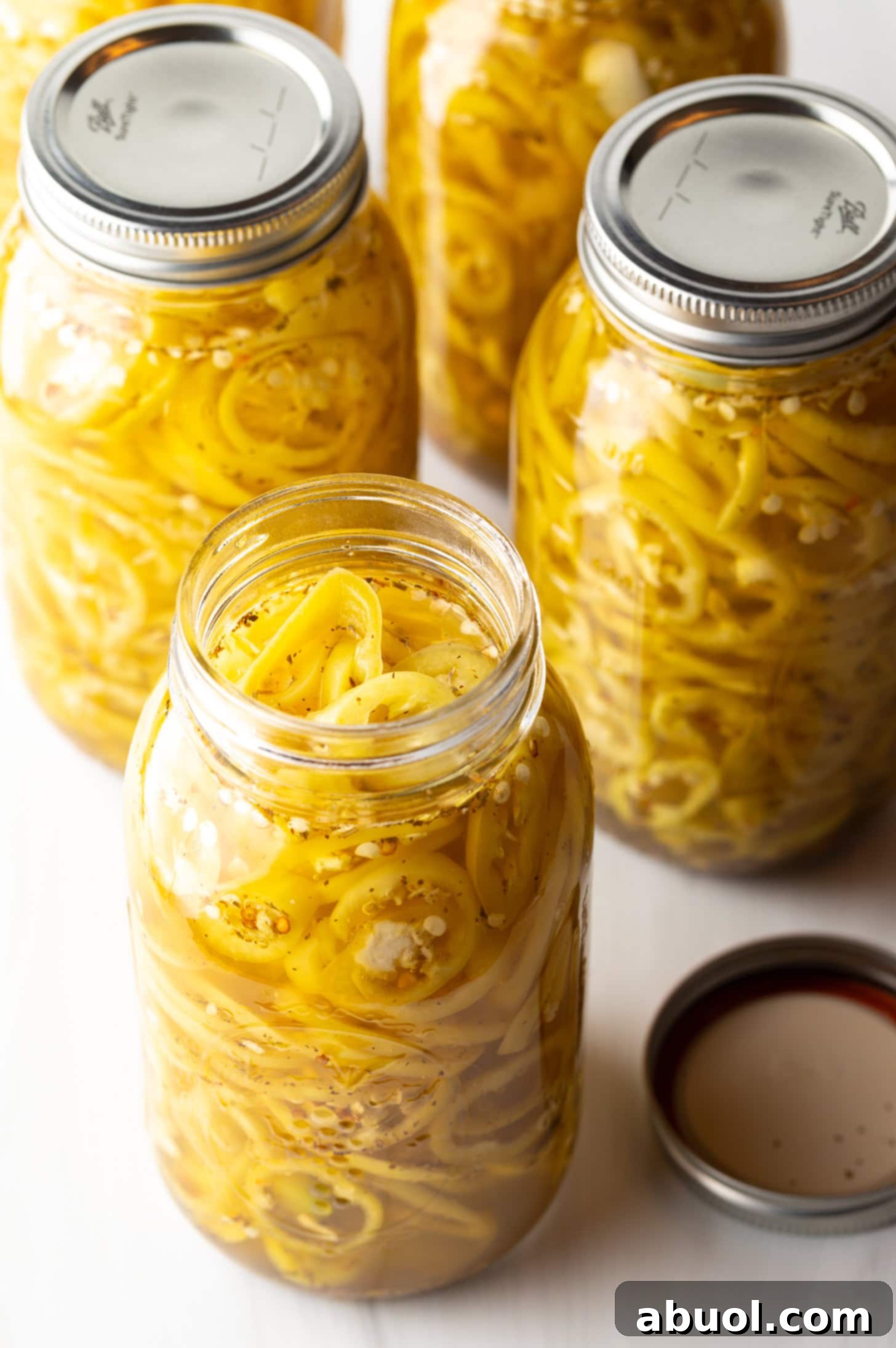
Transform your garden’s bounty or market find into a jar of pure delight with this easy-to-follow recipe for homemade pickled banana peppers. Whether you’re aiming for the quick gratification of refrigerator pickles or the long-term satisfaction of traditional canning, these tangy, crisp, and vibrantly flavored peppers are an absolute must-try. Perfect for enhancing your favorite dishes or simply enjoyed straight from the jar, our pickled banana peppers are sure to become a staple in your pantry.
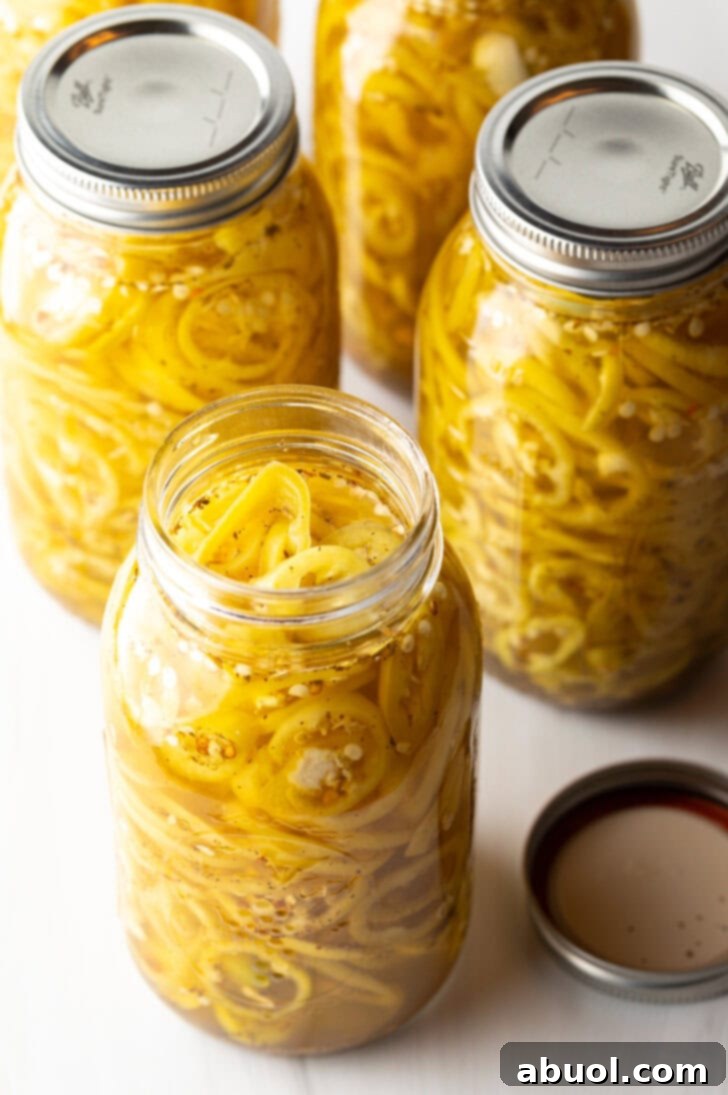
Why You’ll Adore This Pickled Banana Peppers Recipe
There’s something uniquely satisfying about preserving fresh produce, and pickling banana peppers is no exception. While we love creating savory dishes like stuffed banana peppers with cheese and sausage, there’s an undeniable charm in a jar of brightly flavored, zesty pickles. This particular pickled banana peppers recipe stands out for its simplicity, yielding a generous batch of tangy and utterly delicious peppers that are versatile enough for any meal or snack.
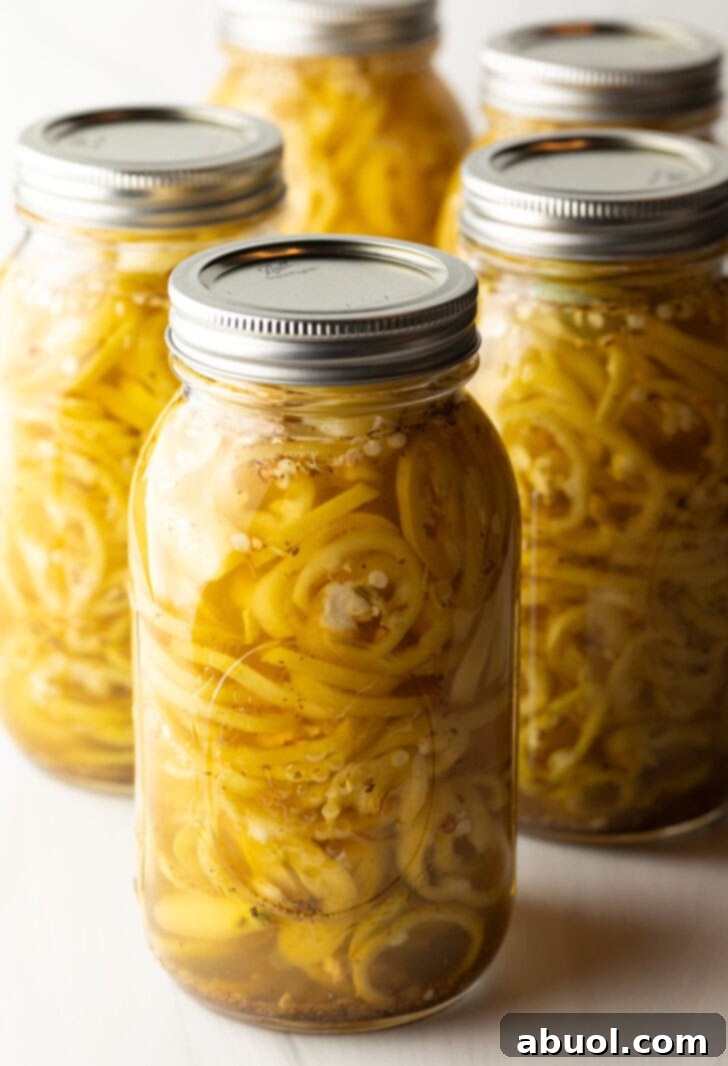
What makes this recipe truly special is its adaptability. You can opt for the traditional method of “canning” jars in a hot water bath, extending their shelf life significantly and making them pantry-stable for months. Alternatively, for quicker enjoyment, you can prepare them as refrigerator pickles, which will be ready to eat in just a couple of days and store wonderfully in your fridge for a shorter period. No matter which preservation route you choose, these peppy peppers are so irresistibly delightful, they rarely last long! They’re fantastic for sharing with friends, munching on as a healthy snack, or piling onto nearly anything you can imagine, adding a burst of flavor and a satisfying crunch.
Banana Peppers vs. Pepperoncinis: A Flavorful Comparison
Many people often confuse banana peppers with pepperoncinis, and it’s a great question to ask what distinguishes them! While both are mild, yellowish-green peppers often found pickled, they have distinct characteristics that are worth noting.
- Banana Peppers: True to their name, banana peppers are typically longer and have a smooth, waxy, vibrant yellow skin that resembles a banana. They are known for their mild, slightly sweet, and tangy flavor profile, offering more of a “punchy” taste rather than intense heat. On the Scoville scale, they usually range from 0 to 500 SHU (Scoville Heat Units), putting them firmly in the sweet pepper category. They are most commonly sliced into rings for pickling, making them perfect for layering in sandwiches or sprinkling over salads.
- Pepperoncinis: In contrast, pepperoncinis are generally shorter, more wrinkled, and possess a slightly darker yellow-green hue. You’ll often find them pickled whole, not sliced. While still considered mild, pepperoncinis do tend to have a bit more kick than banana peppers, typically registering between 100 to 500 SHU. They aren’t as hot as jalapeños (which can range from 2,000 to 8,000 SHU) but offer a noticeable, pleasant warmth. Their unique shape and texture make them a popular choice for antipasto platters or served alongside Italian dishes.
Understanding these differences can help you choose the right pepper for your culinary needs, though for this particular recipe, the crisp texture and mild tang of banana peppers are simply unparalleled.
Essential Ingredients for Perfect Pickled Banana Peppers
Crafting delicious pickled banana peppers begins with selecting high-quality ingredients. Here’s what you’ll need, along with some tips for optimal results:
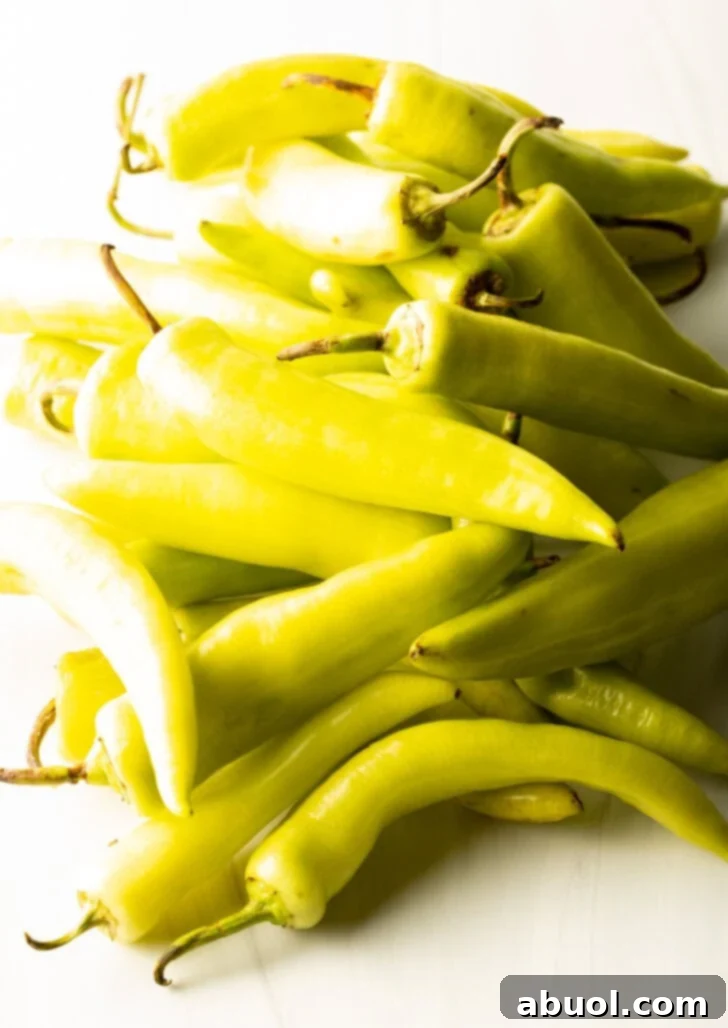
- Banana Peppers: The star of our show! Choose firm, ripe banana peppers that are free from blemishes. You can use sweet banana peppers for a milder flavor or hot banana peppers if you prefer a little extra zing. Ensure they are not overly soft, as this can lead to mushy pickles.
- Fresh Garlic: Whole cloves, peeled. Garlic infuses the pickling brine with a delightful aromatic depth that complements the peppers beautifully. Fresh garlic is always preferred over pre-minced for the best flavor.
- Italian Seasoning: This blend of herbs like oregano, basil, thyme, and rosemary adds a classic, savory touch. Use your favorite store-bought brand or create your own homemade Italian seasoning blend for a personalized touch.
- Celery Seeds: These small seeds contribute a subtle earthy, slightly bitter, and aromatic flavor that helps to cut through the peppers’ sweetness and vinegar’s tang. They are a classic pickling spice and really enhance the overall profile.
- Vinegar: The backbone of your pickling brine. White vinegar is a popular choice for its clean, sharp acidity. For a slightly mellower flavor, you can use apple cider vinegar or a 50/50 mix of white and apple cider vinegar to cut the intense bite of white vinegar alone. Ensure your vinegar is at least 5% acidity for safe pickling.
- Water: Used to dilute the vinegar, creating a balanced pickling liquid that is flavorful yet not overly strong.
- Granulated Sugar: Essential for balancing the sharp acidity of the vinegar and enhancing the natural sweetness of the banana peppers. Granulated white sugar dissolves easily and provides the best results for clarity in the brine.
- Pickling Salt or Coarse Kosher Salt: It’s crucial to use salt specifically designed for pickling or coarse kosher salt. Avoid iodized table salt, as the anti-caking agents and iodine can make your brine cloudy and potentially alter the flavor and color of your pickles. Salt is vital for flavor, crispness, and acting as a preservative.
Step-by-Step Guide: How to Pickle Banana Peppers
Pickling banana peppers is a rewarding process that’s easier than you might think. Follow these detailed steps to create your own batches of delicious, homemade pickles.
1. Prepare Your Jars
Begin by setting out 5 clean quart jars or 10 pint jars. If you plan to water-bath can (for shelf-stable storage), ensure your jars and lids are properly sterilized according to USDA guidelines. For refrigerator pickles, thoroughly washing with hot soapy water and rinsing well is often sufficient, but sterilizing provides extra peace of mind.
2. Wash and Slice the Peppers
Wash and drain your fresh banana peppers thoroughly. For uniform slices that pickle evenly and look beautiful in the jar, we highly recommend using a mandoline slicer. Carefully slice the banana peppers into 1/8-inch rounds. This method is incredibly fast and ensures consistent thickness. If you don’t have a mandoline, a sharp chef’s knife can also be used, but always exercise extreme caution with either tool to prevent injury.
Pro Tip for Slicing: Mandoline slicers make quick work of peppers, ensuring every slice is perfectly uniform. If using a knife, take your time and aim for consistent thickness for even pickling.
3. Pack the Jars
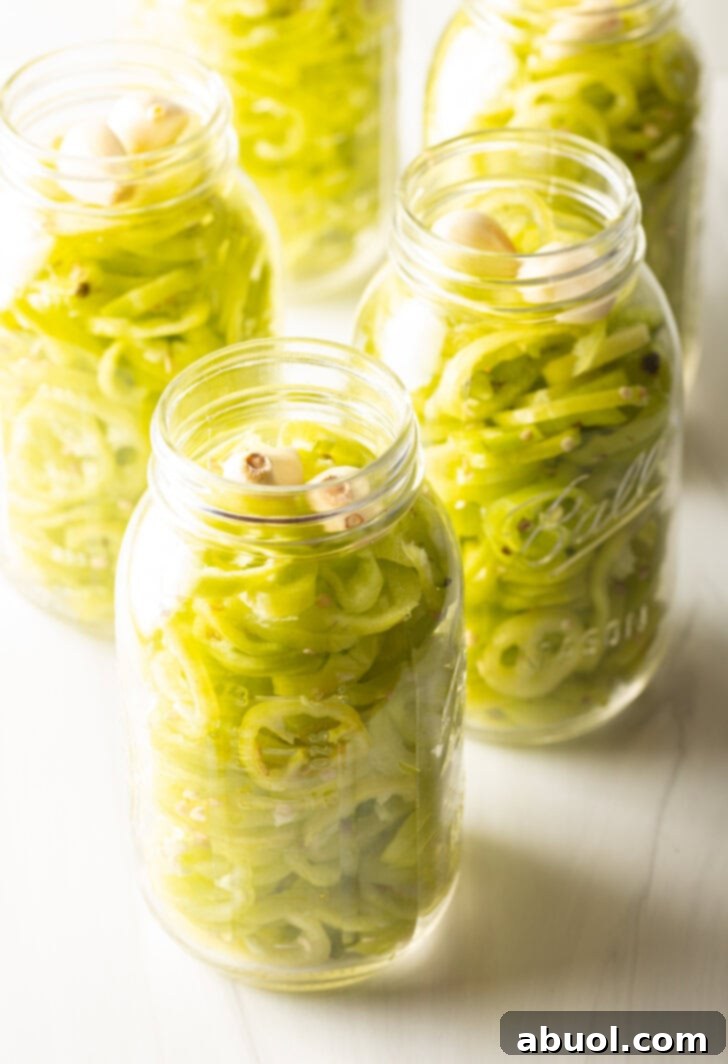
Stuff the sliced banana peppers tightly into your prepared jars. Pack them down firmly, leaving enough space for the pickling liquid and ensuring they are fully submerged once the brine is added. You want to utilize the jar space efficiently, but avoid crushing the peppers.
4. Add Aromatics and Spices
Once the peppers are packed, it’s time to infuse flavor. Adjust quantities based on jar size:
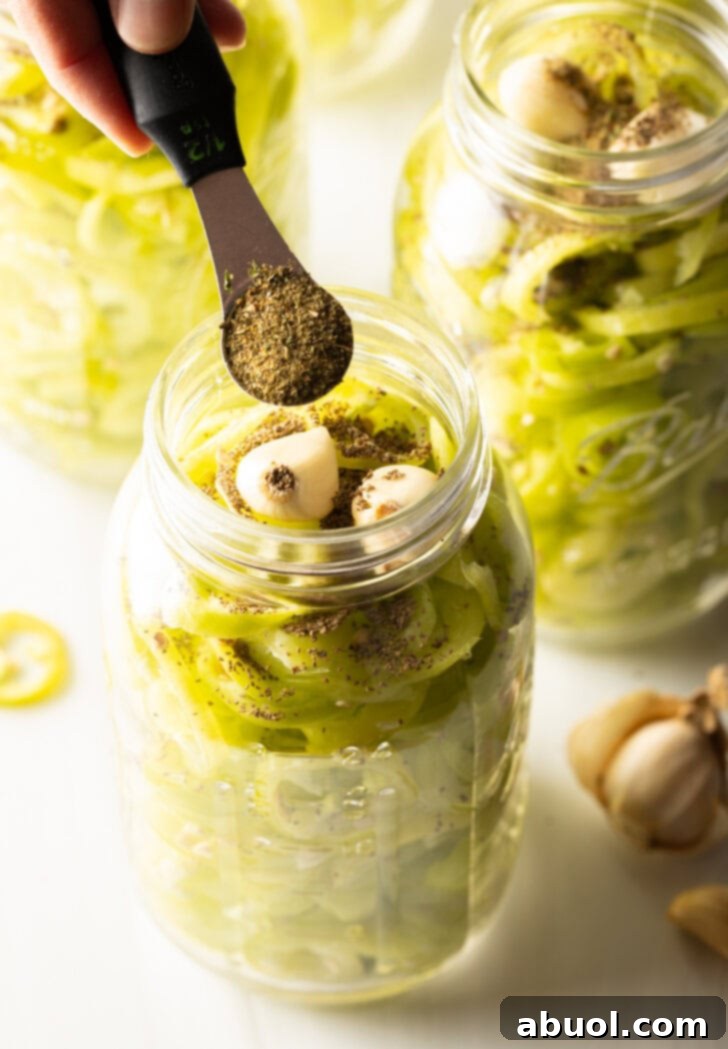
- For Quart Jars: Place two peeled whole garlic cloves, ½ teaspoon of Italian seasoning, and ½ teaspoon of celery seeds into each jar.
- For Pint Jars: Place one peeled whole garlic clove, ¼ teaspoon of Italian seasoning, and ¼ teaspoon of celery seeds into each jar.
5. Prepare the Pickling Brine
In a large pot, combine the vinegar, water, granulated sugar, and kosher salt (or pickling salt). Place the pot over high heat and stir continuously until the sugar and salt are fully dissolved. Bring the mixture to a rolling boil. Once it reaches a boil, immediately remove the pot from the heat. The hot brine is crucial for properly pickling the peppers and ensuring safety.
6. Fill and Seal the Jars
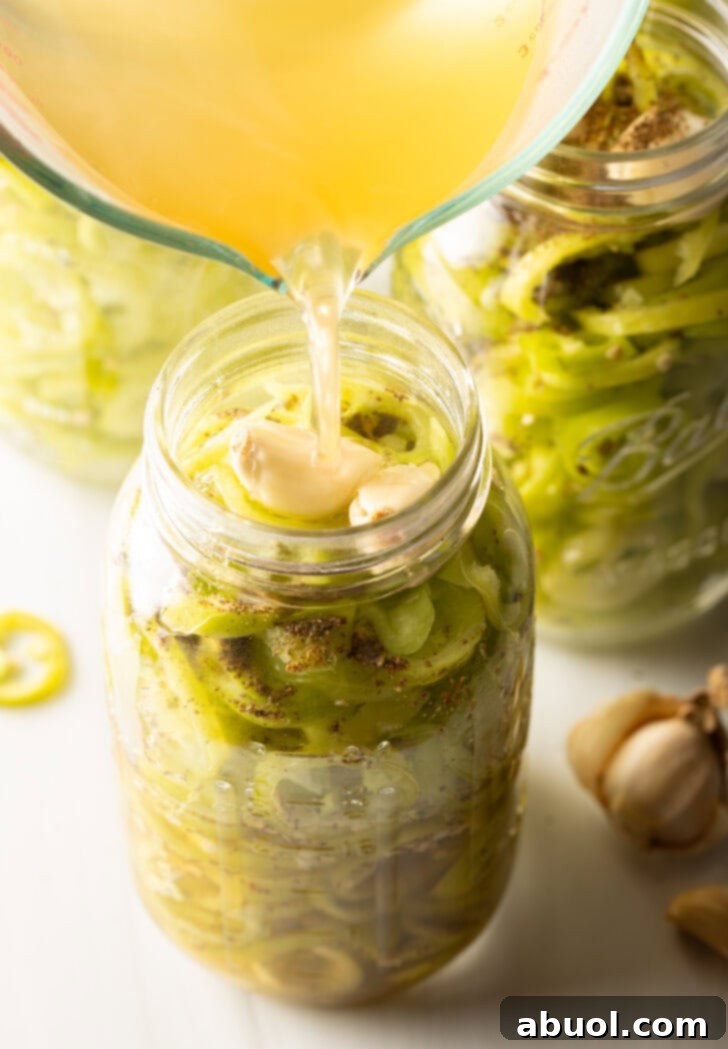
Carefully ladle or pour the hot pickling brine over the peppers in each jar. Fill the jars to the top, ensuring all peppers are completely submerged, but leave a crucial ½ inch of headspace at the very top of each jar. This headspace is vital for proper sealing during canning or for allowing expansion in refrigerator pickles. Wipe the rims of the jars clean to ensure a good seal, then screw the lids on tightly (finger-tight if water bath canning, firm for refrigerator pickles).
Find the complete printable recipe, including detailed measurements and a video guide, below. Get ready to enjoy!
7. Process for Storage (Canning vs. Refrigerator)
This step determines the shelf life and storage method for your pickled banana peppers:
- For Shelf-Stable Canning: If you intend to make these peppers shelf-stable for pantry storage, you must follow official water bath canning procedures. This typically involves placing the sealed jars in a boiling water canner, ensuring they are fully submerged, and processing them for a specific amount of time (usually 10-15 minutes for pints/quarts, adjusting for altitude). After processing, carefully remove the jars and let them cool completely on a towel on your counter, undisturbed, for 12-24 hours. Check seals before storing. For more details on safe canning practices, refer to our guide on How to Can.
- For Refrigerator Pickles: If you’re planning to store them in the refrigerator, simply allow the sealed jars to cool completely to room temperature on your counter. Once cool, transfer them to the refrigerator. These “quick pickles” are not shelf-stable and must always be kept refrigerated.
8. The Waiting Game (Flavor Development)
Whether canned or refrigerated, it’s crucial to let the banana peppers pickle for at least 48 hours before serving. This resting period allows the flavors to meld and the peppers to fully absorb the tangy brine, developing their characteristic pickled taste and texture. For even deeper flavor, waiting a week or two can make a significant difference.
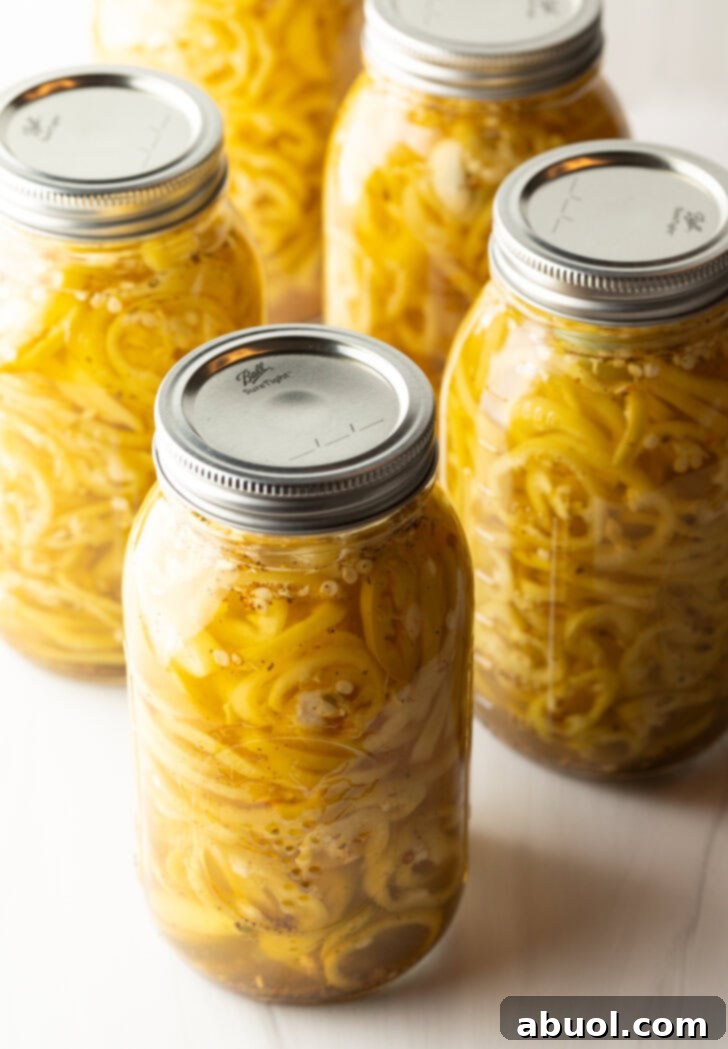
Delicious Ways to Enjoy Your Pickled Banana Peppers
Once your homemade pickled banana peppers are ready, the culinary possibilities are truly endless! Their vibrant tang and satisfying crunch make them a versatile addition to countless dishes.
- Snack Right from the Jar: This is arguably the simplest and most satisfying way to enjoy them. Pop a few slices straight from the jar for a refreshing, zesty bite anytime.
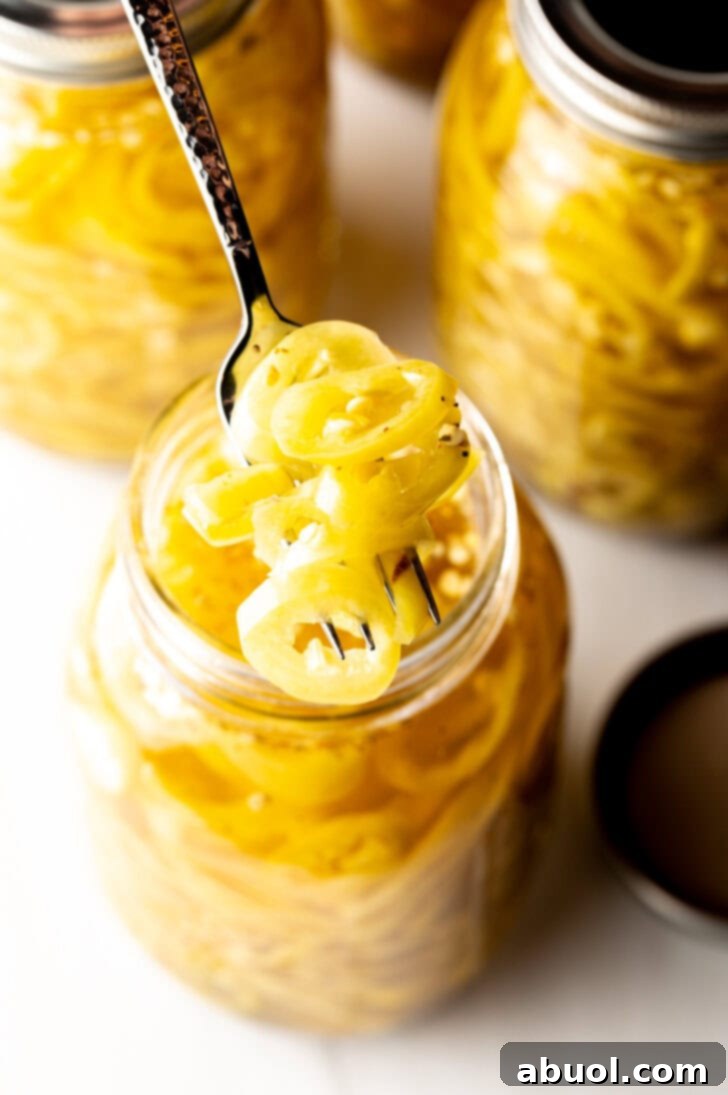
- Elevate Sandwiches and Wraps: Add a generous forkful (or two!) of sliced pickled peppers to your favorite sandwiches and wraps for an irresistible tangy kick. They are phenomenal on a classic New Orleans muffuletta, warm and gooey patty melts, savory pesto sandwiches, hearty Italian-style cheeseburgers, flavorful Greek burgers, sizzling gyros, and fresh veggie hummus wraps. They cut through richness and add an exciting layer of flavor.
- Add Pep to Salads: Sprinkle these delightful peppers onto any salad for a significant boost of crunch and zesty flavor. They’re a fantastic addition to a beautiful antipasto salad, a classic Greek salad, or a refreshing Mediterranean fattoush salad. Even a simple bed of mixed greens with some fresh vegetables comes alive with these bright pickles.
- Enhance Savory Dishes: Pickled banana peppers make a great extra touch on top of, and as a side with, all kinds of savory main courses. You absolutely must try our red pepper pizza with pickled peppers – they go exceptionally well with just about any pizza! They’re also highly recommended alongside savory pepperoni rolls, generous helpings of slow-cooked Italian beef, or any dish that could use a touch of bright acidity and pizzazz. Consider them for tacos, burritos, chili, eggs, or even on a charcuterie board.
Don’t be afraid to experiment! The tangy, slightly sweet, and mildly spicy notes of pickled banana peppers complement a wide array of flavors, making them a pantry essential for any adventurous home cook.
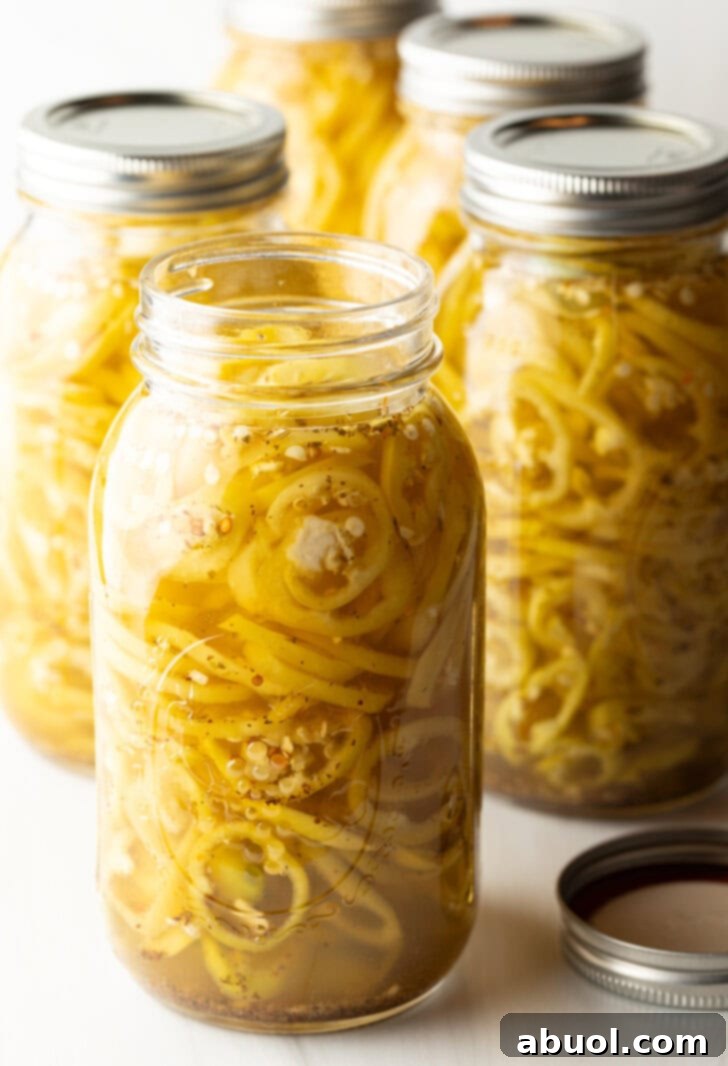
Frequently Asked Questions About Pickled Banana Peppers
Are banana peppers spicy?
Banana peppers are generally considered mild peppers. They do have a very subtle hint of heat, but their dominant flavor is tangy and slightly sweet, not truly spicy. For reference, on the Scoville Heat Unit (SHU) scale, banana peppers typically range from 0 to 500 SHU, making them comparable to bell peppers in terms of heat. In contrast, a jalapeño pepper registers between 2,000 and 8,000 SHU, meaning jalapeños are 4-16 times spicier than banana peppers. You can find both “sweet” and “hot” varieties of banana peppers, so be sure to check the label if you’re sensitive to heat.
How long are pickled banana peppers good for?
The shelf life of your pickled banana peppers depends on the preservation method. If you follow proper water bath canning procedures (ensuring a good seal), jars of pickled peppers can be stored in a cool, dark pantry for at least a year, often longer. Once a canned jar is opened, or if you make refrigerator pickles, the banana peppers will stay fresh and delicious for up to 2-3 months when stored in the refrigerator. Always check for any signs of spoilage (odd smell, mold) before consuming.
Can you freeze banana peppers to pickle later?
While technically possible to freeze banana peppers, it’s generally not recommended for pickling. Freezing causes the water within the pepper cells to expand and rupture, leading to a significant loss of crispness and a soft, mushy texture once thawed. The delightful crunch is a key characteristic of good pickled peppers, which is best achieved by starting with fresh, firm banana peppers. For optimal results, pickle them when they are fresh from the harvest.
Can I pickle other peppers with this pickling brine?
Absolutely! This versatile pickling brine is perfect for many other varieties of peppers. You can successfully pickle Hungarian Wax Peppers (which have a similar shape but more heat), Pepperoncinis (for a slightly spicier, wrinkly pickle), or Cubanelle Peppers using this exact same method and brine recipe. The key is to ensure the peppers are fresh and sliced uniformly for even pickling. Feel free to experiment with your favorite mild to medium heat peppers!
Can I add other spices to the pickling brine?
Yes, you certainly can! While we love the simple, flavor-packed brine in this recipe, pickling is a fantastic opportunity for culinary creativity. Consider adding whole mustard seeds, black peppercorns, a pinch of red pepper flakes for extra heat, a bay leaf, or a few whole cloves to the jars for additional layers of flavor. Experiment with different combinations to find your perfect spice blend. Just be mindful not to overdo it, as the goal is to enhance, not overpower, the natural flavor of the banana peppers.
What kind of jars should I use for pickling?
For safe and effective pickling, especially if you plan to water-bath can, always use jars specifically designed for canning, such as Mason jars. These jars are made from tempered glass that can withstand the high temperatures of a boiling water bath. They come with two-piece lids (a flat lid and a screw band) which are essential for creating a vacuum seal. Quart (32 oz) and pint (16 oz) sizes are most commonly used for pickled peppers. Ensure your jars are free of cracks or chips, which can prevent a proper seal or lead to breakage.
Why did my pickled peppers turn soft?
Several factors can lead to soft pickles. First, using peppers that are already overly ripe or soft can result in a mushy final product. Always start with firm, fresh peppers. Second, using non-pickling salt (like iodized table salt) can sometimes contribute to softness due to its additives. Third, over-processing during water bath canning can also make pickles soft. Ensure you follow recommended processing times precisely. Finally, some people add a grape leaf or a pinch of pickling crisp (calcium chloride) to their jars, which contain tannins that help maintain the peppers’ crisp texture.
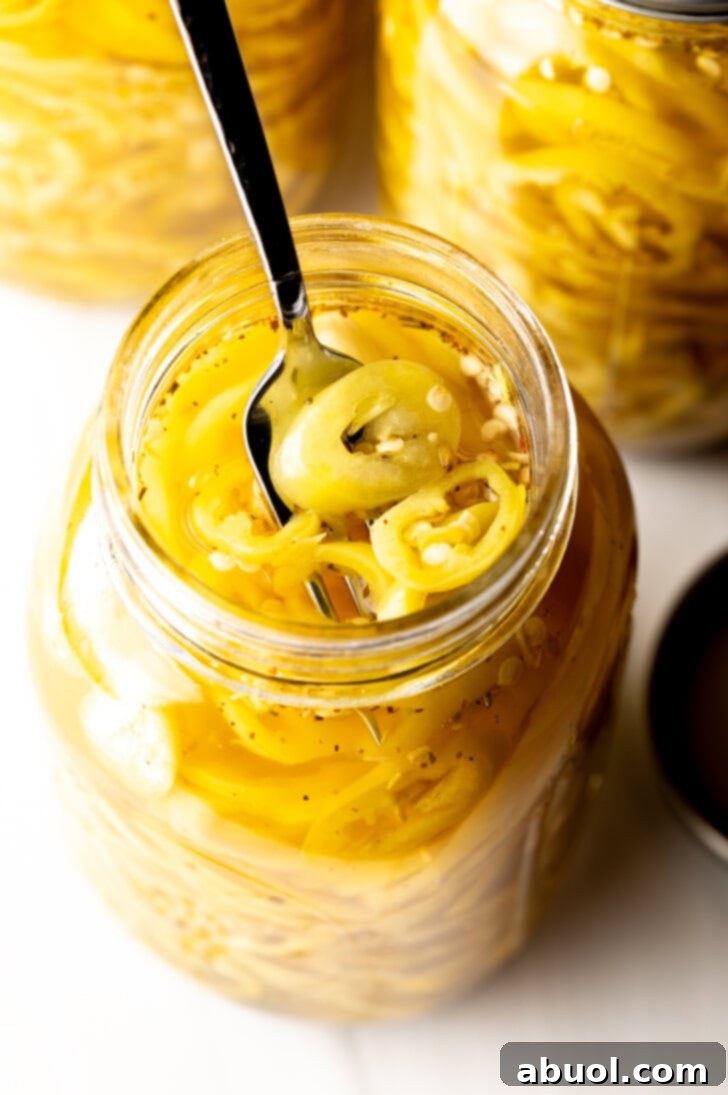
Expand Your Pantry: More Easy Pickling Recipes to Try
If you’ve enjoyed the process of pickling banana peppers, you’ll love exploring other simple and rewarding pickling projects. Preserving fresh produce at home is a fantastic way to enjoy seasonal flavors year-round and add unique zest to your meals. Here are some other delightful pickling recipes you should definitely try:
- Quick Pickled Jalapeños: For those who love a bit of heat, these spicy pickled peppers are incredibly fast to make and perfect for tacos, nachos, or sandwiches.
- Pickled Green Tomatoes: A Southern classic, these tangy tomatoes offer a unique flavor and texture that’s wonderful alongside rich dishes or in salads.
- Preserved (Pickled) Garlic: A delightful way to enjoy garlic’s robust flavor with a milder, sweeter edge. Great for snacking or adding to marinades.
- Pickled Radishes: Crisp, vibrant, and with a peppery bite, pickled radishes are a fantastic topping for tacos, salads, or banh mi.
- Pickled Watermelon Rind: A surprisingly delicious and wonderfully sweet-tart treat that transforms a typically discarded part of the watermelon.
Pickled Banana Peppers Recipe
This easy recipe for Pickled Banana Peppers yields perfectly palatable pickles, ideal for piling onto your favorite savory dishes or enjoying as a refreshing snack straight from the jar!
Prep Time: 40 minutes
Cook Time: 5 minutes
Resting Time: 2 days
Total Time: 2 days 45 minutes
Servings: 160 servings (approximately 5 quart jars)
Ingredients
- 4 pounds fresh banana peppers
- 10 cloves garlic, peeled
- 2 ½ teaspoons Italian seasoning
- 2 ½ teaspoons celery seeds
- 6 cups vinegar (white vinegar, apple cider vinegar, or a mix of both)
- 6 cups water
- 1 ¼ cups granulated sugar
- 6 tablespoons kosher salt (or pickling salt)
Instructions
- Set out 5 clean quart jars, or 10 clean pint jars.
- Wash and drain the banana peppers. Using a mandoline slicer, carefully slice the banana peppers into 1/8 inch rounds. (This is best done with a mandoline for speed and evenness, but a sharp chef’s knife works too. Always be careful!)
- Stuff the banana peppers into the jars, packing them down firmly if needed to ensure they all fit.
- If using quart jars, place two garlic cloves, ½ teaspoon of Italian seasoning, and ½ teaspoon of celery seeds in each jar. If using pint jars, use one garlic clove, ¼ teaspoon of Italian seasoning, and ¼ teaspoon of celery seeds per jar.
- Set a large pot over high heat. Add the vinegar, water, sugar, and kosher salt to the pot. Stir until sugar and salt are dissolved and bring the mixture to a boil. Once boiling, turn off the heat.
- Ladle the hot pickling liquid into the jars. Fill them to the top, covering the peppers, but leave ½ inch of headspace at the very top of the jar. Screw the lids on tight.
- If canning to make them shelf-stable, proceed with official water bath canning procedures.
- If planning to keep them as refrigerator pickles, allow the jars to cool completely to room temperature, then place them in the refrigerator.
- Either way, let the banana peppers pickle for at least 48 hours before serving to allow flavors to develop fully.
Notes
Following proper canning procedures, jars of pickled peppers will keep well for at least a year at room temperature. For refrigerator pickles, or once an opened jar of canned peppers, they will stay good for up to 2-3 months in the fridge.
Nutrition
Serving: 1oz, Calories: 11kcal, Carbohydrates: 1g, Protein: 0.2g, Fat: 0.1g, Saturated Fat: 0.01g, Polyunsaturated Fat: 0.03g, Monounsaturated Fat: 0.01g, Sodium: 164mg, Potassium: 31mg, Fiber: 0.4g, Sugar: 1g, Vitamin A: 39IU, Vitamin C: 9mg, Calcium: 4mg, Iron: 0.1mg
Course: Condiment, Side Dish, Snack
Cuisine: American, Italian, Southern
Author: Sommer Collier