
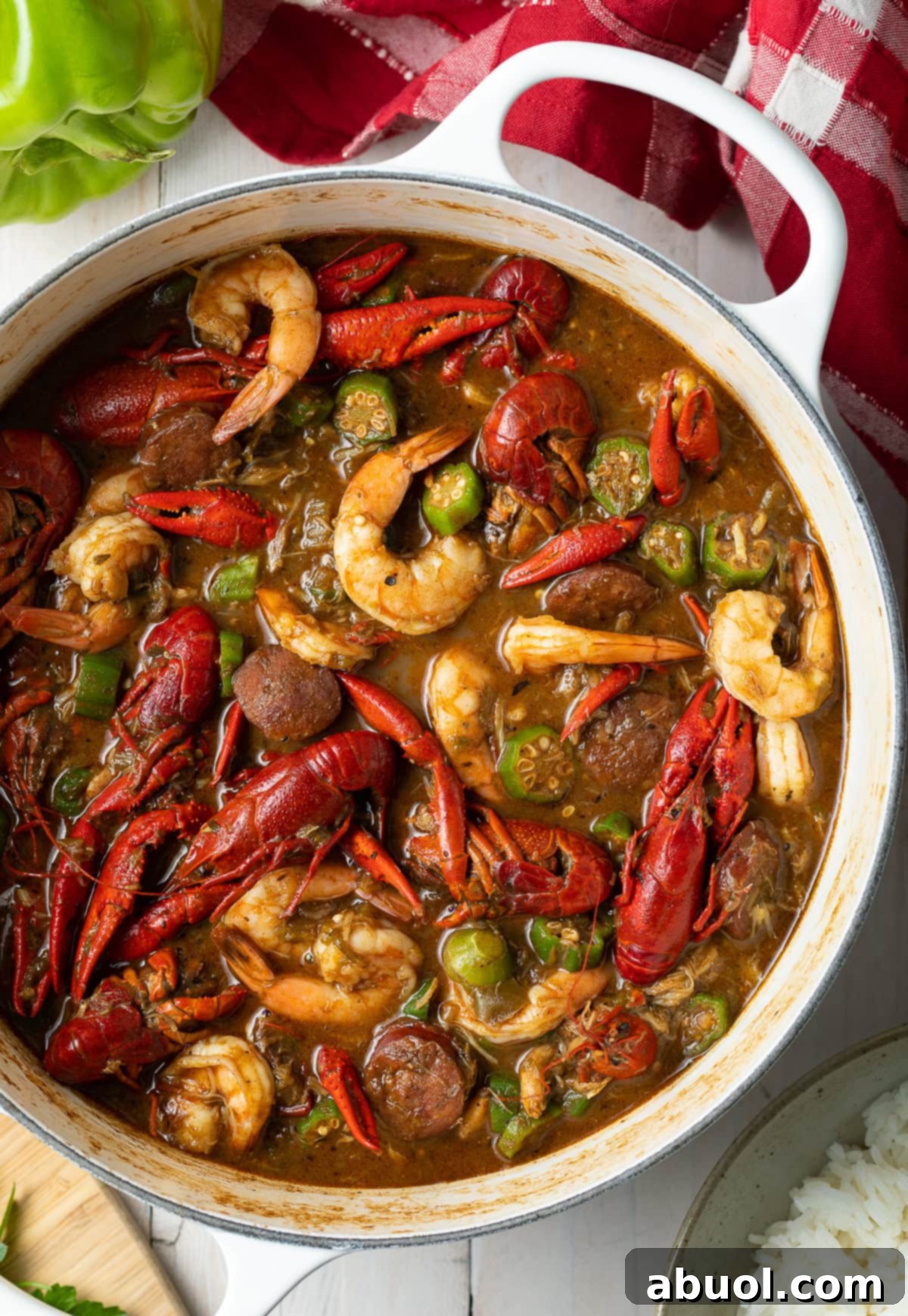
Discover the Soul of Louisiana: Mastering Authentic Seafood Gumbo – This comprehensive guide unveils the secrets to crafting a rich, homemade New Orleans Gumbo, brimming with succulent fresh seafood and the iconic, bold flavors of Cajun country. Prepare for an unforgettable culinary journey to the heart of the Gulf Coast.
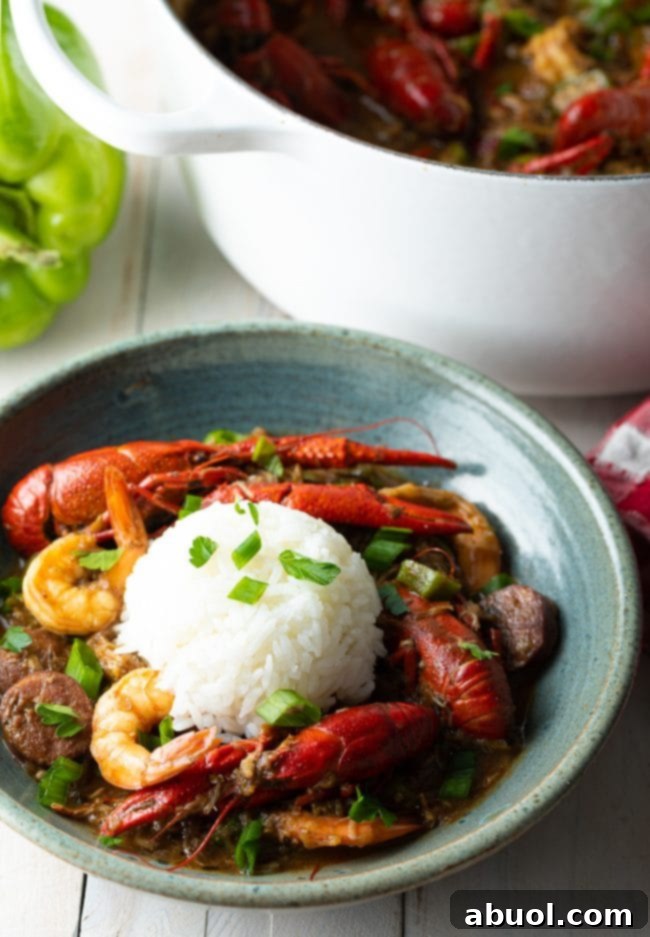
Seafood Gumbo: A Culinary Masterpiece from the Gulf Coast
There’s a reason Louisiana Gumbo holds a revered place in American culinary tradition. It’s more than just a stew; it’s a comforting, intensely flavorful experience that tells a story of cultural fusion and generations of passionate cooking. This vibrant dish, deeply rooted in the heart of New Orleans and the wider Cajun country, is renowned for its rich aroma, complex taste, and heartwarming satisfaction.
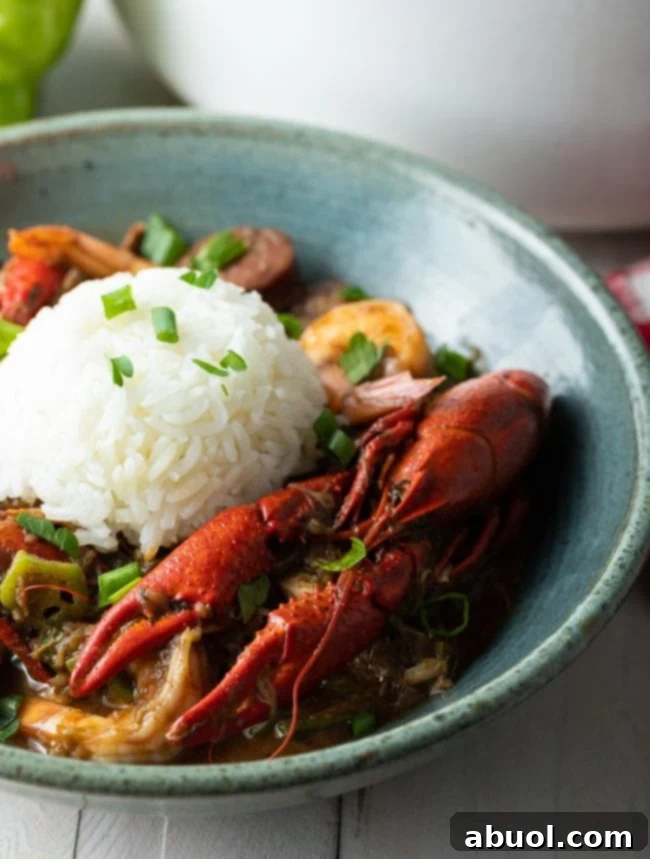
Our authentic seafood gumbo recipe brings together an exquisite blend of warm, earthy spices, generous portions of fresh, tender seafood, and the beloved “Holy Trinity” of Cajun cuisine: aromatic onion, crisp bell pepper, and crunchy celery. Each spoonful delivers a burst of the incredible, zesty flavors that define the Gulf Coast, transporting your senses straight to the bustling kitchens and festive gatherings of Louisiana.
While the allure of a quick meal is strong in today’s fast-paced world, an exceptional gumbo cannot be rushed. This isn’t a dish you whip up in 30 minutes; it’s a labor of love, a weekend cooking project that rewards patience and dedication. The depth of flavor, the perfect consistency of the roux, and the tender integration of every ingredient demand time and thoughtful preparation. Yet, we promise, the vibrant goodness and the soul-satisfying taste you’ll achieve are absolutely worth every minute of effort.
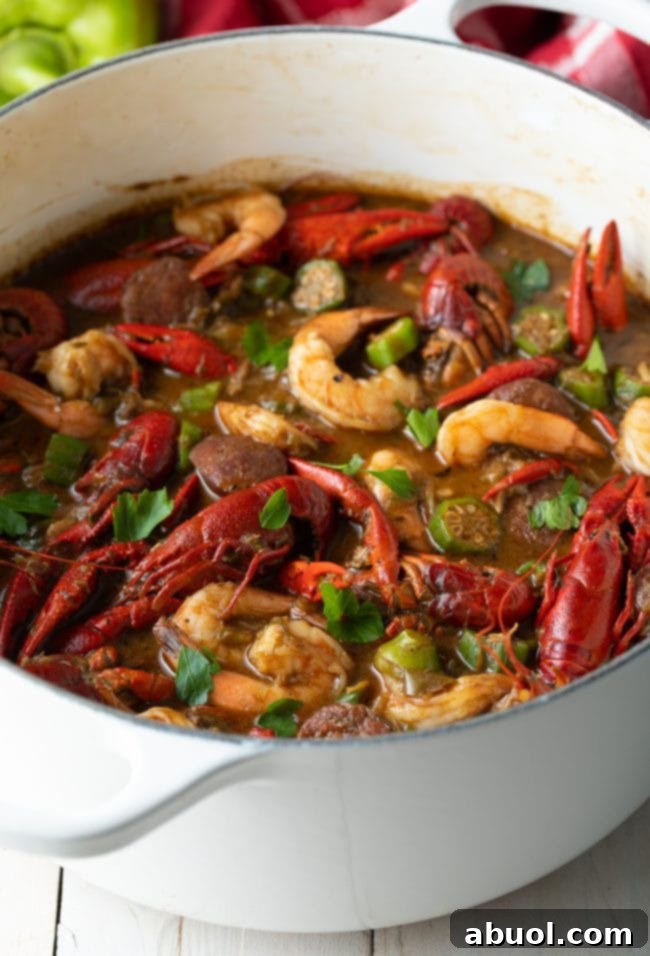
New Orleans Gumbo: Understanding Its Unique Identity
Many aspiring home cooks often wonder about the distinctions between classic Louisiana dishes. A frequently asked question is, “What’s the difference between etouffee, jambalaya, and gumbo?” While all three are staples of Cajun and Creole cooking, they each possess unique characteristics that set them apart:
- Etouffee: Typically features a lighter, often tomato-based sauce, and is almost always served *over* rice, allowing the creamy, rich sauce to be the star. The focus is usually on a single primary ingredient, such as crawfish or shrimp, smothered in the flavorful gravy.
- Jambalaya: This iconic dish is more akin to a pilaf. Rice is cooked directly *within* the pot along with the meats (often sausage, chicken, and sometimes shrimp or other seafood) and vegetables, absorbing all the flavors as it cooks. Like etouffee, it commonly includes a tomato base, resulting in a drier, heartier one-pot meal where the rice is an integral part of the main dish itself.
- Louisiana Gumbo: Distinctively, gumbo relies on a rich, dark roux as its foundational thickening agent and flavor base. Unlike etouffee and jambalaya, traditional gumbo typically does *not* include tomatoes. It’s a thick, hearty soup or stew, served with a scoop of white rice added to each bowl, rather than cooked into the dish. The complexity of gumbo comes from its slow-cooked roux, diverse meats (like sausage and various seafood or chicken), and the “Holy Trinity” of vegetables.
Understanding these differences is key to appreciating the culinary landscape of Louisiana and recognizing what makes an authentic seafood gumbo truly special.
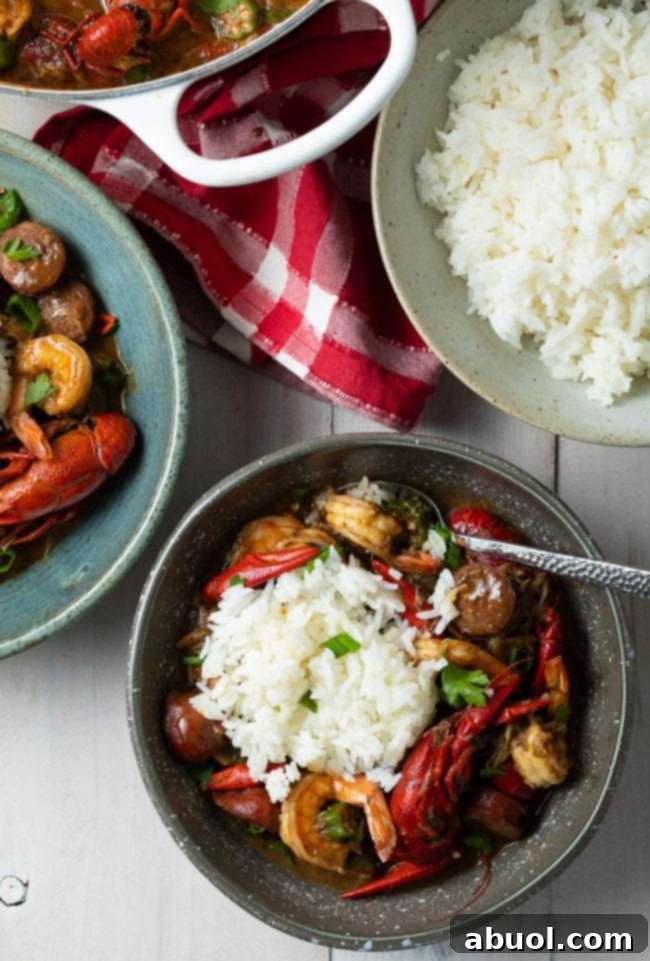
Essential Ingredients for the Best Seafood Gumbo
While this recipe is one of the more involved culinary adventures you might undertake, the unparalleled flavor and depth it offers certainly justify the extra effort. You’ll soon discover why this delicious dish becomes a cherished staple for special occasions and cherished family meals.
To craft this exceptional New Orleans seafood gumbo, you’ll need a selection of high-quality ingredients, each playing a vital role in building its signature profile:
- For the Roux: All-purpose flour, vegetable oil, butter. These three simple ingredients are transformed into the dark, nutty, and essential base of your gumbo.
- The Holy Trinity & Aromatics: Large onion, green bell pepper, celery stalks, garlic cloves. This foundational trio, enhanced by garlic and a hint of heat from a habanero or serrano pepper, provides the aromatic backbone of the dish.
- Meats & Seafood: Andouille sausage, crawfish, gumbo crabs (or blue crabs/crab meat), raw shrimp, shucked oysters (optional but highly recommended for depth). The combination of smoky sausage and a medley of fresh seafood creates a complex and irresistible flavor profile.
- Thickener & Liquid: Okra, white vinegar (for prepping okra), seafood stock. Okra acts as a natural thickener (if used), while rich seafood stock forms the liquid base.
- Seasonings & Flavor Enhancers: Worcestershire sauce, dried thyme, Cajun seasoning, bay leaf. These spices and sauces are crucial for layering the deep, savory, and subtly spicy flavors characteristic of authentic gumbo.
- To Serve: Long-grain white rice, fresh parsley or scallions (green onions) for garnish. Served over fluffy rice and garnished, the gumbo is complete.
The Art of Gumbo: A Culinary Perspective
Disclaimer: Declaring a recipe “authentic” to a specific region like Louisiana can be a nuanced and sometimes contentious claim. Gumbo, like many traditional dishes, has countless variations, each with passionate proponents. Many classic Louisiana and New Orleans gumbo recipes feature a dark roux base, often with *only* sausage and shrimp, or a combination of chicken and sausage, and, of course, okra. Some traditionalists might even raise an eyebrow at the inclusion of crawfish or oysters in a single gumbo pot, preferring a more singular seafood focus.
Our goal with this particular recipe is to capture and celebrate the robust flavors and rich textures found in several of the finest gumbos we’ve had the pleasure of tasting throughout New Orleans. This rendition leans towards a “chef-ier” interpretation, yet it consciously retains the rustic, hearty essence that defines traditional gumbo. The intentional addition of multiple forms of seafood—especially those cooked in their shells—serves a specific purpose: to develop unparalleled depth and intrigue in the broth. While gumbo crabs might be regionally specific, more widely available crawfish, particularly when cooked with their shells, are exceptional for infusing the gumbo with an intense seafood essence. We urge you to experience this rich medley of flavors before forming an opinion; sometimes, the most delightful culinary discoveries lie beyond conventional boundaries. Trust us, it’s a game-changer for flavor!
Step-by-Step Guide: How to Make New Orleans Seafood Gumbo
Crafting a truly exceptional New Orleans Seafood Gumbo is a rewarding experience, and while the process might appear multifaceted, each individual step is straightforward and manageable. The secret to that crave-able, authentic Cajun flavor lies in patience and allowing each component to develop fully. Follow these detailed steps to create a gumbo that will impress everyone:
1. Master the Roux: The Heart of Your Gumbo
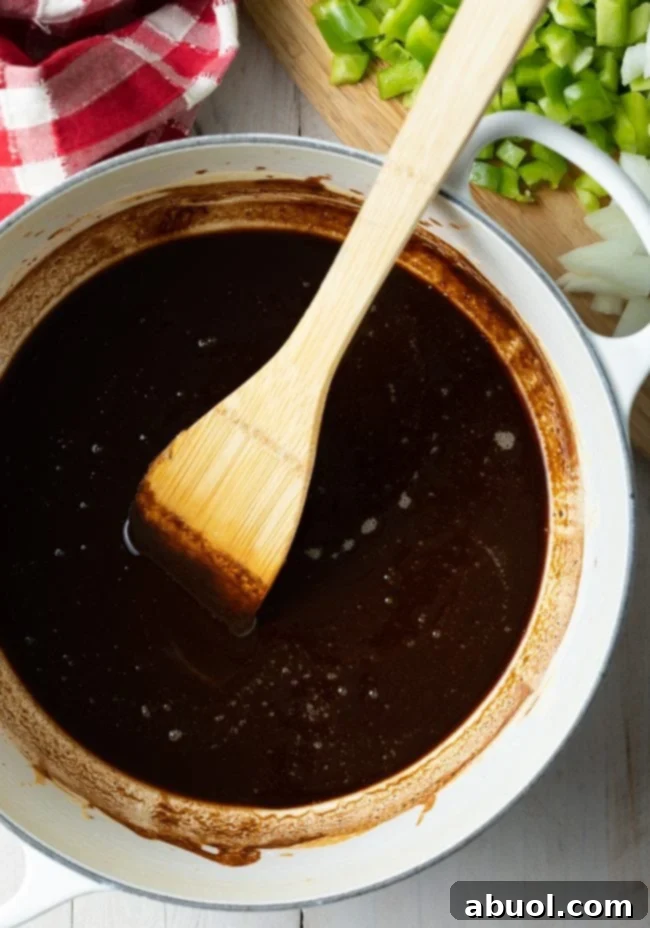
The roux is the cornerstone of any great gumbo. Its deep, rich flavor and color are paramount. In a large, heavy-bottomed 7-8 quart sauce pot, combine the flour, vegetable oil, and butter over medium-high heat. Whisk continuously and thoroughly to prevent any lumps. Cook the roux for a dedicated 30-40 minutes, stirring regularly. The goal is to achieve a deep, milk chocolate brown color. This slow cooking process is vital, as it toasts the flour, developing incredible nutty, complex flavors that define gumbo.
2. Efficient Prep: Mise en Place is Key
While your roux is slowly transforming, take advantage of the time to prepare your other ingredients. Finely chop the Andouille sausages, dice all your vegetables (onion, bell pepper, celery, garlic, habanero), and gather your fresh herbs. Having everything prepped and ready will make the subsequent steps smooth and enjoyable.
3. The Secret to Okra: De-Sliming for Perfection
One of the most crucial, yet often overlooked, steps when using fresh okra in gumbo is to remove its natural sliminess. This ensures your gumbo has a smooth, desirable texture without any gummy residue. In a smaller sauce pot, bring water to a boil over high heat, then add the white vinegar. Once boiling rapidly, add the chopped okra. Boil for just 3-4 minutes to significantly reduce the slime. Immediately drain the okra and set it aside.
4. Building the Flavorful Base
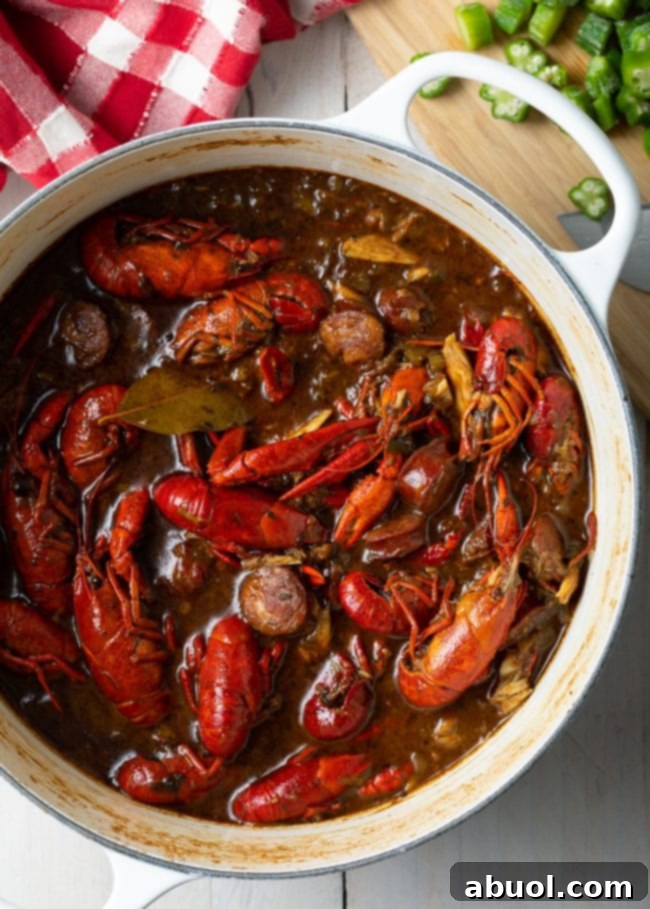
Once your roux has reached its ideal dark brown hue, it’s time to build the foundational flavors. Add the sliced Andouille sausages to the hot roux and fry for 1-2 minutes until slightly browned and fragrant. Next, incorporate the “Holy Trinity” – chopped onion, bell pepper, and celery – along with the minced garlic and habanero. Stir well and sauté for 8-10 minutes, allowing the vegetables to soften and their flavors to meld beautifully with the roux and sausage.
5. The Slow Simmer: Developing Depth
Pour in the seafood broth, Worcestershire sauce, dried thyme, Cajun seasoning, and the bay leaf. Stir everything thoroughly to combine. Now, add the crawfish (especially if they are whole or in shells) and the whole crabs. Reduce the heat to low or medium-low, cover the pot, and let the gumbo simmer gently for a full hour. This extended simmering time allows the flavors to deepen, the broth to enrich, and the seafood in shells to impart their essence.
6. Perfectly Cooked Rice
To minimize dishwashing and optimize timing, use the same smaller pot previously used for the okra to cook your long-grain white rice. Follow the package instructions carefully. Once cooked, fluff the rice with a fork and cover it to keep warm until serving. We recommend starting the rice just as the gumbo’s main simmering phase is ending, right before the gumbo enters its crucial resting period.
7. The Final Touches: Finishing with Delicate Seafood
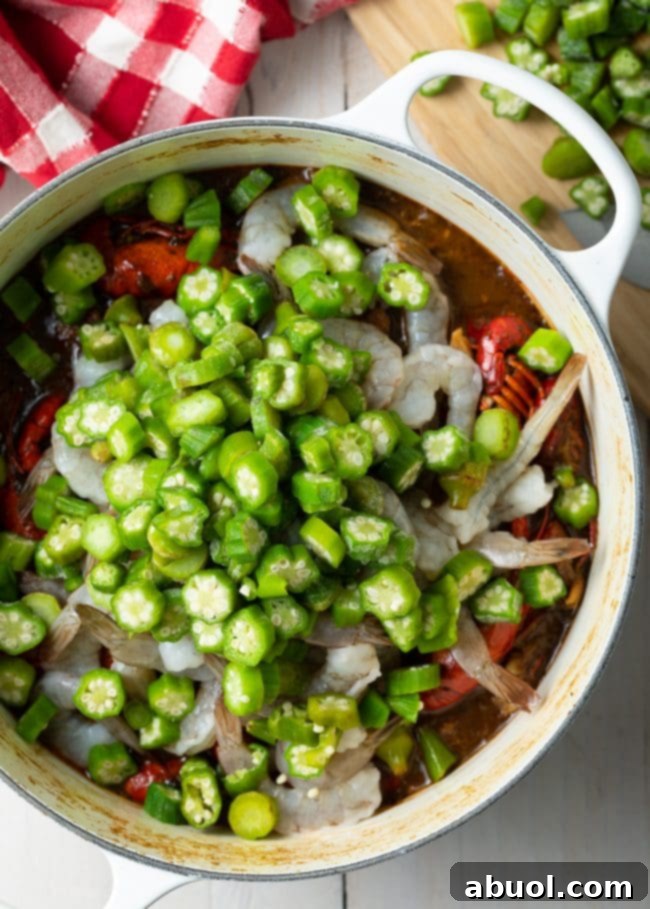
After the hour of slow simmering, it’s time to add the more delicate seafood. Stir in the large raw shrimp, shucked oysters (if using), and the de-slimed okra. If you’re using crab meat instead of whole crabs, add it now as well. Continue to simmer the gumbo for just another 5 minutes, or until the shrimp and oysters are opaque and perfectly cooked through. Be careful not to overcook the seafood, as it can become rubbery.
8. The Essential Rest: Marrying Flavors
This step is non-negotiable for a truly exceptional gumbo. Once the cooking is complete, cover the gumbo pot, turn off the heat, and allow it to rest for at least 30 minutes. This resting period is critical; it allows all the complex flavors to meld, deepen, and truly harmonize without the risk of overcooking the delicate seafood. It also helps the gumbo thicken slightly to its ideal consistency. We know it’s incredibly tempting to dive in when your kitchen smells absolutely divine, but trust us, this waiting period is worth every moment for the enhanced flavor!
9. Serving Your Masterpiece
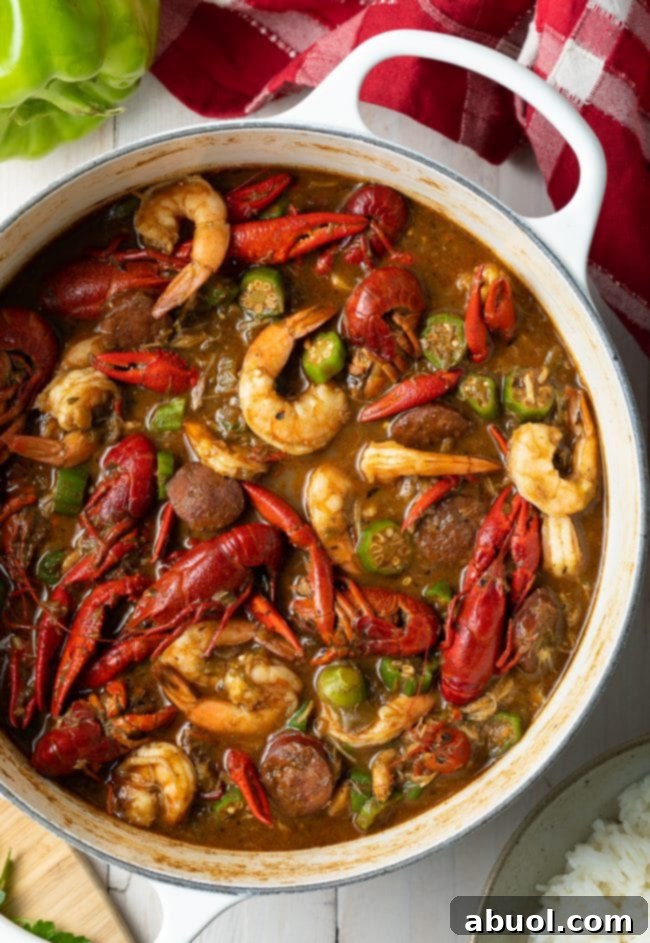
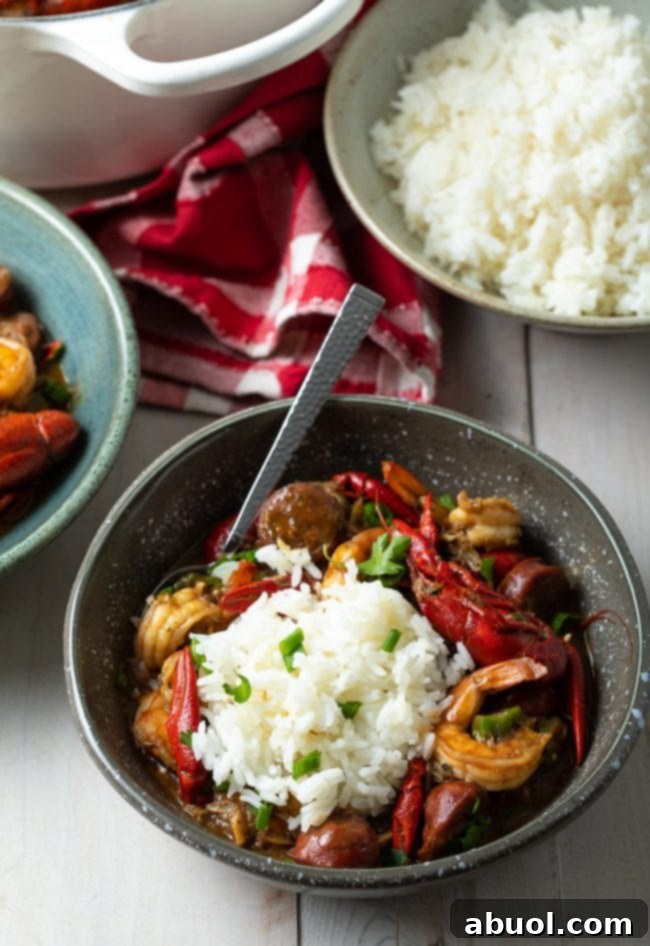
Before serving, gently rewarm the gumbo for 2-3 minutes if needed. Ladle generous portions into large bowls, add a heaping scoop of fluffy warm rice, and finish with a fresh sprinkling of chopped parsley and/or scallions. Serve immediately and savor the rich, comforting flavors of Louisiana.
Leftover Louisiana Gumbo Tips
Any leftover Louisiana Gumbo will store wonderfully in an airtight container in the refrigerator for up to 3 days. Many find that the flavors intensify and become even more delicious the following day, making it an excellent meal for lunch or dinner. When reheating, we highly recommend preparing a fresh batch of rice to accompany it for the best experience.
Exploring New Orleans Gumbo Variations
The beauty of gumbo lies in its versatility and adaptability. While our recipe offers a rich seafood medley, there are many traditional and delightful variations you might explore:
- Okra’s Role: Okra is a traditional thickening agent and adds a distinct flavor. However, many gumbo variations, particularly those from the Cajun country, do not include okra, relying solely on the roux for thickening. If you are hesitant about okra or simply prefer a version without it, feel free to omit it from this recipe. The gumbo will still be wonderfully flavorful.
- Seafood Selection: As mentioned, our recipe embraces a generous mix of seafood for maximum flavor depth. After sampling countless celebrated gumbos in New Orleans, we’ve observed that many popular versions don’t always feature crawfish (especially in shells) or oysters. Our personal culinary philosophy holds that seafood cooked in its shell imparts an incomparably richer, more profound seafood essence to the broth. However, this is not a strict requirement. The paramount consideration is to use the absolute freshest seafood you can source, regardless of the type. High-quality, fresh ingredients are always the key to a superior gumbo.
- Chicken and Sausage Gumbo: If you or your guests aren’t fond of seafood, or if you simply crave a different classic, a traditional chicken and sausage gumbo is a fantastic alternative. Simply replace the seafood components with shredded cooked chicken. Add the pre-cooked shredded chicken to the gumbo during the final simmering stage, allowing it just enough time to warm through and absorb the delicious flavors without becoming dry.
Get the Complete (Printable) New Orleans Seafood Gumbo Recipe Below. Enjoy!
Substituting Seafood in Gumbo: A Flexible Approach
Access to specific types of seafood can vary greatly depending on your location. While crawfish and small gumbo crabs contribute wonderfully to this recipe, don’t hesitate to substitute them with other fresh, high-quality seafood that is readily available to you. The key is understanding how different seafood cooks and integrates into the gumbo.
Follow this simple guideline for seafood additions:
- If the seafood is in its shells (like whole crabs, unpeeled shrimp, or mussels/clams), add it during the longer simmering phase (approximately 1 hour). The shells will infuse the broth with deep, oceanic flavors.
- If the seafood is delicate and not in shells (such as peeled and deveined shrimp, scallops, or flaky white fish like snapper or cod), add it towards the very end of the cooking process. A quick simmer of only about 5 minutes is usually sufficient to cook these items through without making them tough or rubbery.
This flexibility ensures you can enjoy a delicious homemade seafood gumbo no matter what fresh catches are available in your local market.
Explore More Cajun and Creole-Inspired Recipes
If you’ve enjoyed delving into the rich world of New Orleans cuisine with this gumbo recipe, you’ll surely love exploring other fantastic dishes from the region. Expand your culinary repertoire with these other flavorful Cajun and Creole-inspired recipes:
- Creamy Skillet Cajun Chicken and Mushrooms Recipe
- Cajun Chicken and Rice Casserole
- Easy Red Beans and Rice Recipe
- Cajun Hot Shrimp Dip Recipe
- Cajun Dirty Rice Recipe
- Cajun Boiled Peanuts Recipe
- Classic Muffuletta Sandwiches
Below, you’ll find the complete, printable recipe card with detailed instructions and nutrition information, including calories, protein, sodium, fiber, and vitamin percentages. Enjoy crafting your own authentic taste of Louisiana!
Print Recipe
Leave a Review »
New Orleans Gumbo Recipe
Cook Time: 2 hours
Rest Time: 30 minutes
How to Make New Orleans Seafood Gumbo – This homemade gumbo recipe is loaded with lots of fresh seafood and intense Cajun flavors for a deliciously bold taste of Louisiana.
Ingredients
- ½ cup all-purpose flour
- ¼ cup vegetable oil
- ¼ cup butter
- 12 ounces fresh or frozen okra, chopped
- 2 tablespoons white vinegar
- 2 cups dried long grain rice
- 12 ounces Andouille sausage, sliced
- 1 large sweet onion, peeled and chopped
- 1 large green bell pepper, chopped
- 1 cup chopped celery
- 4-5 cloves garlic, minced
- 1 habanero pepper, seeded and minced (or serrano)
- 8 cups seafood stock
- 1 tablespoon Worcestershire sauce
- 2 teaspoons dried thyme
- 2 teaspoons Cajun seasoning
- 1 bay leaf
- 1 pound crawfish (whole if possible)
- 1 pound small “gumbo crabs” or blue crabs (or crab meat)
- 1 pound large raw shrimp, cleaned
- 1 pint shucked oysters, optional
- 1 cup chopped parsley and/or chopped scallions for garnish
Instructions
- Make the Roux: Set a large 7-8 quart saucepot over medium-high heat. Add the flour, oil, and butter. Whisk well to break up any clumps. Cook the roux for 30-40 minutes, whisking regularly, until it is the color of milk chocolate.
- Prep Ingredients: Meanwhile, chop the sausages, all the vegetables, and herbs.
- De-Slim the Okra: Set a smaller saucepot filled with water over high heat. Add the vinegar. Once boiling, add the chopped okra. Boil for 3-4 minutes to reduce the slime. Then drain and set aside.
- Build the Base: Once the roux is a dark rich brown color, add in the andouille sausages. Fry it in the roux for 1-2 minutes, then add in the chopped onion, bell pepper, celery, garlic, and habanero. Stir and sauté for 8-10 minutes.
- Slow Simmer: Add in the seafood broth, Worcestershire sauce, thyme, Cajun seasoning, bay leaf. Stir well. Then mix in the crawfish and whole crabs. Simmer on low for 1 hour.
- Cook the Rice: Use the same smaller pot you used for the okra to cook the rice according to the package instructions. Once cooked, fluff the rice, and cover until ready to use.
- Finish: Now add the shrimp, oysters (plus crabmeat if using), and okra. Simmer another 5 minutes, or until seafood is cooked through.
- Rest: Cover the gumbo pot and turn off the heat. Let the gumbo rest for at least 30 minutes, so all the flavors have longer to mix and mingle, without overcooking the seafood.
- To Serve: Rewarm the gumbo, if needed, for 2-3 minutes. Then serve it in large bowls with a heaping scoop of rice, and a sprinkling of parsley and/or scallions.
Notes
Depending on where you live, it might be tricky to find certain types of seafood. You can certainly swap what is fresh and available to you for the crawfish and small crabs. Just follow the rule: if it’s in shells, simmer for an hour. If it’s not, only simmer for 5 minutes to avoid overcooking.
Nutrition
Calories: 865kcal,
Carbohydrates: 72g,
Protein: 57g,
Fat: 38g,
Saturated Fat: 18g,
Cholesterol: 306mg,
Sodium: 2905mg,
Potassium: 1215mg,
Fiber: 5g,
Sugar: 6g,
Vitamin A: 2827IU,
Vitamin C: 77mg,
Calcium: 371mg,
Iron: 7mg
Cuisine: Cajun
Cook It? Love It? Rate It! YOU can help this recipe RANK on Google – TAP 5 STARS so other hungry people can find it. Thank you!