
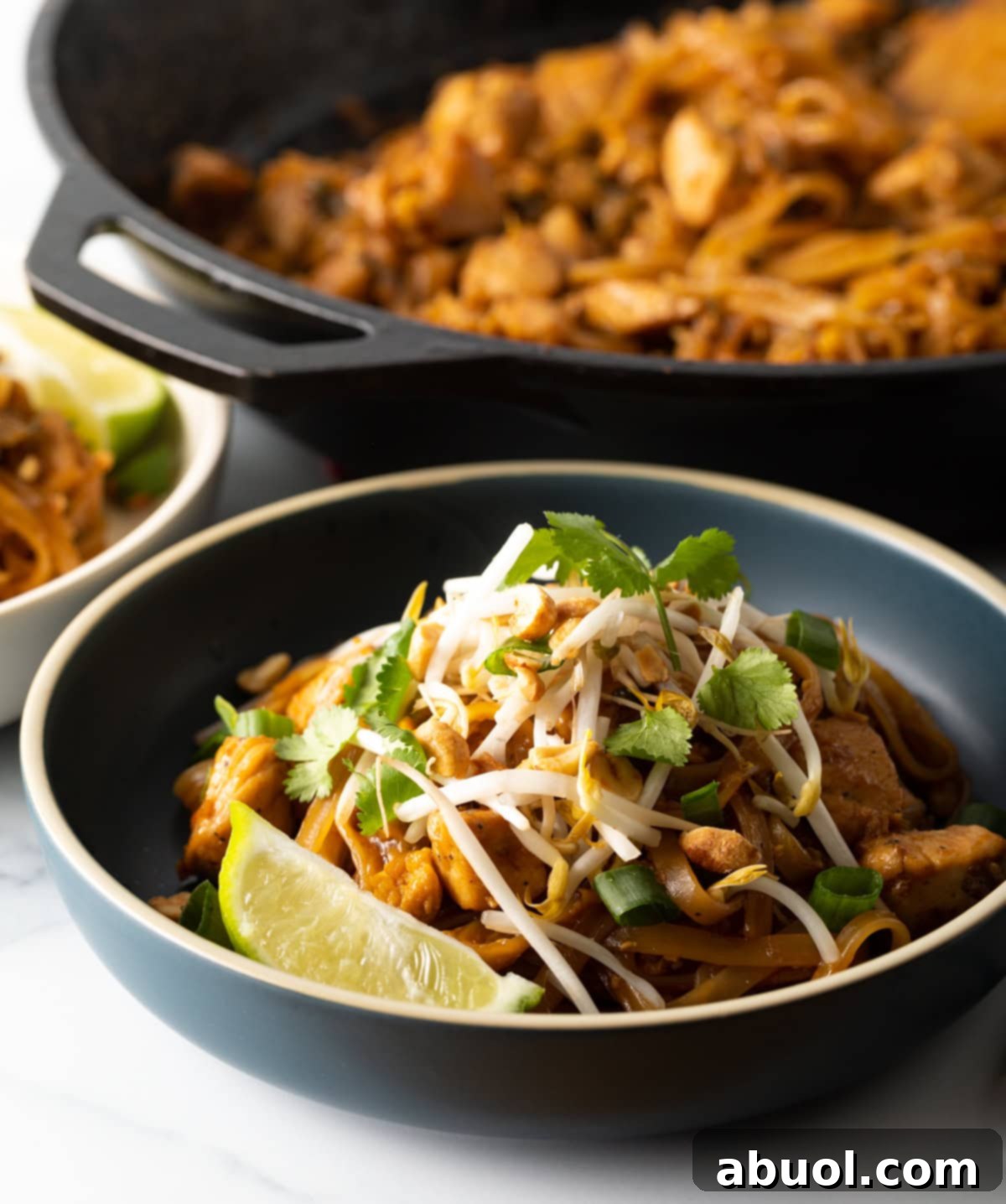
Experience the vibrant flavors of Thailand right in your own kitchen with this incredibly easy Chicken Pad Thai recipe. Forget expensive takeout – this homemade rendition captures all the authentic taste and appeal you crave, effortlessly prepared in under 30 minutes with readily available ingredients!
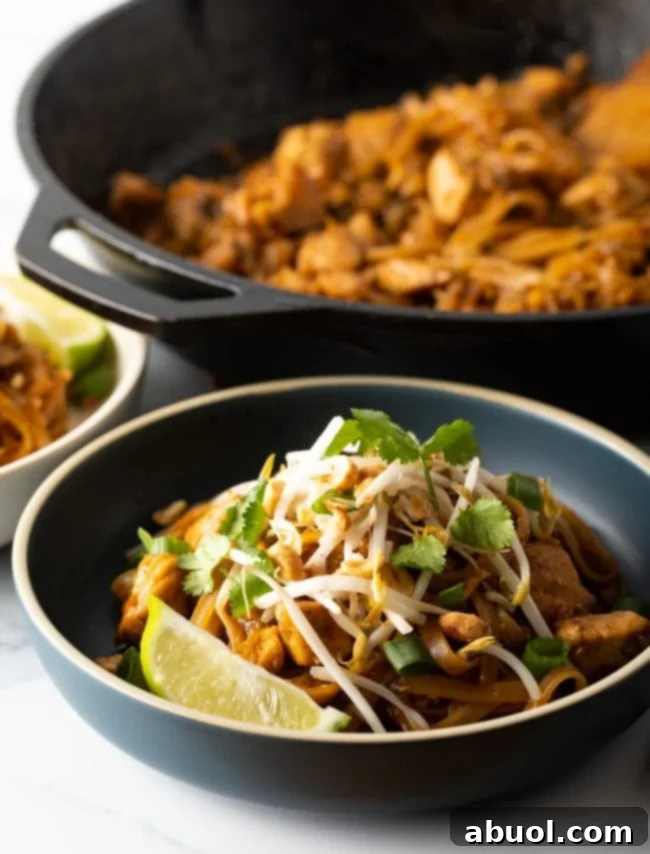
Why This Easy Chicken Pad Thai Recipe Will Become Your Go-To
Craving the sweet, sour, salty, and spicy dance of authentic Pad Thai? There’s no need to reach for your phone or worry about delivery fees and long waits. Our simplified yet incredibly flavorful Chicken Pad Thai recipe brings the magic of Thai cuisine directly to your dinner table in less than half an hour. Imagine, fresh, hot, and exquisitely balanced Pad Thai, crafted by your own hands, saving you time and money.
This isn’t just another quick meal; it’s a culinary triumph that proves restaurant-quality Thai food is entirely achievable at home. Whether you’re a seasoned chef or a kitchen novice, this recipe is designed for success. Many of the ingredients are likely already staples in your pantry, especially if you enjoy Asian cooking. And if not, don’t fret – everything can be easily sourced from your local grocery store.
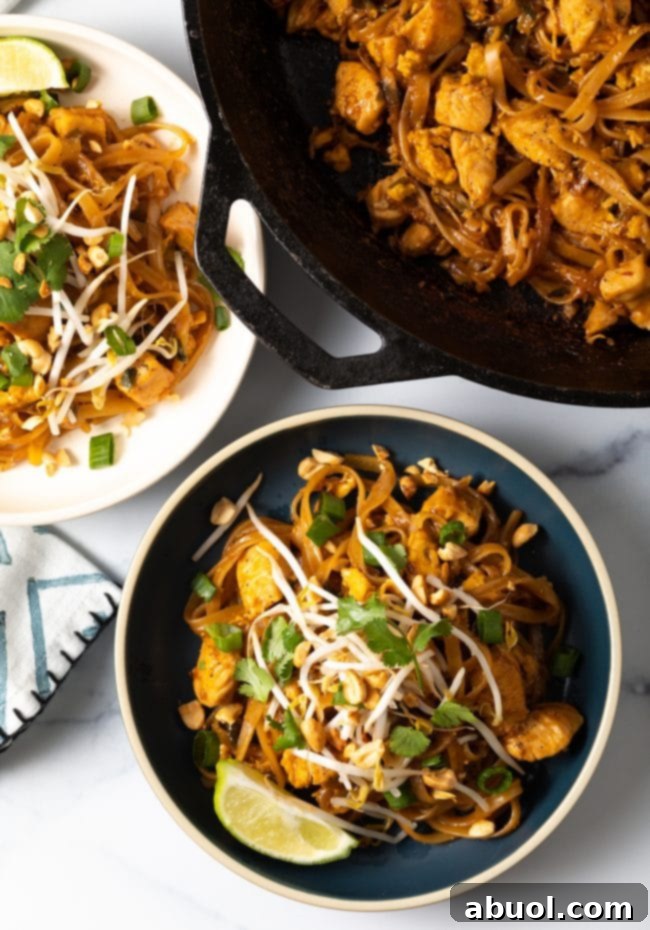
We’ve meticulously designed this recipe to include all the fundamental elements of traditional Pad Thai: tender chicken, perfectly scrambled eggs, crisp green onions, aromatic garlic, crunchy mung bean sprouts, classic rice noodles, and a rich, complex sauce that hits every note. Garnished with fresh cilantro and toasted peanuts, each bite is a burst of perfectly balanced, fresh, and utterly delicious flavor. It’s truly a “one-pan wonder” that minimizes cleanup while maximizing taste, promising a gourmet experience without the gourmet effort.
Essential Ingredients for Your Homemade Pad Thai
Crafting the perfect Pad Thai starts with selecting the right ingredients. Each component plays a vital role in achieving that signature sweet, sour, savory, and spicy flavor profile. Here’s what you’ll need to create this incredible dish:
For the Flavorful Stir-Fry
- Boneless Skinless Chicken Breasts: Cut into uniform bite-sized pieces for even cooking and easy eating. Chicken breasts are lean and absorb the sauce beautifully.
- Pad Thai Noodles (Rice Noodles): The heart of the dish! These flat, gluten-free rice noodles are essential for the authentic texture. Look for them in the international or Asian foods aisle of your supermarket. Ensure they are specifically “Pad Thai noodles” for the best results, as their width and chewiness are key.
- Peanut Oil or Coconut Oil: Both oils have a high smoke point suitable for stir-frying and impart a subtle, complementary flavor to the dish. Peanut oil is a classic choice for Asian cooking.
- Large Eggs: At room temperature, eggs scramble more evenly. They add richness and a delicate texture, binding the other ingredients together.
- Green Onions: Chopped for a mild, oniony bite and a splash of color. They contribute freshness and a slight pungency.
- Mung Bean Sprouts: These add a wonderfully refreshing crunch and a subtle, earthy flavor that is characteristic of authentic Pad Thai. Stir them in at the end to maintain their crispness.
- Garlic Cloves: Minced fresh garlic is indispensable for building the aromatic base of any good stir-fry. It provides a pungent, savory depth.
For the Irresistible Pad Thai Sauce
The sauce is arguably the most critical element, bringing together all the distinct tastes that define Pad Thai. Achieving the right balance of sweet, sour, salty, and spicy is key:
- Brown Sugar (packed): Provides the essential sweetness, balancing the sour and savory notes, and contributing to the sauce’s glossy finish.
- Soy Sauce: Offers a deep umami and salty foundation. For a gluten-free or soy-free option, coconut aminos can be used as a delicious alternative.
- Lime Juice (freshly squeezed): Fresh lime juice is paramount for that bright, tangy, and invigorating sour component. Bottled lime juice simply won’t yield the same vibrant flavor.
- Fish Sauce: Non-negotiable for authentic Pad Thai! This fermented anchovy sauce delivers a powerful umami depth and savory saltiness that cannot be replicated by any other ingredient. Don’t be tempted to skip or substitute it.
- Creamy Peanut Butter (optional): While not strictly traditional in all Pad Thai variations, a tablespoon of creamy peanut butter can add a wonderful richness, nutty flavor, and a smoother consistency to the sauce. It’s highly recommended if you appreciate a deeper, more indulgent taste.
- Chile Garlic Sauce: Adjust to your preference for heat. This adds a fantastic spicy kick and another layer of garlicky flavor. Sriracha can be a substitute, but chili garlic sauce offers a richer, chunkier texture.
Delightful Optional Toppings
- Fresh Cilantro Leaves: A sprinkle of fresh cilantro provides a bright, herbaceous contrast and a beautiful visual appeal.
- Lightly Chopped Peanuts: Toasted and chopped peanuts add a satisfying crunch and enhance the nutty undertones of the dish, providing textural complexity.
Step-by-Step Guide: How To Make Authentic Chicken Pad Thai
Creating this flavorful dish is simpler than you think! Follow these steps for a perfect Pad Thai every time:
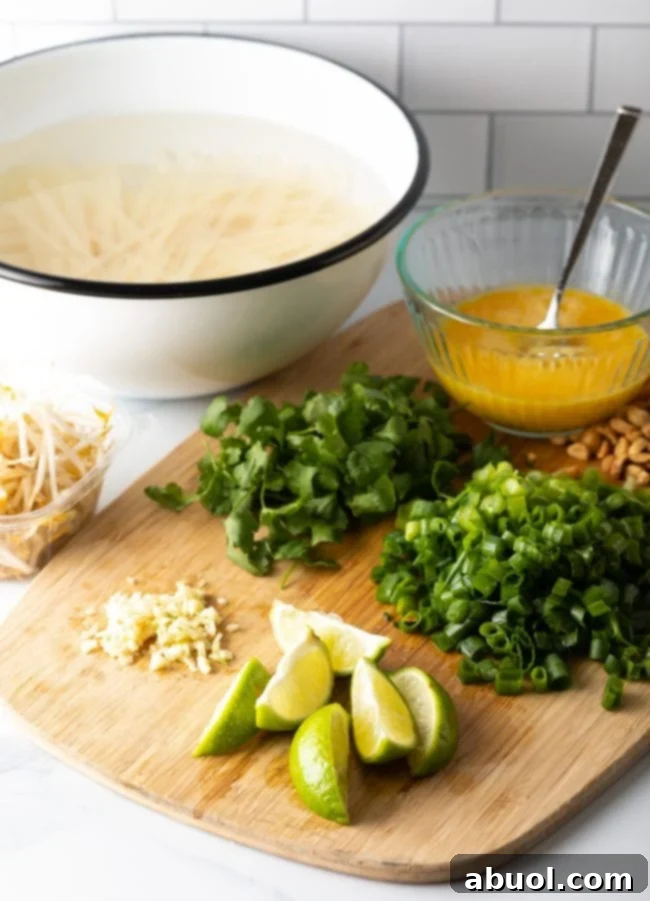
- Prepare the Noodles: Begin by placing your Pad Thai rice noodles in a large bowl. Completely submerge them in cold water. Allow them to soak for 25 to 35 minutes, or until they become flexible and pliable but are not yet soft. This pre-soaking is crucial as it prevents the noodles from becoming mushy when cooked in the pan.
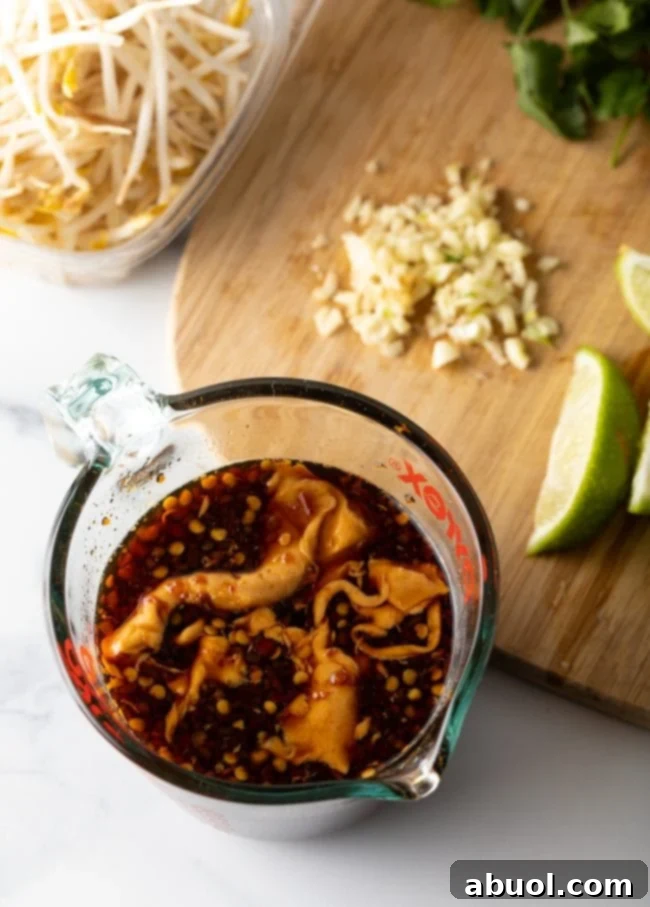
- Whisk the Sauce: In a separate medium-sized bowl, combine all the ingredients for the Pad Thai sauce: brown sugar, soy sauce, fresh lime juice, fish sauce, creamy peanut butter (if using), and chili garlic sauce. Whisk vigorously until well combined. If you’re including peanut butter, it may not fully dissolve until heated in the pan, which is perfectly normal. Set this flavorful sauce aside.
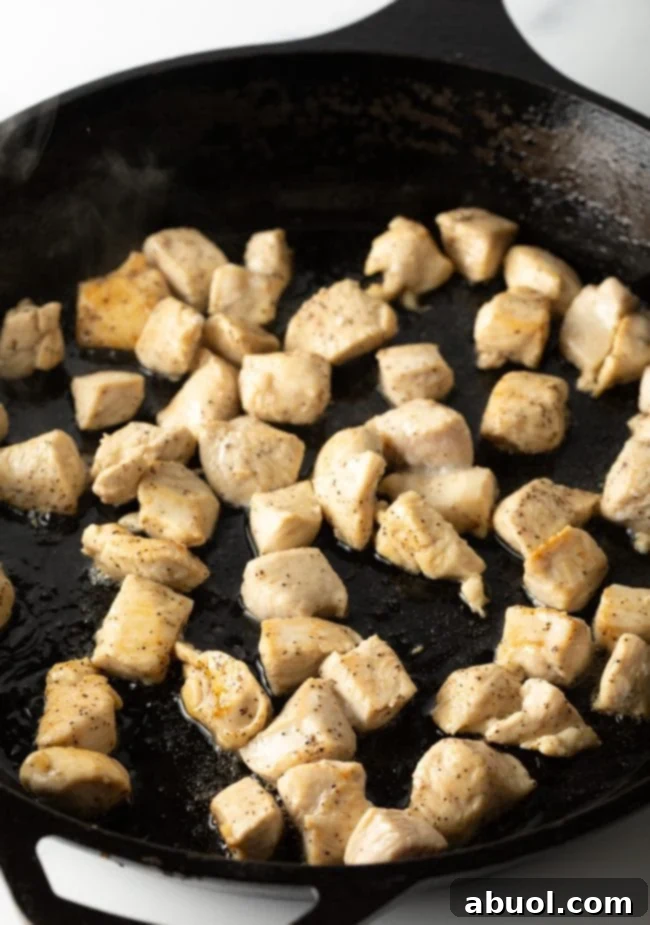
- Cook the Chicken: Lightly season your bite-sized chicken pieces with salt and pepper. Heat 1 tablespoon of peanut or coconut oil in a large wok or a deep, large skillet over medium to medium-high heat. Once the oil shimmers, add the chicken pieces and sauté for about 3 to 5 minutes, or until they are mostly cooked through and tender. Avoid overcrowding the pan, as this can steam the chicken instead of searing it. Cook in batches if necessary.
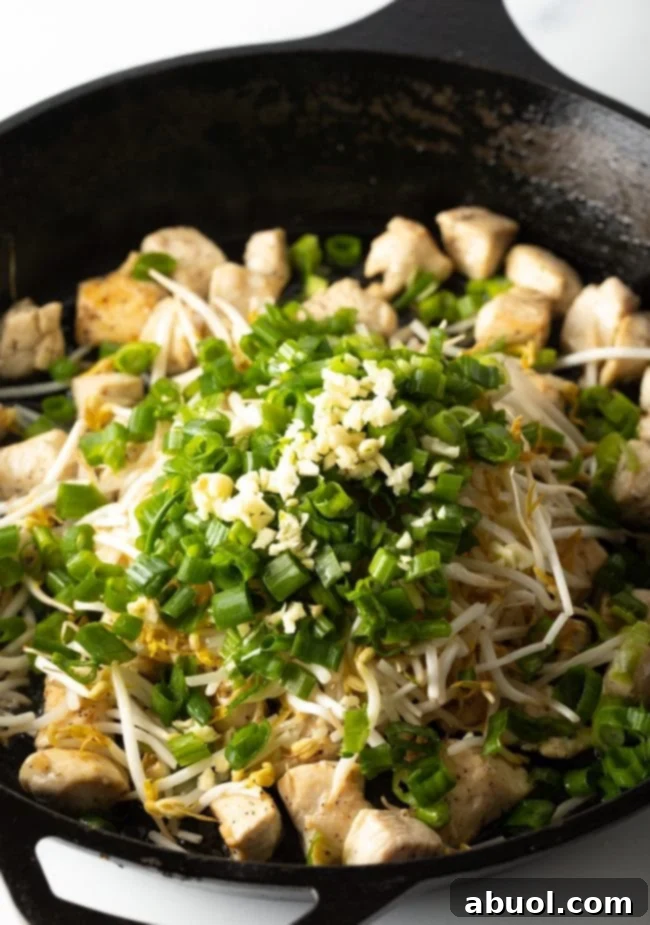
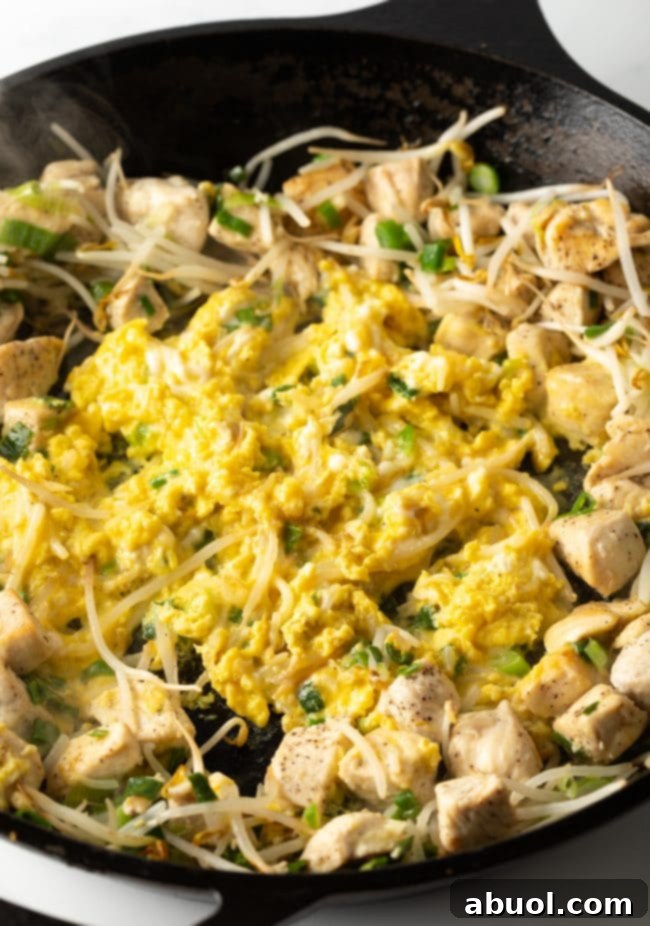
- Sauté Aromatics and Eggs: To the cooked chicken, add the minced garlic, chopped green onions, and mung bean sprouts. Stir-fry for just 1 to 2 minutes until fragrant and the sprouts are slightly tender but still crisp. Next, push the chicken and vegetable mixture to one side of the pan. Add the remaining 1 tablespoon of oil to the cleared space. Pour in the beaten eggs and scramble them quickly until they are firm. Once scrambled, gently incorporate the eggs into the chicken and vegetable mixture, mixing everything together.
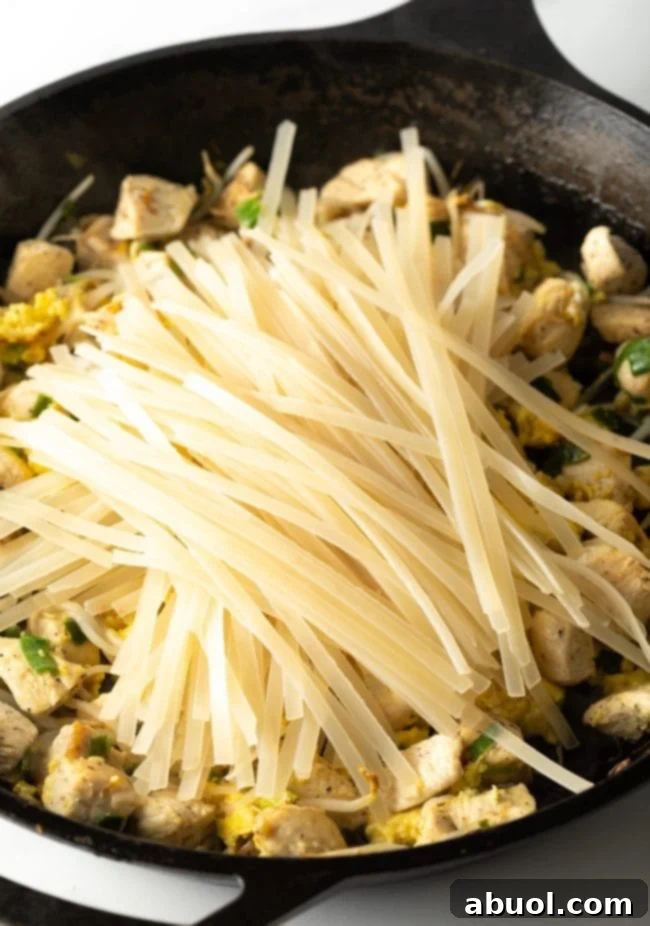
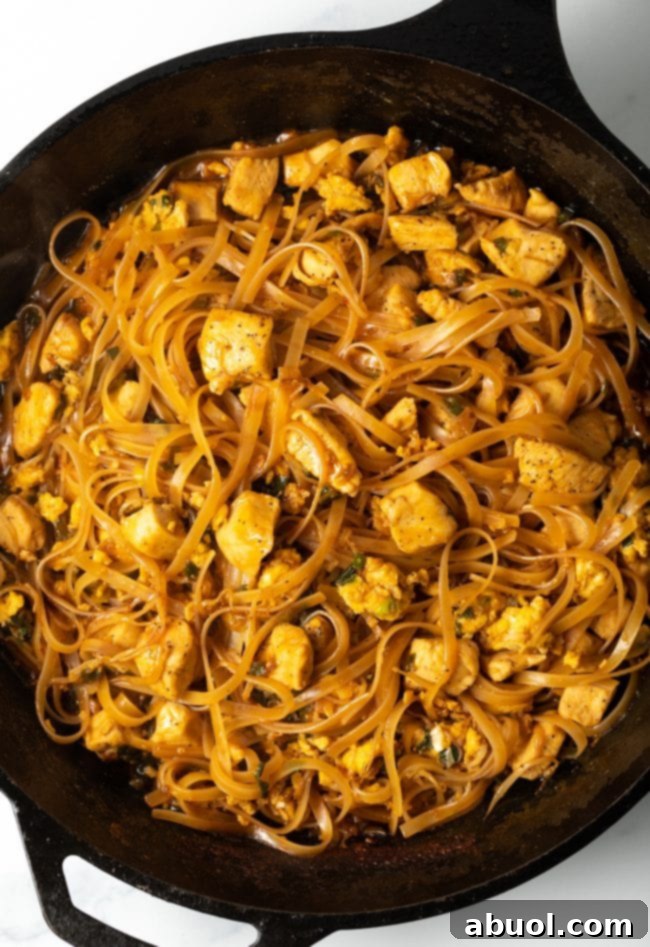
- Combine and Finish: Carefully drain the soaked Pad Thai noodles very well. Add the drained noodles to the pan, then pour the prepared Pad Thai sauce over everything. Using tongs or a spatula, gently stir and toss to incorporate all the ingredients evenly. Cook for another 3 to 5 minutes, continuously stirring gently. Be very careful not to overcook the noodles, as they can become mushy quickly. If the sauce appears too thick, you can thin it out slightly by stirring in a few tablespoons of water until it reaches your desired consistency.
Pro Tip for Noodle Perfection: Pad Thai rice noodles are delicate! They tend to break apart if overcooked or stirred too aggressively. Treat them gently during the cooking process to maintain their perfect chewy texture.
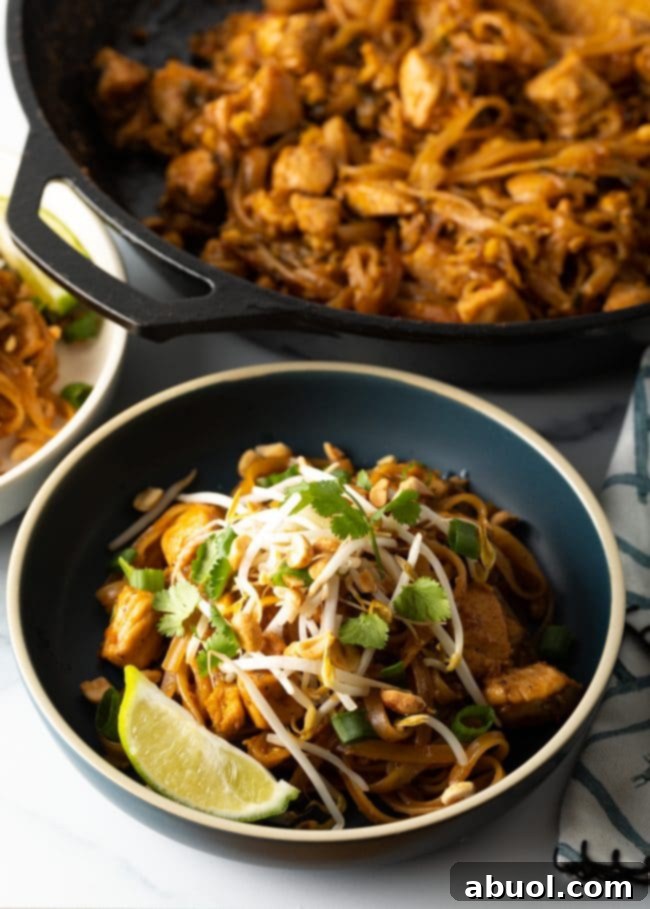
Once your homemade Pad Thai is ready, serve it warm with traditional garnishes. A generous sprinkle of chopped peanuts and a handful of fresh cilantro leaves will elevate the dish, adding both visual appeal and an extra layer of flavor and texture. Enjoy your culinary creation!
Get the Full (Printable) Chicken Pad Thai Recipe Below. Enjoy!
Pad Thai Your Way: Recipe Variations and Dietary Considerations
One of the beauties of homemade Pad Thai is its adaptability. While this recipe provides an authentic foundation, don’t hesitate to customize it to your taste preferences or dietary needs:
- Noodle Alternatives: While true Pad Thai demands rice noodles for their distinct texture and gluten-free nature, finding them can sometimes be a challenge. If you absolutely cannot locate rice noodles, some recipes suggest using fettuccine as a substitute. Be aware that the texture and flavor will differ significantly. Cook wheat fettuccine pasta according to package directions until al dente before incorporating into the dish. For a low-carb alternative, spiralized zucchini noodles or shirataki noodles can be used, though they will greatly change the overall feel of the dish.
- Protein Power-Ups: Chicken is a classic, but your Pad Thai can easily feature other proteins. Try adding fresh peeled shrimp for a seafood twist, or extra-firm tofu cubes for a vegetarian-friendly version. If using tofu, press it thoroughly to remove excess water and pan-fry until golden brown before adding to the stir-fry. Sliced beef or pork can also be delicious additions, ensuring they are thinly sliced and cooked quickly.
- Vibrant Veggie Boost: Enhance the nutritional value and texture by stirring in more vegetables. Sliced red bell pepper, julienned carrots, tender broccoli florets, snow peas, or baby corn are all excellent choices. Add them with the chicken or garlic/green onions, allowing them to cook until crisp-tender. This adds color, fiber, and additional layers of flavor.
- Peanut-Free Pad Thai: For those with peanut allergies or simply not a fan, making this dish peanut-free is simple. Just omit the creamy peanut butter from the sauce and skip the chopped peanuts as a topping. The dish will still be incredibly flavorful thanks to the other robust ingredients. You could also explore using tahini or sunbutter in the sauce for a different nutty depth, if allergies allow.
- Make it Vegan/Vegetarian: To make this recipe suitable for a vegan or vegetarian diet, substitute the chicken with pressed and pan-fried tofu or tempeh. Replace the eggs with a “tofu scramble” or simply omit them. Crucially, substitute the fish sauce with a vegetarian fish sauce alternative or an equal amount of additional soy sauce/tamari and a pinch of seaweed powder for umami.
Frequently Asked Questions About Homemade Pad Thai
Why should I consider adding peanut butter to my Pad Thai?
Adding a small amount of creamy peanut butter to the Pad Thai sauce is an optional but highly recommended step for many home cooks. It significantly deepens the flavor profile, adding a wonderful richness and a subtle nutty undertone that complements the other vibrant flavors. It can also contribute to a slightly thicker, more luxurious sauce texture. If you’ve found some Pad Thai dishes to be a bit bland or lacking in depth, peanut butter can be the secret ingredient to elevate your homemade version.
What does authentic Pad Thai taste like?
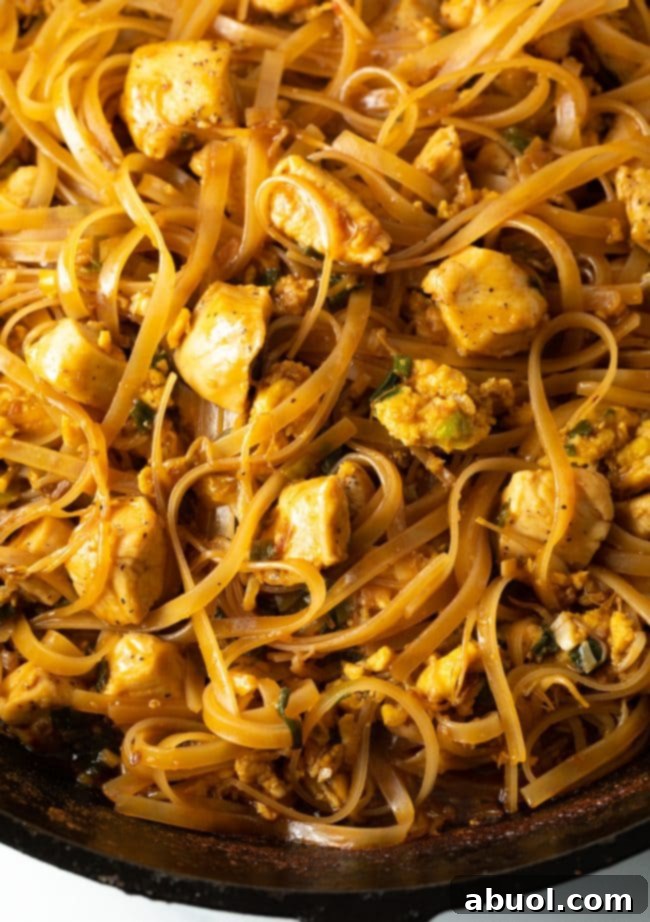
Authentic Pad Thai is a symphony of contrasting and harmonious flavors and textures. It’s renowned for its perfect balance of sweet, sour, salty, and a hint of spice. You’ll experience the savory depth of fish sauce, the bright tang of lime, the sweet notes of brown sugar, and the subtle heat from chili garlic sauce. The texture is equally delightful: thick, chewy rice noodles, tender protein (like chicken or shrimp), crunchy mung bean sprouts, and the satisfying bite of chopped peanuts. Each mouthful offers a complex, yet incredibly satisfying, culinary experience.
How long will this homemade Pad Thai recipe last in the fridge?
Leftover Pad Thai can be stored in an airtight container in the refrigerator for approximately 2 to 3 days. It’s best consumed within this timeframe, as the delicate rice noodles tend to absorb moisture and can become somewhat soggy if stored for too long. For reheating, simply warm it gently in the microwave or on the stovetop over low heat. Interestingly, some people even enjoy cold Pad Thai straight from the fridge!
Can I freeze Pad Thai?
Yes, you can freeze Pad Thai, though with a slight caveat regarding noodle texture. To freeze, transfer the cooked chicken and noodles into a freezer-safe container, ensuring it’s sealed tightly. It can be stored in the freezer for 3 to 6 months. When ready to enjoy, thaw it overnight in the refrigerator before gently rewarming. Be aware that upon thawing and reheating, the rice noodles may become a bit softer than when freshly made. However, the flavors will largely remain intact and delicious.
What kind of noodles are best for Pad Thai?
For truly authentic Pad Thai, flat, wide rice noodles are essential. They are typically labeled as “Pad Thai noodles” or “rice stick noodles” in Asian markets or the international aisle of larger grocery stores. Their texture is crucial for absorbing the sauce and providing that characteristic chewiness. Avoid glass noodles or vermicelli, as they have a different consistency and won’t give you the same authentic experience.
Explore More Thai-Inspired Recipes!
If you’ve fallen in love with the flavors of Thailand through this Pad Thai recipe, you’re in luck! Thai cuisine offers a vast array of delightful dishes that are just as exciting and often surprisingly easy to recreate at home. Expand your culinary horizons with some of our other favorite Thai-inspired recipes:
- Thai Red Curry Grilled Chicken Salad Recipe
- Thai Quinoa Salad Recipe
- Nam Sod Lettuce Wraps (or Salad)
- Thai Pumpkin Curry (Vegan!)
- Spicy Thai Chicken Soup Recipe
- Classic Thai Fried Rice Recipe
- Thai Coconut Curry Hummus Recipe
- Keto Thai Larb Rolls Recipe
- Thai Baked Turkey Meatballs Recipe
- Thai Mango Sticky Rice Recipe

Print Recipe
4.86 stars (7 reviews)
Leave a Review »
Easy Chicken Pad Thai Recipe
This homemade Thai pasta dish has all the flavor and appeal of authentic Pad Thai from your favorite takeout restaurant, but is easy to make in under 30 minutes with simple ingredients!
Video
Ingredients
For the Stir-Fry:
- 1 pound boneless skinless chicken, cut into bite-size pieces.
- 8 ounces pad Thai noodles (rice noodles)
- 2 tablespoons peanut oil or coconut oil
- 3 large eggs
- 6 green onions, chopped
- 2 cups mung bean sprouts
- 2 cloves garlic, minced
For the Sauce:
- 1/4 cup brown sugar, packed
- 1/4 cup soy sauce
- 1/4 cup fresh lime juice
- 2 tablespoons fish sauce
- 1 tablespoon creamy peanut butter* (optional)
- 3-5 teaspoons chile garlic sauce
Toppings:
- 1/3 cup fresh cilantro leaves
- 1/3 cup peanuts, lightly chopped
Instructions
- Place the noodles in a large bowl. Completely cover them with cold water and soak for 25-35 minutes, until slightly pliable.
- In a separate bowl, mix the sauce ingredients together. Set aside. (If adding the peanut butter, it won’t completely mix in until heated.)
- Generously salt and pepper the chicken pieces. Set a wok or large deep pan over medium heat and add 1 tablespoon of the oil. Sauté the chicken until mostly cooked, 3-5 minutes.
- Stir in the garlic, green onions, and bean sprouts. Cook for 1-2 minutes. Push the ingredients to the sides, and scramble the eggs in the middle of the pan until firm. Mix all ingredients together.
- Drain the noodles well, then add the noodles and the prepared sauce to the pan. Stir gently to incorporate, cooking another 3-5 minutes, careful not to overcook the noodles. Add 2-4 tablespoons water if needed to thin the sauce. Serve warm topped with peanuts and cilantro.
Notes
*Adding a little peanut butter to the sauce gives the Pad Thai a deeper, richer flavor. It is not necessary, but delicious!
Leftovers will last in an airtight container in the fridge for about 2 to 3 days before the noodles start to get soggy.
Reheat leftover Pad Thai in the microwave, or just eat it cold from the fridge. It’s delicious both ways!
To Freeze: Store this recipe in a suitable freezer container and keep it in the freezer for 3 to 6 months. Let it thaw out in the fridge overnight before rewarming gently. Be aware that the noodles will be a bit softer after freezing, but the dish will still be very flavorful!
Nutrition
Serving: 8 ounces, Calories: 405 kcal, Carbohydrates: 46g, Protein: 24g, Fat: 13g, Saturated Fat: 2g, Cholesterol: 130mg, Sodium: 1289mg, Potassium: 516mg, Fiber: 2g, Sugar: 11g, Vitamin A: 320IU, Vitamin C: 9.8mg, Calcium: 59mg, Iron: 2.1mg
⭐️⭐️⭐️⭐️⭐️ Cook It? Love It? Rate It! YOU can help this recipe RANK on Google – TAP 5 STARS so other hungry people can find it. Thank you!