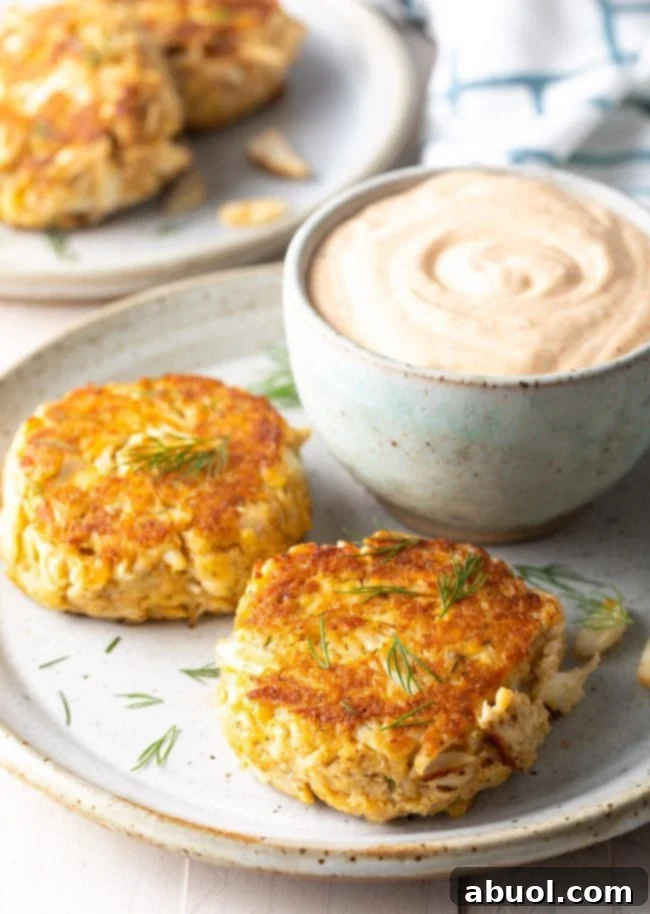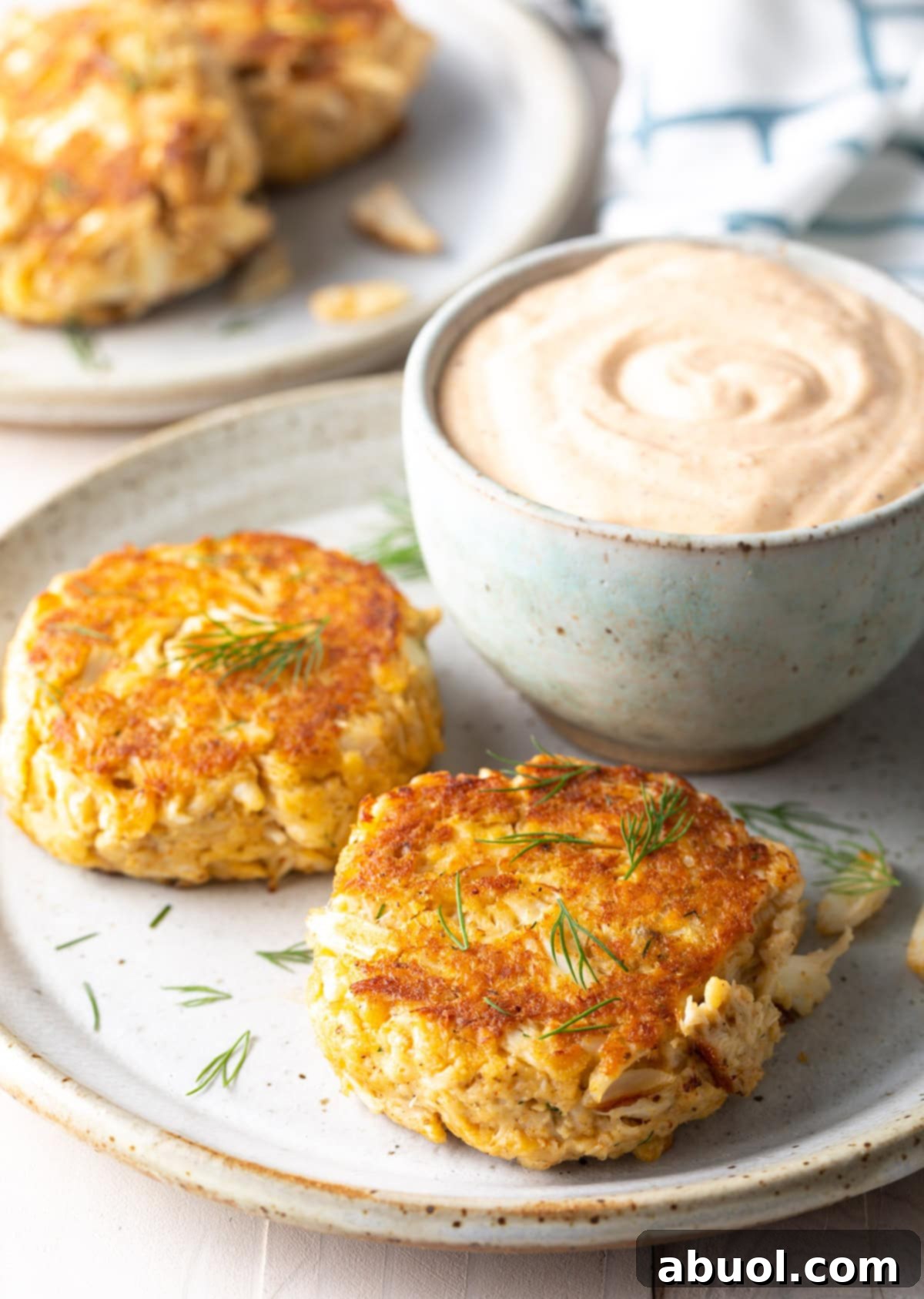
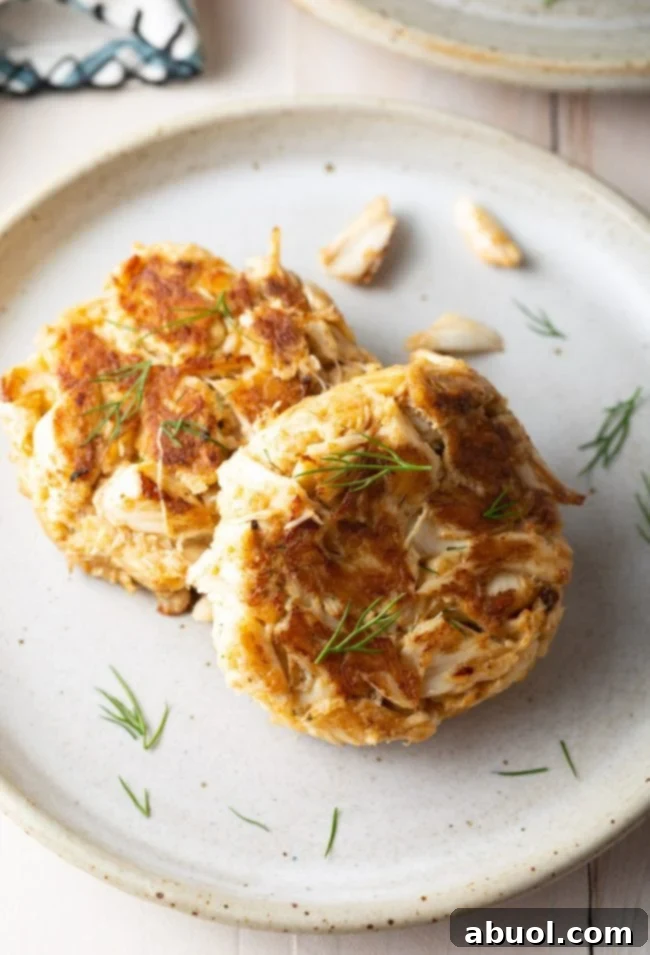
Discover the ultimate recipe for Maryland-style Pan Seared Crab Cakes. These culinary gems are generously packed with succulent, fresh crab meat, enhanced by a symphony of zesty seasonings, and perfectly complemented by a creamy homemade remoulade or classic tartar sauce.

The Essence of Maryland Crab Cakes
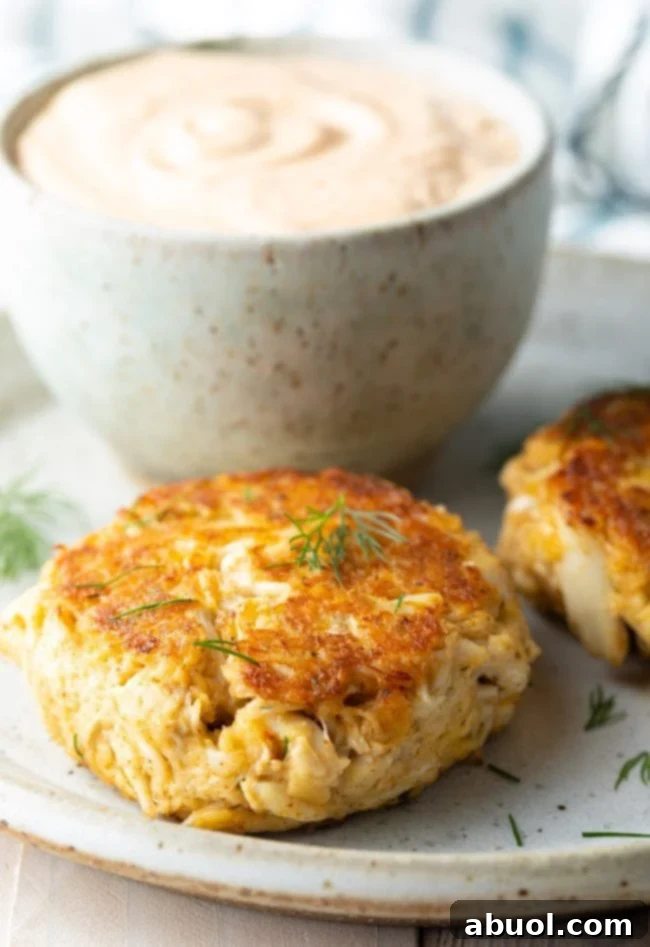
For me, the gold standard for exceptional Pan Seared Crab Cakes lies in the authentic Maryland-style preparation. This approach prioritizes the natural sweetness and delicate texture of the crab meat itself, incorporating minimal filler. The result is a crab cake that is predominantly composed of generous chunks of premium crab, bound together by just a hint of crumb, egg, and a carefully selected blend of seasonings designed to elevate, not overpower, the incredible flavor of the fresh crab.
Our meticulously crafted Maryland-style crab cake recipe takes this principle a step further by combining both fresh jumbo lump crab meat and finely shredded crab meat. This unique combination ensures each bite is incredibly meaty and tender, creating a rich texture that requires even less binding agent. The shredded crab meat not only helps to naturally bind the larger, more luxurious lumps but also offers a clever way to make this gourmet experience slightly more budget-friendly. It’s a win-win, delivering superior taste and texture without excessive cost.
Why You’ll Adore These Pan Seared Crab Cakes
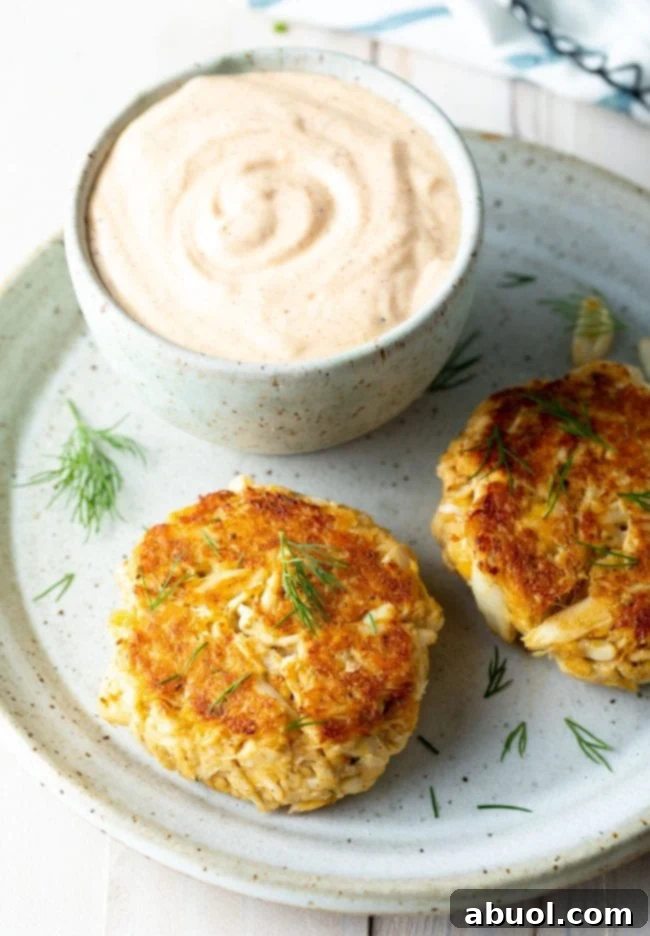
- Unrivaled Crispness and Tenderness – Prepare to be captivated by the perfect balance of these crab cakes. Each one boasts a beautifully crisp, golden-brown exterior, giving way to an irresistibly juicy and tender interior. It’s a textural masterpiece that will leave you craving more.
- Incredibly Versatile for Any Occasion – Whether you’re planning an elegant dinner party or a casual weeknight meal, these crab cakes fit seamlessly into any menu. Serve them as a distinguished main course, a sophisticated appetizer, perched atop a fresh salad, or tucked into a delectable summer seafood sandwich. Their adaptability makes them a culinary superstar.
- Authentic, Premium Crab Meat Experience – Unlike many recipes that resort to imitation crab, our recipe celebrates the real deal. We insist on using luscious, fresh lump crab meat, ensuring an authentic and deeply satisfying seafood experience that truly stands out. You’ll taste the difference that genuine quality makes.
While pan-frying offers that sought-after crispy exterior, I understand preferences vary. That’s why I’ve also included clear oven baking instructions, allowing you to achieve delicious results with ease. And remember, no crab cake is complete without the perfect accompaniment, so be sure to pair these with your favorite savory dips!
Key Ingredients for Perfect Crab Cakes & Expert Tips
Crafting the perfect Maryland crab cake begins with selecting the finest ingredients. Here’s a detailed look at what you’ll need and why each component is essential:
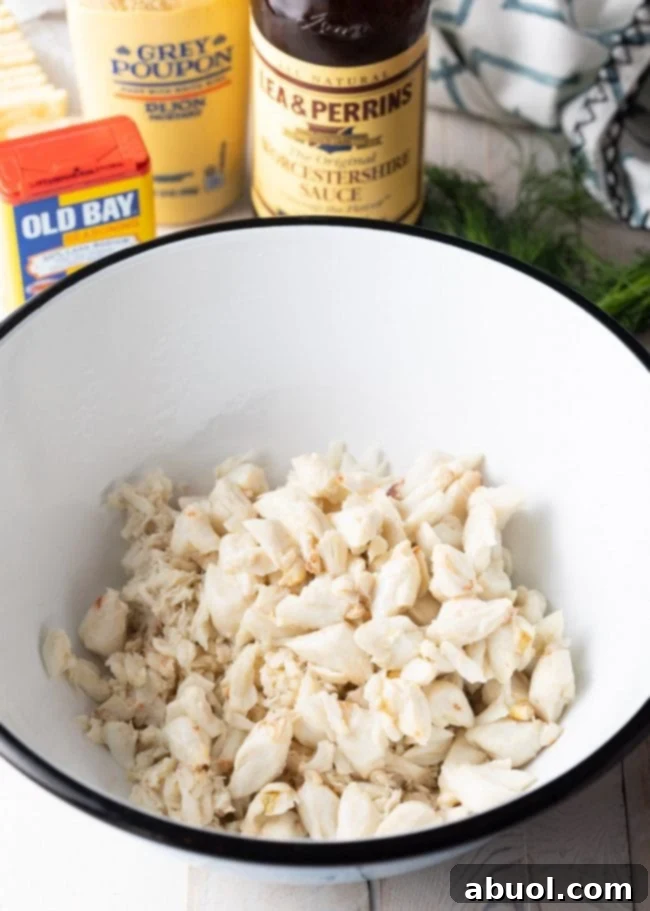
- Fresh Crab Meat – This is the star of our show. We recommend a dynamic duo: fresh jumbo lump crab meat for those impressive, succulent chunks, and a good quality fresh shredded crab meat. This combination ensures an incredibly meaty texture that is rich in flavor and holds together beautifully. Always drain your crab meat well to prevent excess moisture.
- Saltine Crackers – Crushed saltine crackers serve as a traditional, light binder that absorbs moisture and adds a subtle savory note without making the crab cakes dense. They contribute to that delicate, tender interior. Alternatively, you can use panko breadcrumbs for a slightly different, equally delicious texture.
- Mayonnaise – Essential for richness and moisture, mayonnaise acts as a key binder, helping to emulsify the ingredients and keep the crab cakes tender. Feel free to use regular, low-fat, or a paleo-friendly mayo based on your dietary preferences.
- Egg – A single room-temperature egg is crucial for binding all the delicious components together, ensuring your crab cakes hold their shape during cooking.
- Dijon Mustard – A tablespoon of Dijon mustard introduces a delightful tangy kick and a subtle depth of flavor that perfectly complements the sweetness of the crab.
- Old Bay Seasoning – No Maryland crab cake would be complete without the iconic Old Bay seasoning blend. This classic spice mix provides the quintessential zesty, savory, and slightly spicy flavor profile that defines this regional delicacy.
- Lemon Juice – Freshly squeezed lemon juice brightens all the flavors, cutting through the richness and adding a vibrant, essential citrus note.
- Fresh Herbs – Chopped fresh parsley or dill adds a burst of freshness and aromatic complexity. These herbs provide a beautiful visual appeal and a delicate, savory fragrance.
- Butter – Whether you choose to pan-fry or bake, butter is indispensable for achieving that coveted golden-brown, wonderfully crispy exterior and a rich, irresistible flavor.
Recipe Variations and Dietary Swaps for Your Crab Cakes
While our classic recipe is perfection, don’t hesitate to customize your crab cakes to suit your taste or dietary needs:
- Breadcrumb Options – If you prefer a different texture, readily swap the crushed saltine crackers with an equal amount of panko breadcrumbs. Panko tends to offer an even lighter, crispier crust.
- Amp Up the Spiciness – For those who crave a fiery kick, stir in a dash of cayenne pepper, a pinch of red pepper flakes, or a teaspoon of prepared horseradish into the crabmeat mixture. This will add a delightful warmth and zing.
- Gluten-Free Alternative – Making these gluten-free is simple! Just ensure you use certified gluten-free saltine crackers or gluten-free panko breadcrumbs to keep the recipe compliant.
- Lighter Mayo Substitute – For a healthier twist without sacrificing moisture, replace the mayonnaise with plain Greek yogurt. It provides a similar creamy texture and a pleasant tang, making for a lighter version of these delectable crab cakes.
- Add Aromatics – Finely minced shallots or a touch of celery can add extra layers of flavor and texture to your crab cake mixture. Just be sure not to add too much, as we want the crab to remain the star.
- Herb Variations – Experiment with other fresh herbs like chives or tarragon for different flavor profiles that beautifully complement seafood.
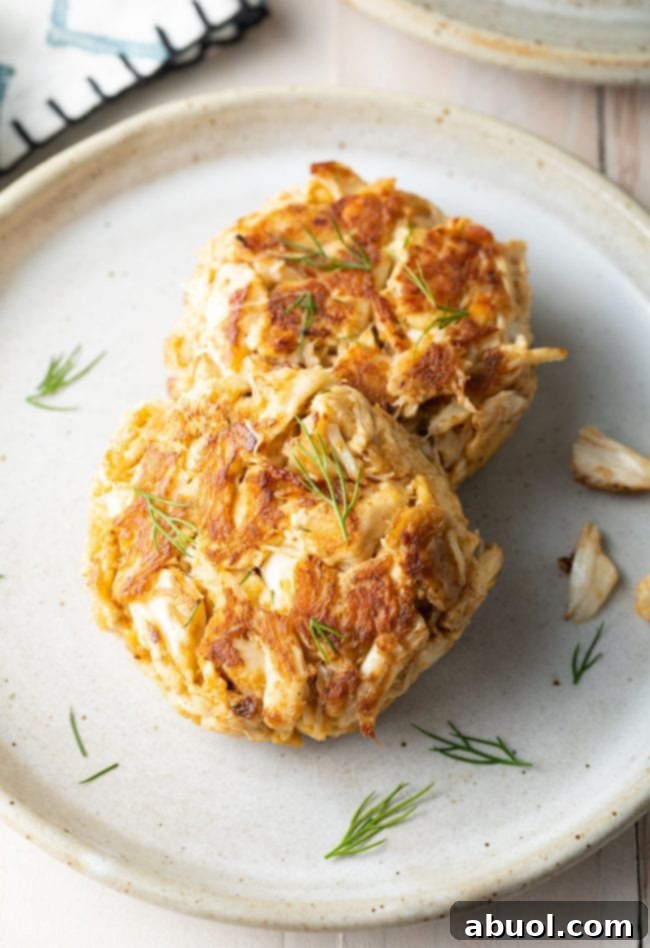
How To Master Pan Seared Crab Cakes From Scratch
Creating these rich and crispy, restaurant-worthy Pan Seared Crab Cakes at home is surprisingly simple. With just a few easy steps, you can achieve gourmet results from scratch. The best part? This classic crab cake recipe can be prepared and cooked in less than an hour, making it perfect for both busy weeknights and special occasions.
Find the full Pan Seared Crab Cakes recipe with detailed instructions, ingredient measurements, and storage tips in the printable recipe card at the bottom of this post!
Expert Tips For Crab Cake Success
- Mind the Salt Content – Both Old Bay seasoning and saltine crackers inherently contain salt. For this reason, there’s generally no need to add extra salt to your crab cake mixture. Over-salting can easily detract from the delicate crab flavor. However, a few grinds of fresh black pepper can add a lovely aromatic touch if desired.
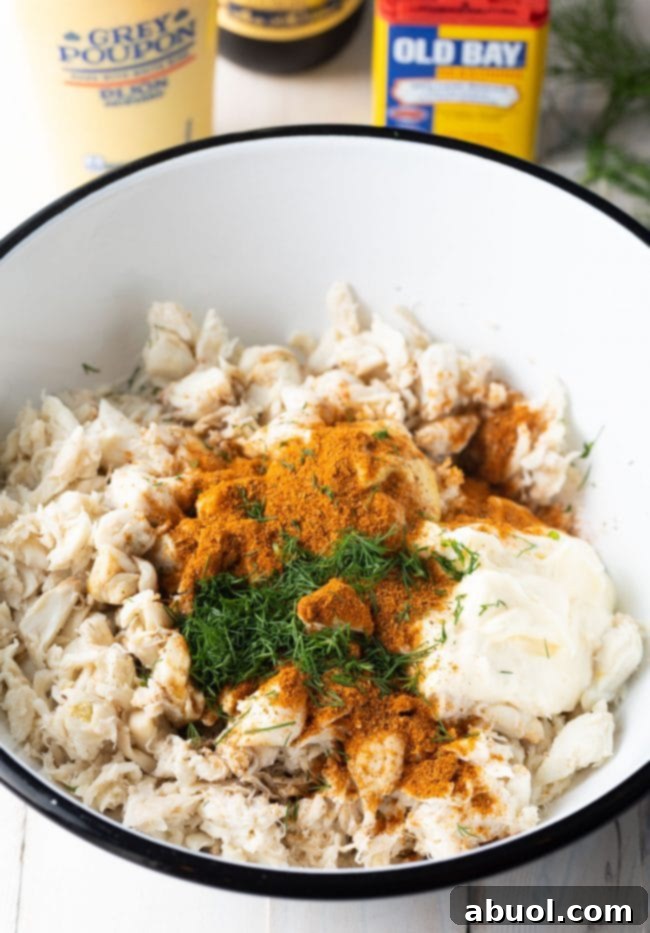
- Gentle Mixing is Key! – The secret to truly magnificent Maryland crab cakes lies in preserving those large, tender chunks of crab meat. When combining your ingredients, be incredibly gentle. Overmixing will break down the crab, resulting in a mushy texture rather than distinct, succulent pieces. Use a light hand and mix just until everything is incorporated.
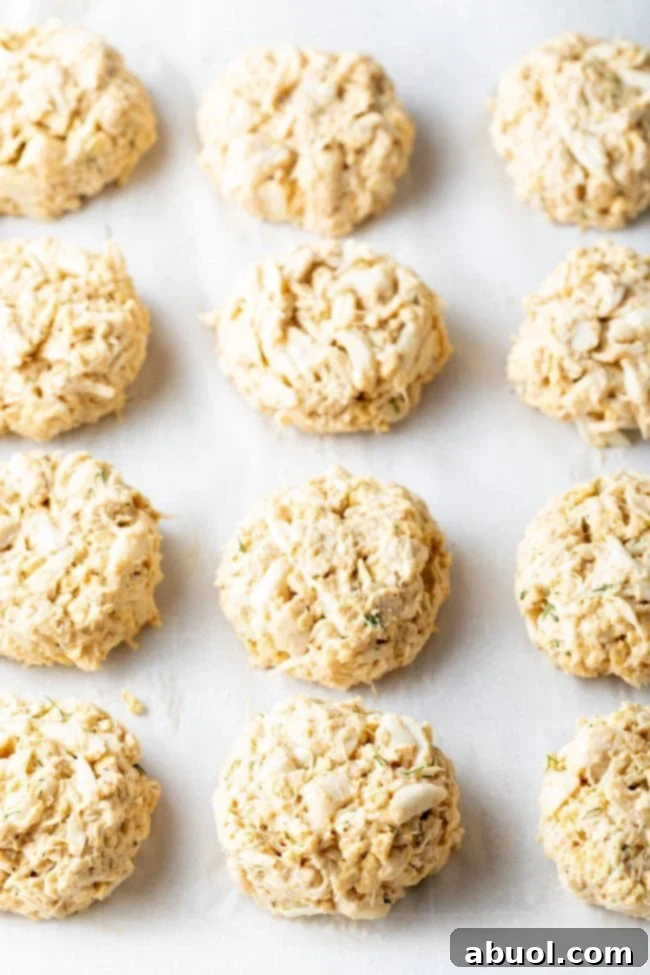
- Don’t Skip the Chill Time – This step is absolutely essential for perfectly formed crab cakes that hold their shape. After forming your patties, they need to be chilled in the refrigerator for at least 30 minutes, or up to 4 hours. This crucial chill time allows the binders (egg and mayo) to set and the flavors to meld, preventing your crab cakes from falling apart during cooking. Skipping this step is the most common reason for crumbly crab cakes. Embrace the chill, and you’ll understand why this truly is the best crab cakes recipe you’ll ever make!
- Perfect Pan Searing Technique – When pan-searing, ensure your skillet is preheated to medium heat and the butter is fully melted before adding the crab cakes. Don’t overcrowd the pan, as this can lower the temperature and lead to steaming rather than searing. Cook until golden brown and crispy on each side.
- Achieving Crispy Baked Crab Cakes – If baking, preheat your oven adequately to 450°F (232°C). Drizzling melted butter over the formed crab cakes on the baking sheet helps achieve a beautiful golden crust in the oven. Remember to flip them gently halfway through baking for even browning.
Storage and Reheating Tips for Crab Cakes
Proper storage ensures you can enjoy these delicious crab cakes for days, or even months, after preparing them:
- Storing Leftovers – Any leftover crab cakes should be cooled completely and then transferred to an airtight container. When stored in the refrigerator, they will maintain their freshness and flavor for up to 4 days.
- Reheating Leftovers – For best results, gently reheat leftover crab cakes in a microwave on a lower power setting to prevent drying them out, or in a preheated oven at 300°F (150°C) for a few minutes until warmed through and slightly crisp again. Avoid overheating to maintain their tender texture.
- Freezing for Future Enjoyment – Cooked crab cakes freeze exceptionally well. To freeze, individually wrap each baked or fried crab cake tightly in plastic wrap. Then, place the wrapped crab cakes into an airtight plastic freezer bag or a sturdy freezer-safe container. Adding an extra layer of aluminum foil around the container can help prevent freezer burn and keep them even fresher. They can be stored in the freezer for up to 3 months. Thaw overnight in the refrigerator before reheating.
Irresistible Serving Suggestions for Maryland Crab Cakes
Serve your exquisite Maryland-style crab cakes warm, perhaps with elegant lemon wedges on the side for a burst of fresh citrus, and a sprinkle of sliced green onions or fresh dill for a touch of garnish and added flavor. Their rich flavor pairs wonderfully with a variety of accompaniments.
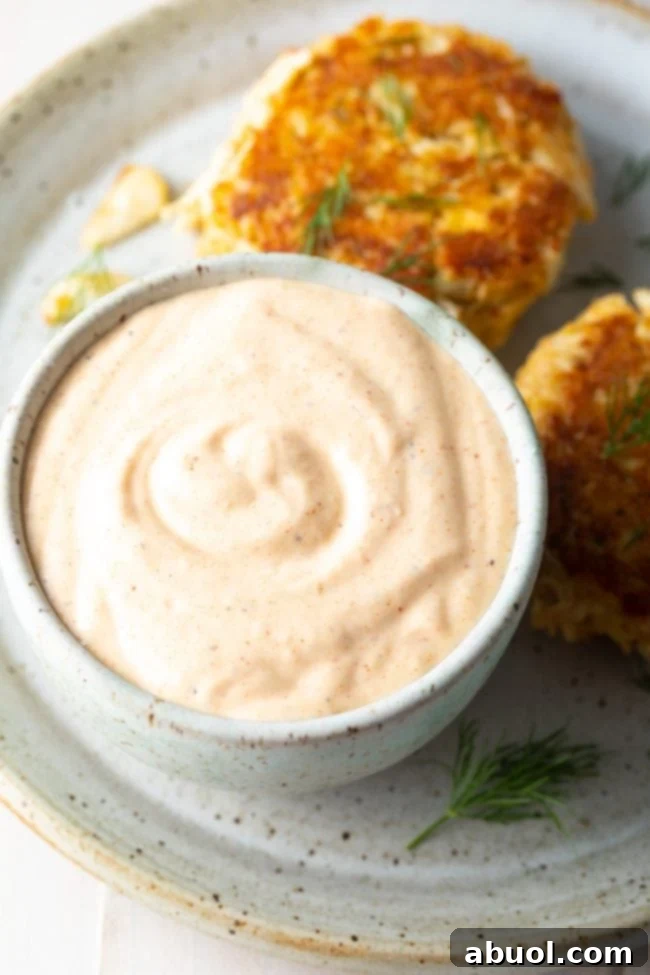
We highly recommend serving these fresh Maryland Crab Cakes with one or more of these three classic seafood sauces to truly complete the experience:
- Zesty and Creamy Remoulade Sauce – A vibrant, mayonnaise-based sauce with hints of mustard, capers, and herbs that perfectly complements the rich crab. Get the Remoulade Sauce recipe here.
- Tangy and Bright Tartar Sauce – The timeless classic featuring a creamy base with chopped pickles, capers, and fresh herbs, offering a delightful counterpoint to the crab. Find our Homemade Tartar Sauce recipe.
- Perky and Spicy Cocktail Sauce – For those who love a bit of heat, this zesty, tomato-based sauce with horseradish is an invigorating choice. Make your own Cocktail Sauce.
These easy crab cakes also make a fantastic meal when paired with a few additional sides. Consider serving them alongside:
- Perfectly Grilled Vegetables
- Fragrant Lemon Roasted Potatoes
- Crisp Roasted Asparagus
- Creamy Southern Coleslaw
- Sweet Corn on the Cob
Pan Seared Crab Cakes Recipe
Prep Time: 10 minutes
Cook Time: 10 minutes
Chill Time: 30 minutes
Total Time: 50 minutes
Servings: 6 crab cakes
5 stars (8 reviews)
Leave a Review »
Print Recipe
These crispy Maryland-style Pan Seared Crab Cakes are packed with chunks of fresh, tender crab meat, lots of zesty seasonings and served with a homemade remoulade or tartar sauce.
Video
Ingredients
- 8 ounces fresh jumbo lump crab meat, drained well
- 8 ounces fresh shredded crab meat, drained well
- ½ cup crushed saltine crackers (or 1/3 cup panko breadcrumbs)
- ¼ cup mayonnaise
- 1 large egg
- 1 tablespoon Dijon mustard
- 1 tablespoon lemon juice
- 1 tablespoon fresh chopped parsley (or 1 tsp fresh dill)
- 2 teaspoons Old Bay seasoning
- 3 tablespoons butter
Instructions
- Prepare your workspace: Set out a large mixing bowl and line a rimmed baking sheet with parchment paper.
- Combine ingredients: In the bowl, gently add all the crab meat, crushed crackers, mayonnaise, egg, Dijon mustard, lemon juice, fresh chopped herbs, and Old Bay seasoning. Mix very gently until just incorporated. Be careful not to break up the crab chunks.
- Form and chill patties: Using a 1/3 cup measure, scoop out 6 equal portions of the mixture. Gently press each portion into large patties, approximately 1 ½ inches thick. Place these formed crab cakes onto the prepared baking sheet. Cover the baking sheet and chill the crab cakes in the refrigerator for at least 30 minutes, or up to 4 hours. This crucial step helps them set and hold their shape.
- For Stovetop Cooking (Pan-Seared): Place a large skillet over medium heat. Add the butter and allow it to melt completely. Once the butter is shimmering, carefully place the chilled crab cakes into the skillet. Cook for 4-5 minutes per side, or until they are beautifully golden-brown and crispy.
- For Baked Crab Cakes: Preheat your oven to 450 degrees F (232°C). Melt the butter and gently drizzle it over the crab cakes arranged on the baking sheet. Bake for 10-12 minutes, carefully flipping them once after 5 minutes, until they are golden and heated through.
Notes
Why Crackers? Saltine crackers are a time-honored ingredient, used as a moisture-holding binder in various recipes from crab cakes to meatballs. They impart more flavor than plain breadcrumbs and contribute to a lighter, less dense texture. For a gluten-free option, substitute with gluten-free saltines or breadcrumbs.
Serve these Maryland Crab Cakes immediately with a side of homemade tartar sauce or a zesty remoulade for the best experience.
Cooked crab cakes can be stored in an airtight container in the refrigerator for up to 4 days. To freeze, wrap individual crab cakes tightly in plastic wrap before placing them in an airtight freezer bag or container. They will keep well in the freezer for up to 3 months.
Nutrition
Serving: 1 crab cake
Calories: 217kcal
Carbohydrates: 5g
Protein: 16g
Fat: 14g
Saturated Fat: 5g
Trans Fat: 1g
Cholesterol: 78mg
Sodium: 840mg
Potassium: 191mg
Fiber: 1g
Sugar: 1g
Vitamin A: 314IU
Vitamin C: 7mg
Calcium: 52mg
Iron: 1mg
Course: Main, Main Course
Cuisine: American, Southern
Author: Sommer Collier
Cook It? Love It? Rate It!
Your feedback helps others discover amazing recipes. Please consider leaving a review for this recipe.
Frequently Asked Questions About Crab Cakes
Originating from the renowned Chesapeake Bay region, Maryland crab cakes are celebrated for their unwavering focus on the star ingredient: premium crab meat. Unlike many other crab cake variations that often incorporate a significant amount of breading or filler, authentic Maryland crab cakes are designed to highlight the natural sweetness and delicate texture of the crab itself. They use minimal binding agents and seasonings, ensuring the rich flavor of the crab remains front and center, creating a truly superior seafood experience.
There are a couple of common reasons why crab cakes might not hold their shape. Firstly, it could be due to an insufficient amount of binding ingredients like egg or mayonnaise. These ingredients are crucial for holding the crab meat and filler together. Secondly, skipping or shortening the essential chilling time before cooking is a frequent culprit. Chilling allows the mixture to firm up and the binders to set, making the patties much more stable when they hit the hot pan or oven. Ensure your crab meat is also well-drained to avoid excess moisture.
You’ll know your crab cakes are done when they exhibit a beautiful golden-brown and crispy exterior. For an exact measure of doneness and food safety, you can use a meat thermometer. Insert it into the thickest part of a crab cake; the internal temperature should reach 145 degrees Fahrenheit (63°C). This ensures they are thoroughly cooked while remaining juicy and tender inside.
Absolutely! Preparing the mixture in advance is a great way to save time on the day you plan to cook. You can mix all the ingredients, form the patties, and then store them covered in the refrigerator for up to 24 hours. This extended chill time can even help the flavors meld more deeply and improve their ability to hold shape.
For the most authentic Maryland crab cakes, a combination of jumbo lump and shredded (or regular lump) crab meat is ideal. Jumbo lump provides those impressive, succulent pieces that define high-quality crab cakes, while shredded crab meat offers a finer texture that helps bind the cakes together without the need for excessive filler. Always opt for fresh, high-quality crab meat, ensuring it’s well-drained before mixing.
Similar Seafood Recipes You Might Enjoy