
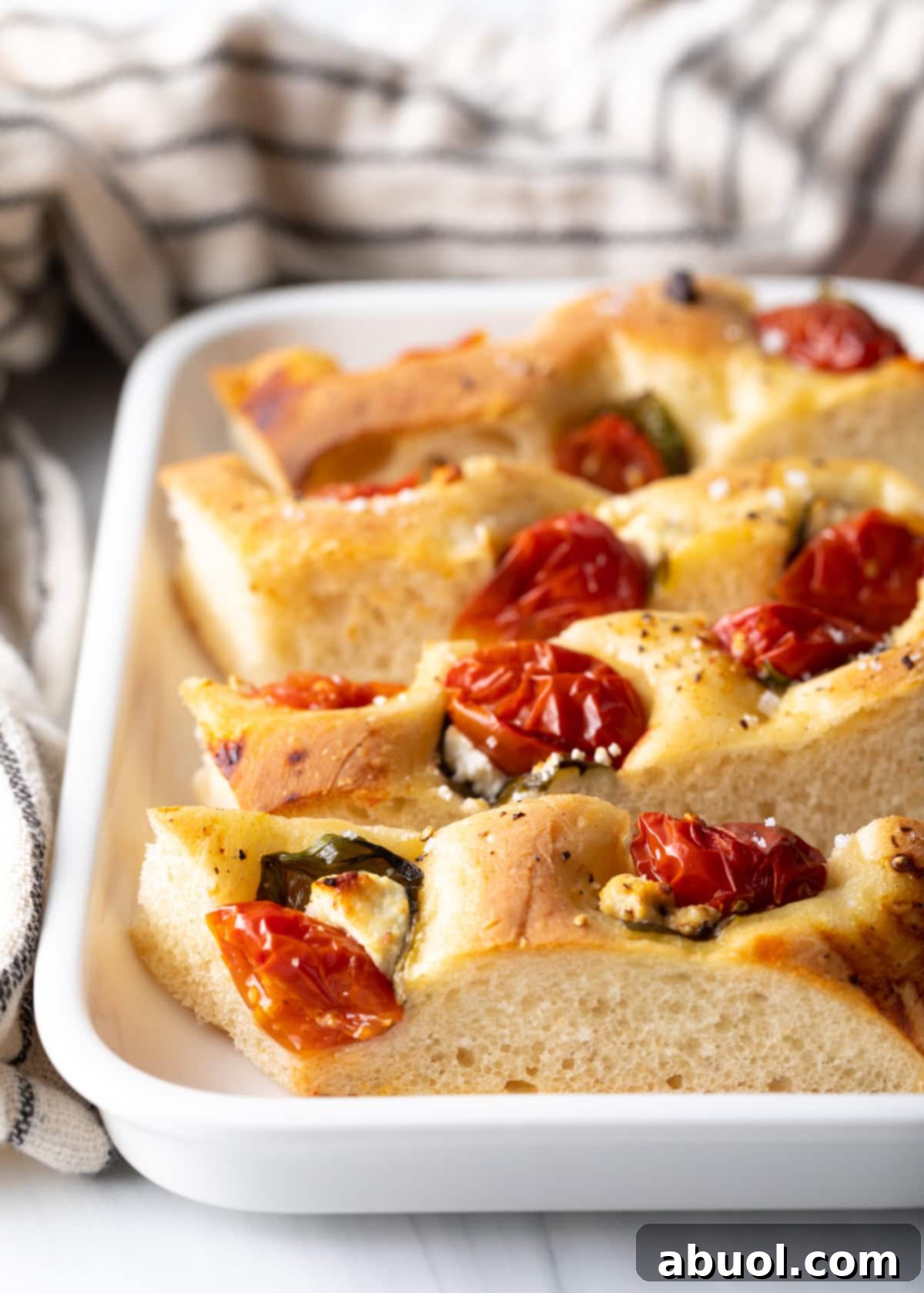
Experience the unparalleled delight of homemade Tomato Basil Focaccia Bread – an effortless recipe that masterfully blends sweet cherry tomatoes, aromatic fresh basil, and creamy, tangy goat cheese into a tender, chewy, and utterly irresistible loaf. This isn’t just bread; it’s a culinary journey to the sun-drenched kitchens of Italy, perfect for any occasion.
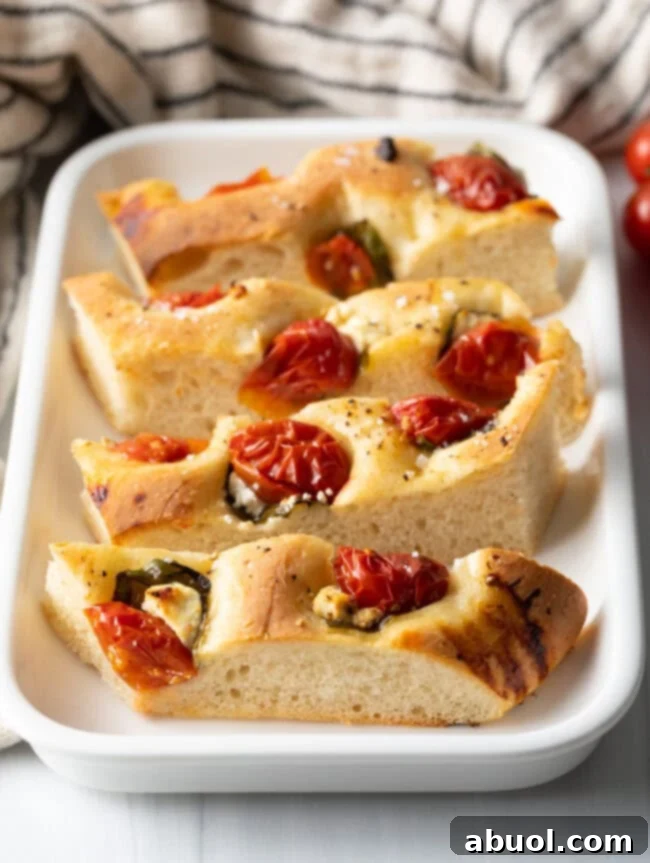
Why This Tomato Basil Focaccia Recipe is a Must-Try
There’s something inherently captivating about focaccia bread – its rustic, free-form shape, its soft, airy interior, and its delightfully chewy crust. When infused with the vibrant flavors of summer, like ripe cherry tomatoes, fragrant basil leaves, and creamy dollops of goat cheese tucked into its signature dimples, it transcends from a simple bread into a gourmet experience. This particular recipe captures the essence of Italian simplicity and robust flavor, making it a beloved staple in our kitchen.
While the process of creating this exquisite bread does require a bit of patience, clocking in at around 3.5 hours from start to finish (mostly passive proofing time!), the individual steps are remarkably straightforward and rewarding. The anticipation builds as the dough slowly rises, promising an incredible texture. Once the dough is perfectly proofed and adorned with its colorful toppings, the Tomato Basil Focaccia with Goat Cheese bakes to golden perfection in your oven in just 25 to 30 minutes. The reward? A stunning, warm, wonderfully chewy, and tender loaf that’s ready to be savored. Whether you share it with family and friends, or indulge in a quiet moment of pure culinary bliss all by yourself, this focaccia is guaranteed to impress. No judgment here – it’s that good!
Beyond its incredible taste, making focaccia is a truly satisfying baking project. The feel of the dough, the intoxicating aroma filling your kitchen, and the joy of presenting such a beautiful loaf make every minute worth it. It’s an edible centerpiece, a versatile side, and a comforting snack all rolled into one.
Essential Ingredients for Perfect Focaccia
Crafting the perfect focaccia begins with selecting high-quality ingredients. Each component plays a vital role in achieving that coveted chewy texture, airy crumb, and unforgettable flavor profile. Here’s what you’ll need:
- Warm Water: Crucial for activating the yeast. Ensure it’s between 105°F and 115°F – too cold, and the yeast won’t activate; too hot, and it could kill it.
- Active Dry Yeast: The leavening agent that gives focaccia its signature fluffy rise. Instant yeast can also be used, typically without proofing.
- Granulated Sugar: A touch of sugar (or honey) feeds the yeast, helping it to activate and providing a subtle sweetness to the bread.
- Extra-Virgin Olive Oil: This is the soul of focaccia! Use a good quality extra-virgin olive oil for maximum flavor, moisture, and that characteristic golden crust. Avocado oil can be a mild-flavored alternative. Don’t be shy with it!
- Salt: Essential for enhancing all the flavors in the bread and controlling yeast activity. Sea salt is particularly recommended for its clean taste and texture.
- All-Purpose Flour: Provides the structure for the dough. Bread flour, with its higher protein content, can also be used for an even chewier texture.
- Grape or Cherry Tomatoes: These sweet, juicy gems burst with flavor when baked. No need to slice or cut them, keeping their juices locked in for a delightful bite.
- Fresh Basil Leaves: The fragrant, slightly peppery notes of fresh basil perfectly complement the tomatoes and cheese. While dried basil can work in a pinch, fresh is highly recommended for optimal aroma and flavor.
- Chevre Goat Cheese: Adds a creamy, tangy dimension that elevates the focaccia. Its soft texture melts beautifully into the bread. Feta cheese is a great substitute if you prefer a saltier, crumbly texture.
- Salt and Black Pepper: A final sprinkling before baking enhances the overall seasoning and creates a beautiful, savory crust.
Step-by-Step Guide to Making Tomato Basil Focaccia
Creating this flavorful focaccia is a delightful process. Follow these detailed steps for a perfect loaf every time:
- Activate the Yeast: Begin by setting out an electric stand mixer fitted with a dough hook attachment. Into the mixer bowl, pour the warm water and granulated sugar. Give the bowl a gentle swirl to help the sugar dissolve and to ensure the water temperature is consistently lukewarm. Next, sprinkle one package of active dry yeast over the water. Allow the yeast to bloom and foam for at least 10 minutes. This crucial step confirms your yeast is active and ready to give your focaccia its signature rise. A healthy foam indicates thriving yeast.
- Mix and Knead the Dough: Once your yeast is active, stir in the cold water, a generous ¼ cup of extra-virgin olive oil, and the sea salt. Turn your stand mixer on low speed and gradually add the all-purpose flour, one cup at a time, until fully incorporated. Increase the speed slightly and allow the dough hook to “knead” the bread for a full 10 minutes. This extended kneading time is vital for developing the gluten, which creates focaccia’s wonderfully chewy texture. The dough will be quite loose and sticky – this is exactly what you want for a tender focaccia.
- First Rise (Proofing): After kneading, remove the dough hook. Drizzle a generous amount of extra olive oil over the top surface of the dough in the bowl. This prevents it from drying out and sticking. Cover the bowl tightly with plastic wrap to create a warm, humid environment. Place the bowl in a warm spot in your kitchen (like near a sunny window or in a slightly warm, turned-off oven) and let the dough rise until it has doubled in size. This typically takes 1 to 2 hours, depending on the warmth of your environment. This first rise develops deep flavors and a light, airy texture.
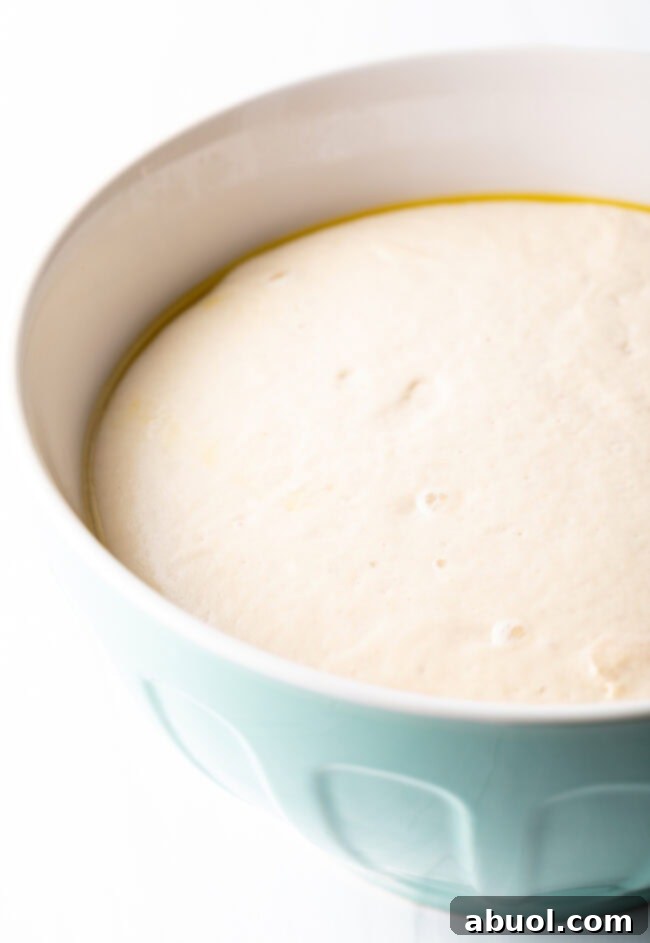
- Shape the Dough: While the dough is undergoing its first rise, prepare your baking sheet. Line a large baking sheet or baking dish with parchment paper – this prevents sticking and makes cleanup a breeze. Once your dough has beautifully doubled in size, lightly flour a clean work surface. Gently turn the sticky dough out onto the floured surface. Carefully knead and fold the dough a few times to form a rough rectangle. Then, using a rolling pin or simply stretching it by hand, shape the dough into a large oval or rectangle, approximately 14 x 10 inches.
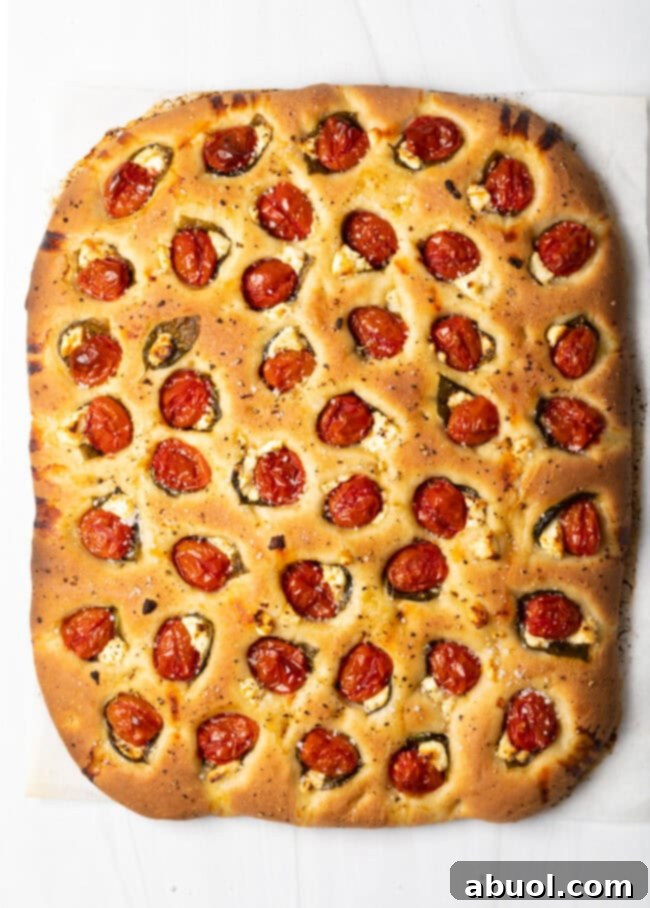
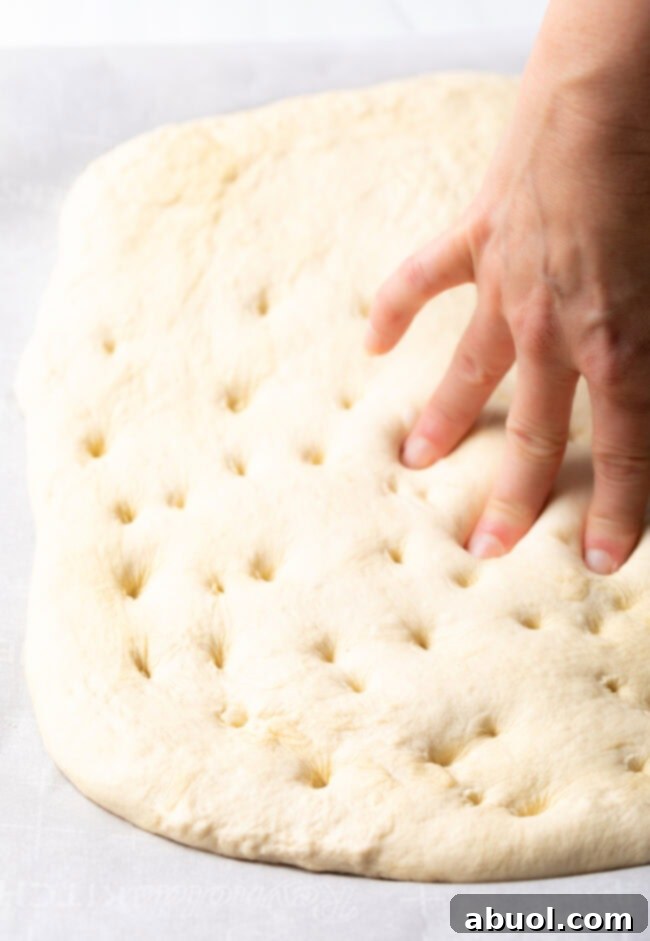
- Dimple and Layer Toppings: Carefully transfer the shaped dough to your prepared baking pan. Using your fingertips, gently but firmly press deep dimples across the entire surface of the dough. These dimples are characteristic of focaccia and serve to hold the olive oil and toppings, creating pockets of flavor and preventing the dough from puffing up too much in the center.
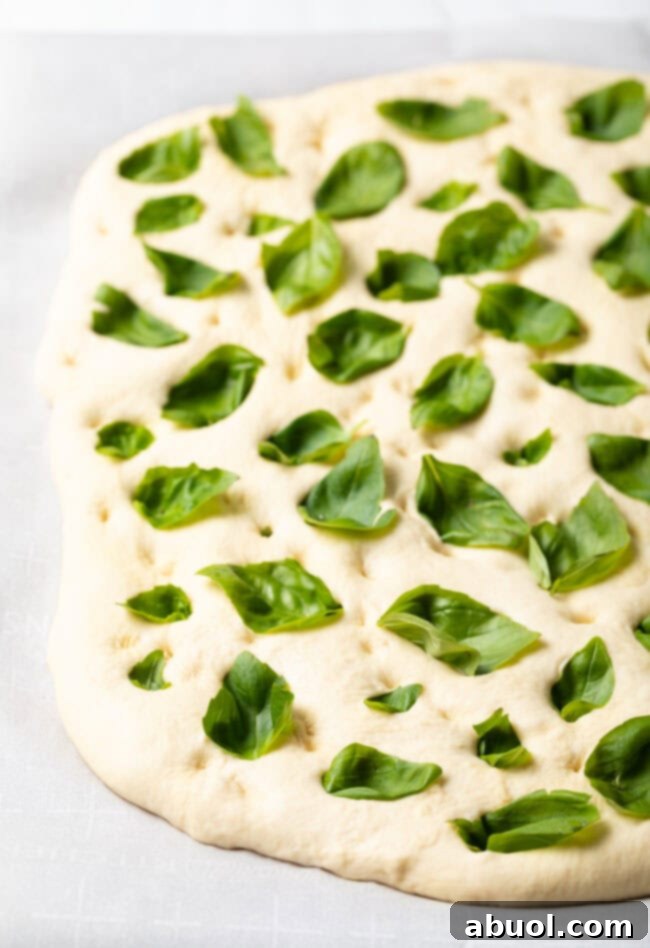
- Next, artfully poke individual fresh basil leaves down into the dough, distributing them evenly for flavor and visual appeal.
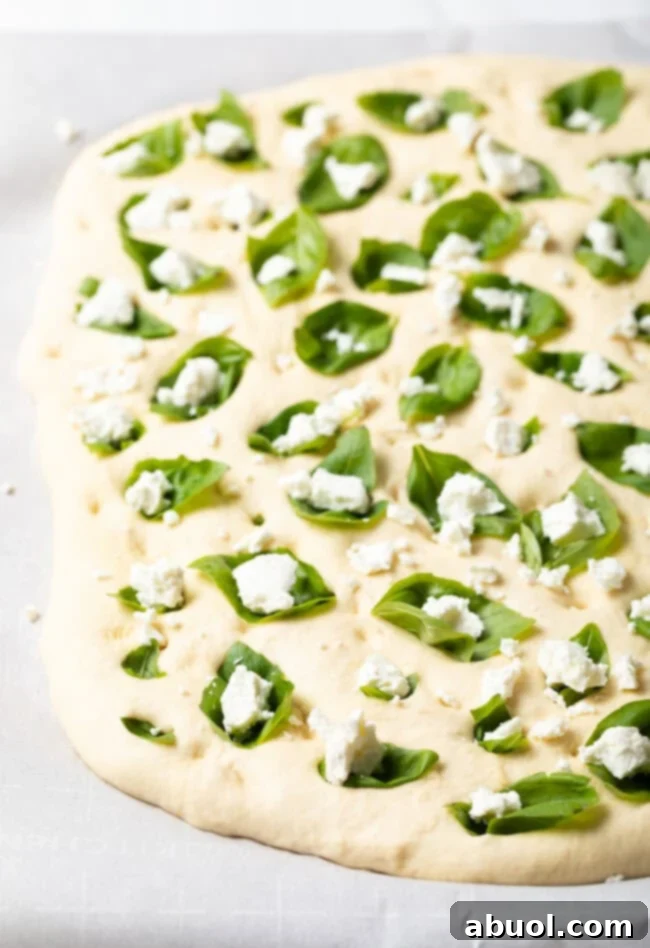
- Follow this by placing small clumps of chevre goat cheese into the dimples, ensuring a creamy, tangy bite in every piece.
- Finally, gently push the cherry tomatoes down into the dimples. Ensure they are nestled securely so they don’t roll off during baking.
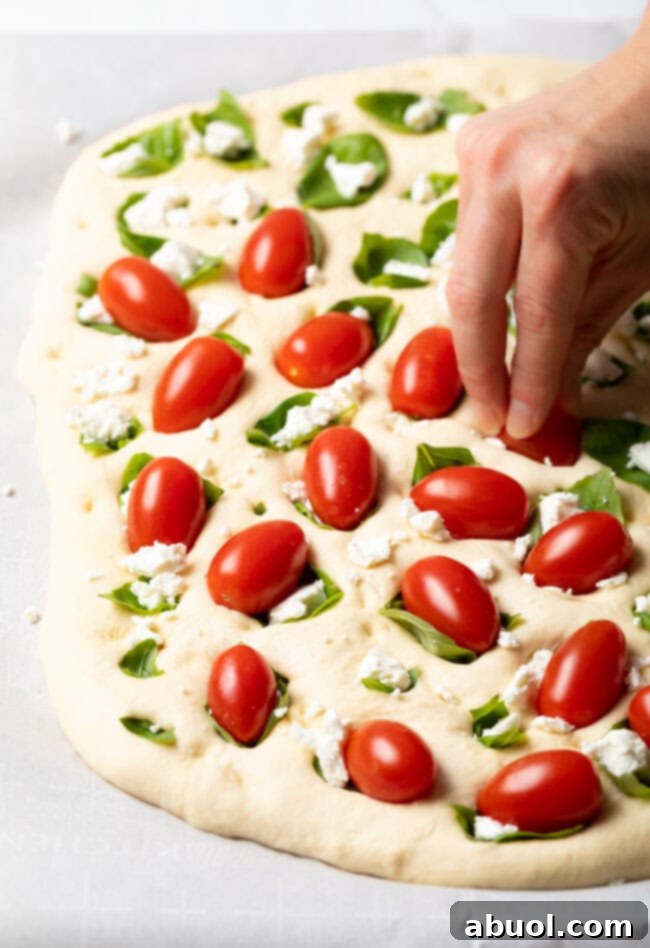
- Second Rise and Final Prep: Gently brush the top surface of the dough, including the toppings, with a little extra olive oil. This contributes to a beautiful golden crust. Cover the pan loosely with plastic wrap and allow the dough to rise again for another 1 hour. During this second rise, the flavors meld, and the dough becomes even more airy. *A personal preference note: you can either leave the tomatoes as they are, letting them bake near the top surface of the loaf, or right before baking, gently press them back down into the dough to create small “caverns” for each tomato. Both methods yield excellent results, so choose what you prefer visually!
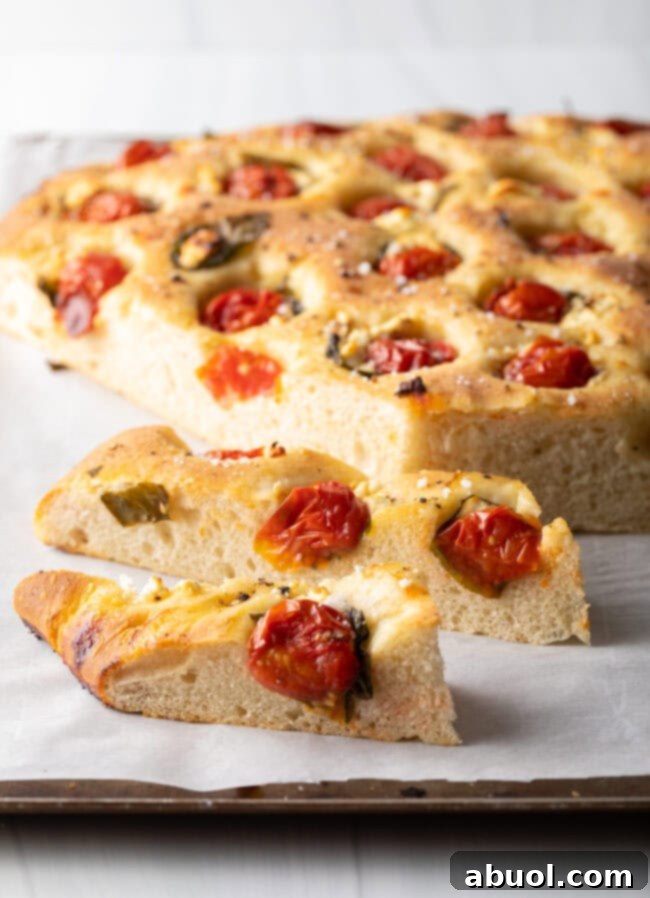
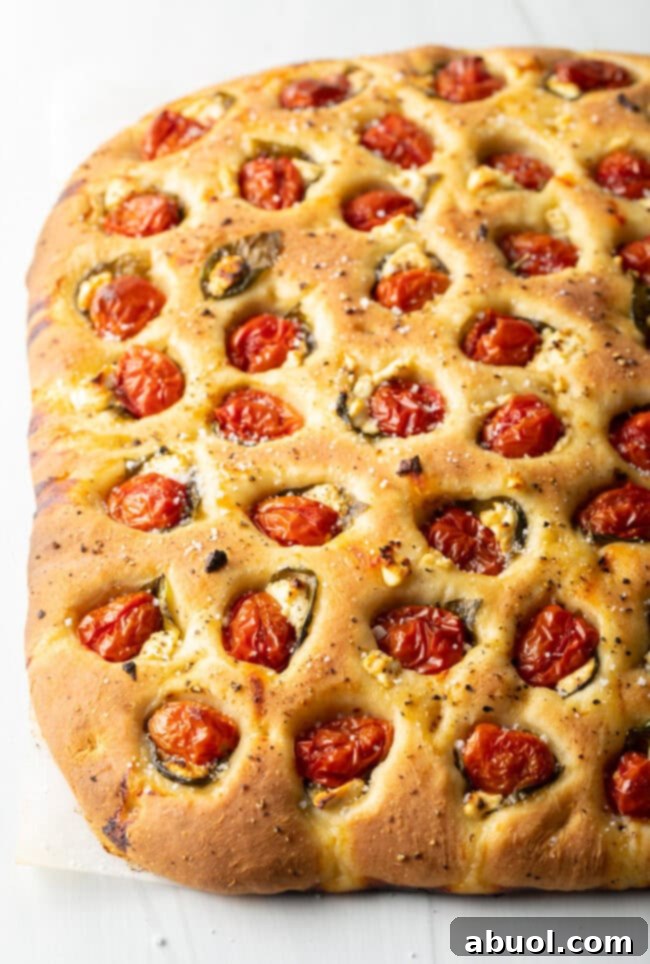
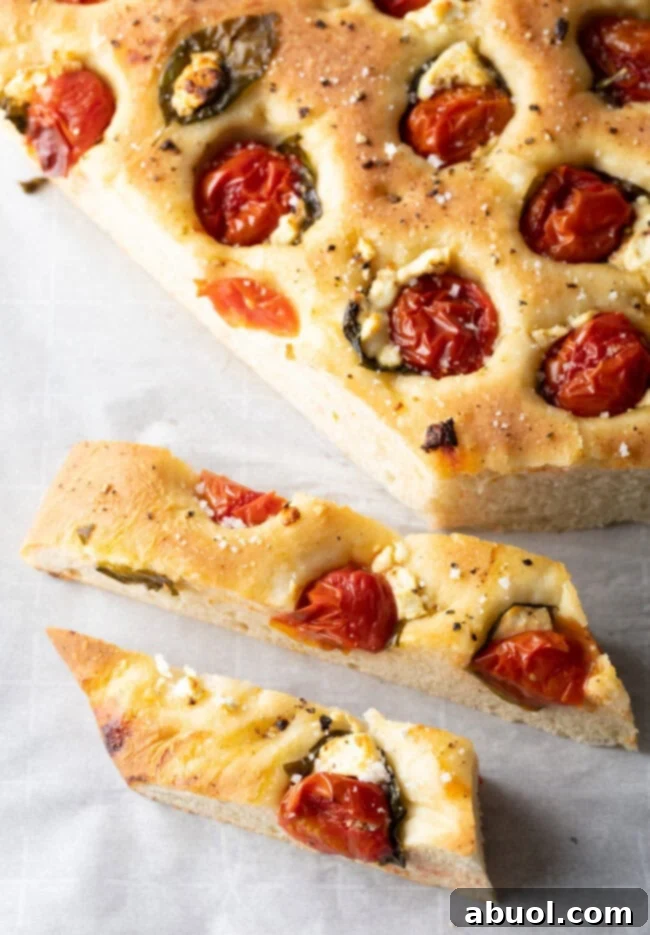
- Bake to Perfection: Towards the end of the second rise, preheat your oven to 400°F (200°C). Once the dough has completed its second rise, remove the plastic wrap. Sprinkle the entire surface generously with a pinch of sea salt and freshly ground black pepper. Transfer the baking sheet to the preheated oven and bake for 25 to 30 minutes. The focaccia is ready when its crust is beautifully golden brown, firm to the touch, and the tomatoes are slightly roasted and caramelized.
Get the Complete (Printable) Tomato Basil Focaccia Bread Recipe Below. Enjoy!
Recipe Tips and Delicious Variations
To ensure your focaccia is nothing short of perfect, and to inspire your culinary creativity, consider these tips and variations:
- Yeast Activation is Key: The temperature of your water for activating the yeast is paramount. It must be between 105°F and 115°F. Water that’s too hot will kill the yeast, preventing any rise, while water that’s too cold will inhibit activation, leading to a dense loaf. Use a kitchen thermometer for accuracy.
- Don’t Rush the Kneading: Patience is a virtue, especially when kneading focaccia dough. Allowing the full 10+ minutes of kneading, especially with a stand mixer, is crucial for developing strong gluten strands. This gluten network is what traps the gases produced by the yeast, giving the focaccia its characteristic airy, open crumb and chewy texture. A well-kneaded dough translates to a successful, light focaccia.
- Embrace the Olive Oil: The flavor and texture of authentic focaccia are deeply rooted in the liberal use of good quality extra-virgin olive oil. This isn’t a place to be frugal! Olive oil not only adds incredible depth of flavor but also contributes significantly to the dough’s moisture, tenderness, and crispy crust. Drizzle it generously over the dough, both in the bowl and on the pan, and don’t forget the final brush before baking.
- Cheese Swaps: While goat cheese offers a wonderful tang and creaminess, feel free to experiment. Small cubes of fresh mozzarella cheese will melt beautifully for a milder, milky flavor. Crumbled feta cheese provides a saltier, more robust option. A sprinkle of grated Parmesan or Pecorino Romano cheese adds a nutty, umami depth.
- Herb Alternatives: Fresh basil is fantastic, but fresh rosemary is another classic focaccia topping that pairs wonderfully with olive oil and salt. You could also try a blend of Mediterranean herbs like oregano and thyme for a different aromatic profile.
- Add More Toppings: Unleash your creativity! Consider adding thinly sliced red onion, pitted Kalamata olives, sun-dried tomatoes (chopped), thinly sliced garlic, or even a sprinkle of red pepper flakes for a subtle kick. For a sweet twist, try a drizzle of honey, fresh figs, and a sprinkle of coarse sugar for a dessert focaccia.
- Use a Pizza Stone: For an extra-crispy bottom crust, preheat a pizza stone in your oven while the focaccia does its second rise. Carefully slide the parchment-lined baking sheet onto the hot stone for baking.
Frequently Asked Questions About Focaccia Bread
Focaccia and pizza doughs are indeed quite similar, both being thick, chewy breads often made with a simple blend of flour, water, yeast, and salt. However, focaccia typically incorporates more yeast, leading to a fluffier, airier, and less dense texture compared to traditional pizza dough. Focaccia is also generously drizzled with olive oil, creating a distinct crispy exterior and rich flavor, whereas pizza dough is usually thinner and designed to be a base for toppings, not necessarily a standalone bread.
Making vegan focaccia bread is surprisingly simple, as the base dough is naturally vegan. The key is to swap out the goat cheese for your favorite plant-based goat cheese alternative. Many excellent vegan cheese options are available on the market today that mimic the texture and tang of traditional goat cheese. Alternatively, you can simply omit the cheese entirely and still enjoy a wonderfully flavorful tomato basil focaccia, perhaps adding more herbs or olives for extra taste.
Several factors can contribute to a dense, rather than fluffy, focaccia. The most common culprit is inactive or dead yeast. Always ensure your yeast is fresh and that your warm water is within the ideal temperature range of 105-115°F to properly activate it. Confirm yeast activity by checking for a foamy layer after 10 minutes. Insufficient kneading time can also lead to a dense crumb, as gluten needs to be properly developed. Additionally, under-proofing (not allowing the dough enough time to rise) will result in a heavy loaf. Ensure your kitchen is warm enough for optimal rising.
Due to the moisture from the fresh tomatoes, homemade tomato basil focaccia bread is best enjoyed fresh. It keeps well for only about 2 to 3 days at room temperature. To store, first allow the loaf to cool completely on a wire rack. Then, wrap it tightly in plastic wrap or transfer it to an airtight container, such as a large plastic zipper bag. Storing it at room temperature will maintain its texture best.
For longer storage, focaccia freezes exceptionally well! Wrap the cooled loaf securely in plastic wrap, then add an additional layer of aluminum foil to prevent freezer burn. Store it in the freezer for up to a month. When you’re ready to enjoy it, thaw the focaccia in the refrigerator overnight or on the countertop for 2 to 3 hours. You can gently warm it in a preheated oven (around 350°F or 175°C) for a few minutes to restore its fresh-baked texture.
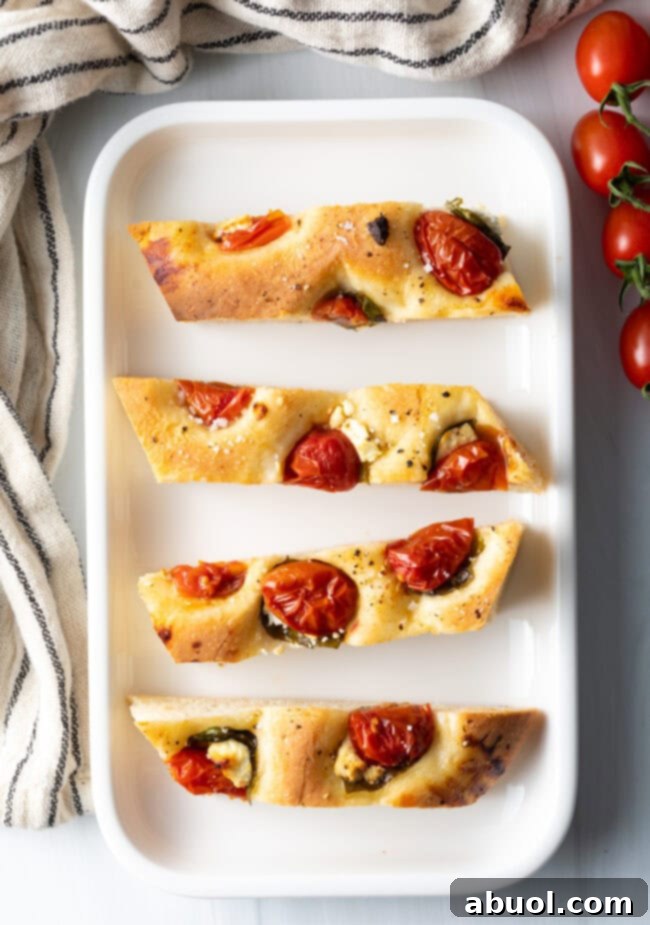
Freshly baked tomato basil focaccia bread is incredibly versatile and can be enjoyed in many ways. It makes a fantastic appetizer or snack on its own, perhaps with a simple dip of olive oil and balsamic vinegar. It’s also an excellent side dish for a wide array of pasta dishes, soups, or salads. For a heartier meal, serve slices alongside ramekins of warm marinara sauce or a rich, creamy garlic butter for dipping. It’s also perfect for making gourmet sandwiches or as the base for small pizzas.
Discover More Easy and Delicious Bread Recipes
If you’ve enjoyed baking this flavorful focaccia, you’ll love exploring other simple yet satisfying bread recipes. Expand your baking repertoire with these fantastic options:
- Crockpot Yeast Rolls
- Quick Garlic Knots
- Hawaiian Bread Recipe
- Crazy Bread Recipe (Homemade Breadsticks)
- Cheesy Garlic Pull-Apart Bread
- Sweet Irish Soda Bread
- Caprese Flatbread Recipe
- Muffuletta Cheesy Garlic Bread
- Zesty Prosciutto Cheese Rolls
Ready to bake this extraordinary bread? Find the complete printable recipe below and bring a taste of Italy into your home!
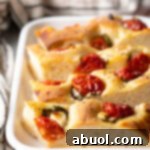
Tomato Basil Focaccia Bread
5 stars (4 reviews)
This easy recipe features flavorful cherry tomatoes, fresh basil, and creamy goat cheese baked right into tender and chewy focaccia bread.
Prep Time: 30 minutes
Cook Time: 25 minutes
Proof Time: 3 hours
Total Time: 3 hours 55 minutes
Servings: 12 servings
Ingredients
- ¼ cup warm water (105-115°F)
- 1 packet active dry yeast
- 2 teaspoons granulated sugar (or honey)
- 1 ½ cup cold water
- ¼ cup extra-virgin olive oil + extra for the bowl and pan
- 2 teaspoons sea salt
- 4 cups all-purpose flour (or bread flour)
- 16 ounces grape or cherry tomatoes
- 1 cup fresh basil leaves
- 2 ounces chevre goat cheese (or feta cheese)
- Salt and black pepper, to taste
Instructions
- Set out an electric stand mixer with a dough hook attachment. To the bowl, add the warm water and sugar. Swirl the bowl around to dissolve the sugar and lower the temperature of the water until it is just lukewarm. Now add one package of dry active yeast and swirl around. Allow the yeast to foam for at least 10 minutes.
- Stir in the cold water, olive oil, and sea salt. Turn the mixer on low and add in the flour. Allow the dough hook to “knead” the bread for at least 10 minutes.
- The dough should be very loose and sticky. Drizzle extra olive oil over the top of the bowl, cover tightly with plastic wrap, and allow the dough to rise until double in size, 1 to 2 hours in a warm kitchen.
- Meanwhile, set out a large baking sheet and line it with parchment paper. Once the dough has doubled in size, lightly flour a clean work surface. Dump the dough out on the surface and knead/fold into a rectangle. Use a rolling pin (or stretch the dough by hand) into a large 14 x 10-inch oval or rectangle.
- Move the dough to the prepared pan. Use your fingers to press deep dimples in the surface of the dough. Then poke basil leaves, goat cheese clumps, and cherry tomatoes down into the dimples.
- Gently brush the top of the dough with extra olive oil then cover with plastic wrap. Allow the dough to rise again for 1 hour. *Either leave the surface of the focaccia alone and the tomatoes will bake near the top of the loaf, or right before baking, press the tomatoes back down into the dough to create little caverns for each tomato. This is completely a personal preference. It will bake well either way!
- Preheat the oven to 400°F (200°C). Once the dough has risen a second time, uncover and sprinkle generously with salt and pepper. Bake for 25 to 30 minutes until the crust on top is golden brown and firm.
Notes
- The flavor and texture of focaccia are based on the heavy use of extra-virgin olive oil. Don’t be stingy with the oil; it makes a huge difference in taste and texture.
- Because of the moisture from the tomatoes, homemade tomato basil focaccia bread keeps well for only about 2 to 3 days. Let the loaf cool completely, then wrap it in plastic wrap or transfer it to an airtight container (like a plastic zipper bag). Store at room temperature.
- This focaccia also freezes well! Wrap the cooled loaf in plastic wrap and then in a layer of aluminum foil. Store in the freezer for up to a month. Thaw in the refrigerator overnight or on the countertop for 2 to 3 hours before serving or reheating.
Nutrition
Serving: 1 pc, Calories: 214kcal, Carbohydrates: 34g, Protein: 6g, Fat: 6g, Saturated Fat: 1g, Polyunsaturated Fat: 1g, Monounsaturated Fat: 4g, Cholesterol: 2mg, Sodium: 412mg, Potassium: 135mg, Fiber: 1g, Sugar: 2g, Vitamin A: 339IU, Vitamin C: 9mg, Calcium: 22mg, Iron: 2mg
Course: Appetizer, Bread, Side Dish
Cuisine: Italian
Author: Sommer Collier