
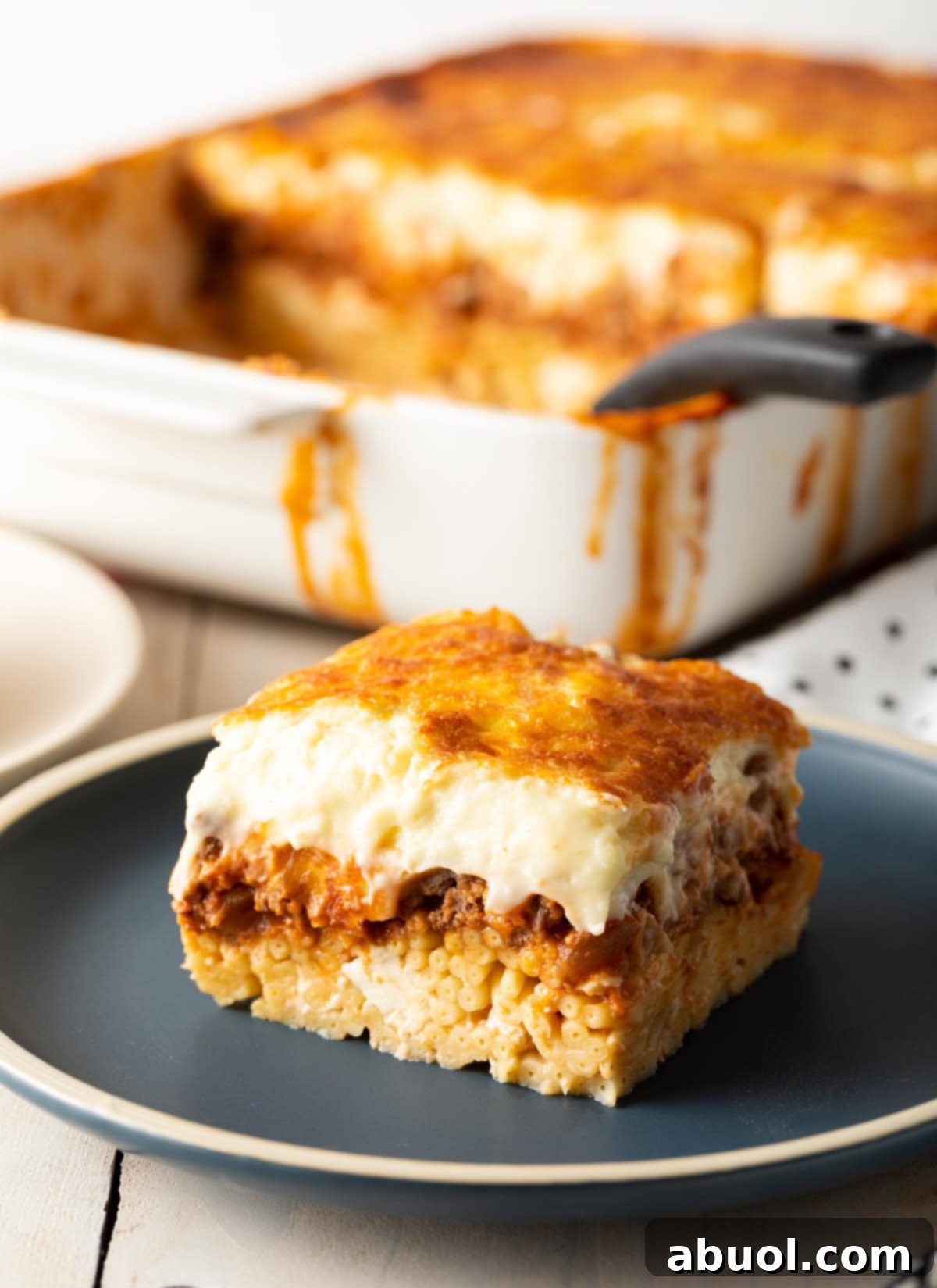
Authentic Greek Pastitsio: Your Guide to Crafting the Ultimate Greek Lasagna
Prepare to fall in love with Pastitsio, a beloved Greek casserole often dubbed “Greek lasagna.” This traditional dish is a masterpiece of flavors and textures, featuring exquisite layers of tender pasta, a rich and aromatic meat sauce, a medley of savory cheeses, and a crown of smooth, creamy béchamel sauce, all baked together to golden perfection. It’s the quintessential comfort food, promising warmth and satisfaction with every forkful. Whether you’re new to Greek cuisine or a long-time admirer, this authentic Pastitsio recipe will transport your taste buds straight to the heart of Greece.
Why This Classic Greek Pastitsio Recipe is a Family Favorite
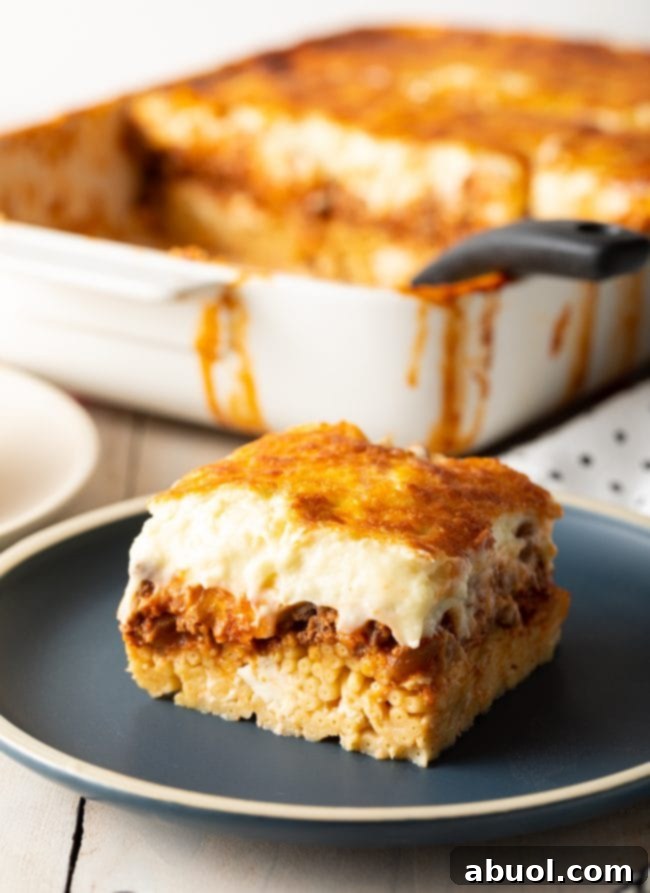
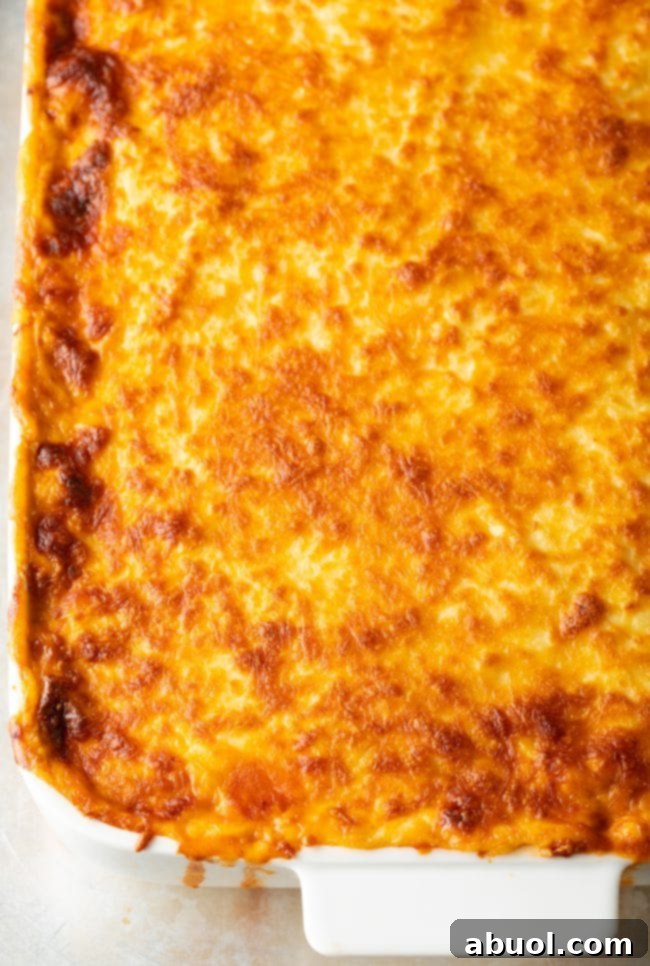
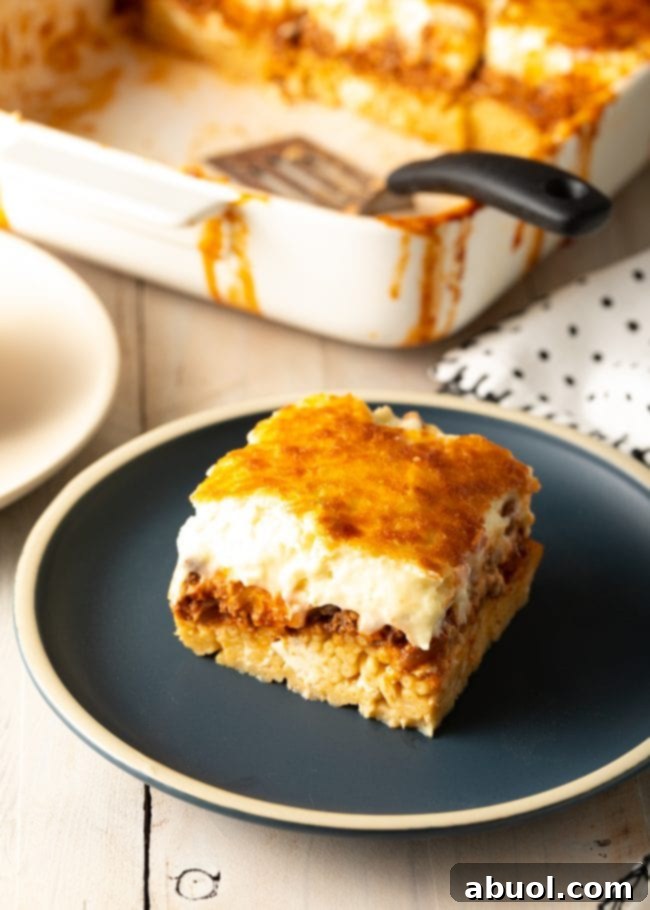
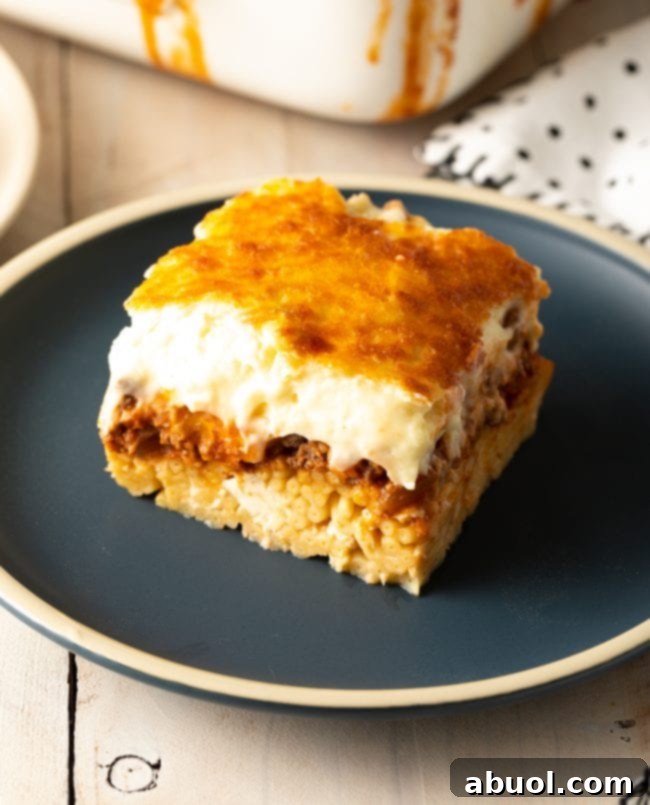
Pastitsio holds a special place in Greek culinary traditions, frequently gracing tables in homes and restaurants alike. It’s a dish that embodies rustic elegance and deep, comforting flavors. What makes our classic Pastitsio recipe stand out is its meticulous balance of components, creating a truly unforgettable experience. Imagine sinking your fork into distinct layers: first, a foundation of perfectly cooked bucatini pasta, followed by a robust and zesty meat sauce infused with Mediterranean spices, and finally, a generous blanket of silky, cheesy béchamel baked until beautifully golden. This isn’t just a meal; it’s an event.
Perfect for a celebratory Sunday dinner or any occasion where hearty, flavorful food is desired, Pastitsio is guaranteed to impress. Its rich flavors deepen over time, making it an exceptional dish for meal prepping as leftovers are often even more delicious than the first serving. Moreover, this Greek béchamel lasagna offers incredible convenience. You can assemble it the day before, cover it tightly, and refrigerate until you’re ready to bake. For longer storage, Pastitsio freezes beautifully, either baked or unbaked, ensuring you have a wholesome, homemade meal ready to enjoy for up to two months. Simply thaw overnight in the refrigerator and bake according to instructions for a stress-free gourmet experience.
Understanding Bucatini: The Heart of Pastitsio
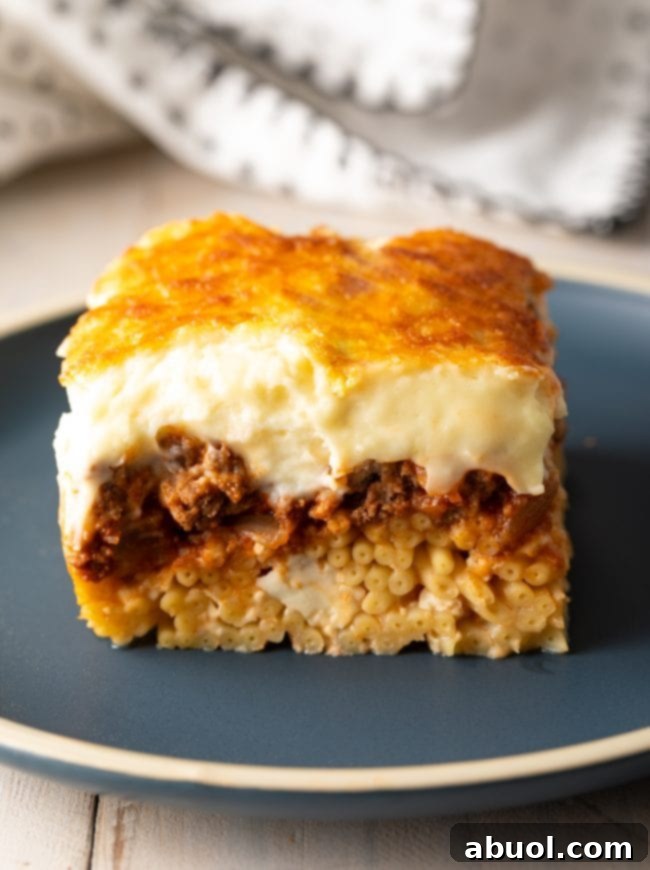
At the core of an authentic Pastitsio lies bucatini, a unique pasta variety that elevates the dish beyond ordinary lasagna. While it resembles thick spaghetti, bucatini boasts a distinctive feature: a hollow center, much like a thin straw. This ingenious design allows the rich meat sauce and creamy béchamel to seep into the pasta’s core, ensuring that every single bite is bursting with flavor, from the exterior to the very middle of each noodle. This characteristic is crucial for Pastitsio, making it incredibly satisfying.
You can typically find bucatini with either a fine or slightly larger central hole. Both variations work wonderfully in Pastitsio, so feel free to choose whichever is available or suits your preference. The key is that hollow structure for optimal sauce absorption. If bucatini isn’t available, don’t worry! Excellent substitutes include other medium-sized tubular pastas like penne, ziti, or even rigatoni. These pastas also have a hollow shape, enabling them to capture and deliver that desirable saucy goodness throughout the layers of your homemade Pastitsio. The goal is a pasta that contributes to the dish’s overall richness, not just its bulk.
Essential Ingredients for Your Homemade Pastitsio
Crafting the perfect Greek Pastitsio requires a thoughtful selection of fresh, quality ingredients. Each component plays a vital role in building the layered symphony of flavors this dish is known for.
- Bucatini Pasta: As discussed, this is the traditional choice, known for its hollow center that captures sauce beautifully. Penne or ziti are excellent alternatives if bucatini is hard to find.
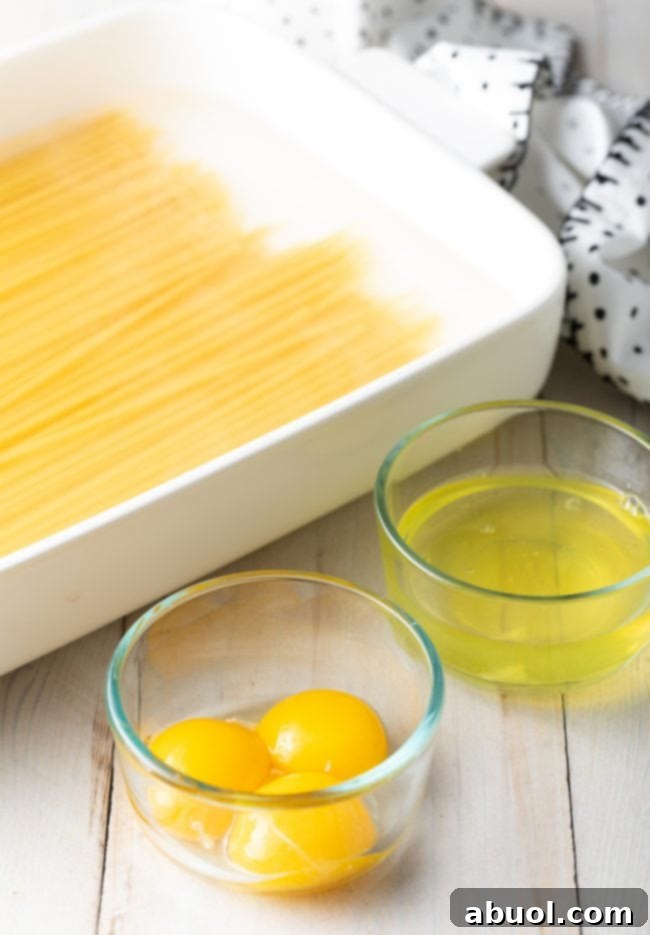
- Eggs: Separated into whites (for the pasta layer, adding structure) and yolks (for the béchamel, contributing richness and thickening power).
- Feta Cheese: Crumbled feta adds a tangy, salty kick to the pasta layer, providing a quintessential Greek flavor.
- Shredded Italian Blend Cheese: A mix typically including mozzarella, provolone, asiago, romano, and parmesan. This blend offers superior melt and a complex flavor profile for both the pasta and béchamel layers.
- Unsalted Butter: The foundation for both the savory meat sauce and the creamy béchamel, providing richness and aiding in sautéing.
- Onion: Finely chopped, it forms the aromatic base for the meat sauce, developing sweetness as it sautés.
- Garlic: Minced fresh garlic infuses the meat sauce with its distinctive pungent and savory notes, a cornerstone of Mediterranean cooking.
- Lean Ground Beef: We recommend 90-95% lean ground beef to create a hearty yet not overly greasy meat sauce. It’s the central protein of the dish.
- Spices for Meat Sauce: Ground cinnamon and nutmeg are the secrets to Pastitsio’s unique aroma and flavor, setting it apart from Italian lasagna. Salt and pepper are, of course, essential for seasoning.
- Tomato Sauce: Canned crushed tomatoes or your favorite jarred tomato sauce provide the rich, savory base for the meat layer.
- All-Purpose Flour: Used in the béchamel to create a roux with butter, which acts as the thickening agent for the sauce.
- Whole Milk: Essential for a truly luxurious and creamy béchamel. Its higher fat content results in a richer, smoother sauce.
- Seasonings for Béchamel: Salt and a pinch of ground nutmeg enhance the béchamel’s flavor, adding a subtle warmth that complements the other layers beautifully.
How to Make Authentic Greek Lasagna (Pastitsio)
Making Pastitsio is a labor of love, but the process is straightforward and incredibly rewarding. Follow these steps for a Greek culinary triumph:
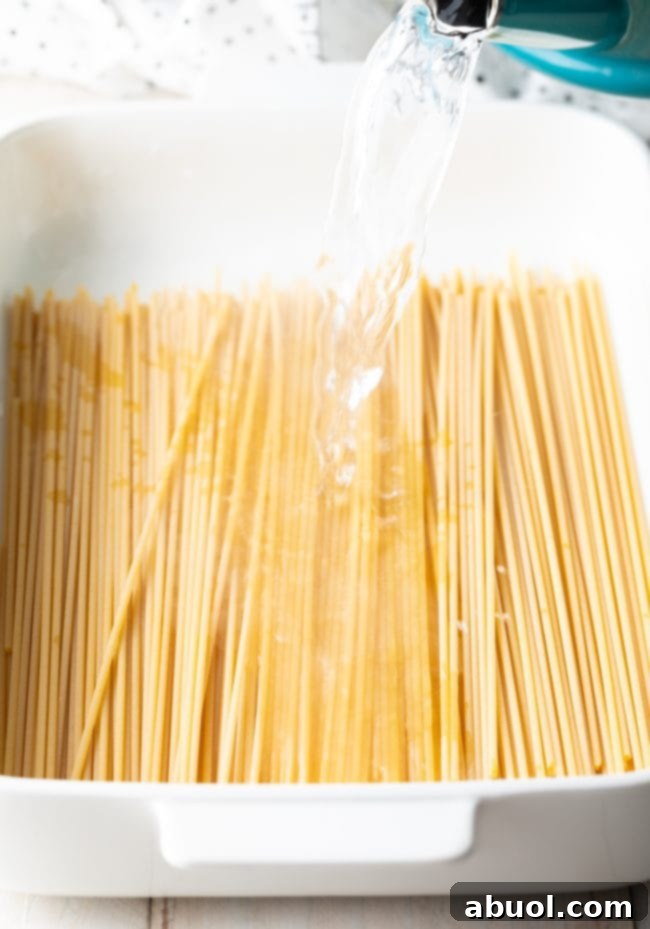
- Prepare the Pasta: Begin by preparing your bucatini pasta. Take a deep 9×13 inch casserole dish and lay the bucatini evenly inside. Cover the pasta generously with very hot tap water – no need to boil it beforehand, as the soaking method yields a perfectly tender pasta without becoming mushy during baking. Stir in a pinch of salt to prevent the noodles from sticking together. Allow the pasta to soak for 30-40 minutes while you prepare the meat sauce and béchamel. This soaking technique ensures the pasta remains firm and absorbs flavors beautifully.
- Prep Your Aromatics: While the pasta soaks, peel and finely chop your onion and mince the garlic cloves. Having these ready will streamline your cooking process.
- Craft the Zesty Meat Sauce: In a large saucepan or a 6-quart pot, melt two tablespoons of unsalted butter over medium heat (or use olive oil if preferred). Add the chopped onions and sauté for 3-5 minutes until they become translucent and fragrant. Incorporate the minced garlic and cook for another minute until aromatic, being careful not to burn it. Add the lean ground beef, ground cinnamon, ground nutmeg, and a teaspoon of salt. Break the beef into small pieces with a wooden spoon as it browns, ensuring even cooking. Once the beef is fully cooked and no pink remains, drain any excess fat if necessary. Stir in the tomato sauce. Bring the mixture to a gentle simmer and let it cook for at least 15 minutes, stirring occasionally, to allow the flavors to meld. Taste and adjust seasoning with additional salt and pepper as needed.
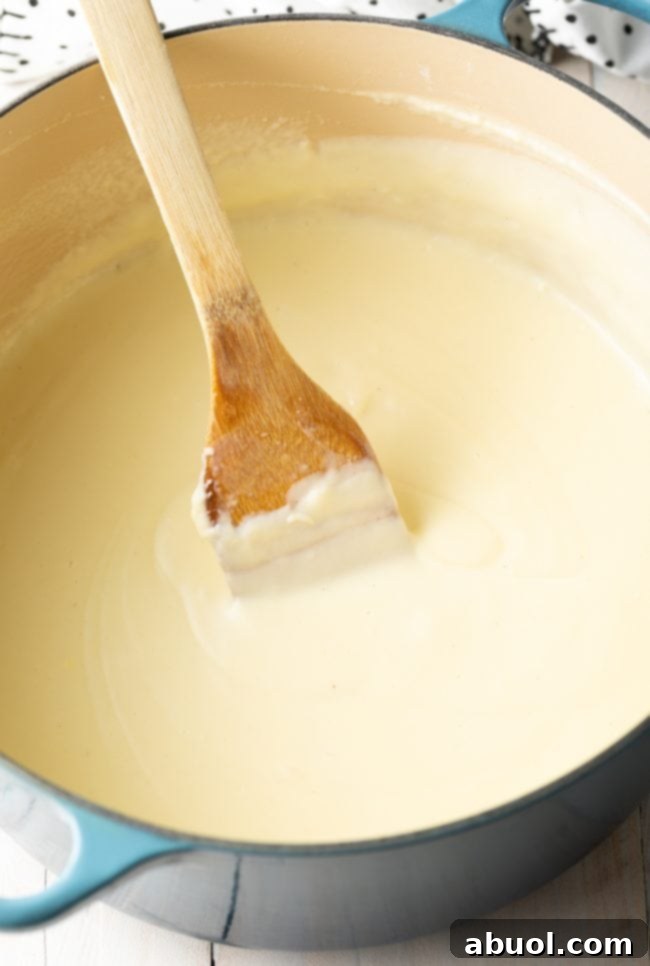
- Prepare the Creamy Béchamel Sauce: In a separate large skillet or pot, melt half a cup of unsalted butter over medium heat. Add half a cup of all-purpose flour to the melted butter, whisking constantly to create a smooth roux. Cook the roux for 1-2 minutes, continuing to whisk vigorously; it’s crucial not to let it brown, as we want a light-colored, creamy sauce. Gradually whisk in the four cups of whole milk. Continue whisking as the sauce thickens into a luxurious, gravy-like consistency. Once thickened, remove the pot from the heat immediately. Vigorously whisk in the two reserved egg yolks until fully incorporated and the sauce is smooth. Finally, stir in one cup of the shredded Italian cheese blend until it’s melted and completely smooth. The béchamel should be rich, velvety, and lump-free.
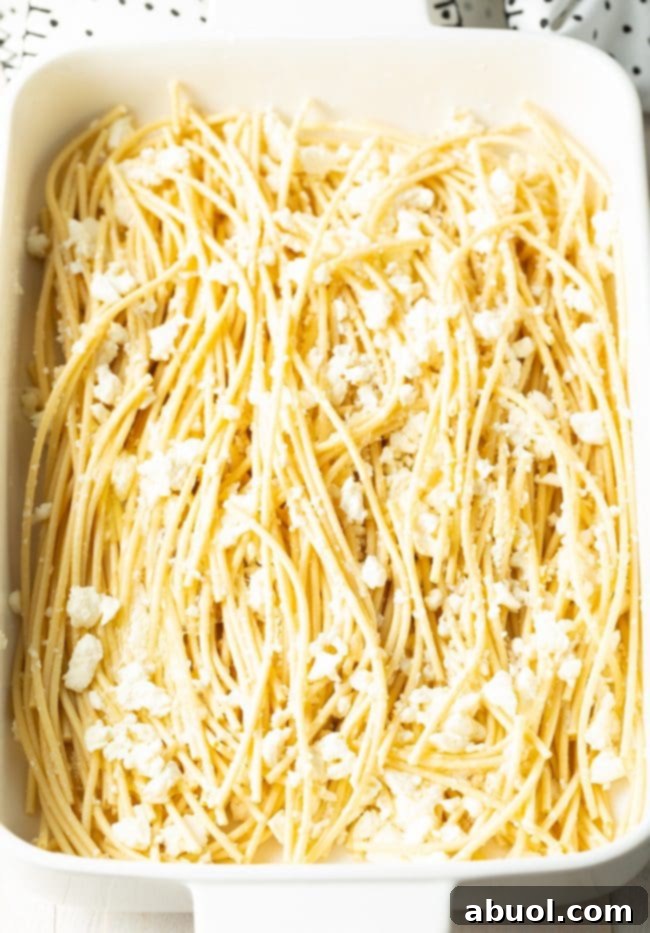
- Drain and Dress the Pasta: Carefully drain the salted hot water from the soaked bucatini pasta. A little residual water is perfectly fine. In the same baking dish, toss the drained pasta with the two egg whites and the crumbled feta cheese. The egg whites help the pasta bind together and form a cohesive layer. Spread the pasta mixture out evenly across the bottom of the dish. Evenly sprinkle two cups of the shredded Italian cheese blend over the pasta layer. This cheese layer adds extra flavor and helps define the pasta layer.
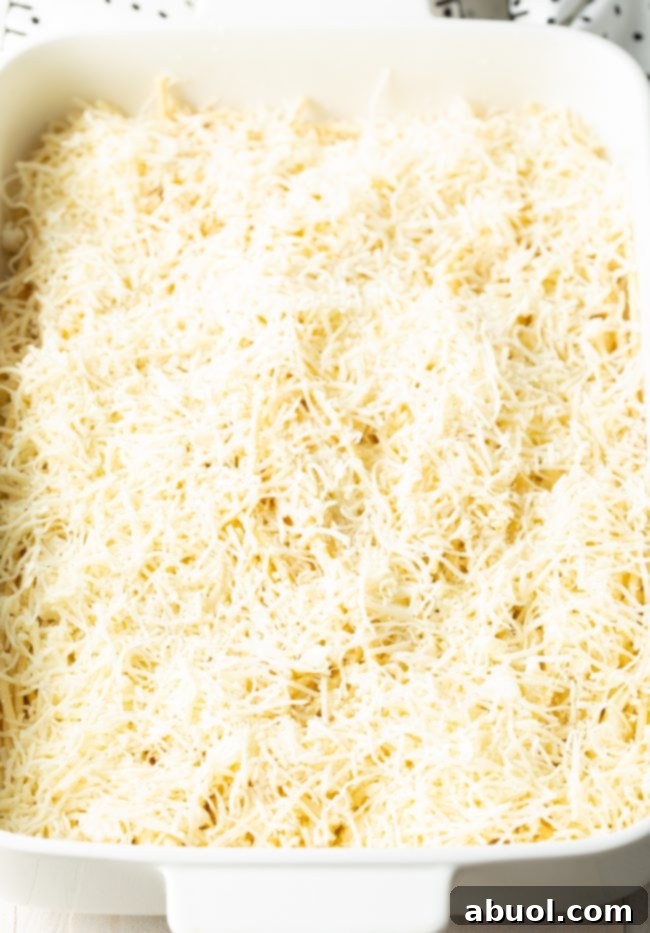
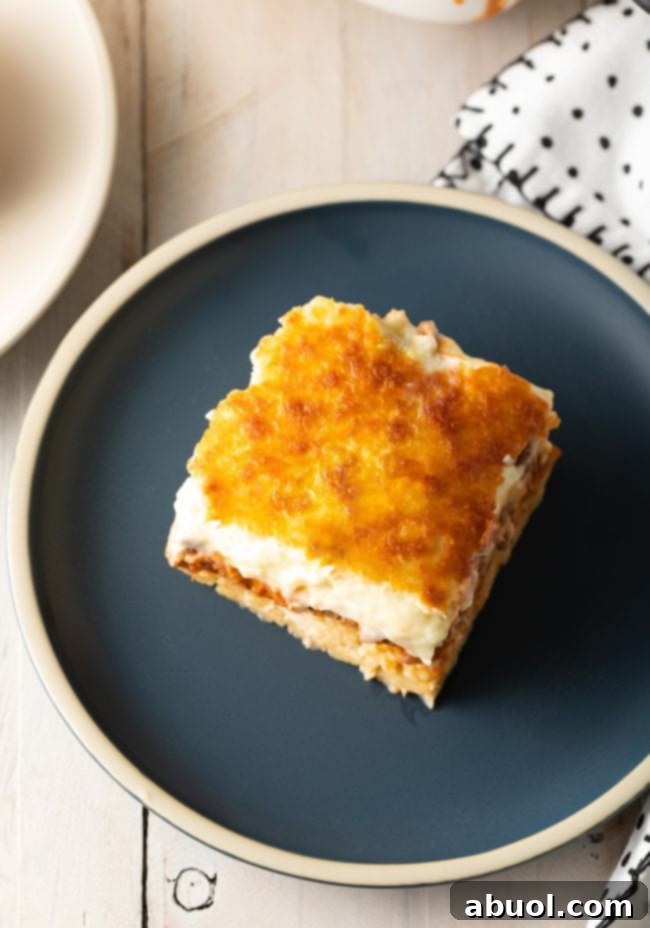
- Assemble the Layers: Preheat your oven to 350 degrees Fahrenheit (175 degrees Celsius). Now it’s time to assemble your Greek lasagna! Carefully spread all of the rich meat sauce evenly over the cheese-topped pasta layer in the baking dish. Next, gently pour and spread the creamy béchamel sauce over the meat layer, ensuring it covers the entire surface right to the edges. Finish by sprinkling the remaining one cup of shredded cheese over the béchamel, along with a dash of freshly ground black pepper for extra flavor and visual appeal.
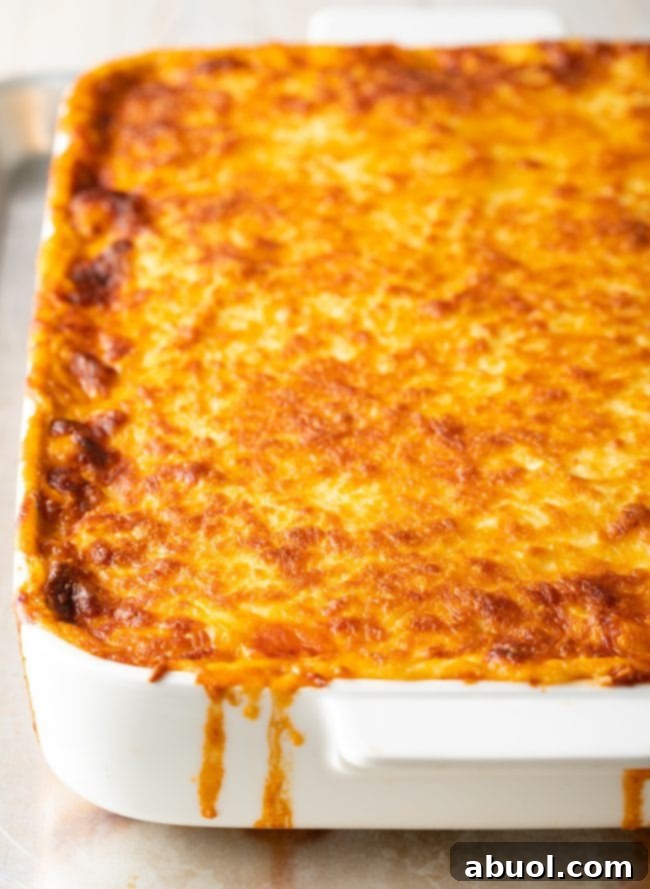
- Bake to Golden Perfection: Place the baking dish on the lowest rack of your preheated oven. If using a standard 9×13 inch dish, it’s wise to place it on a rimmed baking sheet to catch any potential drips. Bake the Pastitsio uncovered for 30-40 minutes, or until the top is a beautiful golden brown and the edges are bubbling. If you notice the top browning too quickly, you can loosely cover it with aluminum foil to prevent over-browning.
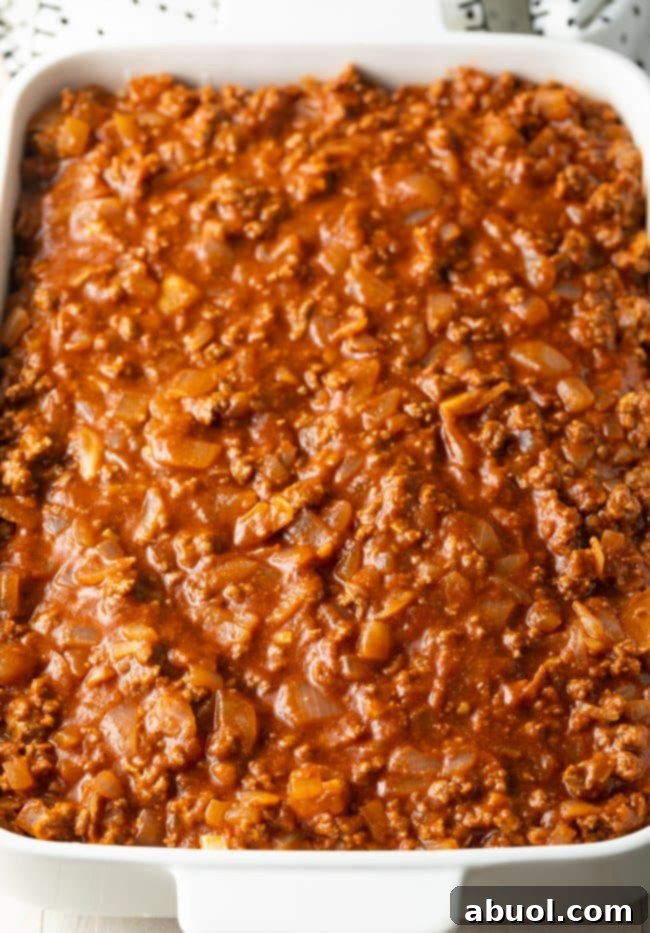
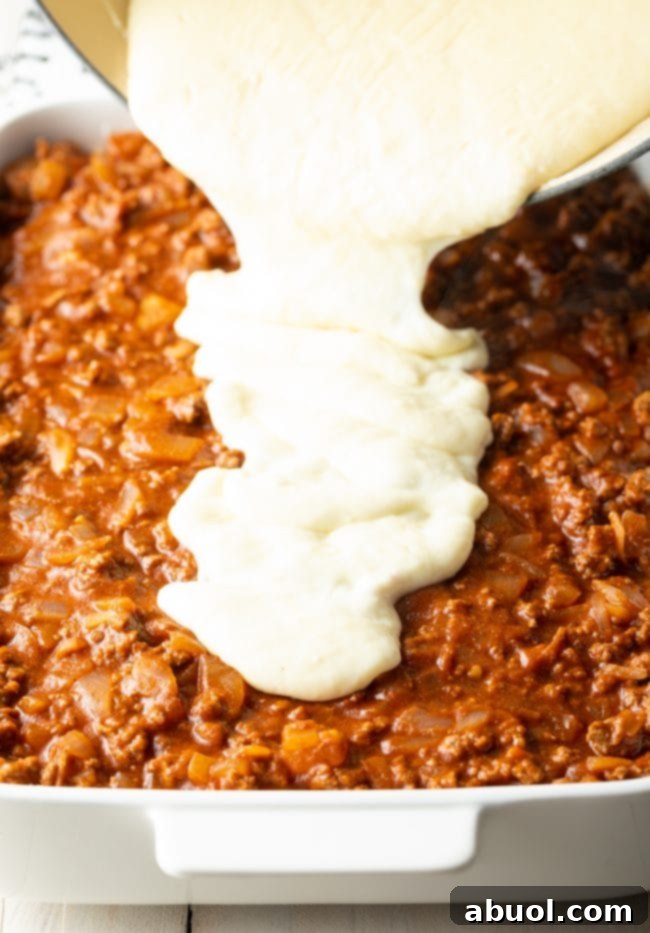
- Allow to Rest: This step is crucial for perfect slices. Once baked, remove the Pastitsio from the oven and let it rest for at least 20 minutes before attempting to cut and serve. This resting period allows the pasta, meat sauce, and béchamel to set and firm up, ensuring that each slice holds its shape beautifully and all the delicious layers remain intact. Patience is key for a picture-perfect presentation!
Get the Complete Greek Lasagna Recipe Below. Enjoy!
Perfect Serving Suggestions for Pastitsio
Pastitsio is a hearty and satisfying dish on its own, but pairing it with the right accompaniments can elevate your meal to a true Greek feast. The richness of Pastitsio benefits beautifully from fresh, vibrant sides that offer a delightful contrast.
- Greek Village Salad (Horiatiki): A classic choice, a cold and refreshing Horiatiki salad provides a crisp counterpoint to the warm, savory Pastitsio. Its medley of tomatoes, cucumbers, red onion, olives, and feta, dressed in a light vinaigrette, cuts through the richness and cleanses the palate.
- Simple Green Salad: For an easier option, a simple green salad tossed with a bright and zesty Greek Salad Dressing is always a welcome addition. The fresh greens add a refreshing crunch.
- Fresh Herbs: A sprinkle of fresh parsley or dill over your finished Pastitsio before serving can add an extra layer of flavor and a burst of color.
- Greek Lemon-Garlic Potatoes: For an extra filling and authentic meal, serve your Greek lasagna with a side of tender and flavorful Greek Lemon-Garlic Potatoes. Their zesty, savory notes complement the casserole perfectly.
- Fresh Baked Bread: No pasta night is complete without something to soak up all the delicious sauces! A basket of warm Homemade Breadsticks or thick, crusty slices of Garlic Bread are essential for an utterly satisfying experience.
Delicious Recipe Variations to Try
While the classic Pastitsio recipe is divine, it’s also incredibly versatile and can be adapted to suit different tastes and dietary needs. Here are some ideas to inspire your culinary creativity:
- Pasta Alternatives: If bucatini isn’t available or you prefer a different texture, feel free to use other medium-sized tubular noodles that have holes and can soak up the rich sauces. Penne, ziti, or rigatoni are all excellent options that maintain the integrity of the dish.
- Protein Swaps: The meat sauce is highly adaptable. Instead of ground beef, consider using ground chicken, ground turkey, ground pork, or a combination of ground beef and veal for a slightly richer flavor. Each will impart a different nuance to the dish.
- Vegetarian Pastitsio: For a delicious meat-free version, simply omit the ground meat and build your Pastitsio with a flavorful marinara sauce or a rich vegetable-based ragu. Add sautéed mushrooms, zucchini, or lentils for extra texture and protein.
- Tomato Sauce Shortcuts: Save time without sacrificing flavor by using your favorite high-quality jarred pasta sauce. You can enhance it with a hint of tomato paste for deeper richness and a touch of extra seasoning.
- Gluten-Free Option: Making Pastitsio gluten-free is simple. Just swap traditional bucatini or penne pasta for your favorite gluten-free equivalent. For the béchamel, use a gluten-free alternative flour (like rice flour or a gluten-free all-purpose blend) as a substitute for wheat flour.
- Cheese Choices: While the Italian blend is fantastic, for a truly traditional Greek touch, consider incorporating or swapping some of the blend for kefalotyri cheese. This hard, salty Greek cheese offers a distinct flavor and excellent melting properties.
- Enhanced Sauce Flavor: Elevate your meat sauce with additional aromatics. Adding a bay leaf or two while simmering can infuse a subtle herbaceous note. For an even deeper, more complex flavor, a splash of dry red wine, allowed to simmer down, can add wonderful depth.
Frequently Asked Questions About Pastitsio
How long will Pastitsio leftovers keep well?
This Greek lasagna stores beautifully! Leftovers will keep well in an airtight container in the refrigerator for 3-4 days. Always allow the dish to cool completely before transferring it to storage to maintain freshness and prevent condensation.
How do I freeze Pastitsio?
Pastitsio is an excellent candidate for freezing, either before or after baking. To freeze before baking, assemble the dish completely in a freezer-safe baking pan. Cover it tightly with plastic wrap, then with aluminum foil. When you’re ready to serve, thaw it in the fridge overnight and bake according to the recipe instructions, adding an extra 10-15 minutes to account for the chilled temperature. If freezing baked leftovers, let them cool completely, then portion into freezer-safe containers that seal well. Pastitsio can be frozen for up to 2 months. Defrost overnight in the refrigerator before reheating gently in the oven or microwave.
Can I make Greek lasagna ahead of time?
Absolutely! Pastitsio is a fantastic make-ahead meal. You can fully assemble the entire dish, cover it tightly, and refrigerate it for up to 2 days before baking. When baking from chilled, you might need to add an extra 10-15 minutes to the total baking time to ensure it heats through completely and the top is golden brown.
What is the difference between Pastitsio and Moussaka?
Both Pastitsio and Moussaka are iconic layered Greek casseroles featuring a rich meat sauce and a creamy béchamel topping. The primary distinction lies in their base layer. Pastitsio is made with a pasta base (typically bucatini), while Moussaka substitutes the pasta with layers of sliced eggplant or potatoes.
What is the difference between Pastitsio and Italian Lasagna?
While both are comforting baked pasta dishes with meat sauce, Pastitsio and Italian lasagna have distinct characteristics. Pastitsio, the Greek version, traditionally uses tubular pasta (like bucatini), a spiced meat sauce (often with cinnamon and nutmeg), and is crowned with a thick, rich, and often cheesy béchamel sauce. Italian lasagna, on the other hand, typically uses flat lasagna noodles, a tomato-based marinara or ragu sauce, and often incorporates ricotta or mozzarella cheese layers, with béchamel being an optional addition depending on the regional variation. The spices, cheeses, and pasta types give each dish its unique flavor profile and cultural identity.
More Delicious Lasagna & Pasta Recipes to Explore
If you loved this Greek Pastitsio, you’ll surely enjoy these other comforting and flavorful lasagna and pasta recipes. Expand your culinary repertoire with these family-friendly dishes:
Looking for More Deliciously Comforting Dinner Recipes?
Our collection of comforting dinner recipes is designed to bring warmth and flavor to your table. If you enjoyed the hearty goodness of Pastitsio, be sure to check out these other irresistible dishes:
- Baked Ziti with Ricotta and Sausage
- Homemade Lamb Gyro Recipe
- Cheesy Chicken Spaghetti with Rotel Casserole
- No-Boil Chicken Parmesan Pasta Recipe
- Cheesy Chicken Alfredo Pasta Bake

Greek Lasagna (Pastitsio)
This authentic Greek-style lasagna recipe features layers of tender bucatini pasta, a rich, zesty spiced meat sauce, a medley of shredded cheeses, and a luscious, creamy béchamel topping. It’s a comforting classic perfect for any meal.
Prep Time: 20 minutes
Cook Time: 1 hour
Total Time: 1 hour 20 minutes
Servings: 12 servings
Ingredients
For the Pasta Layer:
- 12 ounces bucatini pasta (or penne/ziti)
- 2 large egg whites (yolks reserved for béchamel)
- 6 ounces crumbled feta cheese
- 4 cups shredded Italian blend cheese, divided
For the Meat Sauce:
- 2 tablespoons unsalted butter (or olive oil)
- 1 large onion, peeled and chopped
- 4 cloves garlic, minced
- 2 pounds lean ground beef (90-95%)
- ¼ teaspoon ground cinnamon
- ⅛ teaspoon ground nutmeg
- 30 ounces tomato sauce (canned crushed or jarred)
- Salt and freshly ground black pepper, to taste
For the Béchamel Sauce:
- ½ cup unsalted butter
- ½ cup all-purpose flour
- 4 cups whole milk
- 2 large egg yolks (reserved from pasta layer)
- 1 teaspoon salt
- ⅛ teaspoon ground nutmeg
Instructions
- Soak the Pasta: Place bucatini pasta in a deep 9×13 inch (3-quart) baking dish. Cover with very hot tap water (not boiling) and stir in a teaspoon of salt. Let it soak for 30-40 minutes while you prepare the sauces. Preheat oven to 350°F (175°C). Chop all produce.
- Make the Meat Sauce: In a large 6-quart pot over medium heat, melt 2 tablespoons butter. Add chopped onions and garlic, sauté for 3-5 minutes until translucent. Add ground beef, cinnamon, nutmeg, and 1 teaspoon salt. Break beef into small pieces and brown thoroughly. Drain excess fat. Stir in tomato sauce and simmer for 15 minutes, stirring regularly. Season with salt and pepper to taste.
- Make the Béchamel: In a separate pot over medium heat, melt ½ cup butter. Whisk in ½ cup flour to create a roux; cook for 1-2 minutes, whisking constantly, ensuring it doesn’t brown. Gradually whisk in the 4 cups whole milk, salt, and nutmeg. Continue whisking until the béchamel thickens to a gravy-like consistency. Remove from heat. Vigorously whisk in the 2 reserved egg yolks until fully incorporated. Stir in 1 cup of shredded Italian cheese blend until melted and smooth.
- Drain and Prep Pasta: Carefully drain the salted water from the soaked pasta, allowing a little water to remain. In the baking dish, toss the soaked pasta with the 2 egg whites and crumbled feta cheese. Spread the pasta in an even layer across the bottom of the dish. Sprinkle 2 cups of shredded Italian cheese over the pasta.
- Layer All Ingredients: Evenly spread the entire meat sauce over the cheese-topped pasta layer in the baking dish. Gently pour and spread the béchamel sauce over the meat layer, ensuring even coverage. Finally, sprinkle the remaining 1 cup of shredded Italian cheese over the béchamel.
- Bake: Place the baking dish on a rimmed baking sheet (if not using a deep-dish pan). Bake uncovered on the lowest rack for 30-40 minutes, or until the top is golden brown and bubbly. If the top browns too quickly, loosely cover with foil.
- Rest and Serve: Let the Pastitsio rest for at least 20 minutes before cutting and serving. This allows the layers to set, ensuring clean and firm slices.
Notes
This lasagna will keep well in the fridge for 3-4 days. Allow leftovers to cool completely before transferring to an airtight container and refrigerating.
You can easily freeze Greek lasagna before or after baking! To freeze before baking, prepare the dish in a freezer-safe pan, cover tightly, and freeze for up to 2 months. Thaw overnight in the fridge before baking. If freezing leftovers, allow them to cool, transfer to a freezer-safe container, and freeze for up to 2 months. Defrost in the fridge overnight before reheating.
Nutrition
Serving: 1pc, Calories: 586kcal, Carbohydrates: 35g, Protein: 37g, Fat: 33g, Saturated Fat: 20g, Trans Fat: 1g, Cholesterol: 165mg, Sodium: 1138mg, Potassium: 750mg, Fiber: 2g, Sugar: 9g, Vitamin A: 1214IU, Vitamin C: 6mg, Calcium: 468mg, Iron: 4mg
Course: Dinner, Main Course
Cuisine: Greek, Mediterranean
Author: Sommer Collier