
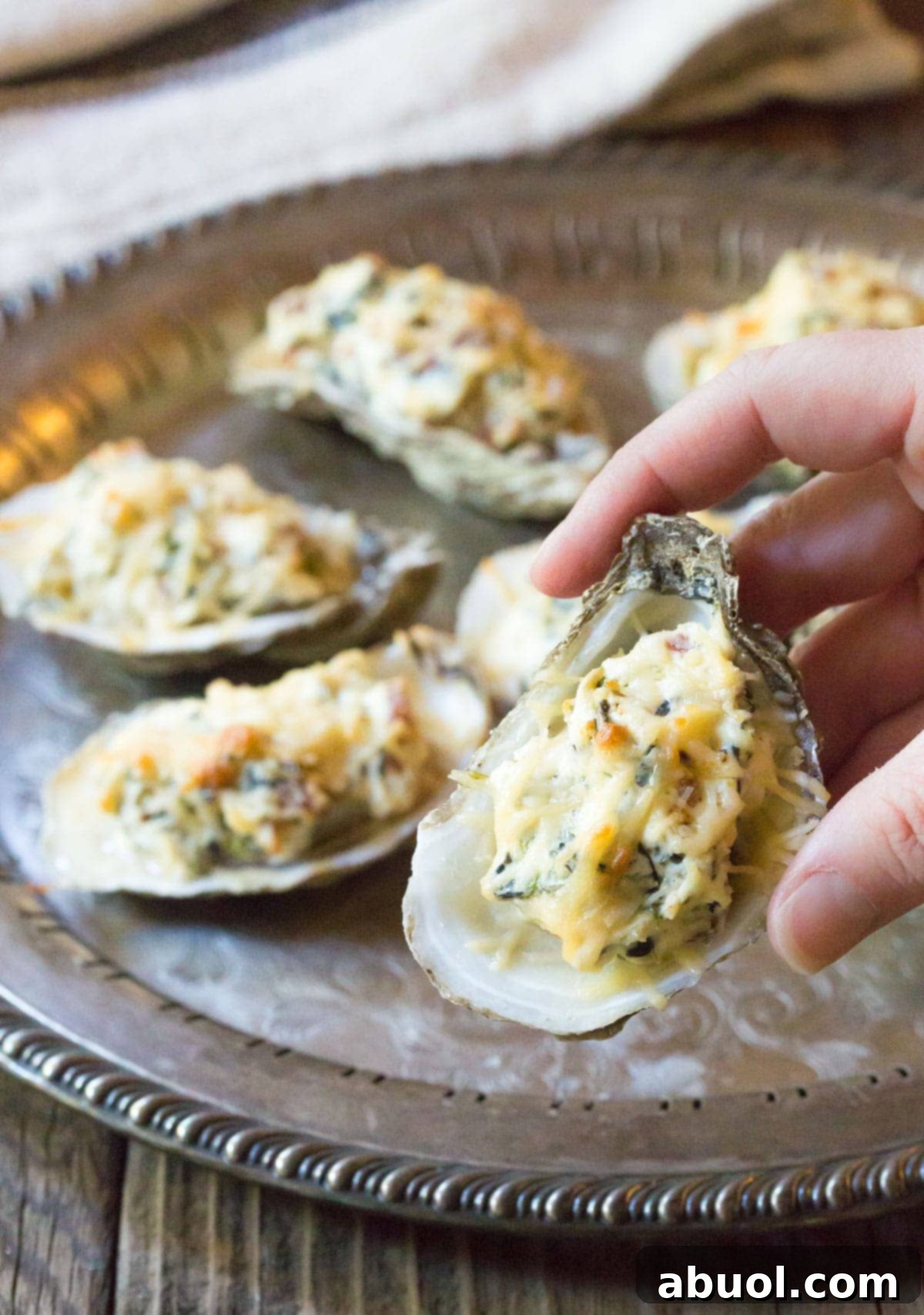
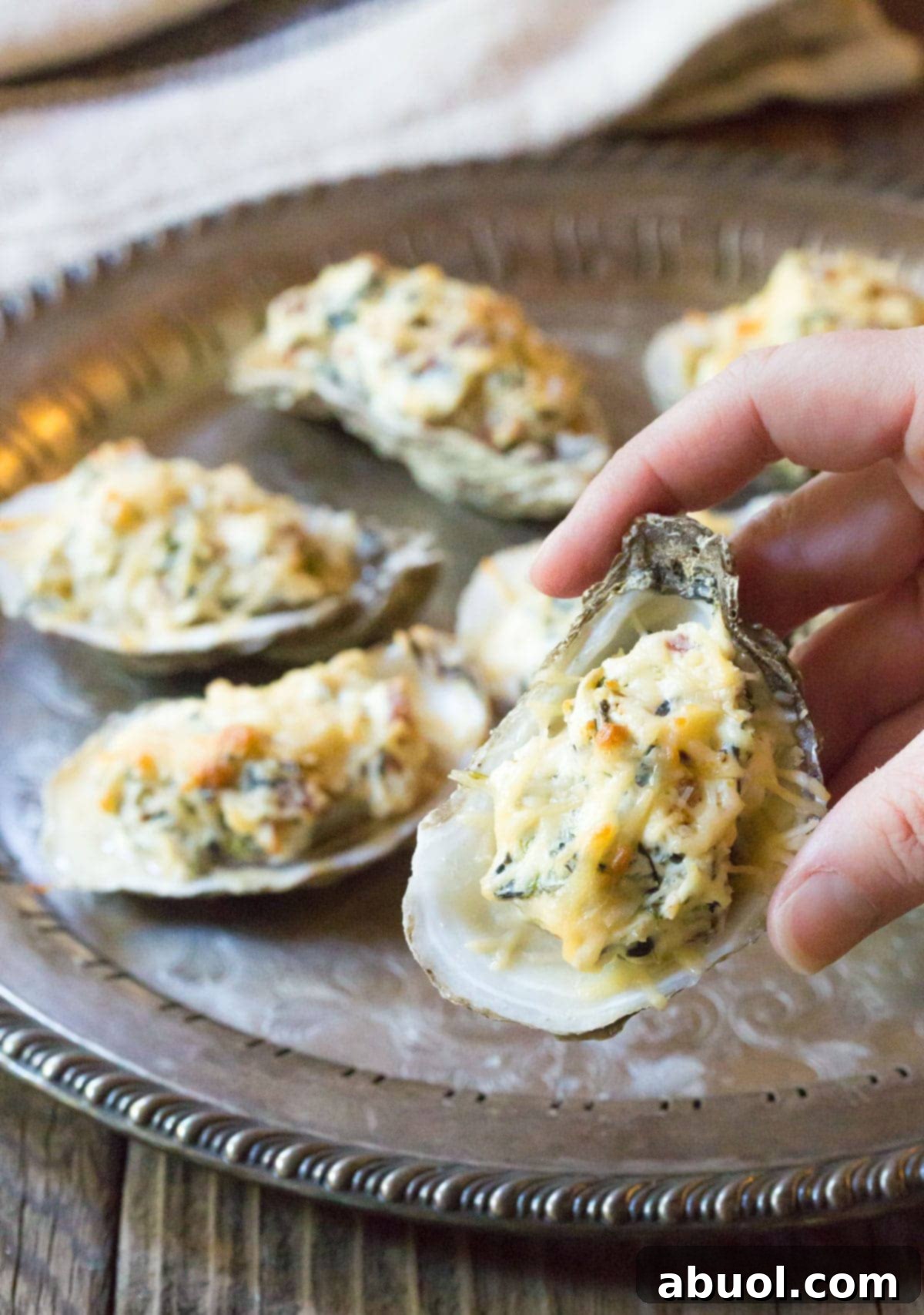
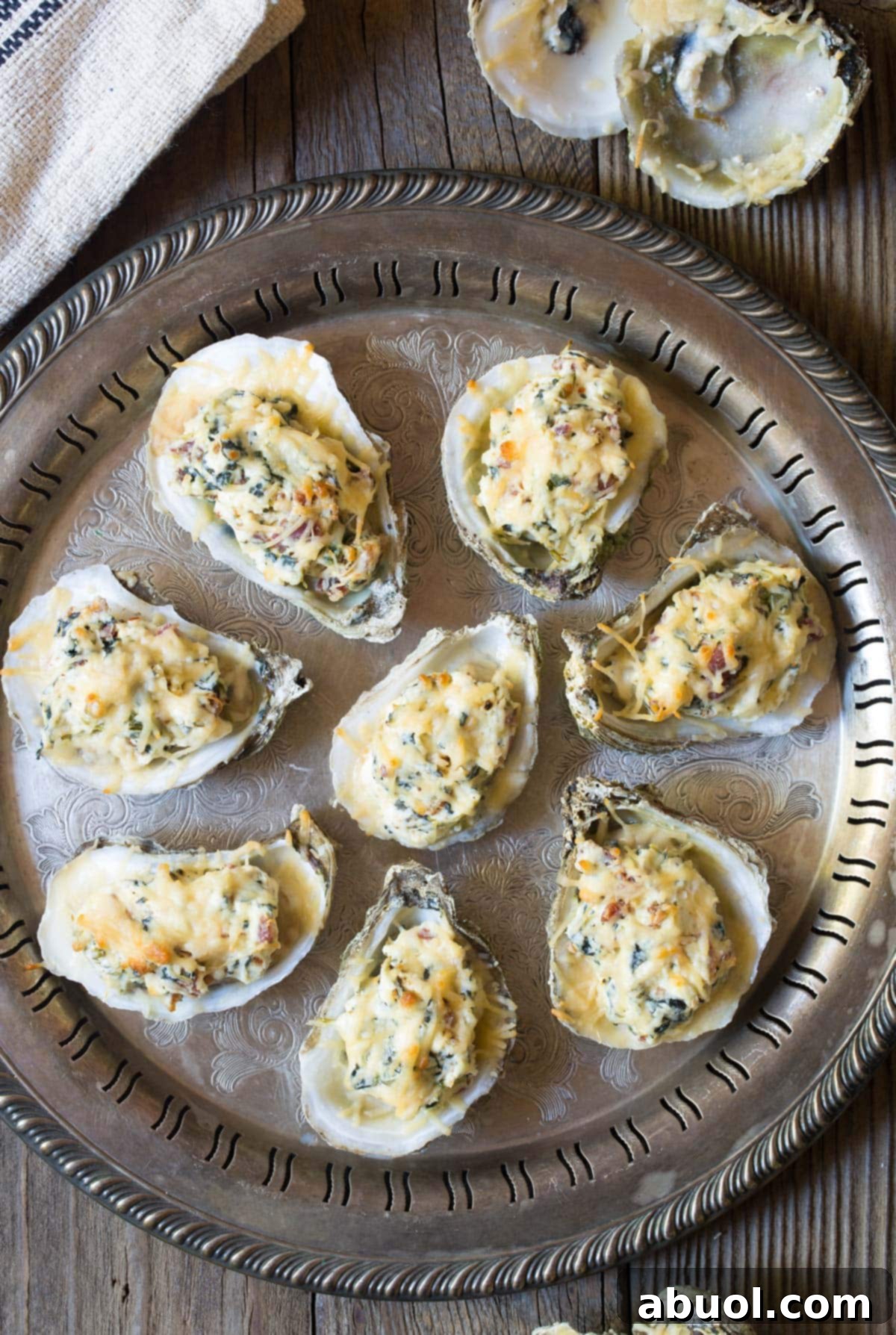
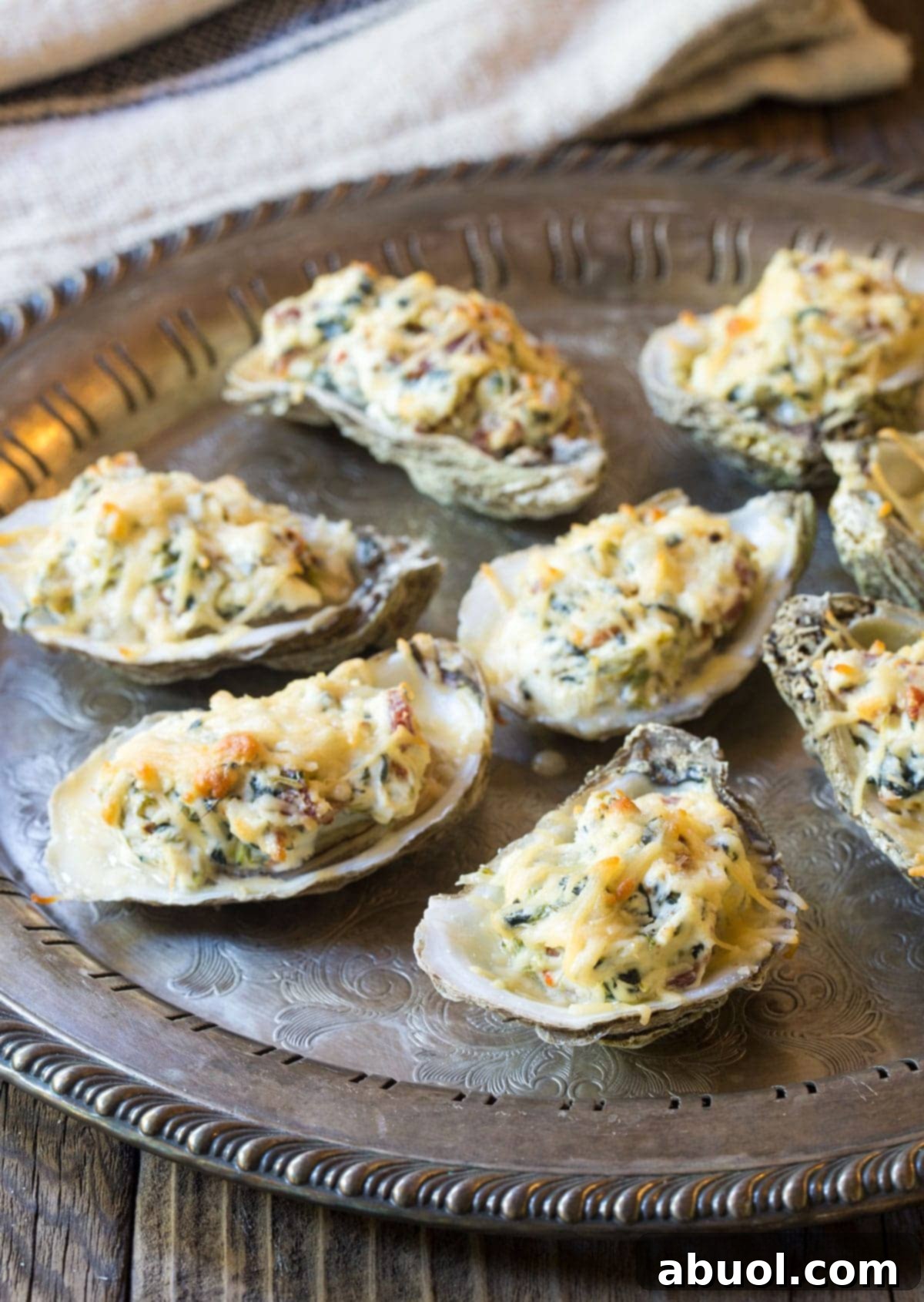
Step aside, traditional Oysters Rockefeller and Oysters Mornay! This holiday season, prepare to dazzle your guests with a fresh, irresistible take on a beloved classic: our modernized Three-Cheese Baked Oysters Recipe. Elegantly served in their natural shells, each oyster is generously crowned with a molten blend of three distinct cheeses and savory, crispy bacon. This exquisite dish transcends the ordinary appetizer, transforming into a true culinary celebration, perfectly suited for festive gatherings and special occasions where flavor and presentation are paramount.
Baked Oysters: A Gourmet Delight for Special Occasions
Oysters, with their distinct briny flavor and delicate texture, have fascinated epicureans for centuries. While the simple joy of savoring raw oysters by the seaside with a splash of mignonette remains a cherished experience for many, the versatility of this bivalve truly shines when it’s prepared with warmth and creativity. As the autumn leaves fall and the festive lights begin to twinkle, oysters naturally transition from a refreshing summer treat to a luxurious indulgence, making them an ideal candidate for holiday entertaining.
Baked oysters offer a profound depth of flavor and a comforting richness that differs wonderfully from their raw counterparts. This cooking method transforms the humble oyster into a truly gourmet appetizer, lending itself perfectly to grand holiday dinners, sophisticated New Year’s Eve parties, or any celebratory gathering that calls for an extra touch of elegance. The interplay between the succulent oyster meat, the creamy, melted cheeses, and the smoky notes of bacon creates a symphony of tastes and textures that is both sophisticated and incredibly satisfying. Our recipe harnesses this potential, promising to elevate your special occasion menu and leave a lasting impression on every guest.
Understanding Oyster Seasonality and Freshness Tips
The traditional wisdom regarding “oyster season” famously states that these delicious bivalves are best enjoyed in months ending with an “R” – specifically September, October, November, and December. This centuries-old guideline stems from a time when refrigeration was scarce. During warmer months (May, June, July, August), oysters tend to spawn, which can result in thinner, often milky meat as their energy is diverted towards reproduction. Additionally, warmer waters historically increased the risk of spoilage and foodborne illnesses, making it safer to consume oysters during cooler periods.
However, thanks to advancements in aquaculture, sustainable farming practices, and sophisticated cold chain management, fresh, high-quality oysters are now available year-round. While the “R” months often still yield oysters at their plumpest and most flavorful, modern consumers can confidently enjoy oysters during any month, provided they are sourced from reputable suppliers who ensure proper handling and freshness. For baked preparations, where the oyster’s inherent flavor is enhanced by rich toppings, the subtle seasonal variations in texture and taste become less critical. The most important factor remains the freshness of the oyster itself: always choose oysters with tightly closed shells and discard any that are open or damaged. A quick rinse and scrub before shucking are also essential for cleanliness.
The Modern Approach: Three-Cheese Baked Oysters with Bacon and Spinach
Our Three-Cheese Baked Oysters Recipe presents a vibrant and accessible alternative to classic baked oyster dishes like Oysters Rockefeller and Oysters Mornay. While these traditional recipes are celebrated for their elegance, they often involve complex roux-based sauces or labor-intensive preparation steps. This modern recipe streamlines the process, delivering an equally impressive and incredibly flavorful appetizer with significantly less fuss, making it perfect for both seasoned hosts and novice cooks alike, especially during the busy holiday season.
The core of this dish lies in using fresh-shucked oysters on the half shell as a natural vessel for our molten, savory topping. The filling is a masterful blend of flavors and textures: the creamy tang of softened cream cheese forms a luxurious base, while sharp white cheddar and nutty Parmesan contribute layers of cheesy goodness. Crispy, salty bacon adds a crucial smoky depth, beautifully contrasted by the fresh earthiness of spinach and the pungent warmth of minced garlic. A hint of crushed red pepper introduces a subtle, zesty kick, awakening the palate with every bite. The result is a robust, well-rounded flavor profile that perfectly complements the briny sweetness of the oyster, offering a gourmet experience that is both bold and satisfying, all achieved with straightforward steps and familiar ingredients.
Achieving Perfection: How to Bake Oysters in the Oven
Baking oysters is an art of precision, where temperature and timing are key to transforming them into a tender, delectable treat. The ultimate goal is to heat the oyster meat just enough to plump it up and marry it with the flavors of the topping, without veering into the dreaded territory of tough, rubbery texture. The duration of baking largely depends on the oven temperature and whether the oysters are “naked” or covered with a substantial topping.
For recipes like our Three-Cheese Baked Oysters, which feature a generous and rich topping, a high oven temperature for a short period is the secret to success. We recommend baking these beauties at a robust 450 degrees Fahrenheit (232 degrees Celsius) for a swift 8-10 minutes. This intense heat ensures that the cheesy topping achieves a beautiful golden-brown crust and a bubbling, molten consistency, while the delicate oysters beneath cook through quickly and remain incredibly tender and juicy. Baking at a lower temperature for a longer period would risk overcooking the oysters before the topping properly browns. Always keep a watchful eye on them during the final minutes; the moment the cheese is gloriously melted and lightly toasted, they are perfectly done. Remove them promptly to preserve their exquisite texture and serve immediately for the best experience.
Essential Ingredients for Your Baked Oyster Masterpiece
Creating truly irresistible stuffed oysters begins with selecting the finest ingredients. Each component in this recipe contributes to the overall harmony and depth of flavor, making every bite a memorable experience. Here’s a closer look at what you’ll need and why:
- Fresh Oysters: The undisputed star of the dish. For this recipe, opt for 12-14 average-sized oysters, or 16-20 smaller ones if that’s what’s available, ensuring a satisfying portion for your guests. Crucially, always select oysters that are tightly closed and free of any cracks or damage, which indicates freshness and vitality. To guarantee the best quality, purchase them on the day you plan to cook, or as close to it as possible. Before shucking, give them a thorough scrub under cold running water to remove any lingering grit or debris.
- Cream Cheese: This is the foundational element of our luscious filling, providing an unparalleled creaminess and tang. When softened to room temperature, cream cheese easily incorporates with other ingredients, creating a smooth, rich base that adheres beautifully to the oyster and delivers a decadent texture.
- Shredded White Cheddar: Chosen for its robust, sharp flavor that stands up to the briny oysters, and its superior melting properties. White cheddar contributes a piquant edge and ensures a wonderfully gooey, melted cheese layer that is utterly irresistible.
- Cooked Crumbled Bacon: Bacon adds an essential layer of smoky, salty complexity and a delightful textural crunch. While pre-cooked bacon bits offer convenience, cooking fresh bacon until crisp and crumbling it yourself will yield a far superior flavor and aroma, truly elevating the dish.
- Frozen Chopped Spinach, Thawed and Squeezed: Spinach introduces a subtle earthiness and a pop of color, balancing the richness of the cheeses and bacon. The key here is to thoroughly thaw the spinach and squeeze out every bit of excess liquid. This crucial step prevents the filling from becoming watery, ensuring a concentrated flavor and ideal consistency.
- Garlic: An aromatic powerhouse, garlic infuses the filling with its characteristic pungent and savory notes, enhancing all other flavors. Freshly minced garlic offers the most vibrant taste.
- Crushed Red Pepper: For those who appreciate a touch of heat, a mere ¼ teaspoon of crushed red pepper flakes provides a subtle, zesty warmth. This small addition brightens the overall flavor profile without overwhelming the delicate oyster. Adjust the quantity to suit your preference.
- Grated Parmesan Cheese: This is the perfect finishing touch. Sprinkled liberally over the filling just before baking, Parmesan melts into a beautiful, golden-brown crust, imparting a distinct nutty, umami flavor that adds another dimension of deliciousness and visual appeal.
Simplified Preparation: How to Make These Incredible Baked Oysters
Crafting these sensational baked oysters is a straightforward and rewarding process. Follow these detailed steps to ensure perfectly cooked, flavor-packed appetizers every time:
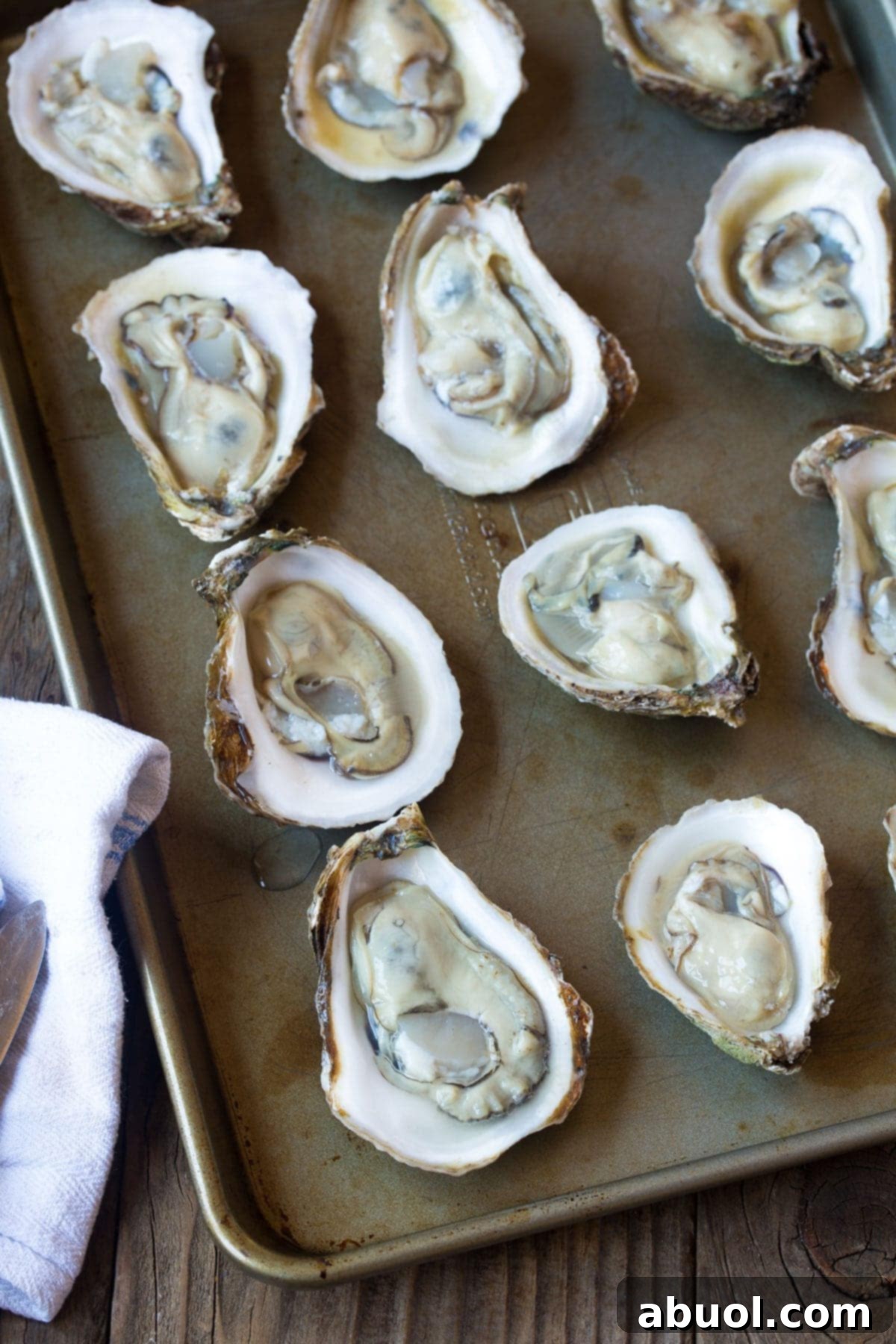
- Shuck the Oysters & Preheat the Oven: Begin by preheating your oven to a high temperature of 450°F (232°C). This ensures the oysters cook quickly and the cheese browns beautifully without overcooking the seafood. Next, carefully shuck your fresh oysters. If you require guidance or a refresher on the technique, our comprehensive oyster shucking tutorial provides detailed, step-by-step instructions for safe and efficient shucking. Once shucked, leave the succulent oyster meat nestled in the deeper half of its shell. Arrange these shucked oysters on a rimmed baking sheet. To keep them stable and prevent the precious filling from spilling, you can create a bed of rock salt or crumpled aluminum foil on the sheet.
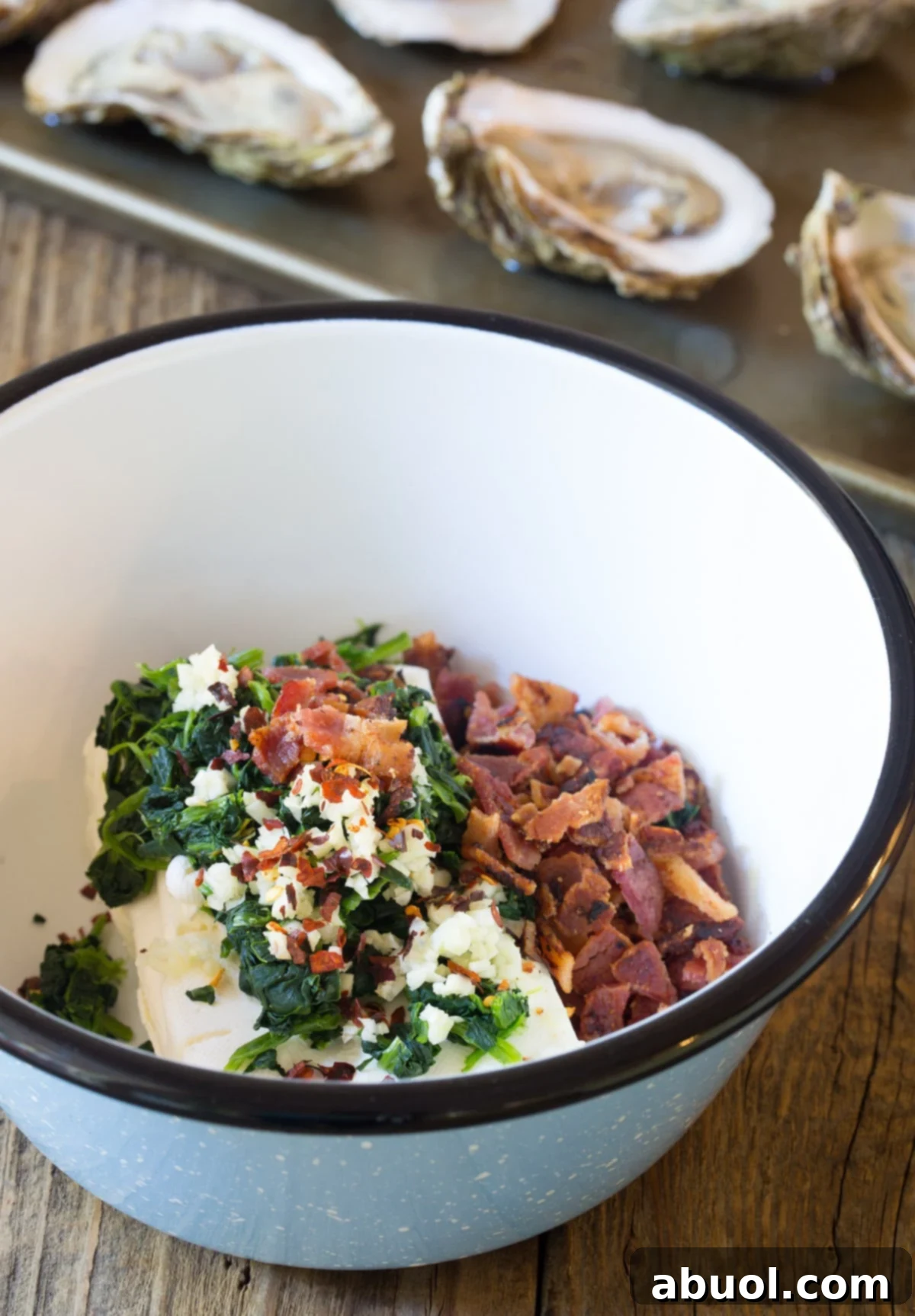
- Prepare the Rich Three-Cheese Filling: Crucially, take your thawed frozen chopped spinach and squeeze out every last drop of excess liquid. This step is vital for preventing a watery filling. In a medium-sized mixing bowl, combine the softened cream cheese, shredded white cheddar, savory crumbled cooked bacon, the thoroughly squeezed chopped spinach, minced garlic, and the crushed red pepper flakes. Mix these ingredients thoroughly until they are uniformly combined and form a thick, cohesive, and richly flavored mixture.
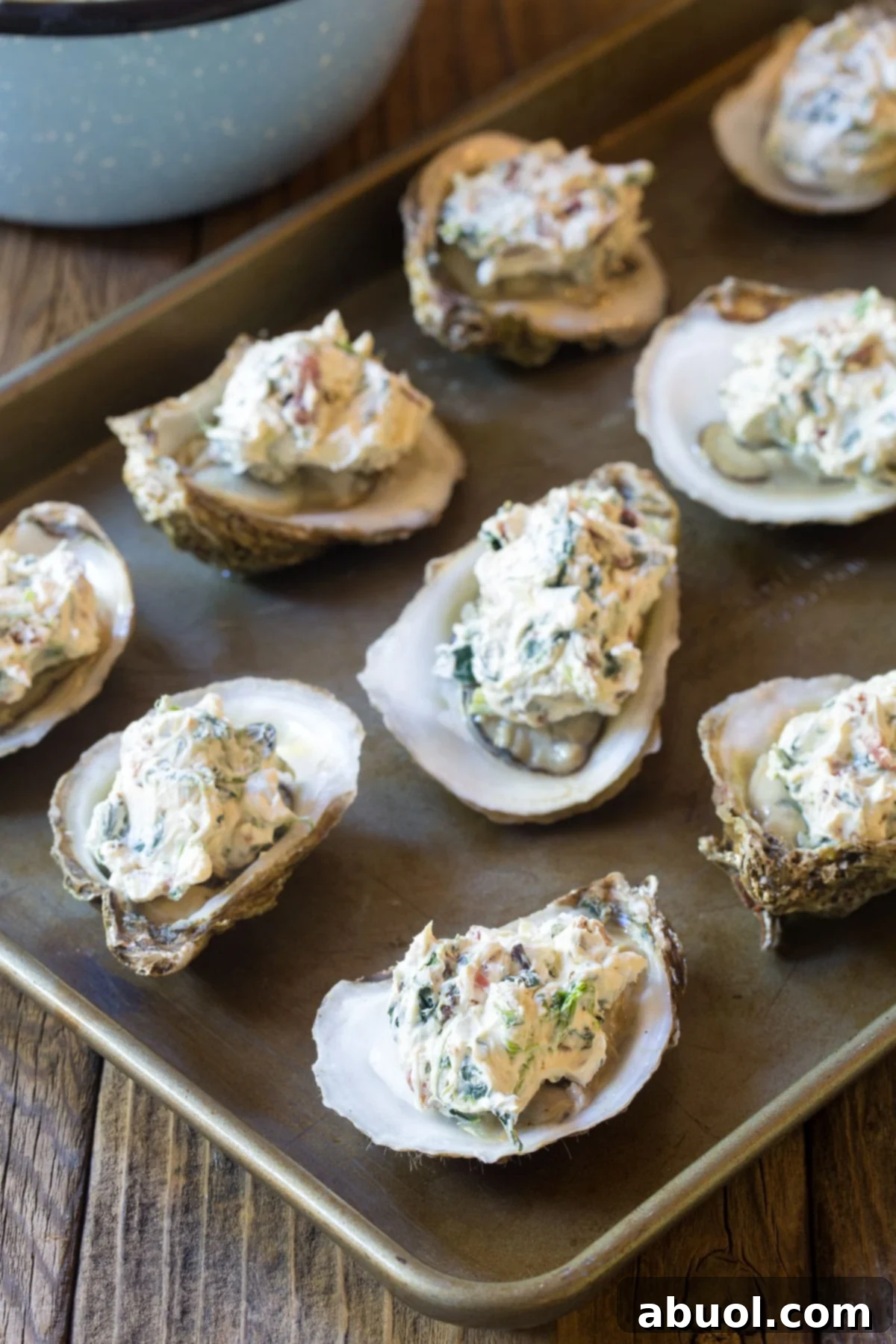
- Generously Top Each Oyster: With your delicious filling prepared, spoon a generous dollop (approximately 1 to 2 tablespoons, depending on the size of your oysters) of this cheesy bacon mixture over each individual, freshly shucked oyster. Ensure that the oyster meat is well covered and the filling is evenly distributed across the shell.
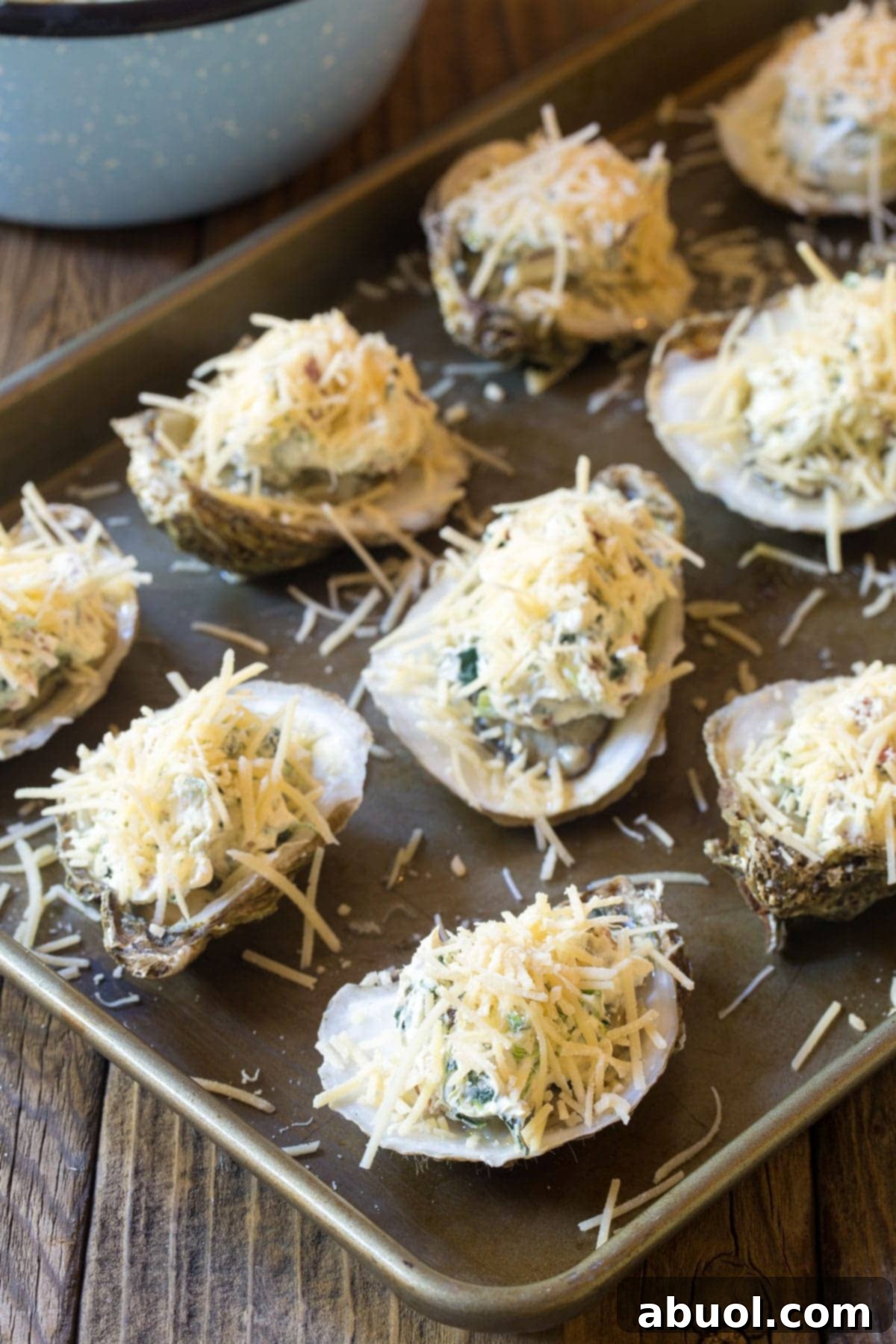
- Crown with Parmesan: For that irresistible golden finish and an extra layer of umami, sprinkle a good amount of grated Parmesan cheese over the top of the filling on each oyster. This layer will melt and brown beautifully in the oven, adding a delightful nutty crust.
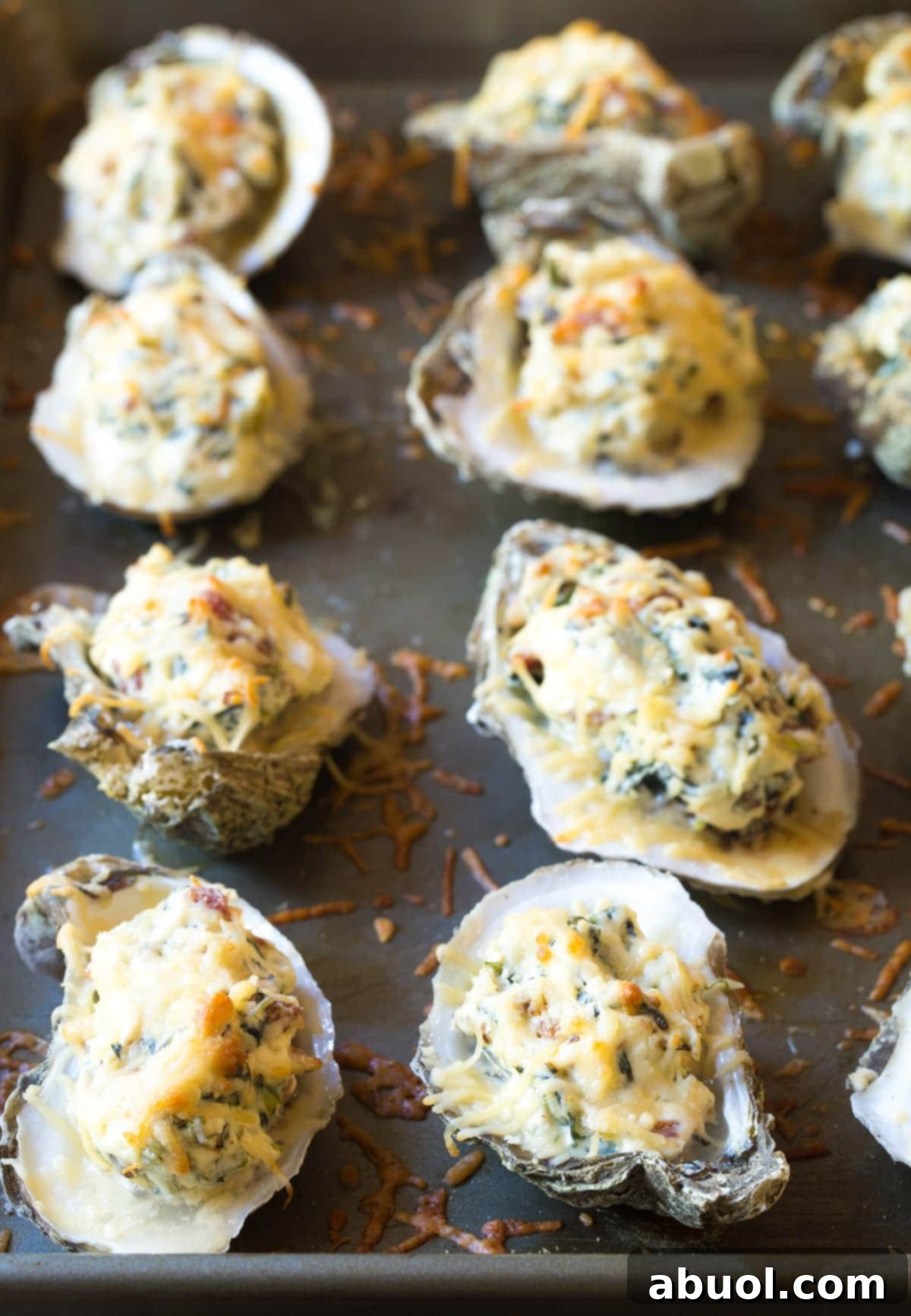
- Bake to Golden Perfection: Carefully transfer the baking sheet into your preheated oven. Bake for approximately 8-10 minutes. Watch closely during the final minutes: the oysters are ready when the cheese topping is bubbling, gloriously melted, and has developed a beautiful golden-brown hue. The oysters themselves will plump up and become tender. As soon as they reach this perfect stage, promptly remove them from the oven to prevent overcooking, which can lead to a rubbery texture. Serve these magnificent three-cheese baked oysters immediately while they are still warm and the cheese is wonderfully molten.
Find the full printable recipe card with precise measurements and nutritional information conveniently located below. We hope you enjoy crafting and savoring this exceptional dish!
Enhancing the Experience: Serving Suggestions and Pairings
Our Three-Cheese Baked Oysters are undoubtedly a show-stopping appetizer on their own, but thoughtfully pairing them with complementary dishes can elevate your entire dining affair. These elegant bites integrate seamlessly into various spreads, particularly during holiday celebrations or any special occasion. Consider these delightful accompaniments to complete your culinary presentation:
- Bright and Refreshing Contrasts: The inherent richness of the baked oysters and cheese is beautifully balanced by fresh, acidic elements. Serve them alongside crisp, sweet grilled corn on the cob, perhaps brushed with a bright lime butter, or a vibrant Mexican shrimp cocktail that offers a refreshing, zesty counterpoint. Always offer lemon wedges for guests to add an extra burst of citrus, enhancing the oyster’s natural flavor.
- Hearty Yet Harmonious Sides: For a more substantial appetizer spread, consider pairing the oysters with flavorful and satisfying sides. Roasted Greek potatoes, with their herbaceous notes and crispy exteriors, provide a wonderful textural and flavor complement to the savory oysters.
- Continuing the Seafood Theme: If you wish to build a truly luxurious seafood feast, expand your offerings with other delicate options. Consider elegant ahi tuna tartare or miniature Maryland crab cakes, which can create a magnificent and diverse seafood platter.
- Ideal Beverage Pairings: To perfectly complement these baked oysters, consider a crisp, dry white wine. A Sauvignon Blanc or an unoaked Chardonnay will beautifully cut through the richness of the cheese and bacon. For beer enthusiasts, a light, crisp Pilsner or a dry lager offers a refreshing palate cleanser. And, of course, a glass of chilled champagne or sparkling wine always adds an extra touch of festivity and luxury to any oyster dish.
For an absolutely stunning presentation, arrange your warm baked oysters on a serving platter filled with a bed of rock salt. Garnish generously with finely chopped fresh parsley or chives for a pop of color and aromatic freshness. Provide extra lemon wedges and, for those who appreciate a kick, a small ramekin of your favorite hot sauce for an optional drizzle. Consider finishing with a dusting of paprika for added visual appeal.
Frequently Asked Questions for Perfect Baked Oysters
How do I shuck oysters safely and efficiently?
Shucking oysters can initially seem intimidating, but with the correct tools and technique, it becomes much easier. Always use a sturdy oyster knife and protect your non-dominant hand with a thick towel or oyster glove. Hold the oyster, cupped side down, in the towel. Locate the hinge, the small, pointed end where the two shells meet. Insert the tip of your oyster shucking knife into the hinge and apply firm, steady pressure, twisting the knife slightly to pry the shells apart. Once a small opening is created, gently slide the knife along the inside of the top shell to sever the adductor muscle. Wipe the knife clean, then slide it underneath the oyster meat in the bottom shell to release it completely. Leave the oyster in the deep half-shell and discard the flat top shell. Never use a standard kitchen knife for shucking, as it can be extremely dangerous.
What kind of oysters are best suited for baking?
For baked oyster recipes like this one, medium to large-sized oysters are generally preferred. Varieties such as Pacific oysters, Gulf oysters, or larger East Coast oysters like Bluepoints are excellent choices. They offer a substantial amount of plump meat and sturdy shells that can hold a generous amount of filling without being overwhelmed. Smaller, more delicate oysters like Kumamotos are often best enjoyed raw to fully appreciate their nuanced flavors, but feel free to experiment with any fresh, high-quality oysters available in your region. The key is to ensure they are fresh and have enough surface area for the delicious cheesy topping.
Can I prepare these baked oysters in advance?
You can certainly streamline your preparation by doing some steps ahead of time! The three-cheese and bacon filling can be mixed 1-2 days in advance and stored in an airtight container in the refrigerator. You can also shuck the oysters a few hours before you plan to bake them, keeping them on a bed of ice in their half shells in the fridge to maintain freshness. However, for optimal taste and texture, it is highly recommended to assemble and bake the oysters just before you intend to serve them. The filling is at its best when freshly melted and bubbly, and the oysters are most tender and succulent directly out of the hot oven.
How should I store and reheat leftover baked oysters?
If you happen to have any leftover baked oysters, store them in an airtight container in the refrigerator. They are best consumed within one to two days. To reheat, arrange the oysters on a baking sheet and warm them gently in a preheated oven at a lower temperature, around 300°F (150°C), for about 5-7 minutes, or until they are just heated through. Avoid excessive reheating, as this will inevitably cause the oysters to become tough and rubbery. A brief stint under the broiler (about 1 minute) can help re-crisp the cheese topping if desired, but watch them very carefully to prevent burning.
What are some creative garnish ideas to elevate the dish?
Garnishes not only add visual appeal but can also introduce fresh flavors and textures. Beyond the classic lemon wedges and fresh parsley, consider these creative options: a sprinkle of finely chopped chives or fresh thyme can add an aromatic herbaceous note. For an enticing textural contrast and a buttery crunch, mix panko breadcrumbs with a drizzle of melted butter and a dash of garlic powder, then sprinkle this mixture over the cheese filling before baking. This creates a beautifully crispy, golden crust that complements the soft oyster meat perfectly. For a touch of heat, a light drizzle of chili oil or a few drops of your favorite hot sauce can awaken the palate. Even a dusting of smoked paprika can add visual warmth and a subtle smoky undertone.
More Irresistible Seafood Recipes to Explore
If your palate is continually drawn to the treasures of the sea, we invite you to explore our curated collection of other incredible seafood recipes. From comforting classics to vibrant new dishes, expand your culinary horizons and discover your next favorite seafood meal:
- Maryland Crab Cakes
- Steamed Oysters
- Shrimp Salad Rolls
- Garlic Lime Roasted Shrimp Salad
- Lobster Tostadas
- Best Crab Salad
- Crab Stuffed Mushrooms
- Seafood Marinara (with Shrimp)
- Skillet Shrimp Fra Diavolo Pasta
Three-Cheese Baked Oysters with Bacon Recipe
Move over, Oysters Rockefeller and Oysters Mornay! This modernized Three-Cheese Baked Oysters Recipe, served in the shell with cheese and bacon, is perfect for the holidays and any special occasion!
Prep Time: 15 minutes
Cook Time: 10 minutes
Total Time: 25 minutes
Yields: 12-14 oysters
Ingredients
- 12-14 fresh oysters, shucked (or 16-20 if small)
- 5 ounces cream cheese, softened
- 2/3 cup shredded white cheddar cheese
- 1/3 cup cooked, crumbled bacon (or high-quality bacon bits)
- 1/4 cup frozen chopped spinach, thawed and thoroughly squeezed to remove liquid
- 1 clove garlic, minced (about 1 teaspoon)
- 1/4 teaspoon crushed red pepper flakes (adjust to taste)
- 1/3 cup grated Parmesan cheese
Instructions
- Prepare Oysters & Oven: Preheat your oven to 450°F (232°C). Shuck the fresh oysters, leaving the meat in the deeper half of the shell. Arrange the shucked oysters on a rimmed baking sheet, creating a stable bed with rock salt or crumpled aluminum foil if needed to prevent tipping.
- Mix the Cheese Filling: In a medium bowl, combine the softened cream cheese, shredded white cheddar, crumbled bacon, thoroughly squeezed chopped spinach, minced garlic, and crushed red pepper flakes. Mix well until all ingredients are evenly incorporated and form a cohesive filling.
- Fill the Oysters: Spoon a generous dollop of the cheese filling over the top of each oyster, ensuring the oyster meat is covered.
- Top with Parmesan: Evenly sprinkle the grated Parmesan cheese over the filling on each oyster.
- Bake & Serve: Bake for 8-10 minutes, or until the cheese topping is bubbly, melted, and golden brown. Remove from oven and serve warm immediately.
Notes
For additional assistance with oyster shucking, refer to our detailed How To Shuck Oysters Tutorial post!
Nutrition Information
(Per 1 oyster serving, estimated)
- Calories: 83 kcal
- Carbohydrates: 0 g
- Protein: 3 g
- Fat: 7 g
- Saturated Fat: 4 g
- Cholesterol: 23 mg
- Sodium: 129 mg
- Potassium: 37 mg
- Fiber: 0 g
- Sugar: 0 g
- Vitamin A: 640 IU
- Vitamin C: 0.2 mg
- Calcium: 93 mg
- Iron: 0.3 mg
Course: Appetizer
Cuisine: American
Author: Sommer Collier