
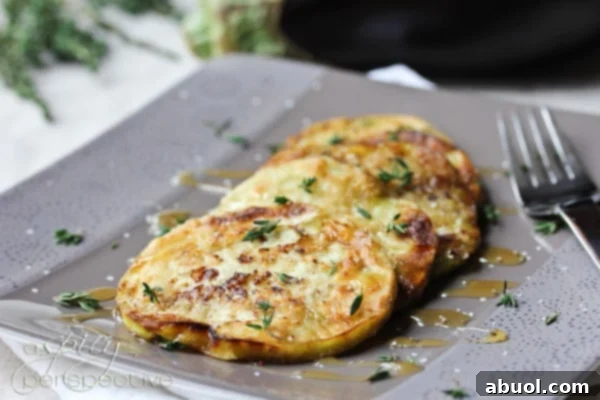
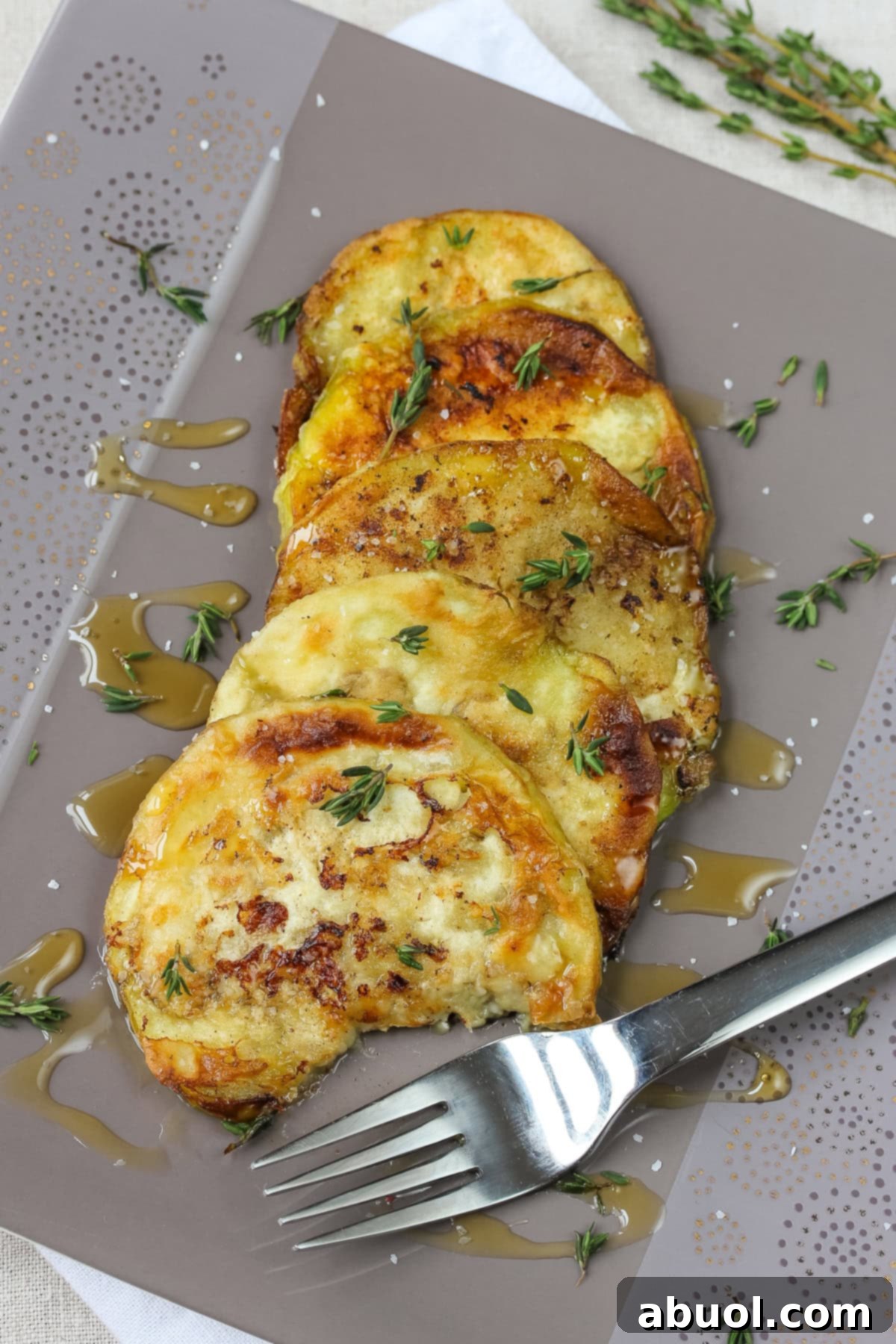
Sautéed Eggplant with Honey and Thyme – A truly transformative recipe that promises melt-in-your-mouth tenderness and an exquisite savory-sweet flavor profile. This dish is not just a meal; it’s a revelation, guaranteed to turn even the most hesitant skeptics into devoted eggplant enthusiasts. Prepare to discover a side dish, appetizer, or light main course that defies expectations and delights the palate.
The Journey from Eggplant Nemesis to Culinary Delight
Most of us have at least one food item that we’ve vehemently avoided throughout our lives – that one ingredient that consistently disappoints, no matter how many times we try it or how it’s prepared. For me, that food was, unequivocally, eggplant. Despite its beautiful, deep purple hue and elegant shape, the texture of cooked eggplant always reminded me of a soggy makeup sponge, a sensation far from appetizing. This peculiar texture often led to a firm “no thank you” whenever eggplant appeared on the menu, leaving me convinced it simply wasn’t for me.
Fried eggplant, in particular, seems to be a polarizing dish, sparking strong opinions on both sides. Many adore its rich flavor and hearty texture, while others, like my former self, found it challenging to appreciate. If you’ve ever felt this way about eggplant, or if you’re simply looking for a new and irresistible way to prepare this versatile vegetable, then you’ve come to the right place. Today, I am thrilled to share a method that transforms the humble eggplant into a tender, flavorful masterpiece that I firmly believe everyone will genuinely enjoy. This isn’t just another eggplant recipe; it’s a journey to convert even the most staunch eggplant skeptics.
Unveiling the Culinary Secret: The Milk Soak
For years, my experiences with eggplant were consistently disappointing. Every attempt, whether by my own hand or a seasoned chef’s, ended with that familiar nose-wrinkling disapproval. The texture was off, and often, an underlying bitterness permeated the dish. It wasn’t until I stumbled upon a closely guarded restaurant secret that everything changed, unlocking the true potential of this enigmatic vegetable: the milk soak.
Yes, you read that correctly – milk. This simple, yet revolutionary technique magically removes the inherent bitterness that can plague eggplant and, perhaps even more importantly, vastly improves its texture. By allowing slices of eggplant to luxuriate in a milky bath overnight, they undergo a profound transformation. The milk works to tenderize the eggplant flesh, drawing out any unwanted bitter compounds and leaving behind a creamy, supple canvas perfectly primed for cooking. It’s a game-changer, turning those dreaded “makeup sponges” into succulent, absorbent disks ready to soak up flavor.
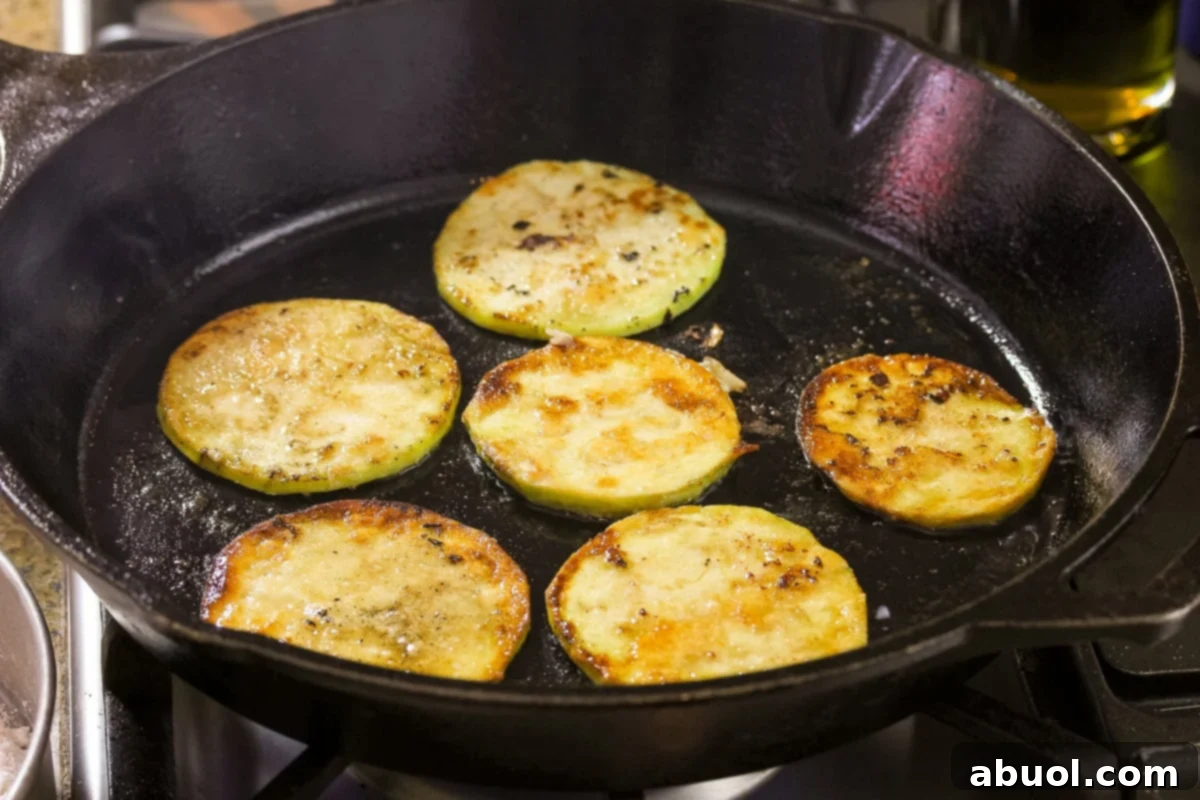
Once your eggplant slices have completed their overnight tenderizing ritual, the next steps are remarkably straightforward. Gently pat off any excess moisture, then lightly dust the slices with a mixture of all-purpose flour and a touch of sea salt. This light coating creates a delicate crust when pan-fried. Heat some olive oil in a large cast iron skillet until it shimmers, then carefully pan-fry the eggplant until each side achieves a beautiful, golden-brown perfection. Serve these piping hot, and prepare for a truly unparalleled experience.
Key Ingredients for Exceptional Sautéed Eggplant
Crafting this irresistible Sautéed Eggplant with Honey and Thyme requires a few simple, yet carefully selected ingredients. Each component plays a vital role in achieving the dish’s signature texture and flavor profile:
- Large Eggplant: Choose a firm, glossy eggplant without blemishes. Italian or globe eggplants work wonderfully for their classic shape and texture. While the recipe calls for peeling, the skin is edible; the decision to peel often comes down to personal preference for a smoother, melt-in-your-mouth consistency.
- Whole Milk: This is the hero ingredient that works its magic, tenderizing the eggplant and drawing out bitterness. Full-fat whole milk is recommended for the best results, though some have experimented with non-dairy alternatives with varying success (see FAQ for more on this).
- All-Purpose Flour: Provides a light, crisp coating when fried, contributing to the desirable exterior texture. It helps create that perfect golden-brown crust.
- Olive Oil: Essential for pan-frying, imparting a delicate flavor and ensuring the eggplant cooks evenly to a beautiful golden hue. Choose a good quality extra virgin olive oil.
- Honey: The crucial element for the savory-sweet balance. A generous drizzle of honey after frying elevates the dish, complementing the eggplant’s richness with a natural sweetness.
- Fresh Thyme Leaves: Adds an aromatic, earthy note that beautifully pairs with both the eggplant and the honey. Fresh thyme is highly recommended over dried for its vibrant flavor.
- Sea Salt: Used both in the flour mixture and as a finishing sprinkle, sea salt enhances all the other flavors and can help prevent the eggplant from becoming soggy.
By focusing on these quality ingredients, you set the stage for a truly remarkable culinary experience that will redefine your perception of eggplant.
Step-by-Step Guide: How to Achieve Perfectly Fried Eggplant
Transforming eggplant from a potential foe into a delicious friend is a straightforward process when you follow these steps. The key lies in the overnight milk soak, which truly makes all the difference.
- Prepare the Eggplant (The Night Before): Begin by peeling the skin from your large eggplant. While eggplant skin is edible, removing it contributes to the luxuriously tender texture we’re aiming for in this dish. Once peeled, slice the eggplant into uniform, approximately 1/8-inch thick circular pieces. Aim for consistency in thickness to ensure even cooking. Place these slices in an airtight container. Pour enough whole milk over the eggplant pieces to fully submerge them. Cover the container and refrigerate it overnight. This crucial step allows the milk to draw out bitterness and tenderize the eggplant, making it incredibly supple.
- Set Up Your Frying Station (Day Two): On the day of cooking, retrieve your eggplant from the refrigerator. In a shallow dish (a pie pan works well), combine the all-purpose flour with about 1 teaspoon of sea salt. This mixture will create your crispy coating. Next, prepare your frying skillet. Heat 2-3 tablespoons of olive oil in a large skillet (a cast iron skillet is excellent for even heat distribution) over medium-high heat. To manage excess oil, line a large plate or baking sheet with several layers of paper towels and keep it near your stove. This will be where your cooked eggplant drains.
- Dredge and Fry the Eggplant: Once the olive oil is hot and shimmering (a small test with a pinch of flour should sizzle immediately), begin the frying process. Take a few eggplant slices from the milk bath, tap off any excess moisture, then dredge them generously in the flour-salt mixture, ensuring they are fully coated. Gently tap off any extra flour – you want a thin, even layer, not clumps. Carefully place the floured eggplant slices into the hot oil, being careful not to overcrowd the skillet. Fry for approximately 2 minutes per side, or until they turn a beautiful golden brown and are tender when pierced with a fork.
- Drain and Season: As each batch of eggplant finishes cooking, remove them from the skillet and immediately transfer them to the paper towel-lined plate to drain off any excess oil. While they are still warm, sprinkle them with a little extra sea salt to enhance their flavor. Continue this process with the remaining eggplant slices, adding more olive oil to the skillet as needed to maintain enough oil for frying.
- Serve and Garnish: Once all the eggplant is cooked, serve it warm. For that signature savory-sweet finish, generously drizzle honey over the fried eggplant slices and sprinkle them with fresh thyme leaves. The combination of sweet honey, earthy thyme, and the rich, tender eggplant is truly exquisite.
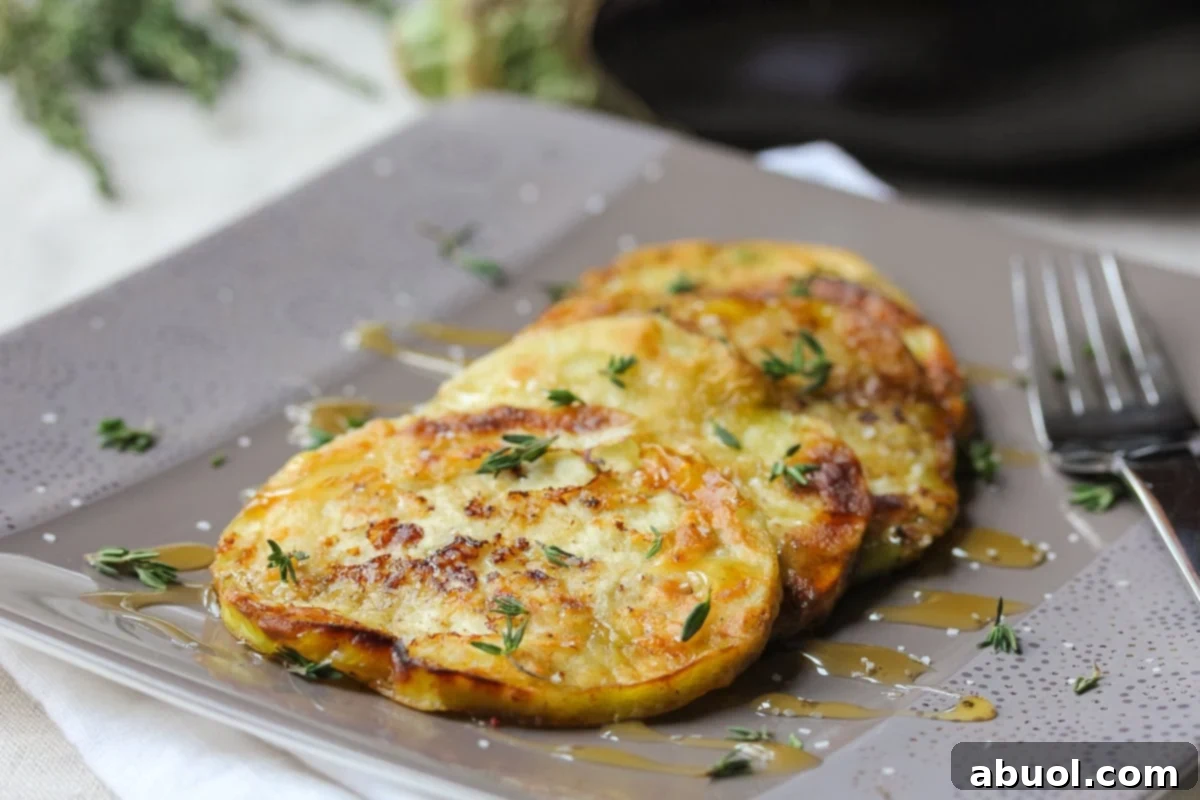
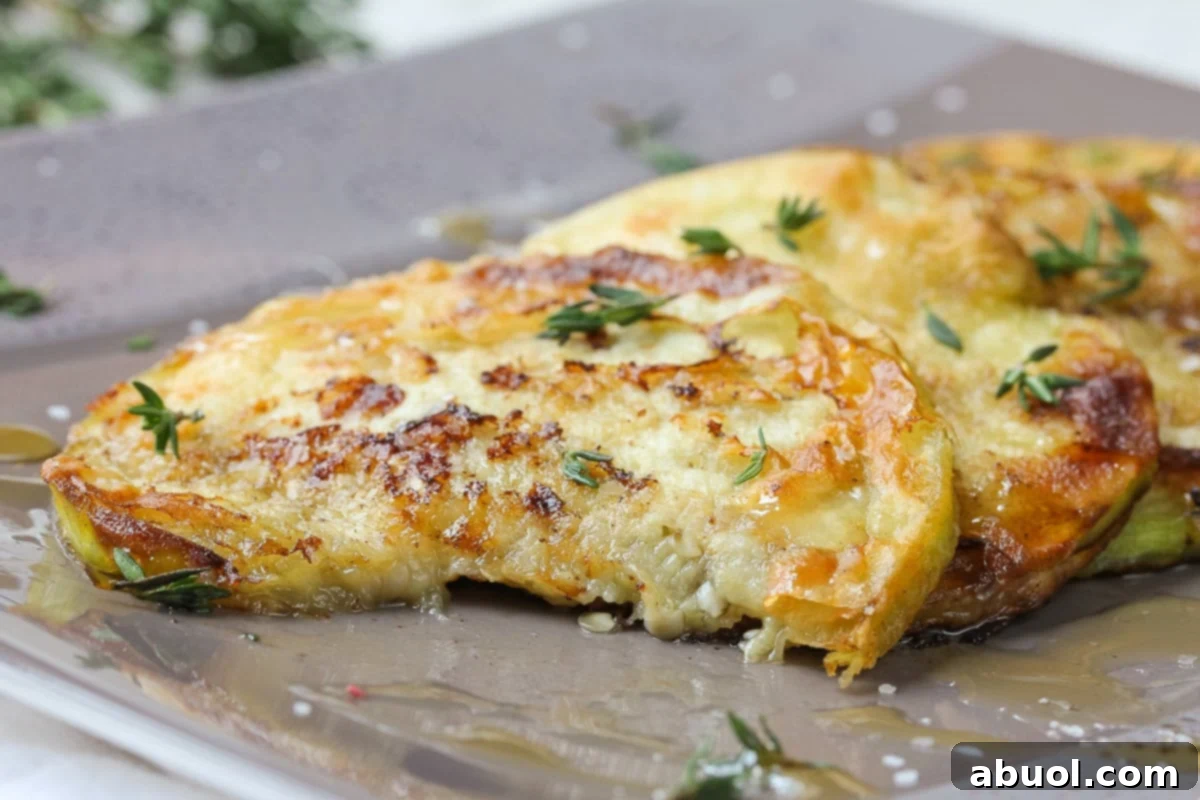
This, my friends, is the secret to perfect eggplant. It’s how you win over even the most reluctant eggplant-eaters. Each bite reveals tender layers of perfectly fried eggplant, boasting an uncanny, custard-like texture reminiscent of the finest French Toast. The exterior is wonderfully crispy, offering a delightful contrast to the moist and supple interior. Finished with a delicate drizzle of sweet honey and the aromatic freshness of thyme, along with a whisper of sea salt, this sautéed eggplant transcends typical vegetable dishes. It is, without a doubt, an irresistible culinary creation.
Sautéed Eggplant with Honey and Thyme will make a believer out of you, guaranteed! It’s an experience that proves even the most challenging ingredients can become household favorites with the right technique.
Discover the full, printable recipe for Sautéed Eggplant with Honey below!
Frequently Asked Questions About Cooking Eggplant
Should you salt eggplant before frying?
Salting eggplant is a technique often used, and its purpose is multifaceted. Yes, incorporating salt is beneficial. When you mix a teaspoon of salt into the flour coating, it helps season the eggplant from the inside out as it cooks, allowing the flavors to develop richly. Furthermore, adding a touch of sea salt at the very end of the frying process, once the eggplant is hot off the skillet, amplifies its natural taste and truly makes the flavors pop. However, there’s a delicate balance. While some traditional methods suggest salting eggplant for an hour beforehand to draw out moisture and bitterness, for this particular recipe, the milk soak effectively handles the bitterness and tenderization. Moreover, delaying the majority of the salt application until the final seasoning helps prevent the eggplant from becoming overly mushy or soggy during the frying process, ensuring that crispy exterior and tender interior we desire.
Do you have to peel the eggplant before frying?
No, you do not strictly have to peel eggplant before frying. Eggplant skin is indeed edible and contains beneficial nutrients. Some larger, older eggplants might have tougher, more bitter skins, making peeling a good idea for a more pleasant eating experience. For this recipe, where the goal is an incredibly soft and luxurious, melt-in-your-mouth texture, I personally prefer to remove the skin. It contributes to that almost custard-like consistency that makes this dish so unique and appealing, especially for those who are typically hesitant about eggplant. If you prefer a slightly firmer bite or appreciate the added fiber, feel free to leave the skin on, but consider thinner slices to help it tenderize more easily.
Could you use almond flour instead of wheat flour?
While I have experimented with almond flour for this recipe, and it does technically work, the results are not quite as optimal as with all-purpose wheat flour. Almond flour tends to absorb oil differently and can result in a slightly different texture and browning. If you’re looking for a gluten-free alternative, a better suggestion would be to use coconut flour, which offers a unique texture and flavor, or a high-quality gluten-free baking mix specifically designed for frying. These alternatives often yield a crispier and more satisfying result than almond flour when pan-frying vegetables.
What type of eggplant is best for this recipe?
For this recipe, large globe or Italian eggplants work wonderfully due to their size, allowing for nice round slices. Japanese or Chinese eggplants, which are longer and thinner, can also be used, but you might need to adjust the slicing technique (perhaps into longer, thinner planks) and cooking time slightly. Always choose eggplants that feel firm and heavy for their size, with smooth, glossy skin, indicating freshness.
Can I bake this eggplant instead of frying?
While the essence of this recipe truly shines through pan-frying for that crispy exterior and tender interior, you could attempt baking for a lighter option. After the milk soak and flour coating, lightly spray or brush the eggplant slices with olive oil and bake them at around 400°F (200°C) for 15-20 minutes, flipping halfway, until golden and tender. However, be aware that the texture won’t be as crispy as pan-frying, and you might lose some of that distinctive richness.
More Delicious Summer Veggies to Explore:
If you’re looking for more ways to celebrate fresh produce, especially during the vibrant summer months, here are some other fantastic recipes:
- Sautéed Yellow Squash with Blistered Tomatoes Recipe
- Fennel Salad with Roasted Beets and Shaved Asparagus Recipe
- Fattoush Salad with Grilled Vegetables Recipe
- Crispy Parmesan Asparagus Sticks ~ How Sweet It Is
- Grilled Corn ~ Michael Ruhlman
- Roasted Tomato Soup ~ Smitten Kitchen
Print Recipe
Rated 5 stars by 10 reviews. Leave a Review »
Sautéed Eggplant with Honey
Prep Time: 20 minutes
Cook Time: 12 minutes
Total Time: 32 minutes
How to cook eggplant: Fried Eggplant with a crispy outside and moist tender inside.
Servings: 4
Ingredients
US Customary – Metric
- 1 large eggplant
- 2 cups whole milk
- 1/2 cup all purpose flour
- 3-5 tablespoons olive oil
- 3 tablespoons honey
- 2 tablespoons fresh thyme leaves
- Sea salt
Instructions
- Peel the eggplant and slice it into thin 1/8-inch rounds. Place the eggplant slices in an airtight container and pour the milk over it. Cover and refrigerate overnight.
- In a small pie pan, mix the flour with 1 teaspoon salt. Heat 2 tablespoons of olive oil in a large skillet over medium-high heat. Line a plate with paper towels.
- When the oil is hot, dredge a few slices of eggplant in the flour and tap off the excess. Gently place them in the skillet and pan fry for 2 minutes per side. Remove and place on the plate to drain.
- Repeat with the rest of the eggplant, adding oil to the skillet as needed. Sprinkle the slices with a little more sea salt as they come out of the skillet. Serve warm, drizzled with honey and sprinkled with thyme.
Nutrition
Serving: 1 serving, Calories: 304kcal, Carbohydrates: 38g, Protein: 7g, Fat: 15g, Saturated Fat: 4g, Cholesterol: 12mg, Sodium: 56mg, Potassium: 461mg, Fiber: 4g, Sugar: 23g, Vitamin A: 390IU, Vitamin C: 8.1mg, Calcium: 162mg, Iron: 1.7mg
Course: Appetizer, Main Course, Side Dish
Cuisine: American
Author: Sommer Collier
Cook It? Love It? Rate It! YOU can help this recipe RANK on Google – TAP 5 STARS so other hungry people can find it. Thank you!