

Lobster Bisque: A Decadent Soup Recipe for Celebrations
My take on classic lobster bisque is a recipe I turn to when I desire something elegant yet entirely achievable at home. I craft a rich seafood stock, gently simmer it with white wine and cream, and then incorporate generous portions of fresh lobster. The result is a soup with incredible depth of flavor and a supremely silky-smooth texture! This restaurant-worthy lobster bisque is an impressive appetizer for any dinner party, and the step-by-step method ensures it remains surprisingly manageable.

While I love a laid-back barbecue and casual seafood feasts, I also appreciate the finer things, especially when it comes to lobster. When I want to enjoy this premium ingredient in a relaxed setting, I often make authentic Maine lobster rolls. However, for holidays or a romantic date night, I opt for a more refined dish like this lobster bisque. It requires a bit more effort and is certainly more expensive, but I promise that this intensely flavorful, velvety, and perfectly creamy lobster soup is easier to prepare than you might imagine, and it’s absolutely worth it!
Table of Contents
- Recipe Highlights
- Key Ingredients and Tips
- How to Make Lobster Bisque
- Expert Tips for Perfect Lobster
- Serving Suggestions
- Storing and Reheating
- Frequently Asked Questions
- More Delicious Soup Recipes


Recipe Highlights
Unparalleled Seafood Flavor: The secret to a truly great lobster bisque lies in the homemade lobster stock. This recipe starts with a store-bought seafood stock, but then significantly enhances the flavor by simmering it with fresh lobster shells. This process extracts every last bit of that rich, buttery lobster essence.
Special Occasion Showstopper: Lobster bisque is renowned as an elegant French dish, perfect for special occasions. Similar to my lobster fra diavolo recipe, the combination of rich cream, a touch of white wine, and luxurious lobster makes it ideal for romantic dinners, such as Valentine’s Day and anniversaries. With 4-6 servings, it’s also an excellent choice as a light main course or soup course during holidays, graduations, or any celebratory meal.
Surprisingly Simple: Despite its elegance, don’t be intimidated! This lobster bisque recipe is quite straightforward, and with my detailed, step-by-step instructions, you’re practically guaranteed to succeed. The process involves simmering a stock, preparing a simple roux with butter and flour, whisking in wine, stock, and cream, and then adding the cooked lobster. You can absolutely do this!

Key Ingredients and Expert Tips
For the Lobster Stock:
- Seafood Stock: Essential as the base flavor. Seafood stock differs from fish stock by including lobster, crab, and shrimp.
- Lobster Tails: Lobster tails are a convenient choice for this recipe, as they are easy to deshell and chop. However, for an even richer, more intense flavor, you can substitute two whole 1lb lobsters. If using whole lobsters, be sure to have lobster crackers handy to extract the meat from the claws and knuckles. Whole lobsters will also result in a deeper color and more pronounced flavor in the stock due to the body cavity. Both methods are delicious!
- Vegetables: Lobster has a natural sweetness. Shallots, carrots, and celery are included in the stock to provide a subtle savory and earthy balance to the soup.
- Aromatics: I use garlic, a single bay leaf, and fresh, chopped tarragon, which provides a peppery, slightly licorice-like note. If you don’t have fresh tarragon, a teaspoon of dried tarragon is a perfectly acceptable substitute.
For the Lobster Bisque:
- Butter and Flour: These are cooked together to form the roux, which creates the bisque’s creamy thickness. I always recommend using unsalted butter, especially when using pre-made stock or broth, which often contains a fair amount of sodium.
- Wine: A splash of alcohol is traditional in lobster bisque and helps to balance the richness of the seafood and cream. White wine is most common, but you could also use dry cooking sherry for a slightly Southern-inspired flavor, as I do in my lobster ravioli sauce recipe.
- Tomato Paste: I prefer using tomato paste from a small can rather than concentrated paste from a tube. This provides a brighter tomato flavor that complements the delicate lobster without overpowering it.
- Lobster Stock: Made with the ingredients listed above, the homemade lobster stock is added to the pot with the roux, wine, and tomato paste to create the soup.
- Heavy Cream: Heavy cream is essential for achieving the authentic bisque texture. This recipe is not for calorie-counting days; indulge and enjoy!
How to Make Luxurious Lobster Bisque: A Step-by-Step Guide
For the complete list of ingredient proportions, detailed instructions, storage tips, and a video tutorial, please refer to the printable recipe card at the bottom of this page.
Step 1: Prepare the Lobster Stock. This process takes approximately one hour and fifteen minutes from start to finish, so be sure to plan accordingly.
I begin by chopping the vegetables, without removing the peels from the shallots and garlic. The peels actually add more flavor to the stock and will be strained out later anyway.
Next, I grab my large 6-8 quart stock pot and place it on the stovetop over medium heat. I add the lobster (either whole or just the tails) to the bottom of the pot, followed by the vegetables, chopped tarragon, and the bay leaf. Finally, I pour in the seafood stock and water, no need to stir!
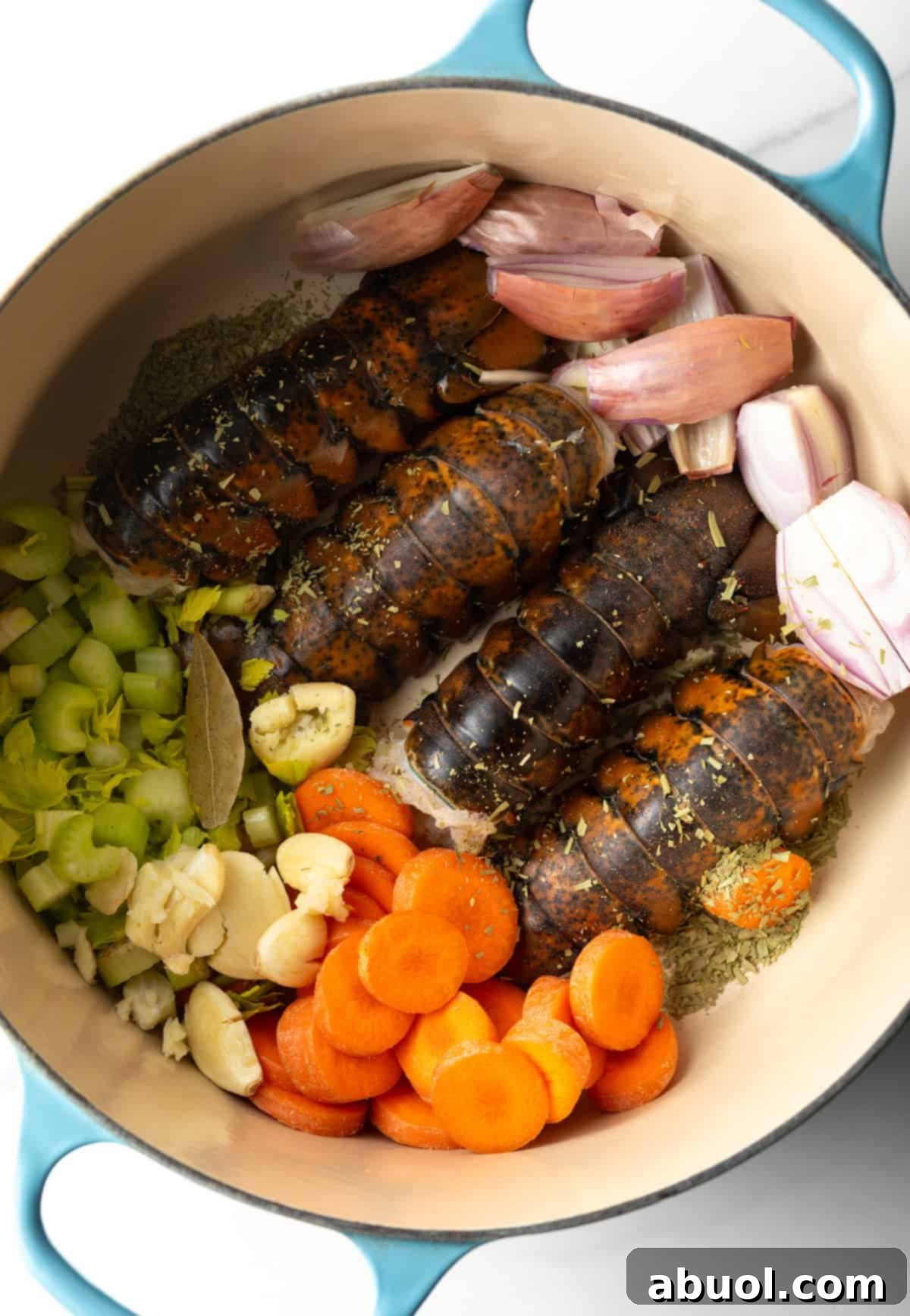
Step 2: Simmer the Stock. Cover the pot and bring the stock to a gentle simmer. You might need to increase the heat slightly, but not to high.
Set a timer for exactly 5 minutes. As soon as the timer goes off, use tongs to transfer the lobster from the pot to a cutting board. Simmering the lobster for longer risks overcooking the meat, so don’t!
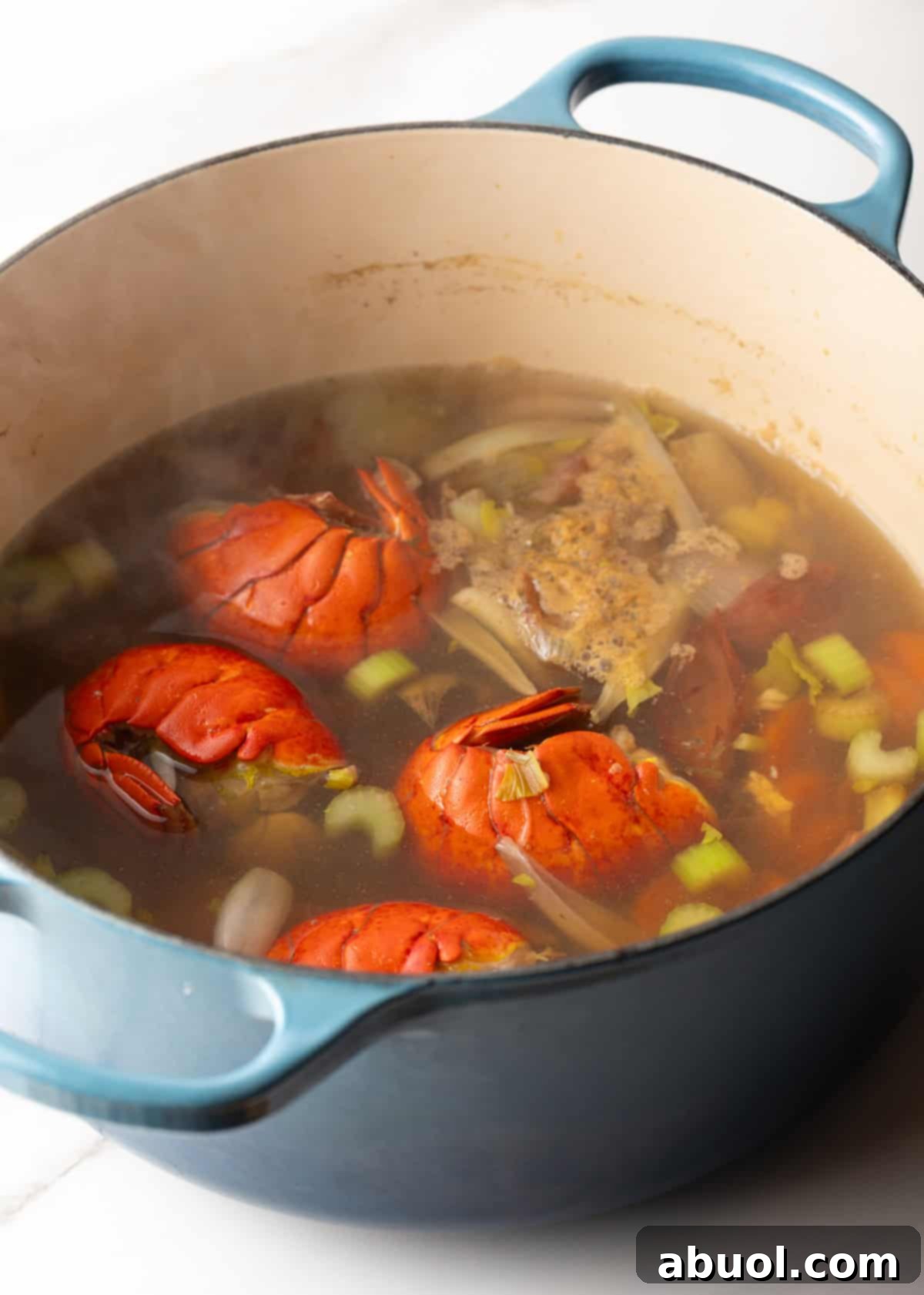
Step 3: Extract the Lobster Meat. This is where the fun begins! To remove the lobster meat from the shells, start by using kitchen shears to cut along the top of the tail shell. Then, gently use your fingers to pull the meat out.
If you are using whole lobsters, break off the tails, claws, and knuckles. Return the lobster body cavity to the stockpot. Remove the lobster meat from the tails and use lobster crackers to extract the meat from the knuckles and claws. Even though everything will be strained through a sieve later, take care to avoid getting small bits of shell in the pot, as they can end up in the broth.
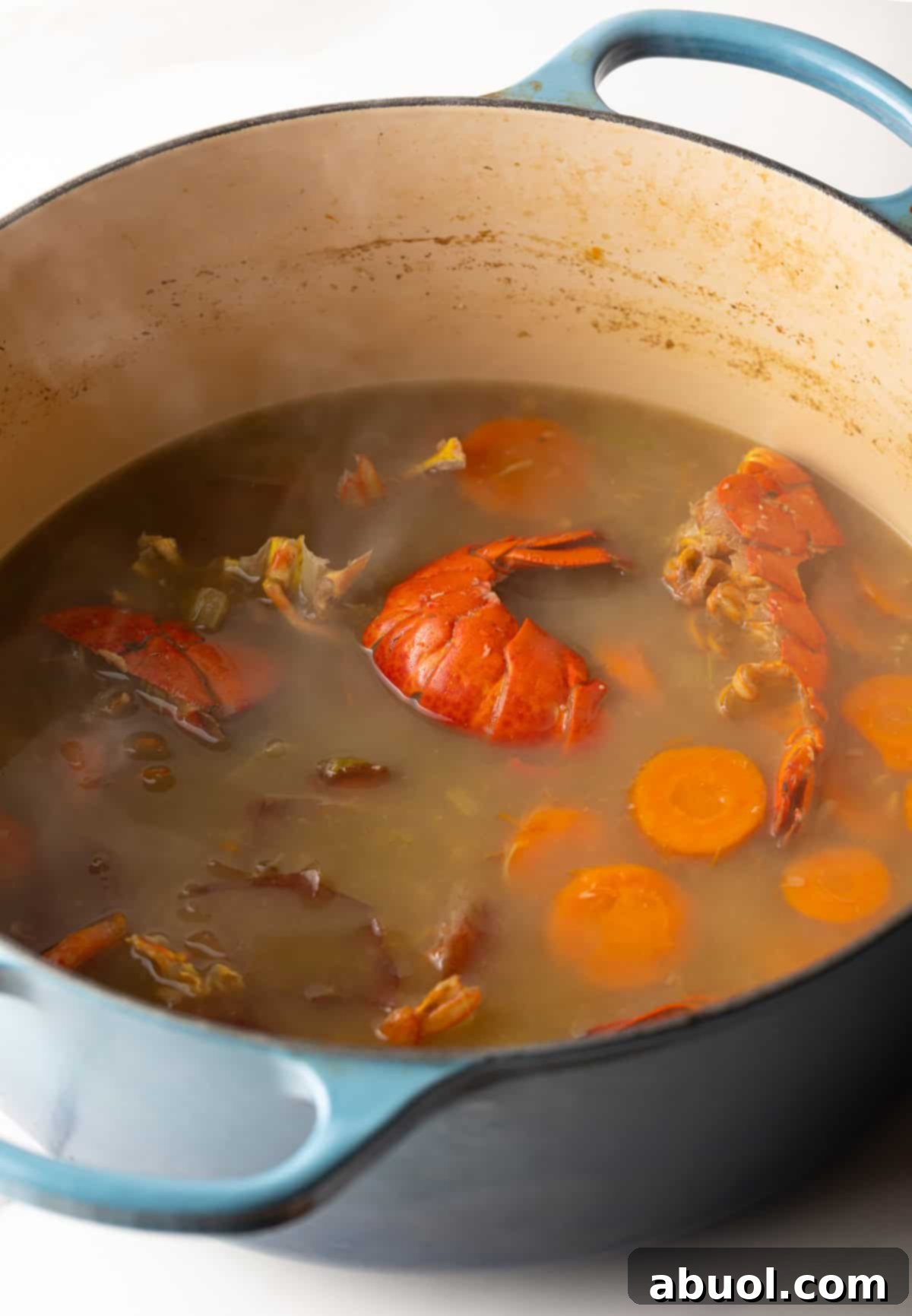
Step 4: Simmer Again with the Shells. Return the large shells to the pot and simmer for another 45 minutes, uncovered. Chop the lobster meat into evenly sized pieces, approximately 1/2 inch in size. Set aside the chopped meat and enjoy a sip of the white wine you’ll be using to make the bisque… just to ensure its quality, of course.
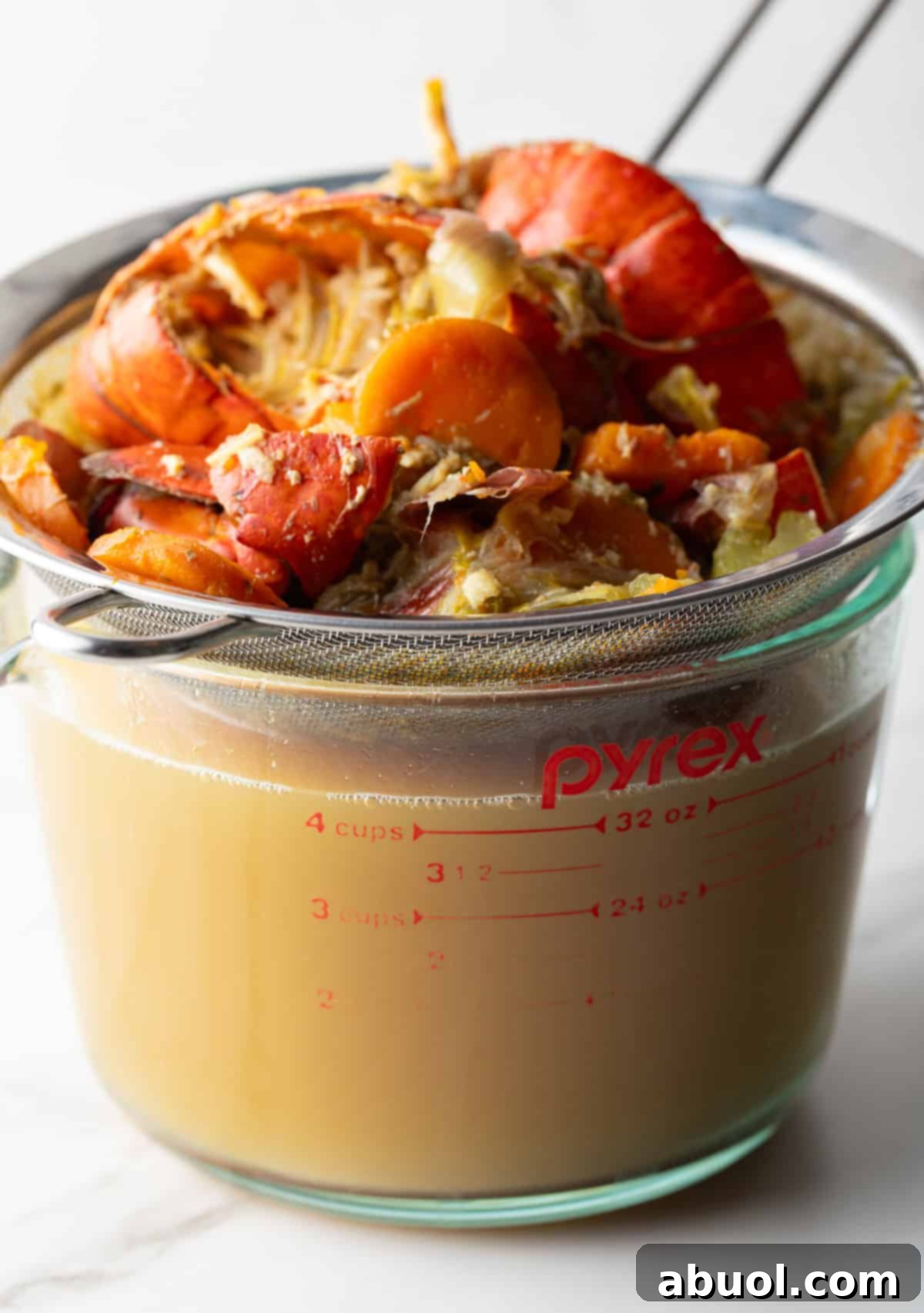
Step 5: Strain the Broth. When the stock is ready, turn off the heat and place a fine-mesh sieve over a large 4-cup measuring pitcher. A sieve and a large bowl can also be used, but be sure to measure the liquid afterward to ensure you have a total of 4 cups of stock. If you are a little short, add a bit of water to reach the correct amount.
Discard the shells, vegetables, and other solid debris at this point.
Step 6: Make the Roux. Now that you have your beautiful lobster broth in the measuring cup, wipe out the soup pot and use it to make the bisque. Return the pot to the stove over medium heat, add the butter, and let it melt. Add the flour and whisk constantly for 2-3 minutes until the roux is thick and a beautiful golden-brown color. A brown roux is ideal, but be careful not to burn it!
Step 7: Finish the Bisque. Pour the white wine into the hot pot to deglaze the bottom of the pan, whisking vigorously to prevent the roux from burning. Then, whisk in the tomato paste and homemade lobster stock. Allow the mixture to simmer for about 10 minutes, whisking occasionally.
When the soup has thickened slightly, slowly stir in the heavy cream and simmer for another few minutes until it thickens further.
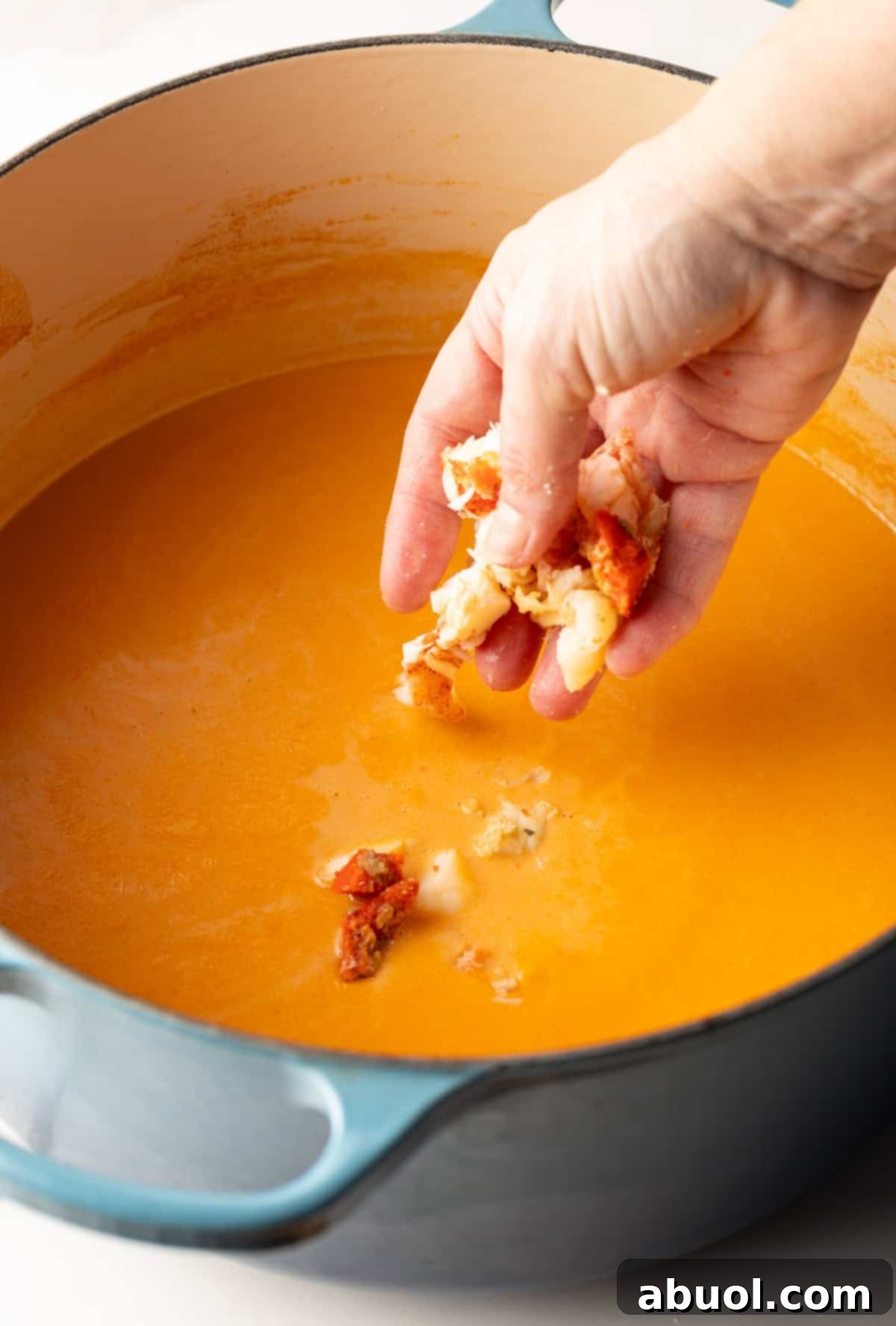
Step 8: Add the Lobster. Once the bisque reaches that gorgeous velvety-smooth consistency, turn off the heat and remove the pot from the burner.
Two Options: A) Stir the chunks of lobster meat directly into the bisque or B) Carefully arrange the chopped lobster pieces in a small pile in the center of each bowl of soup for a more visually appealing presentation.
Expert Tips for Perfectly Cooked Lobster
There’s nothing worse than overcooked, chewy lobster. The key to a fantastic lobster bisque is ensuring the lobster pieces remain tender and succulent. I’m an expert on this topic (check out my popular guide for how to cook lobster tails!).
The secret to cooking perfect lobster is to only cook the tails or whole lobsters for a maximum of 5 minutes. You may even want to reduce the cooking time by a minute or two if you’re using smaller tails. Also, be sure to add the cooked lobster pieces to the bisque after the pot has been removed from the stove. This allows the lobster to warm gently in the soup without continuing to cook.

Serving Suggestions for Lobster Bisque
I often serve rich lobster bisque as a main course with crusty slices of toasted French bread for the complete French dining experience. For more casual dinners, I’ll make a copycat recipe inspired by Red Lobster cheddar bay biscuits.
If serving soup, a salad is a natural pairing. A simple salad with fresh ingredients, such as my romaine hearts salad, is a great way to lighten the meal without overshadowing the luxurious flavors of the bisque.
As a side dish or soup course, lobster bisque is a delightful addition to a “surf and turf”-inspired dinner party with reverse-seared sirloin steak or bone-in ribeye steak. Or create a “surf and surf” theme by pairing it with other seafood dishes like pan-seared crab cakes, baked oysters, or your favorite elegant seared white fish.
Storing and Reheating Lobster Bisque
It’s always best to enjoy lobster bisque freshly prepared. You can store leftovers in an airtight container in the refrigerator for up to 2-3 days. However, the consistency may change, and the lobster is likely to become rubbery upon reheating. If you do have leftovers, reheat them gently in the microwave or on the stovetop over low heat. Add a splash of cream or milk to thin the soup slightly, if needed.

Frequently Asked Questions About Lobster Bisque
Can I make lobster bisque without alcohol?
Yes, you can. This lobster bisque recipe only uses 1/2 cup of wine, and most of it cooks off during the roux-making process. However, if you prefer to avoid alcohol, you can substitute the wine or sherry with more seafood stock or even chicken broth.
How can I make the bisque thicker?
A true seafood bisque should not be overly thick. However, if you prefer a thicker soup, try making a slurry by combining 1 tablespoon of cornstarch with 1 tablespoon of cold water. Drizzle this mixture into the simmering soup before or after adding the heavy cream, stirring constantly until the soup reaches your desired thickness. Avoid doing this *after* adding the lobster.
Can I freeze lobster bisque?
The answer is complicated. You can freeze the *stock* for up to 2 months in a sealed container wrapped in aluminum foil. However, you should not freeze the *finished* bisque, as the cream will separate upon thawing and reheating, negatively impacting the texture.

More Delicious Soup Recipes to Try
Craving more comforting soup recipes? Check out these favorites!