
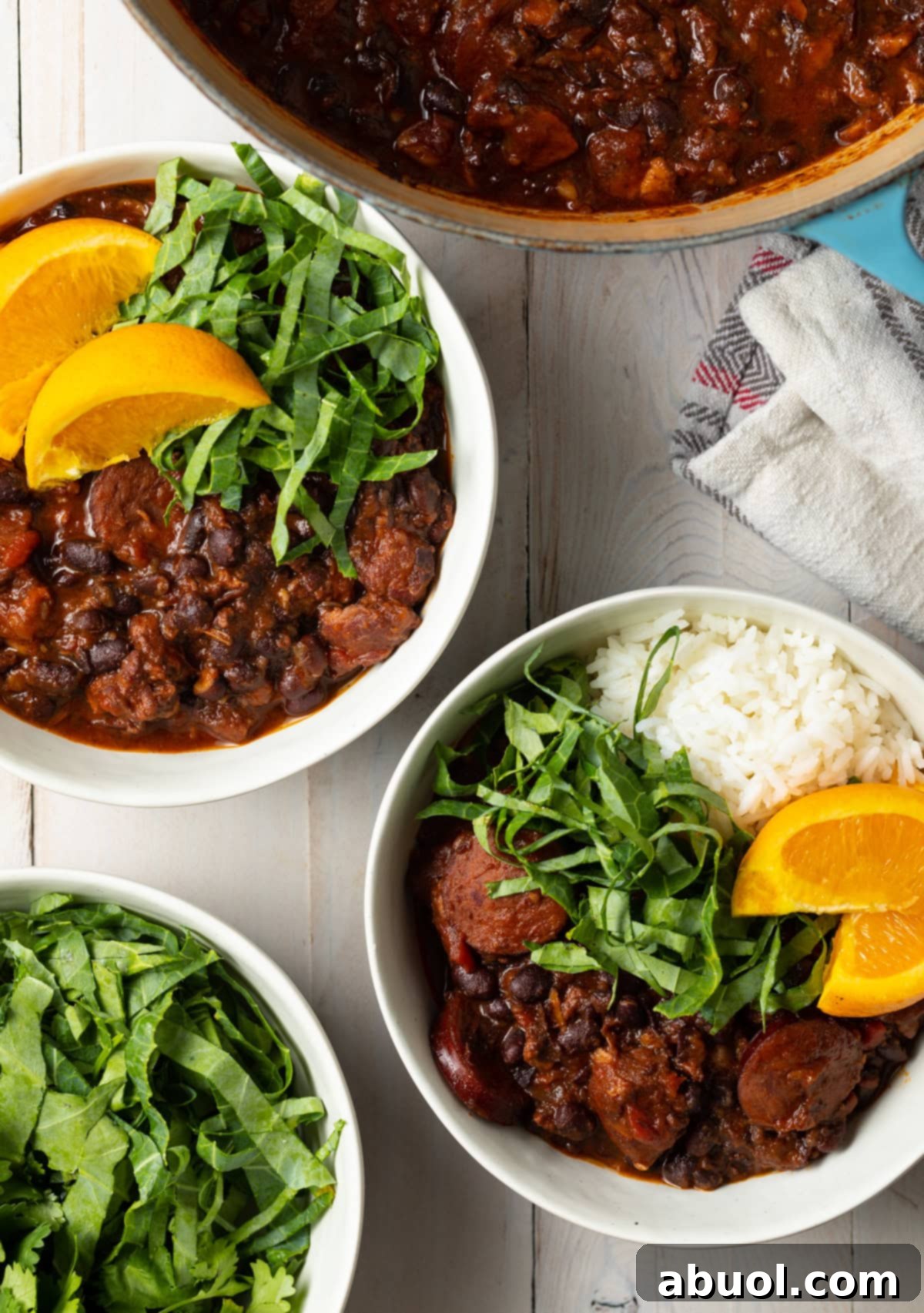
Feijoada: The Ultimate Brazilian Pork and Black Bean Stew Recipe – Experience the rich, savory flavors of Brazil with this authentic Feijoada recipe. Featuring tender cuts of pork and hearty black beans simmered to perfection, this rustic stew offers a deeply satisfying meal. Enjoy it simply, or elevate your dining experience with fluffy rice and a vibrant array of fresh toppings and zesty hot sauce.
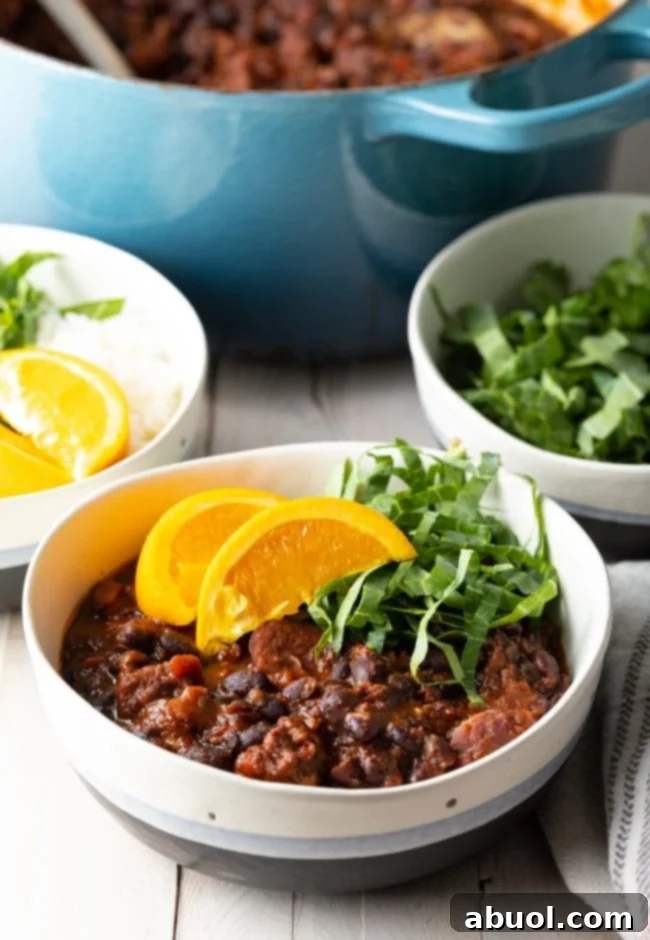
Why Feijoada Will Become Your New Favorite Comfort Food
There’s something truly special about a dish that nourishes both body and soul, and Brazilian Feijoada does just that. This classic recipe, simmered slowly in a single large pot, creates a depth of flavor that can only be achieved through patience and quality ingredients. We adore this stew because it transforms simple components into a culinary masterpiece, cooked at a gentle simmer for several hours, allowing all the distinct flavors to meld beautifully. The result is a robust, savory experience that’s surprisingly easy to achieve, making it perfect for a leisurely weekend cooking project.
The magic lies in the harmonious blend of various pork elements – a succulent pork roast, the rich essence from a ham bone, the spicy kick of ground chorizo, the hearty texture of sausage links, and the unique saltiness of dried beef – all combined with the earthy goodness of black beans. While the cooking process requires time, most of it is hands-off simmering. This means you can spend your day relaxing while your kitchen fills with an irresistible aroma. Plus, the generous portions ensure delightful leftovers that taste even better the next day, proving Feijoada is not just a meal, but an experience to savor.
For those seeking the authentic taste of Brazil, we’ve included a trick for sourcing or replicating Carne Seca, a traditional salty dried beef that can sometimes be challenging to find outside of Latin markets. Our solution uses readily available “Buddig Beef” slices, allowing you to capture that essential flavor without extra fuss. This spicy, savory, and incredibly satisfying Brazilian Feijoada offers a wonderful opportunity to slow down and enjoy a truly comforting and flavorful dinner.
Unveiling Feijoada: Brazil’s National Dish
Feijoada, pronounced Fay-shwa-da, is more than just a stew; it’s considered Brazil’s national dish, deeply ingrained in the country’s culinary heritage and culture. This iconic black bean and pork stew is renowned for its intense flavors, tender meats, and comforting, thick consistency. Originating from Portuguese colonization, Feijoada has evolved over centuries, incorporating diverse influences and becoming a staple on Brazilian tables, particularly for family gatherings and celebrations on weekends.
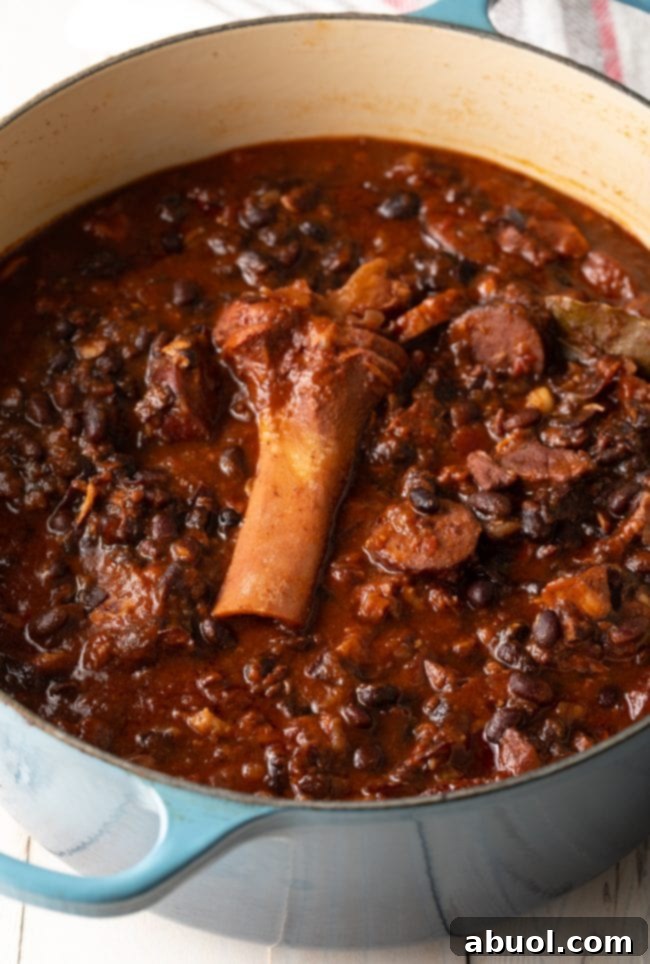
At its core, Feijoada is a slow-cooked masterpiece crafted from black beans and an assortment of salted and fresh pork cuts. Each ingredient contributes to the stew’s distinctive profile – from the smokiness of sausages to the richness of pork ribs and the characteristic saltiness of dried beef. The long simmering process breaks down the meats, tenderizing them to perfection and allowing their flavors to infuse deeply into the black beans, creating a thick, dark, and incredibly flavorful broth that defines this dish.
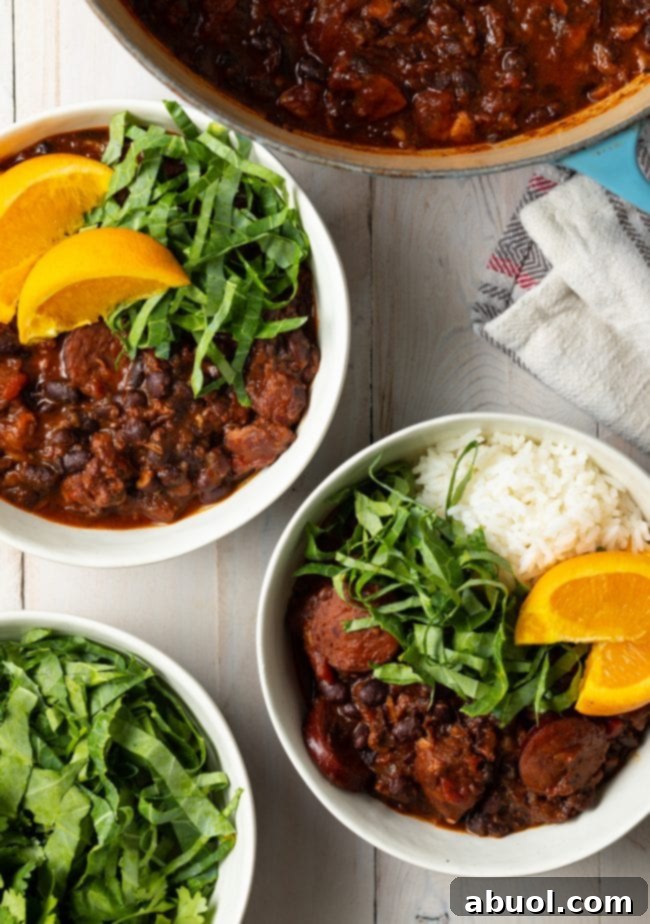
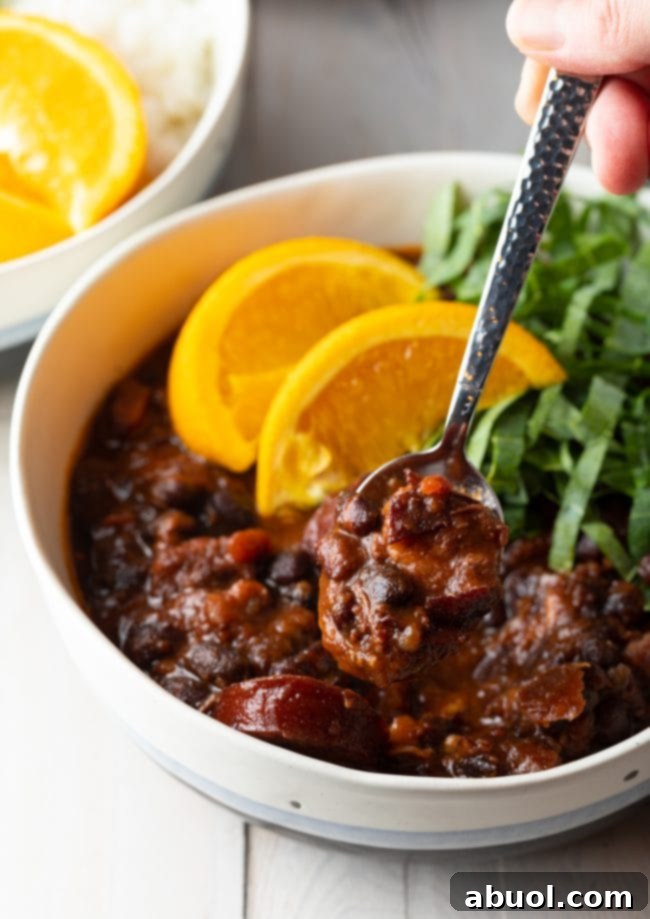
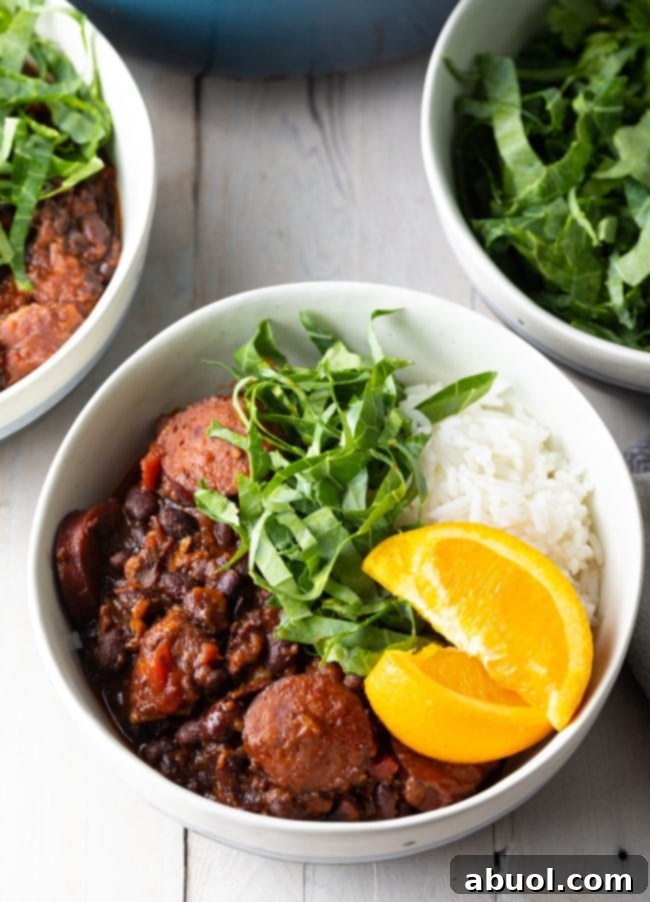
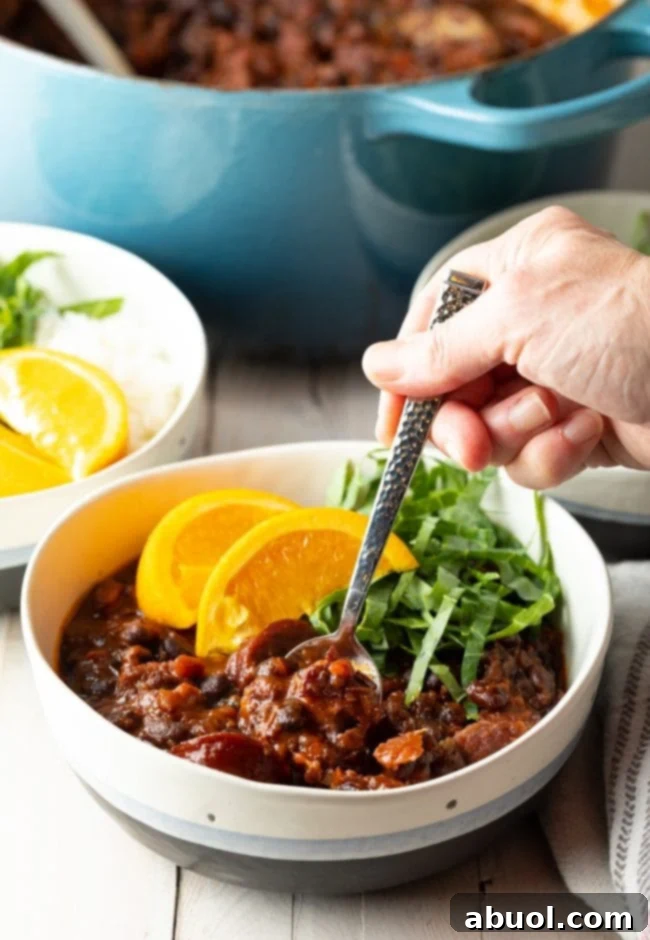
Traditionally, bowls of Brazilian Feijoada are served either on their own, allowing the stew’s robust flavors to shine, or generously spooned over a bed of fluffy white rice, which soaks up all the delicious juices. It’s almost always accompanied by a vibrant medley of garnishes: fresh shredded collard greens or kale, a selection of zesty hot sauces to add a personalized kick, and slices of fresh orange. The citrus from the oranges isn’t just for decoration; it provides a crucial bright counterpoint to the rich, heavy stew, cleansing the palate and enhancing the overall experience. Some variations also include Farofa (toasted cassava flour) for added texture and a unique nutty flavor.
Essential Ingredients for Authentic Feijoada
Crafting this classic Brazilian Feijoada recipe requires a careful selection of ingredients, each playing a vital role in building the stew’s complex and comforting flavor profile. Here’s what you’ll need:
- Dried Black Beans: Essential for the authentic texture and deep flavor. Dried beans absorb the rich flavors of the stew over many hours of cooking, resulting in a creamy consistency that canned beans simply can’t replicate.
- Dried Beef Slices: Traditionally, Carne Seca is used, a heavily salted and dried beef. In the States, a common and effective substitute is “Buddig Beef” slices, which offer a similar salty, savory contribution. Alternatively, if you can find true Carne Seca, even better!
- Bone-in Pork Roast: A two-pound cut, such as a pork butt or shoulder, provides both succulent meat and flavor-rich bone marrow. If using a boneless roast, consider adding a leftover ham bone to the pot for an extra layer of smoky depth.
- Mexican-Style Chorizo: This spiced ground pork sausage adds a fiery, aromatic element. For a milder stew, regular ground pork sausage can be used as a substitute.
- Kielbasa Sausage: A smoked sausage that brings a robust, savory flavor and chewy texture. For those who love heat, a spicy Italian sausage can be substituted to elevate the zest even further.
- Onion: Peeled and finely chopped, yellow or white onions form the aromatic base, sweetening as they sauté and adding a foundational flavor layer.
- Garlic: Generous amounts of peeled and minced garlic are crucial for infusing the stew with its characteristic pungent and savory aroma.
- Crushed Tomatoes: Canned crushed tomatoes, including their juices, add a touch of acidity and sweetness, balancing the rich meats and creating a fuller body for the stew.
- Bay Leaves: A couple of dried bay leaves impart a subtle, earthy, and slightly floral note that complements the hearty ingredients without overpowering them.
- Crushed Red Pepper: For adjustable heat. Add a quarter to half a teaspoon, or more, depending on your preferred level of spiciness.
Pro Tip for Seasoning: Many of the pork components and the dried beef are inherently salty. Therefore, it’s highly recommended to defer adding any additional salt to the stew until the very end of the cooking process. Taste the stew thoroughly once it’s fully cooked, and then adjust the salt level as needed to ensure perfect balance without over-salting.

Mastering Brazilian Pork and Black Bean Stew: A Step-by-Step Guide
Creating an authentic Brazilian Feijoada is a rewarding culinary journey. While it requires a slow simmer, the hands-on preparation is straightforward. Follow these steps to achieve a truly memorable stew:
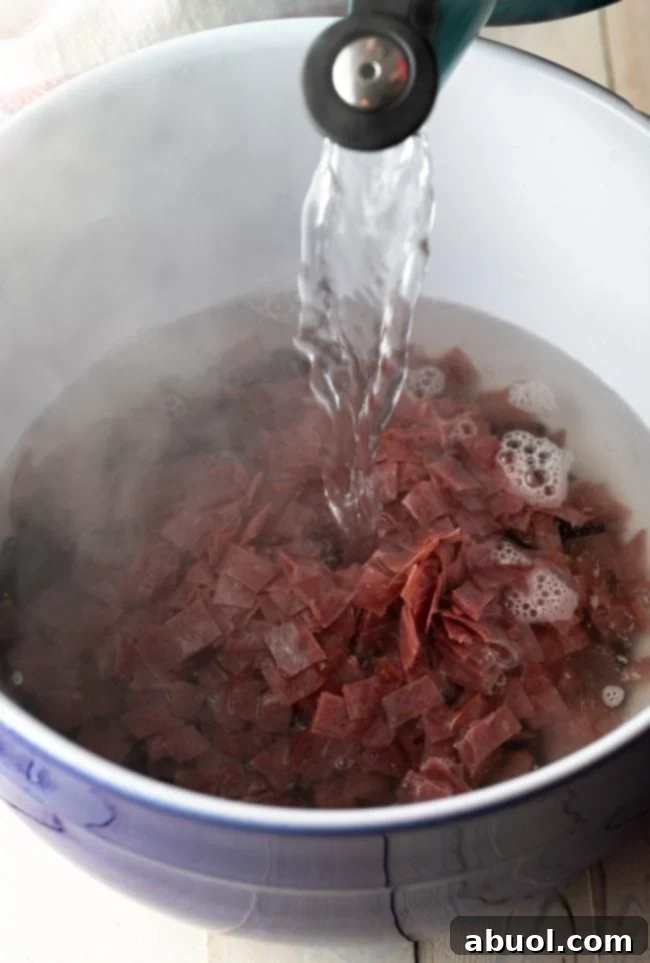
- Prepare the Beans and Dried Beef: Begin by setting out a large, heat-proof bowl. Finely chop the dried beef slices into small, manageable pieces. Combine these chopped beef pieces with the dried black beans in the bowl. Pour 8 cups of freshly boiled water over the mixture, ensuring the beans and beef are fully submerged. Allow them to soak for a minimum of 1 hour, or ideally for several hours (up to 4-6 hours is excellent), to rehydrate and begin softening. This crucial step significantly reduces the final cooking time and ensures a tender texture.
Pro Tip for Time Management: Don’t be intimidated by the overall preparation time for this Brazilian Feijoada recipe. Many of the initial steps, particularly the soaking of the beans and dried beef, can be completed well in advance. Consider starting this process first thing in the morning. This allows you to tackle the more active cooking steps at your leisure later in the day, then simply let the pork and black bean stew slowly simmer on low heat, cooking itself to perfection by evening.
- Prepare the Pork Components: While the beans soak, turn your attention to the pork. Cut the bone-in pork roast into uniform 1-inch chunks. Be sure to carefully reserve the bone; it will be added to the stew later to impart additional flavor and richness during the simmering process. Next, slice the kielbasa sausage into ½-inch thick rounds. Having all your meats prepped beforehand streamlines the cooking process.
- Brown the Meats: Once the black beans and dried beef have completed their soaking, it’s time to build the stew’s flavor foundation. Place a large, heavy-bottomed nonstick sauce pot or a Dutch oven over medium heat on your stovetop. Add the ground chorizo to the hot pot and brown it for approximately 2-3 minutes, breaking it up with a spoon as it cooks. Once lightly browned, add the pork chunks and the sliced kielbasa to the pot. Sauté these meats for another 5-8 minutes, stirring occasionally, until they are nicely browned on all sides. This browning develops deep, caramelized flavors essential to the Feijoada.

- Sauté Aromatics: Create space in the pot by pushing the browned meats to the sides. Add the chopped onion and minced garlic to the center of the pot. Sauté for another 3-4 minutes, stirring frequently, until the onions become translucent and fragrant. This step softens the aromatics and releases their sweet, savory notes.
- Combine and Simmer: Now, carefully add the canned crushed tomatoes (with their juices), the bay leaves, and the crushed red pepper to the pot. Crucially, add the soaked black beans, the rehydrated dried beef, and the bean water directly into the pot. The soaking water is packed with flavor and starch, contributing to the stew’s thickness and richness. If you reserved a ham bone or the pork roast bone, add it in now.
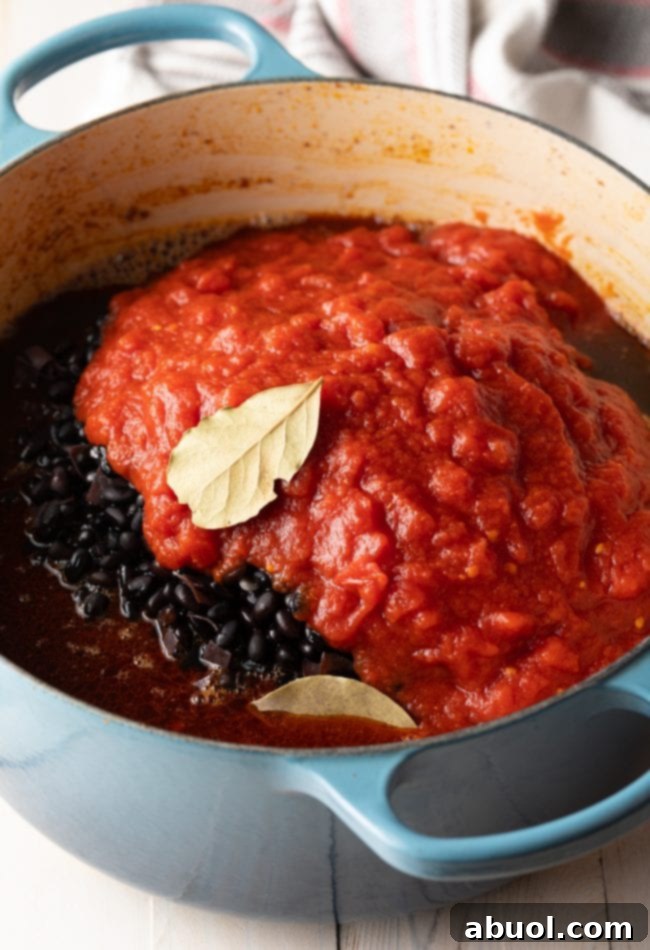
- Slow Cook to Perfection: Bring the stew to a gentle simmer, then reduce the heat to medium-low, cover the pot, and let it cook for at least 3 hours. The total cooking time will largely depend on how long the black beans were initially soaked. The goal is for the beans to become wonderfully soft and creamy. During this simmering period, remember to open the lid and stir the stew every 30 minutes or so to prevent sticking and ensure even cooking.
- Adjust Consistency and Seasoning: As the stew simmers, monitor its consistency. If it starts to thicken too much before the beans are fully tender, stir in an additional 1-2 cups of water or broth to reach your desired consistency. Once the beans are soft and the meats are incredibly tender, taste the stew. This is the time to add more salt if necessary, keeping in mind the inherent saltiness of some of the ingredients. Remove the pork bone before serving.
- Serve Warm: Once the Feijoada has reached its perfect tenderness and flavor balance, turn off the heat. Ladle the rich, aromatic stew warm into bowls. It’s now ready to be enjoyed with a selection of traditional garnishes.
Ready to dive into the full culinary adventure? Get the Complete (Printable) Feijoada Recipe below and let the feasting begin!
Elevate Your Feijoada: Traditional Serving Suggestions
Part of the authentic Feijoada experience comes from its traditional accompaniments, which add freshness, texture, and balance to the rich stew. Here are the classic garnishes for homemade pork and black bean stew:
- Large Oranges: Cut into juicy wedges, the bright, acidic citrus of oranges (or lime wedges for a sharper tang) provides a refreshing contrast to the stew’s hearty flavors, cleansing the palate with each bite.
- Shredded Fresh, Raw Collard Greens or Kale: Lightly sautéed or simply shredded raw, these leafy greens offer a vibrant color and a slightly bitter note that beautifully cuts through the richness of the meat and beans.
- Cooked White Rice: A staple accompaniment, fluffy white rice is perfect for soaking up the savory, thick sauce of the Feijoada. For a lighter, low-carb alternative, consider serving it with cauliflower rice.
- Hot Sauce: Offer a variety of your favorite hot sauces on the side, allowing each diner to customize the level of spice to their preference.
- Farofa: This toasted cassava flour, sometimes seasoned with bacon or herbs, is sprinkled over the stew or rice for an extra layer of crunch and a unique nutty, smoky flavor that’s distinctly Brazilian.
Creative Add-Ins and Flavor Enhancements
While this Feijoada recipe is robust and delicious on its own, feel free to personalize it with these flavorful add-ins to match your taste preferences:
- Fresh Chopped Cilantro (Coriander): Stirred in at the end or used as a garnish, cilantro adds a fresh, bright, and herbaceous note.
- Ground Cumin: A pinch of ground cumin can deepen the earthy, smoky undertones of the stew, enhancing its aromatic complexity.
- Poblano Peppers: Diced poblano peppers can be sautéed with the onions to add a mild, smoky heat and a subtle vegetal sweetness.
- Red Bell Pepper: Chopped red bell pepper adds a touch of sweetness and vibrant color, along with a slight crunch if added towards the end of cooking.
- Jalapeño: For those who crave more heat, thinly sliced jalapeño can be added during the sautéing process or served as a fresh garnish.
- Bacon: Crispy rendered bacon bits can be stirred into the stew or sprinkled on top for an extra layer of smoky, salty flavor and texture.
- Tomato Paste: A tablespoon or two of tomato paste can be added with the crushed tomatoes to intensify the tomato flavor and slightly thicken the stew.
- Vinegar: A splash of red wine or apple cider vinegar at the very end can brighten the flavors and add a subtle tang, cutting through the richness.
Storage and Meal Prep Tips for Feijoada
Homemade Feijoada is an excellent choice for meal prepping, as its flavors often deepen and improve after a day or two in the refrigerator. It truly tastes delicious for several days after it’s cooked!
Once the stew has cooled completely to room temperature, transfer any leftovers to an airtight container. It can be safely stored in the refrigerator for 4-5 days. If you plan on enjoying the stew with rice, it’s best to store any leftover rice separately from the Feijoada to maintain optimal texture and freshness for both components.
To reheat, simply warm the leftovers in the microwave or gently on the stovetop over medium-low heat. If the stew has thickened considerably in the refrigerator, add a splash or two of water or chicken broth to loosen it up and restore its desired consistency.
Brazilian Feijoada also freezes remarkably well, making it perfect for long-term storage. Store it in a freezer-safe sealed container, ensuring there’s minimal air at the top. It will keep beautifully in the freezer for up to 3 months. For optimum freshness and to prevent freezer burn, we recommend adding an extra layer of protection by wrapping the container in aluminum foil before freezing.
Frequently Asked Questions About Feijoada
Yes, absolutely! The slow cooker is an excellent tool for achieving wonderfully tender meats and beans in your Feijoada. However, it’s important to complete the initial browning steps (steps 1-4) on the stovetop first. Searing the meats and sautéing the aromatics beforehand develops crucial depth of flavor that the slow cooker alone cannot provide. Once these preliminary steps are done, combine all ingredients in your slow cooker and simmer on HIGH for 4-6 hours, or on LOW for 8-12 hours, until everything is incredibly tender and the flavors have fully melded.
Yes, it can be made efficiently in a pressure cooker or Instant Pot! This method drastically reduces cooking time while still achieving tender results. Begin by using the Sauté function directly in your pressure cooker to brown the meats and sauté the onions and garlic, just as you would on the stovetop. Once that’s done, add the remaining ingredients, including the soaked beans and their water. Secure the lid, select the “Manual” or “Pressure Cook” setting, and cook on high pressure for 45-50 minutes. After cooking, allow for a natural pressure release for at least 15 minutes before carefully opening the lid. This ensures the beans and meat are perfectly cooked and the flavors are well-developed.
While dried beans are recommended for superior texture and flavor, canned black beans can certainly be used in a pinch. Be aware that the texture might be slightly softer, and the stew may not develop the same depth of flavor or thick consistency as with dried beans. If opting for canned beans, ensure you drain and rinse them thoroughly to remove excess sodium. Since canned beans are already cooked, you will need to significantly reduce the simmering time to about 1 hour – just enough time for the flavors to meld. You may also need to adjust the amount of liquid in the recipe, starting with less and adding more only if the stew appears too thick, as the beans won’t absorb as much liquid.
Explore More Hearty Stew Recipes
If you’ve enjoyed the comforting embrace of Feijoada, you’re likely a fan of hearty, slow-cooked meals that deliver big on flavor. We’ve curated a collection of other delicious stew recipes from around the world that are sure to warm your soul and impress your palate. Be sure to try these culinary delights:
- Crockpot Brunswick Stew: A Southern American classic, perfect for a fuss-free meal.
- Original Jamaican Curry Chicken: A vibrant and aromatic dish with a delightful spicy kick.
- Rustic Hungarian Goulash (Gulyas): A rich, paprika-infused beef stew that’s truly authentic.
- Pozole Verde de Pollo (Chicken Pozole): A refreshing and tangy Mexican chicken and hominy stew.
- The Best Beef Stew Recipe: A timeless and universally loved comforting classic.
- Beef and Lentil Stew: A nutritious and fulfilling stew packed with earthy flavors.
For detailed measurements and a convenient format, find the complete printable recipe card for Feijoada below. Enjoy your cooking!
Feijoada Recipe (Pork and Black Bean Stew)

Feijoada is a classic Brazilian Stew featuring savory, tender pork and flavorful black beans. This rustic recipe is delicious as-is or over rice with lots of fresh toppings and hot sauce.
Prep Time: 1 hour
Cook Time: 3 hours 30 minutes
Total Time: 4 hours 30 minutes
Servings: 12 servings
Ingredients
For the Pork Stew –
- 1 pound dried black beans
- 4.5 ounces dried beef slices (Buddig or Carne Seca)
- 2 pound bone-in pork roast (or 1.5 pound boneless roast + hambone)
- 12 ounces Mexican-style chorizo
- 14 ounces kielbasa sausage (sliced)
- 3 cups chopped onion (2 large onions)
- 6-8 cloves garlic (minced)
- 28 ounces crushed tomatoes
- 2 bay leaves
- ¼ – ½ teaspoons crushed red pepper
Feijoada Garnishes –
- 2 large oranges (cut into wedges)
- 3 cups shredded collard greens or kale
- 4 cups cooked white rice
- Hot sauce
- Farofa (toasted cassava flour) (optional)
Instructions
- Set out a large bowl. Chop the dried beef slices into small pieces. Place them in a bowl along with the dried beans. Pour 8 cups of boiling water over the beans and let them soak for at least 1 hour, but up to several hours.
- Chop the pork roast into 1-inch chunks, reserving the bone to simmer in the stew. (You can also use boneless pork roast and a hambone for extra flavor!) Slice the kielbasa into ½-inch slices.
- Once the beans and dried beef have soaked, set a large 7-8 quart saucepot over medium heat. Add the chorizo and brown for 2-3 minutes. Then add in the pork chunks and kielbasa. Sauté for 5-8 minutes, stirring occasionally.
- Move the meat to the sides of the pot and add in the chopped onion and garlic. Sauté another 3-4 minutes to soften.
- Now add in the tomatoes, bay leaves, and crushed red pepper, along with the soaked beans, beef, and bean water. Add the reserved pork bone or hambone if using.
- Cover and simmer on medium-low for 3+ hours, or until the beans are soft. (Cook time is determined by how long the beans previously soaked.) Open the lid and stir every 30 minutes or so. If the stew seems to thicken before the beans are fully cooked, add in another 1-2 cups water.
- Meanwhile, prepare the garnishes. Once the beans are soft and silky, and the meat is tender, turn off the heat. Remove the pork bone before serving.
- Serve warm, topped with shredded greens, sliced oranges, hot sauce, and rice if desired.
Notes
- Transfer leftovers to an airtight container and keep in the refrigerator for 4-5 days. If enjoying with rice, keep any leftover rice stored separately from the Feijoada.
- Reheat leftovers in the microwave or on the stovetop, adding a splash or two of water if needed to loosen the stew a bit.
- Brazilian Feijoada also freezes very well. Store in a freezer-safe sealed container and keep in the freezer for up to 3 months. For optimum freshness I recommend that you also wrap the container in a layer of aluminum foil.
Nutrition Information
Serving: 1.25 cup, Calories: 629kcal, Carbohydrates: 52g, Protein: 39g, Fat: 29g, Saturated Fat: 11g, Cholesterol: 94mg, Sodium: 980mg, Potassium: 1289mg, Fiber: 9g, Sugar: 8g, Vitamin A: 319IU, Vitamin C: 22mg, Calcium: 115mg, Iron: 5mg
Course: Dinner, Main Course, Soup
Cuisine: Brazilian, South American
Author: Sommer Collier