
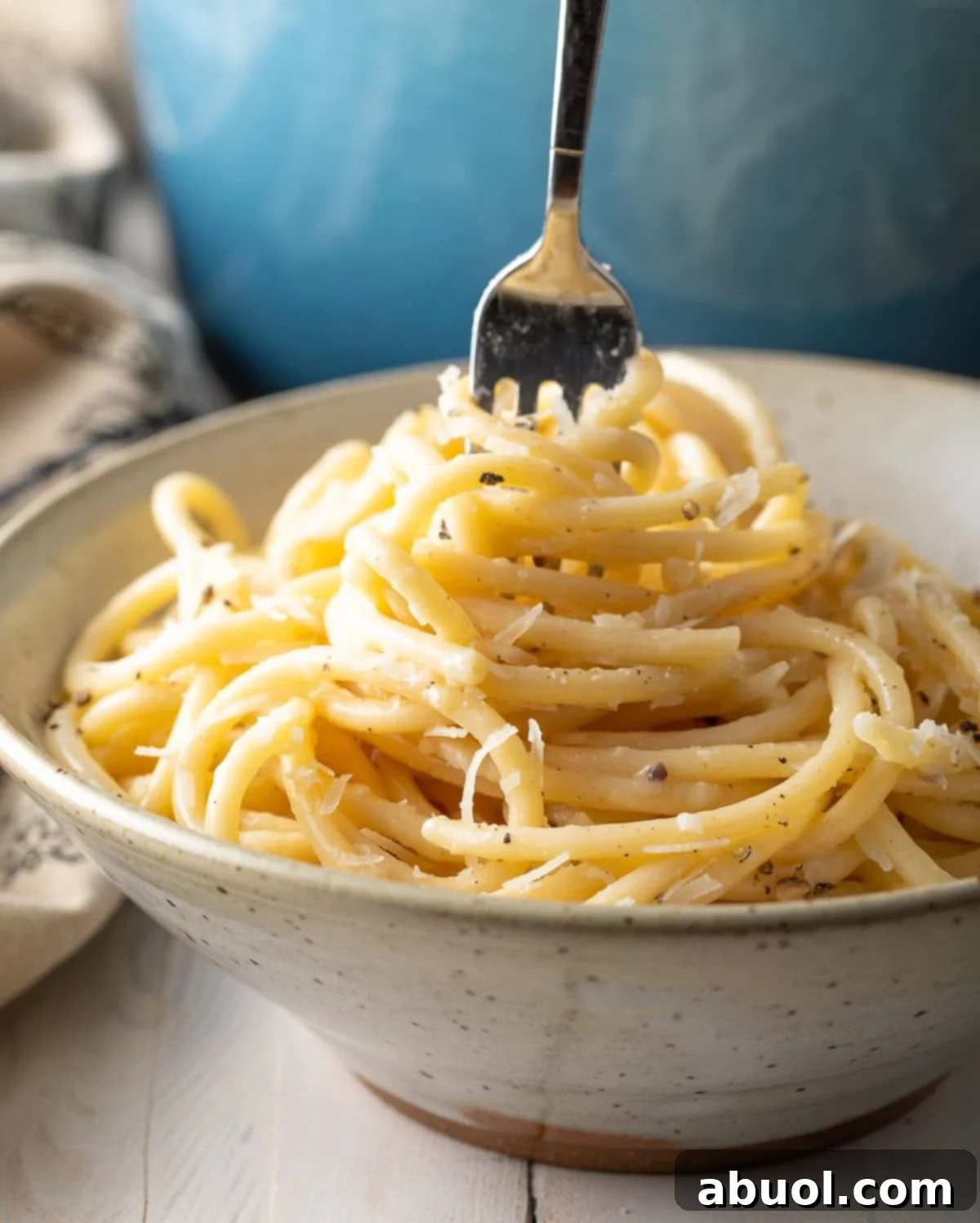
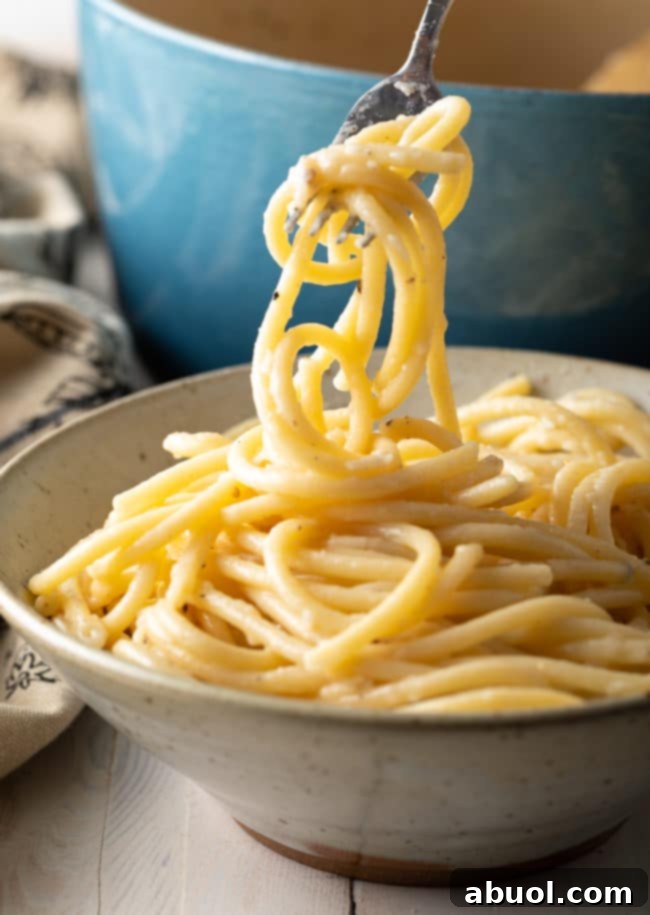
Cacio e Pepe Recipe: Uncover the secrets to crafting an authentic, incredibly flavorful Cacio e Pepe that rivals top Italian trattorias, all with just a handful of ingredients – including our signature twist! Learn How To Make Cacio e Pepe like a true culinary artist.
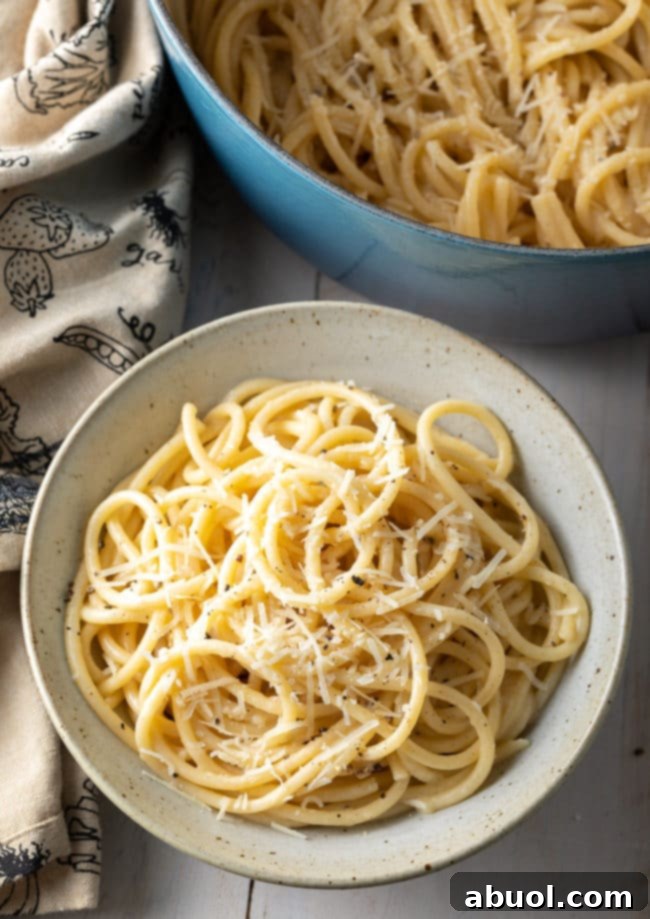

From Sommer’s Kitchen: Elevating Your Cacio e Pepe Experience
Hello, fellow food enthusiasts! Today, I am absolutely thrilled to share a recipe that will not just tantalize your taste buds but also impress anyone lucky enough to share a meal with you. We’re diving deep into the world of Cacio e Pepe, a timeless Italian classic. This isn’t just any pasta dish; it’s a revelation of simplicity, a silky embrace of pasta, copious amounts of rich, nuanced cheesy flavor, and the undeniable kick of fresh black pepper.
If you’re searching for the perfect dish to create a memorable date night or simply to treat yourself to an exquisite culinary journey, look no further. This Cacio e Pepe recipe is more than just a meal; it’s an experience. Prepare to build your entire menu around this masterpiece, as it promises to be the star of your dining table.
The beauty of Cacio e Pepe lies in its minimalist approach. Originating from ancient Rome, this humble pasta dish translates literally to “cheese and pepper,” reflecting its core ingredients. Yet, from these simple components, an extraordinary depth of flavor emerges, creating a comforting and sophisticated meal that has captured hearts worldwide. Join me as we unlock the secrets to truly exceptional Cacio e Pepe.
What Makes Our (Authentic & Best) Cacio e Pepe Recipe Stand Out?
The internet abounds with countless Cacio e Pepe recipes, and many of them are undoubtedly good. However, through extensive experimentation and a deep respect for Italian culinary traditions, we’ve refined a method that consistently delivers superior results. Here’s why you absolutely must try our unique approach to this beloved pasta dish:
The Genius of One-Pot Cooking for Perfect Emulsion – This isn’t merely a convenient shortcut; it’s a fundamental technique for achieving the characteristic velvety sauce of Cacio e Pepe. Unlike many pasta dishes, the magic here happens when the pasta cooks directly in the sauce’s foundational liquid. By cooking in a single pot, we retain all the precious starchy liquid released by the pasta. This starchy liquid is absolutely vital – it’s the emulsifier that binds the cheese and butter, creating that luscious, creamy, glossy sauce without a drop of cream. Draining the pasta would strip away this essential element, making it nearly impossible to achieve the authentic texture. Our one-pot method ensures every strand of pasta is perfectly coated and infused with flavor, leading to an unparalleled taste and consistency.
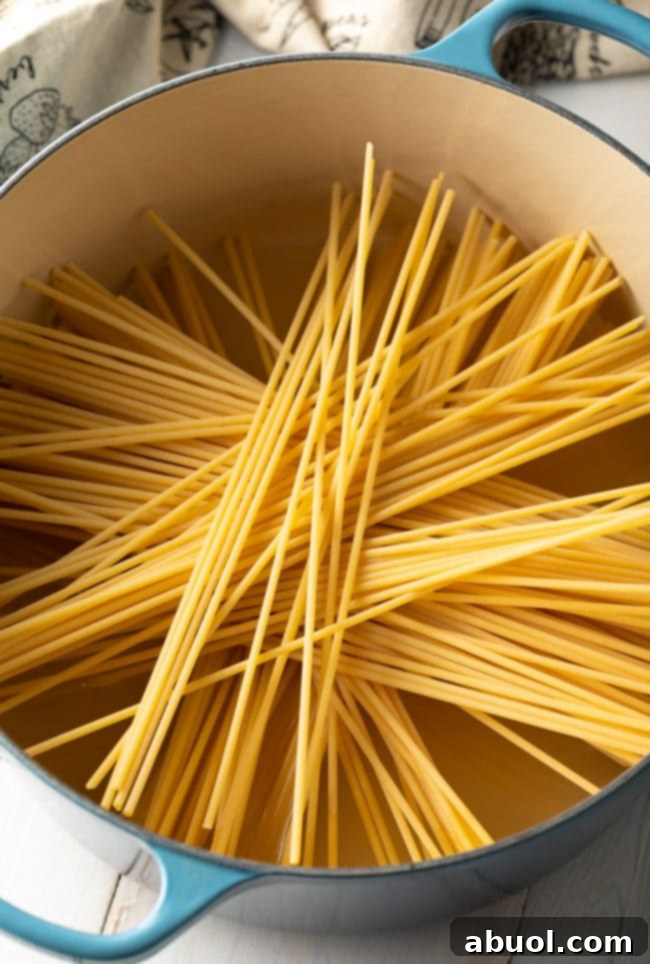
Bucatini: The Unsung Hero for Superior Texture – While spaghetti is often used for Cacio e Pepe, we advocate for bucatini as a far superior choice, especially if fresh pasta isn’t an option. Bucatini pasta is remarkably similar to spaghetti but boasts a subtle, yet significant, difference: each strand has a hollow center, a tiny tunnel running its entire length. This unique characteristic is a game-changer. When you bite into bucatini, it offers a slight give, a pleasant resistance that brilliantly mimics the mouthfeel of freshly made pasta. The hollow center also acts as a tiny reservoir, capturing and holding the flavorful sauce within, releasing an burst of cheesy goodness with every bite. Once you experience Cacio e Pepe with bucatini, you’ll understand why it’s a truly transformative choice.
Our Secret Ingredient: Pasta Boiled in Rich Chicken Broth – Prepare for your mind to be blown! To elevate the flavor profile of the pasta itself, our secret weapon and perhaps the most impactful tip is to cook the bucatini in chicken broth instead of plain water. This seemingly small alteration infuses every strand of pasta with a profound savory depth even before the cheese is introduced. The broth acts as a flavor foundation, creating a more complex and satisfying base for the simple cheese and pepper sauce. For our vegetarian friends, a high-quality vegetable broth or mushroom broth works beautifully, achieving a similar umami-rich effect. You will be astonished at the difference this simple swap makes!
The Art of Toasted Pepper for Intense Aroma – The “pepe” in Cacio e Pepe is more than just a seasoning; it’s a co-star. To truly unlock its aromatic potential and add an incredible depth of flavor, we insist on toasting freshly cracked black pepper before incorporating it into the dish. The dry heat gently coaxes out the pepper’s essential oils, transforming its sharp, raw bite into a warm, fragrant, and more complex spice. This simple step adds a layer of sophistication that elevates the entire dish, ensuring the pepper’s presence is bold and integral, not merely an afterthought.
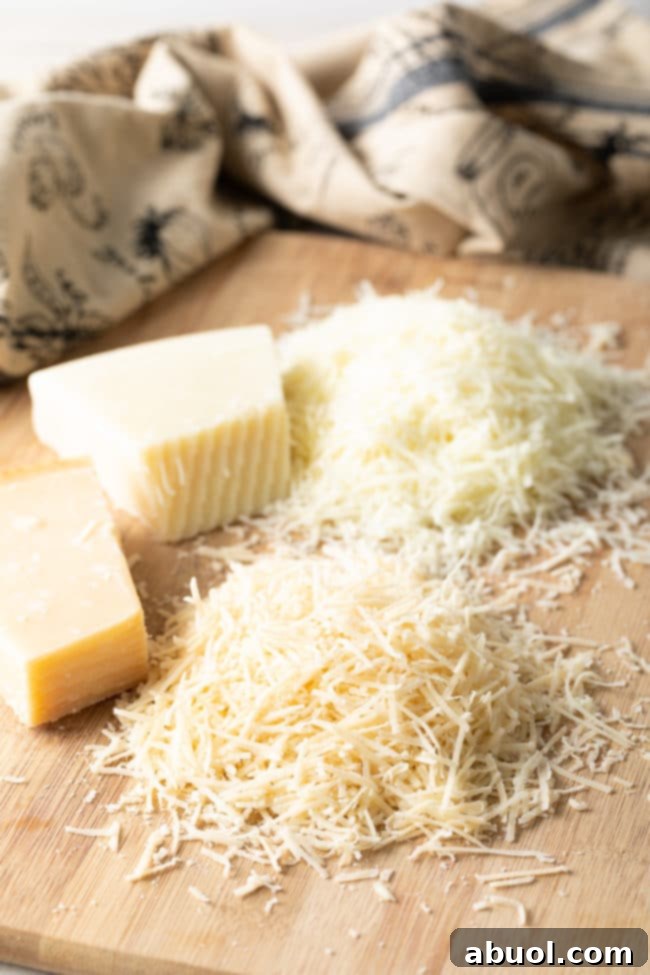
The Dynamic Duo: Two Cheeses for Double the Flavor & Perfect Melt – While some recipes might call for just one type of cheese, we firmly believe that the combination of two specific Italian cheeses is essential for the ultimate Cacio e Pepe. By blending both Parmesan cheese and Pecorino Romano cheese, we achieve a harmonious balance of flavors and textures. Parmesan offers a deep, nutty, umami-rich profile, while Pecorino Romano, made from sheep’s milk, brings a sharper, saltier, and tangier kick. The Pecorino also contributes to a silkier, more pliable texture in the sauce, creating a complex and incredibly delicious experience that a single cheese simply cannot replicate.
The Golden Rule: Grate Cheese Freshly “Off the Block” – This cannot be stressed enough: for the best Cacio e Pepe, you absolutely must grate your cheese fresh off the block. Pre-grated, pre-packaged cheeses often contain anti-caking agents like cellulose, which prevent them from melting smoothly and can give your sauce a grainy, unpleasant texture. More importantly, freshly grated cheese boasts a vastly superior flavor and aroma. The act of grating releases fresh oils, contributing to a more vibrant, authentic taste and ensuring your sauce achieves that perfectly molten, luxurious consistency. This small effort yields monumental rewards.
Essential Ingredients for Your Perfect Cacio e Pepe
The beauty of this classic Roman pasta lies in its minimal ingredient list, making quality paramount. Each component plays a vital role in creating that unforgettable taste and texture. Here’s what you’ll need to craft your exquisite Cacio e Pepe:
- Freshly Cracked Black Pepper – This isn’t just any pepper; it’s the heart of the “pepe.” We recommend using whole peppercorns and cracking them just before toasting for maximum aroma and flavor. A coarse grind is ideal.
- Bucatini Pasta – As discussed, bucatini is our preferred choice for its unique texture and sauce-holding capabilities, whether you opt for dried or can find fresh.
- Chicken Broth – Our secret ingredient! Choose a high-quality, low-sodium chicken broth. For a vegetarian version, substitute with an equally flavorful vegetable or mushroom broth.
- Unsalted Butter – Crucial for creating the foundational silky emulsion and contributing a rich, creamy note to the sauce.
- Parmesan Cheese – Grated freshly off the block, this provides a deep, nutty, and savory dimension. Look for Parmigiano-Reggiano for the most authentic taste.
- Pecorino Romano Cheese – Also grated freshly from the block, this sheep’s milk cheese adds a distinctive sharp, salty, and tangy kick that is indispensable. Budget-minded tip: If you can only buy one block of cheese, go with Pecorino Romano for its bolder flavor profile, which is closer to the dish’s Roman origins!
Mastering the Art: How To Make Cacio e Pepe Flawlessly
Creating an authentic and delicious Cacio e Pepe is simpler than you might think, especially with our one-pot method and expert tips. The key lies in understanding the interplay of the ingredients and the precise timing. Follow these guidelines, and you’ll be enjoying a restaurant-quality dish in your own home.
Crucial Tip for Success: Selecting the Right Pot. This seemingly minor detail is actually paramount for our one-pot technique. You need a pot or pan that is sufficiently wide to accommodate the length of your bucatini pasta. The pasta should be able to lie relatively flat and be fully submerged in the liquid from the start. A 6-quart (or larger) sauté pan or a wide Dutch oven works perfectly. This ensures even cooking and allows the pasta to release its starch effectively into the broth, which is critical for creating the emulsified sauce. Avoid narrow, deep pots.
For precise ingredient proportions, step-by-step detailed instructions, and a helpful video tutorial, please refer to the comprehensive printable recipe card conveniently located at the bottom of this post. It contains all the exact measurements and timings for this sensational Cacio e Pepe recipe.
The One-Pot Method: Step-by-Step Excellence
1. Toast the Pepper: Begin by placing your wide, dry pot over medium heat. Add the freshly cracked black pepper. Toast it for 1-2 minutes, shaking the pan frequently, until it releases a wonderfully strong, fragrant aroma. Immediately transfer the toasted pepper to a plate to prevent over-toasting.
2. Cook the Pasta in Broth: Add the bucatini pasta and 5 cups of chicken (or vegetable) broth to the same pot. Add a generous pinch of salt. Ensure the pasta is fully submerged – if not, add a little more broth. Cover the pot and bring it to a rolling boil. Once boiling, remove the lid and stir vigorously to prevent the pasta from sticking. Continue boiling, uncovered, until the pasta is al dente. This typically takes 7-8 minutes, but always check your pasta package for specific cooking times. The goal is pasta that is slightly firm to the bite in the center, and there should be just about 1/4 to 1/2 inch of starchy broth remaining in the pot.
3. Create the Silky Sauce: While the pasta cooks, grate your Parmesan and Pecorino Romano cheeses fresh from the block. Once the pasta reaches al dente and the broth has reduced to the ideal level, remove the pot from the heat. Add the butter to the pasta and stir thoroughly until it melts and coats the pasta strands.
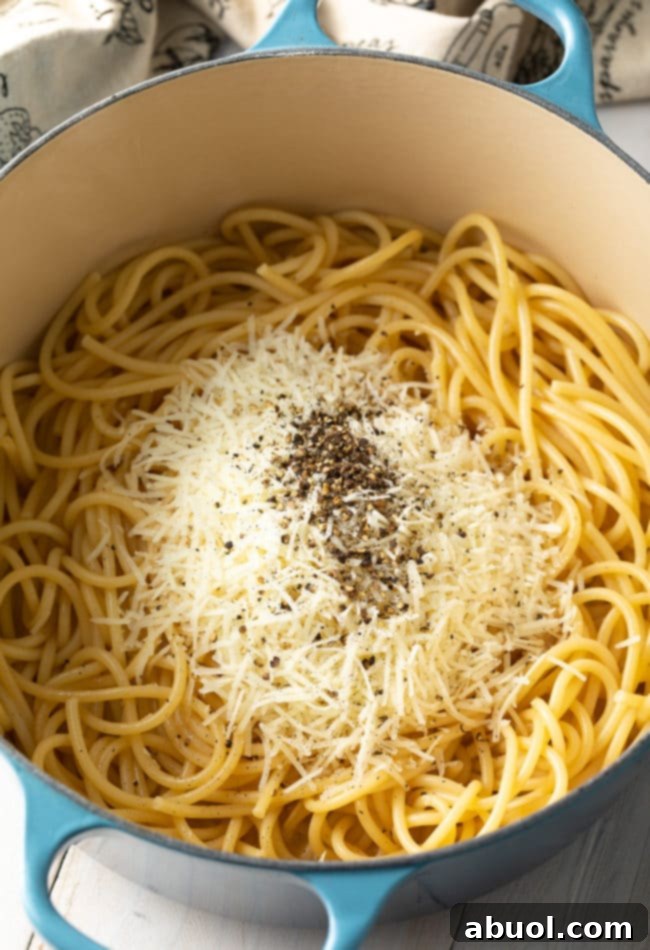
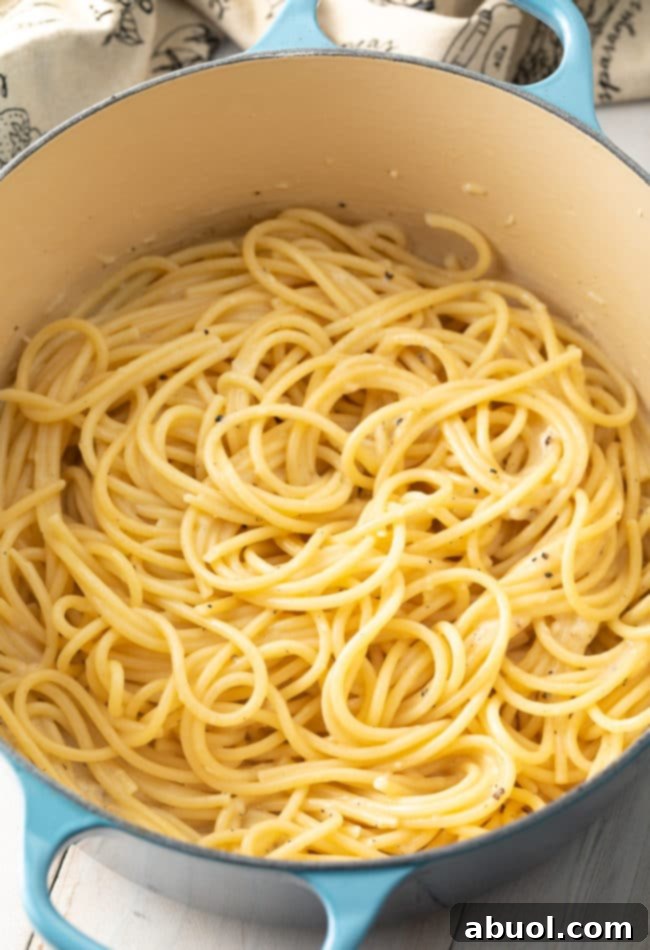
4. Emulsify and Serve: Now, quickly add the toasted cracked pepper and both grated cheeses to the pot. Stir continuously and vigorously. The residual heat from the pasta and the warm starchy broth will melt the cheeses, creating a luxurious, emulsified sauce that clings beautifully to the bucatini. If the sauce appears too thick or clumpy, add a splash or two of hot broth until it reaches your desired consistency. Serve immediately with an extra sprinkle of freshly grated cheese and a final crack of pepper. Enjoy this delightful easy Cacio e Pepe!
Exploring Delightful Cacio e Pepe Variations
By traditional Italian standards, adding anything beyond cheese and pepper means it’s no longer strictly “Cacio e Pepe.” However, that doesn’t mean you can’t create absolutely delicious pasta dishes inspired by its simplicity! If you’re feeling adventurous and want to introduce new layers of flavor, here are some fantastic additions that pair wonderfully with the cheesy, peppery base:
- Roasted Garlic: Add a sweet, mellow depth by roasting a head of garlic, mincing the cloves, and stirring them in with the butter.
- Fresh Greens: For a touch of color and extra nutrition, wilt in some fresh spinach or finely chopped kale at the very end of cooking.
- Crushed Red Pepper Flakes: If you crave more heat, a pinch of crushed red pepper flakes can be toasted with the black pepper or stirred in at the end.
- Roasted Red Peppers: Sweet and smoky, diced roasted red peppers can be gently folded in for a burst of vibrant flavor.
- Toasted Nuts: A sprinkle of toasted pine nuts or walnuts adds a delightful crunch and nutty complexity.
- A Dollop of Basil Pesto: A small spoonful of fresh basil pesto can introduce herbaceous notes, transforming the dish into a vibrant green pasta.
- Grilled Shrimp or Chicken: For a more substantial meal, top your Cacio e Pepe with perfectly grilled shrimp or thinly sliced chicken breast.
- Minced Anchovies: For a deeper, savory umami punch, finely minced anchovies can be dissolved in the butter before adding the pasta. This is a subtle addition that adds incredible depth without making the dish taste “fishy.”
Discover More Comforting & Delicious Pasta Dishes
If you’ve fallen in love with the comforting simplicity and rich flavors of Cacio e Pepe, you’re in for a treat! Our collection features an array of other beloved pasta recipes that are perfect for any occasion, from weeknight dinners to special holiday feasts. Dive into these other crowd-pleasing dishes:
Frequently Asked Questions About Cacio e Pepe
Get answers to all your burning questions about this Roman classic. We cover everything from its origins to preparation tips and common variations.
Originating from the Lazio region of Italy, particularly Rome, Cacio e Pepe is one of the most ancient and cherished Roman pasta dishes. Its name, translating to “cheese and pepper,” perfectly describes its incredibly simple yet profoundly flavorful composition. At its core, it’s a dish of pasta (traditionally Tonnarelli or spaghetti, though we love bucatini!), Pecorino Romano cheese, black pepper, and the magic ingredient: starchy pasta cooking water. The beauty lies in its minimalist approach, where an emulsion of these few ingredients creates a light, velvety dressing that coats each strand of pasta beautifully. It’s a testament to how simple, high-quality ingredients can produce a dish of remarkable depth, offering the comforting familiarity of a childhood favorite elevated to an elegant, decadent experience.
While both Cacio e Pepe and Fettuccine Alfredo are creamy pasta dishes, their origins, ingredients, and preparation methods are fundamentally different. Cacio e Pepe is an authentic Roman dish, hundreds of years old, built on a delicate emulsion. Its “sauce” is formed by the starchy pasta water, freshly grated Pecorino Romano and Parmesan cheeses, butter, and toasted black pepper. The absence of cream or milk means the cheese flavor truly shines, and the sauce is light, clinging subtly to the pasta rather than smothering it. It celebrates the pasta itself.
In contrast, Alfredo Sauce, as commonly known today, is largely an Italian-American creation. The original Alfredo, created in Rome by Alfredo di Lelio, was much simpler (just butter and Parmesan), but the version popularized in the U.S. typically involves heavy cream, butter, and often flour to create a rich, thick roux-based sauce. This results in a much heavier, more liberally applied sauce with a milder cheese flavor that often takes center stage over the pasta. Cacio e Pepe is about elegant simplicity and the harmonious blend of few ingredients, while modern Alfredo tends towards indulgent richness and a more dominant sauce.
To truly experience its peak deliciousness, Cacio e Pepe is best enjoyed immediately after it’s prepared. The delicate emulsion that forms the sauce is at its creamiest and silkiest when fresh and hot. As the pasta cools, it tends to absorb the thin sauce, causing it to tighten and lose its characteristic velvety texture and fresh appeal. Therefore, it is generally not recommended as a make-ahead, meal prep, or freezer meal. The magic of Cacio e Pepe lies in its fresh preparation.
However, if you do find yourself with leftovers, don’t despair! You can absolutely rewarm it. To restore some of its original glory, gently reheat the pasta in a sauté pan over low heat, adding a splash or two of chicken or vegetable broth (or even water) as it warms. Stir constantly, and the added liquid will help loosen the sauce and bring back some of that creamy texture. It won’t be quite as perfect as fresh, but it will still be incredibly tasty!
Absolutely! Our recipe features chicken broth as a “secret ingredient” to infuse deeper flavor into the pasta, but you have excellent alternatives. For a delicious vegetarian version, a high-quality vegetable broth or even a rich mushroom broth would be fantastic choices. Both will impart a wonderful umami depth to the pasta, complementing the cheesy and peppery notes. The key is to select a broth that is flavorful and not overly salty, as the Pecorino Romano will add significant saltiness. Experiment to find your favorite!
Achieving the perfect sauce consistency is often the trickiest part of Cacio e Pepe, but it’s easily adjustable. If you find your Cacio e Pepe has tightened up too much and the sauce feels too thick or clumpy before serving, simply add another splash or two of warm chicken broth (or the reserved pasta cooking water, if you saved some). Stir vigorously until the cheese sauce loosens to your desired creamy consistency. Conversely, if your sauce appears too thin, it might be that too much broth remained in the pot, or your cheese wasn’t emulsifying properly. You can try returning it to very low heat for a moment, stirring constantly, to help it thicken slightly, or add a tiny bit more grated cheese. Practice makes perfect!
For an absolutely classic and authentic Cacio e Pepe recipe, Pecorino Romano and Parmesan (Parmigiano-Reggiano) cheeses are the traditional and highly recommended choices due to their specific flavor profiles and melting properties. Pecorino offers a sharp, salty tang, while Parmesan provides a nutty, umami richness. However, if you’re feeling adventurous and wish to explore, you can certainly experiment with other hard, grating cheeses that melt well. Consider aged Asiago for a milder, nuttier profile, or even a good quality Grana Padano as an alternative to Parmesan. Just be mindful that altering the cheese blend will change the traditional flavor of the dish. Always grate your chosen cheese fresh off the block for the best texture and taste!

Print Recipe
Leave a Review »
Classic One-Pot Cacio e Pepe Recipe
Video Guide
Ingredients for Authentic Cacio e Pepe
- 1 teaspoon freshly cracked black pepper (coarsely ground, essential for flavor)
- 1 pound dried bucatini pasta (or quality spaghetti, but bucatini offers superior texture)
- 5-6 cups chicken broth (low-sodium preferred; use vegetable broth for a vegetarian option)
- 2 tablespoons unsalted butter (adds richness and helps create the emulsion)
- 1 cup freshly grated Parmesan cheese (Parmigiano-Reggiano, grated off the block for best melt and flavor)
- 1 cup freshly grated Pecorino Romano cheese (also grated off the block for its essential sharp, salty flavor)
Detailed Instructions for Your Cacio e Pepe
-
Prepare Your Pot: Select a large (6+ quart) saucepot or a wide sauté pan with a lid. Ensure the pot is wide enough for the bucatini pasta to lie flat on the bottom, allowing it to be fully submerged in liquid for even cooking. (Do not add ingredients yet, just confirm sizing.)
-
Toast the Pepper: Place the dry pot over medium heat. Add the freshly cracked black pepper. Toast the pepper for 1-2 minutes, shaking the pan occasionally, until you can smell a strong, fragrant peppery aroma. This step is crucial for deepening the pepper’s flavor. Immediately transfer the toasted pepper onto a small plate and set aside.
-
Cook the Pasta: Add the bucatini pasta and 5 cups of chicken broth to the same pot. Add a large pinch of salt, but be mindful as the broth and cheeses will add more saltiness. Ensure the pasta is completely submerged; add more broth if necessary. Cover the pot and bring the liquid to a boil over high heat. Once boiling, remove the lid and stir the pasta vigorously with tongs to prevent it from sticking together. Continue to boil, uncovered, until the pasta is al dente (slightly firm in the middle), typically 7-8 minutes or according to package directions. As the pasta cooks, the broth will reduce and become starchy. You should aim for about 1/4 to 1/2 inch of liquid remaining in the pan when the pasta is al dente.
-
Prepare Cheeses and Butter: While the pasta cooks, grate both the Parmesan and Pecorino Romano cheeses fresh from their blocks. Once the pasta reaches al dente and the broth has reduced to the desired amount, remove the pot from the heat. Immediately add the butter to the pasta and stir vigorously until it is fully melted and coats all the pasta strands.
-
Emulsify and Serve: Quickly add the toasted cracked pepper and both grated cheeses to the pot. Stir continuously and rapidly with tongs or a wooden spoon. The residual heat from the pasta and the remaining starchy broth will work together to melt the cheeses, creating a luxurious, creamy, and perfectly emulsified sauce that beautifully clings to the bucatini. If the sauce appears too thick or clumpy, add an additional splash or two of hot broth, stirring until it reaches your preferred silky consistency. Serve your delectable Cacio e Pepe immediately with an optional extra sprinkling of fresh cheese and a final crack of pepper!
Chef’s Notes for Best Results
Broth Adjustments: The amount of broth can vary slightly based on pasta type and pot size. If your Cacio e Pepe sauce tightens up or becomes too thick before serving, don’t hesitate to add another splash or two of warm chicken (or vegetable) broth. This will help loosen the cheese sauce to achieve that perfect velvety consistency. For a delightful vegetarian version of this recipe, ensure you use a flavorful vegetable broth instead of chicken broth.