

The Ultimate Croissant Breakfast Casserole Recipe
Imagine flaky, buttery croissants transformed into a savory breakfast masterpiece. This croissant breakfast casserole combines store-bought croissants with crispy bacon, rich cheese, and perfectly cooked eggs. The secret ingredient adds a tangy twist that elevates this dish from ordinary to extraordinary. Whether you’re prepping ahead for a holiday brunch or assembling it on the spot for a weekend treat, this easy, crowd-pleasing breakfast casserole is guaranteed to impress at any gathering.

Breakfast casseroles are a staple for busy mornings and special occasions. The ability to prepare them the night before makes life so much easier. This croissant breakfast casserole is a game-changer. It takes the concept of a breakfast bake to a whole new level, offering a unique and delicious experience.
The magic lies in the use of croissant chunks. These create a delightfully fluffy and airy base for the egg and dairy mixture. As the casserole rests, the croissants absorb the custard, becoming incredibly soft and flavorful. During baking, they act as a structural support, allowing the eggs to puff up beautifully, resulting in the lightest, fluffiest, and most tender interior imaginable. Add crumbled bacon, sweet sautéed onions, fresh rosemary, smoky Gouda cheese, and a hint of mustard, and you have a symphony of bold, savory, and decadent flavors. This croissant casserole is now a regular fixture on brunch menus.

Why This Croissant Breakfast Casserole is a Must-Try

Easy to Make
This croissant breakfast casserole is surprisingly easy to put together. Using store-bought croissants simplifies the process, and a quick sauté of aromatics adds depth of flavor. Simply mix the ingredients in a bowl, combine everything in a casserole dish, and bake. It’s that simple!
Perfect for Making Ahead
For holiday brunches or special occasions, preparing the breakfast croissant casserole the night before is a game-changer. Wrap the pan tightly in plastic wrap and refrigerate overnight. In the morning, remove the wrap and bake. Whether baked immediately or prepared in advance, the casserole layers remain incredibly flaky, tender, cheesy, and eggy.
Feeds a Crowd
This recipe yields 12 generous servings, ideal for large gatherings like Christmas, Easter, Mother’s Day, or any family event. If you need fewer servings, the recipe can easily be halved and baked in an 8×8-inch square pan for at least 6 portions.
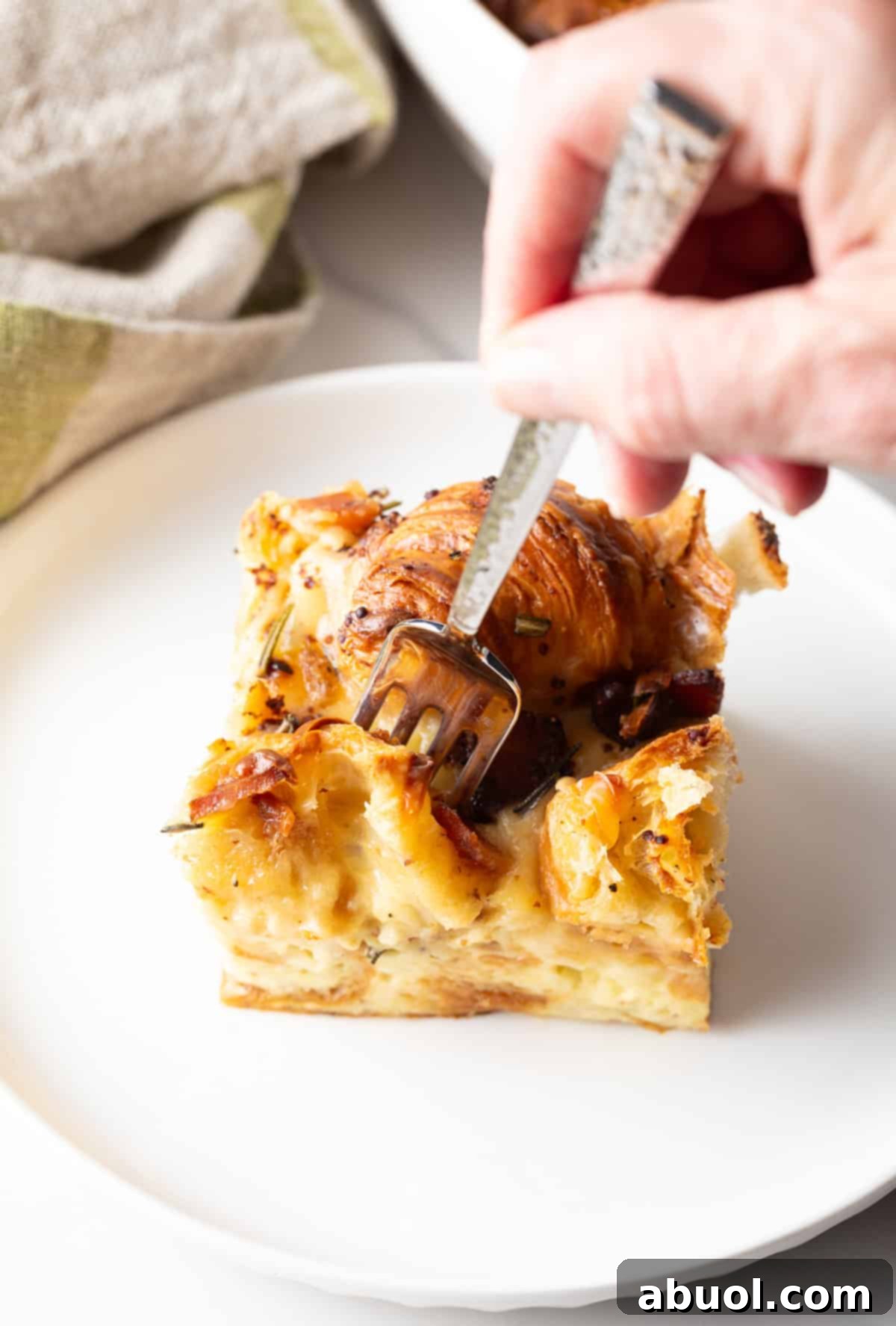
Key Ingredients and Tips for the Best Croissant Casserole
- Croissants: Fresh or day-old croissants work perfectly.
- Bacon: Thick-cut bacon crisps up beautifully and holds its texture in the casserole.
- Shredded Gouda: Grating Gouda by hand from a wedge provides the best texture and flavor.
- Eggs: Allow eggs to sit at room temperature for 15-20 minutes for even cooking.
- Onion: White onion offers a slightly sharp bite, while yellow onion provides a milder, sweeter flavor.
- Half & Half: While milk can be used, half & half creates a richer, custardy texture.
- Mustard: Chunky-style French Dijon mustard or a coarse brown mustard adds a delightful tang.
- Fresh Rosemary: If fresh rosemary is unavailable, avoid dried rosemary unless fully crushed. Dried thyme (½ teaspoon) is a suitable substitute.
Ready to create this amazing breakfast dish? Scroll down for the full ingredient list, detailed instructions, storage tips, and even a video tutorial in the printable recipe card at the bottom of the page!
How to Make Croissant Breakfast Casserole: A Step-by-Step Guide
Step 1: Prep Your Ingredients
Begin by preheating your oven to 350 degrees Fahrenheit (175 degrees Celsius). While the oven warms up, grease a 9×13-inch (3-quart) baking dish with softened butter. Buttering the dish ensures crispy edges and prevents sticking.
Next, tear the croissants into large, irregular chunks. A great stress reliever! Each full-size croissant should yield about 4-6 pieces. Spread these chunks evenly across the prepared baking dish, creating a delicious croissant base.

Now, prepare the remaining ingredients: chop the bacon into bite-sized pieces, dice the onion, chop the fresh rosemary, and shred the Gouda cheese. Having everything prepped and ready will make the assembly process smooth and efficient.
Step 2: Sauté for Flavor
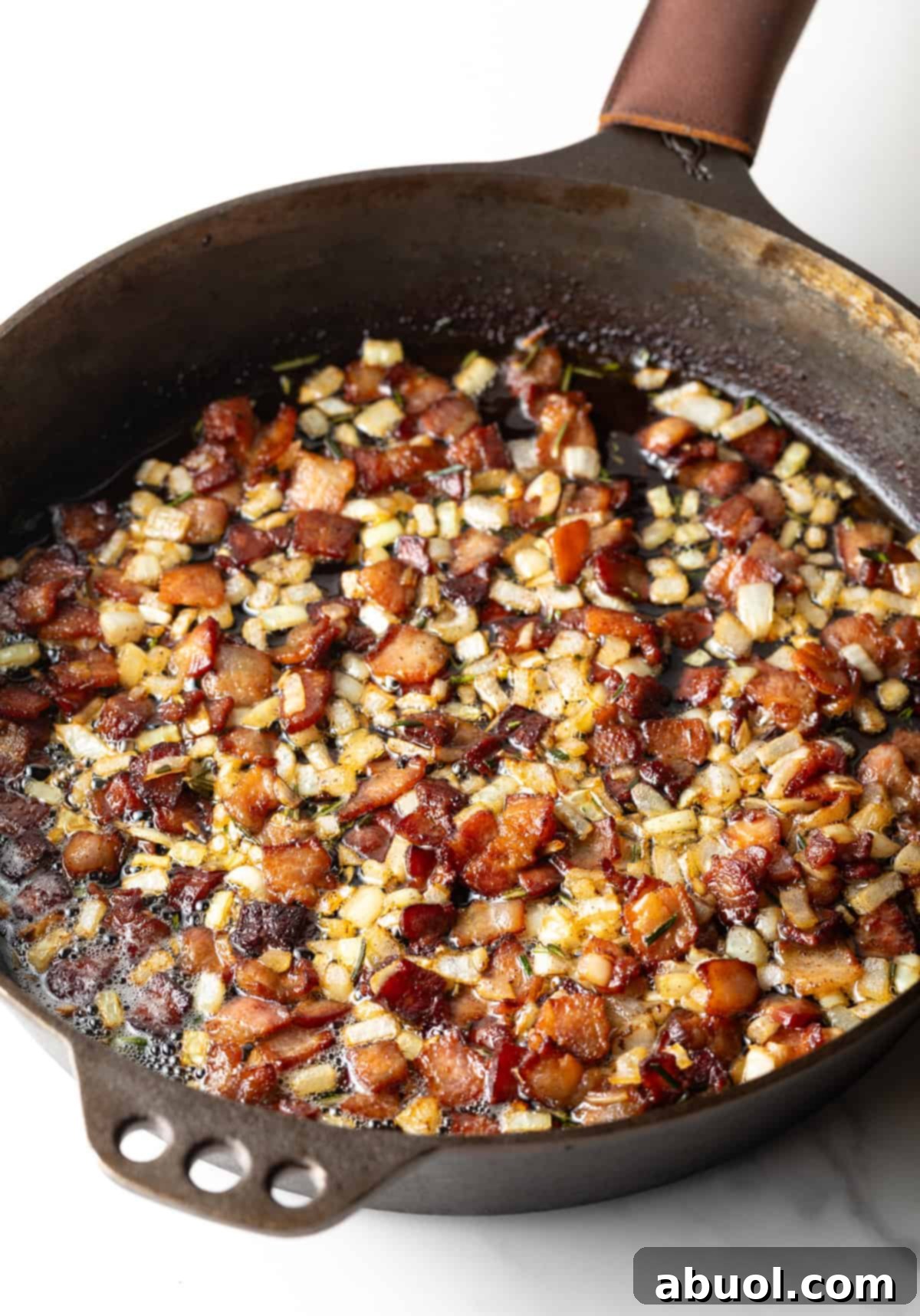
Warm a large skillet over medium heat on the stovetop. Once the skillet is hot, add the chopped bacon. Stir and cook the bacon for a few minutes, until it begins to crisp and render its fat. Then, add the diced onion and chopped rosemary to the skillet.
Continue to cook for another 3-4 minutes, stirring occasionally to prevent burning. The goal is to soften the onions and infuse them with the smoky bacon flavor and fragrant rosemary. Careful not to burn the ingredients, as this will impact the overall taste of the casserole.
Step 3: Layer with Deliciousness
Using a slotted spoon, scoop the bacon and onion mixture from the skillet and sprinkle it evenly over the croissant pieces in the baking dish. A slotted spoon helps to drain excess bacon grease, preventing the casserole from becoming overly greasy.

Next, evenly sprinkle the shredded Gouda cheese over the top of the croissant and bacon mixture. The Gouda cheese will melt beautifully during baking, creating a rich and savory layer of flavor.

Step 4: Whisk the Custard
In a large mixing bowl, whisk together the eggs, half & half, Dijon mustard, salt, and pepper. Whisk until the mixture is well combined and slightly frothy.

Step 5: Soak and Chill (Optional)
Slowly and evenly pour the egg and milk mixture over the croissant base in the baking dish, ensuring that every piece of croissant is soaked in the custard. Work your way back and forth across the surface of the casserole to achieve even distribution.

If you’re planning to bake the casserole in the morning, cover the dish tightly with plastic wrap and refrigerate it overnight. This allows the croissants to fully absorb the custard, resulting in a richer and more flavorful casserole.
If you’re baking right away, allow the unbaked casserole to sit on the counter for about 15 minutes before baking. This allows the egg and milk mixture to soak into every nook and cranny of the croissants, ensuring a perfectly textured casserole.
Step 6: Bake to Golden Perfection
Carefully slide the dish into the preheated oven. Bake for 50-60 minutes, or until the casserole is golden brown on top and puffed in the center.
To check for doneness, insert a knife into the center of the casserole. If the knife comes out clean or with only a few moist crumbs, the casserole is done. If the knife comes out wet and jiggly, bake for another 10 minutes and check again.

Serving Suggestions for Your Croissant Breakfast Casserole
Let the baked casserole rest for about 5 minutes before cutting into it. This allows the ingredients to firm up and makes it easier to slice into neat portions. Letting it rest slightly also helps to prevent the casserole from being too runny.
This croissant breakfast casserole is a complete meal on its own, packed with carbs and protein from the croissants, eggs, cheese, half & half, and bacon.
If you want to add a side dish, consider fresh fruit such as slices of melon or a simple fruit salad. For a more savory option, try a sweet potato hash or baked hash browns.
No brunch is complete without beverages! Bloody Marys and mimosas are always a fantastic choice to accompany this decadent casserole.
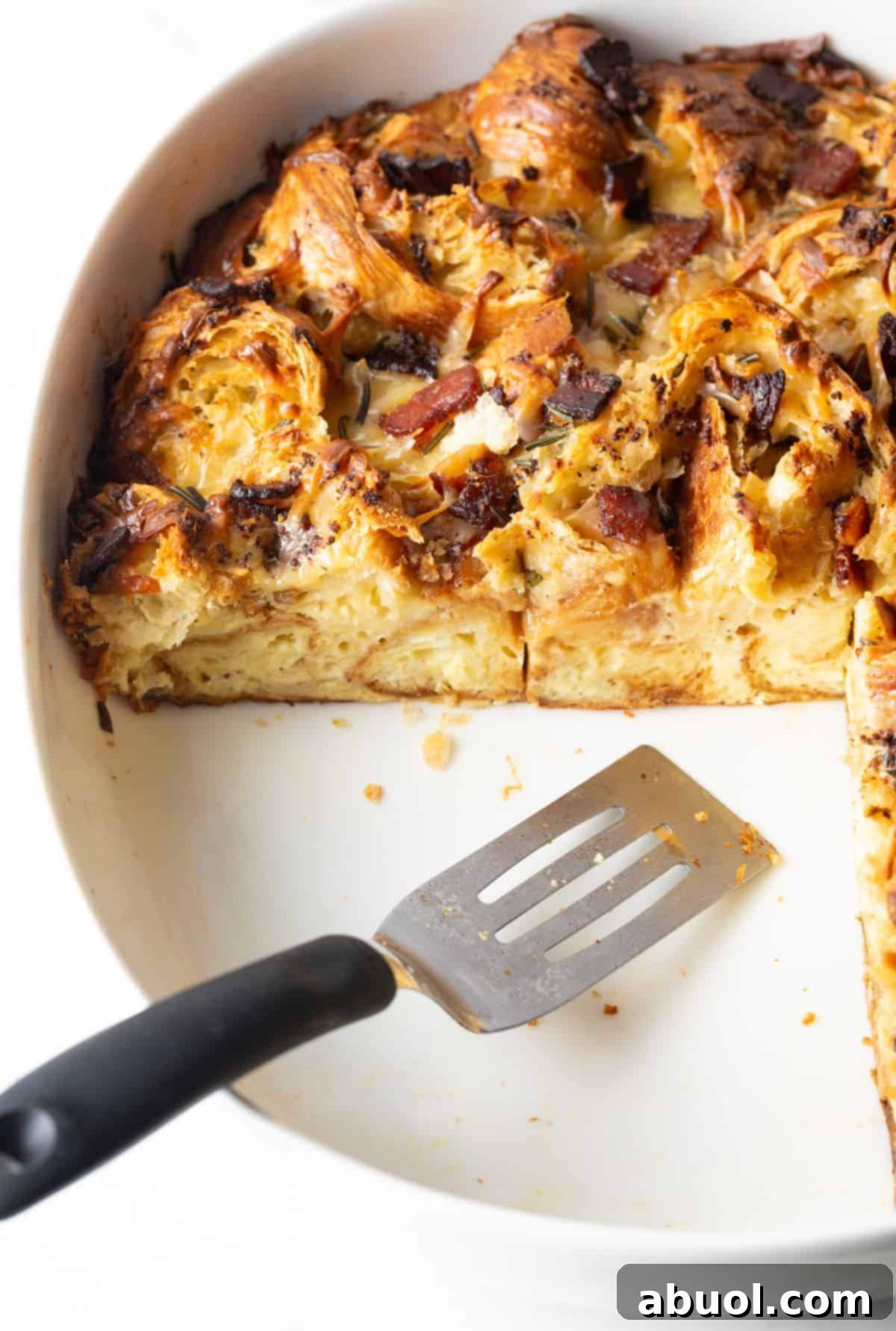
Storing Leftovers and Freezing Tips
Store leftover croissant breakfast casserole in an airtight container in the refrigerator for 3-4 days. Reheat in the microwave or oven until warmed through.
This casserole freezes beautifully, making it perfect for meal prepping. When freezing the unbaked casserole, assemble it in a disposable aluminum pan. Wrap the pan in aluminum foil, then in several layers of plastic wrap. Freeze for 2-3 months.
To bake from frozen, add 20-30 minutes to the baking time and cover the dish loosely with foil after 40 minutes to prevent burning. Alternatively, thaw the casserole in the refrigerator overnight and add only 10 minutes to the baking time.
If freezing after baking, thaw the casserole in the fridge overnight before reheating in a 350-degree oven for 30-40 minutes, or until heated through and crisp on top.
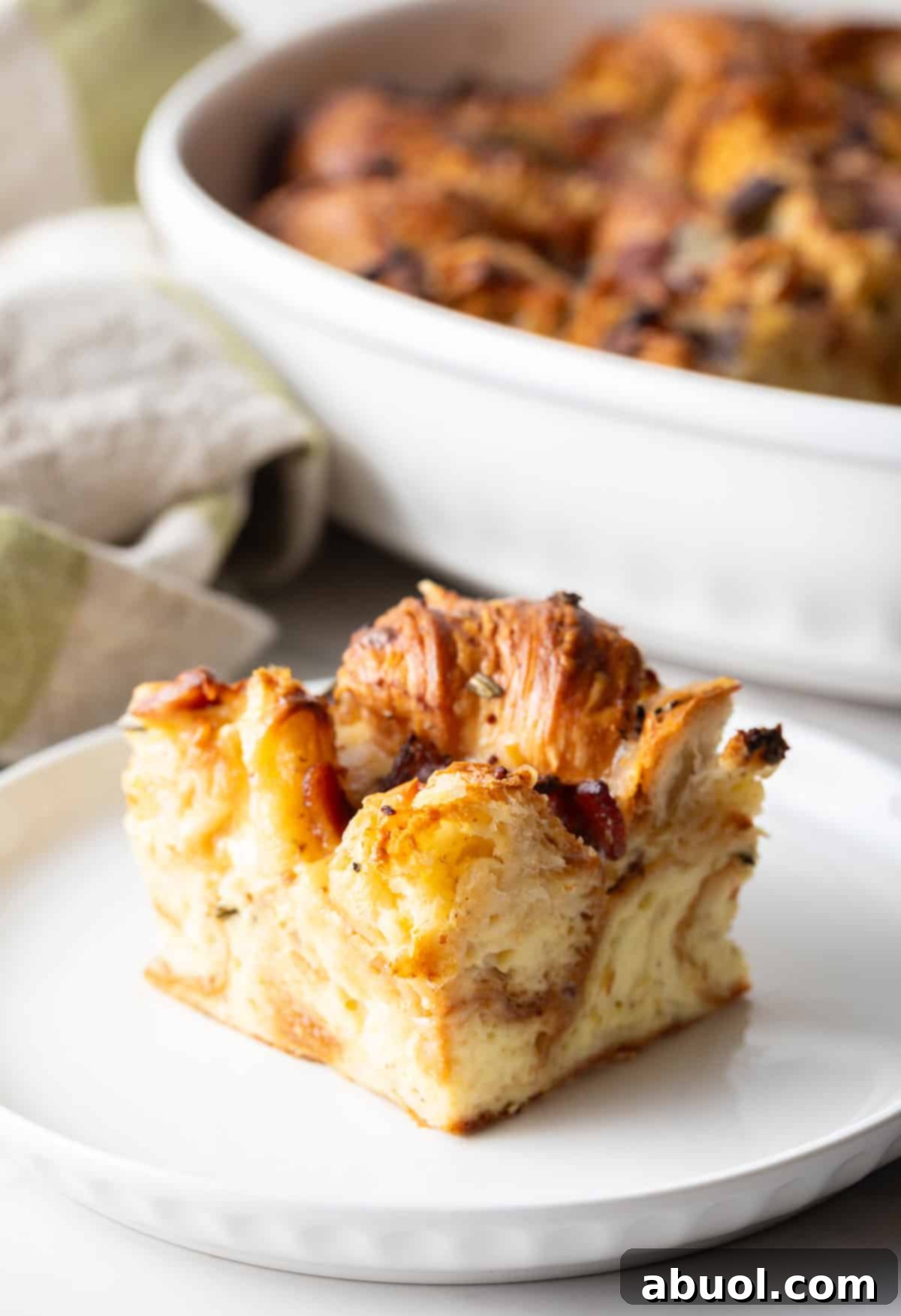
Frequently Asked Questions About Croissant Casserole
Can I make it vegetarian?
Yes! Simply omit the bacon and sauté the onion and rosemary in 2 tablespoons of olive oil.
How do I prevent the casserole from being too runny?
Ensure that you drain off as much grease as possible from the bacon. Excess moisture can lead to a soggy casserole.
When pouring the milk and egg mixture, do so slowly and evenly across the croissants, avoiding pools of liquid in any one area.
How do I bake the casserole if assembled ahead of time and refrigerated overnight?
Before baking, let the dish sit on the counter for 15-20 minutes to allow the pan to come to room temperature, preventing cracking. Remove the plastic wrap and bake as directed, adding approximately 10 minutes to the baking time.
How can I keep the top from burning?
If the top starts to darken too quickly, loosely cover the casserole with foil after 30-40 minutes of baking. Avoid crimping the foil down, as this can trap moisture and lead to a soggy casserole.

Looking for More Delicious Breakfast Recipes?
Croissant Breakfast Casserole Recipe

Ingredients
- 8-10 croissants (10 large, 8 XL, or 20 minis)
- 6 strips thick-cut bacon (about 1 cup, chopped)
- 1 cup diced onion
- 2 teaspoons fresh chopped rosemary
- 8 ounces smoked Gouda cheese, shredded (2 cups)
- 12 large eggs
- 3 cups half & half
- 2 tablespoons coarse Dijon mustard or coarse brown mustard
- Salt and pepper to taste
Instructions
- Preheat the oven to 350°F (175°C). Butter the inside of a 9 x 13 inch (3-quart) baking dish.
- Tear each croissant into large chunks, about 4-6 chunks per croissant. Spread the croissant pieces into the baking dish. Chop the bacon into small pieces. Dice the onion. Chop the rosemary. Shred the smoked Gouda cheese.
- Set a skillet on the stovetop over medium heat. Add the chopped bacon. Stir and cook the bacon until it’s reddish-brown, then add onions and rosemary to the skillet. Continue to stir and sauté the onions for another 3-4 minutes until soft. Turn off the heat.
- Use a slotted spoon to scoop the onions and bacon out of the grease and sprinkle them over the top of the croissants. Allow the bacon to cool for several minutes. Then add the shredded cheese and gently toss the ingredients into the croissant pieces. Spread out in an even layer.
- Set out a medium mixing bowl. Combine the cracked eggs, half-and-half, coarse mustard, ½ teaspoon of salt, and ¼ teaspoon of cracked black pepper. Whisk well.
- Pour the mixture evenly over the croissant base in the baking dish. Allow the mixture to rest and soak into the croissants for at least 15 minutes before baking. *If making ahead, cover and refrigerate.
- Place the baking dish in the oven, uncovered, for 50-60 minutes, until golden-brown on top and puffed in the center.
- Test the croissant casserole by inserting a knife deep into the center. If the eggs are set, remove from the oven. If the knife comes out wet, bake for another 5-10 minutes. If the casserole starts looking a little too dark on top, you can cover it loosely with foil. Allow the croissant casserole to rest for 5 minutes then cut and serve.
Notes
Keep leftovers in an airtight container and store in the refrigerator for 3-4 days.
This casserole freezes well, too! When I plan to freeze the whole baked thing, I always assemble the casserole in a disposable aluminum pan so it can go straight from the freezer to the oven.
First, I wrap the pan in aluminum foil. Then I wrap it in a few layers of plastic wrap and freeze it for 2-3 months. If you bake it from frozen, you’ll need to add 20-30 extra minutes to the baking time, and you definitely want to loosely cover the dish with foil around the 40-minute mark to keep it from burning. But I usually let the casserole thaw in the fridge overnight before baking, so then I only have to add another 10 minutes or so to the total bake time.
If you freeze the casserole after baking, I suggest thawing it in the fridge overnight before reheating in a 350-degree oven for 30-40 minutes, or until it’s heated throughout and crisp again on top.
Nutrition
Serving: 1 pc, Calories: 446kcal, Carbohydrates: 22g, Protein: 18g, Fat: 32g, Saturated Fat: 16g, Polyunsaturated Fat: 3g, Monounsaturated Fat: 10g, Trans Fat: 0.04g, Cholesterol: 244mg, Sodium: 547mg, Potassium: 267mg, Fiber: 1g, Sugar: 8g, Vitamin A: 850IU, Vitamin C: 2mg, Calcium: 241mg, Iron: 2mg
Course: Breakfast, Brunch Cuisine: American Author: Sommer Collier