
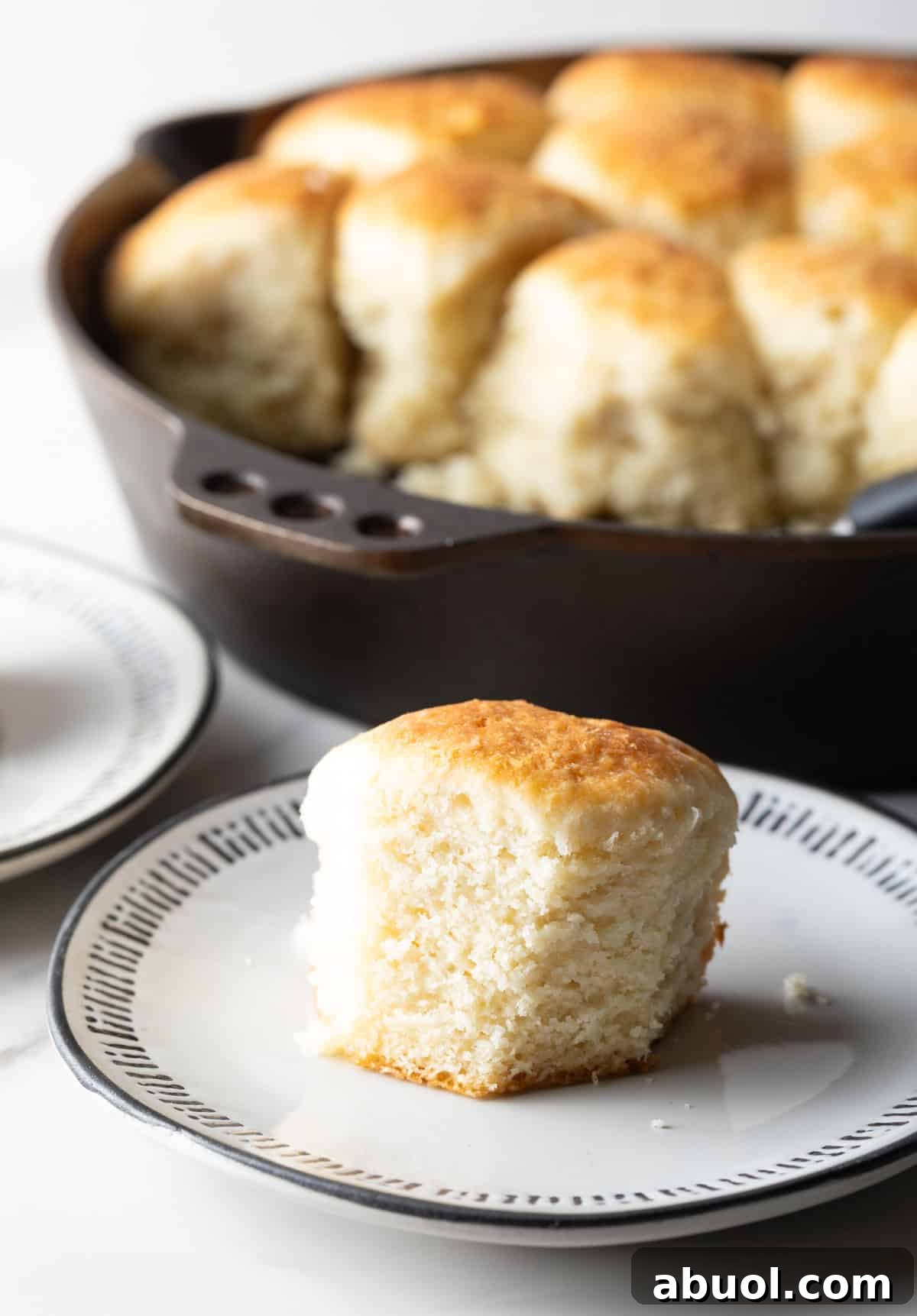
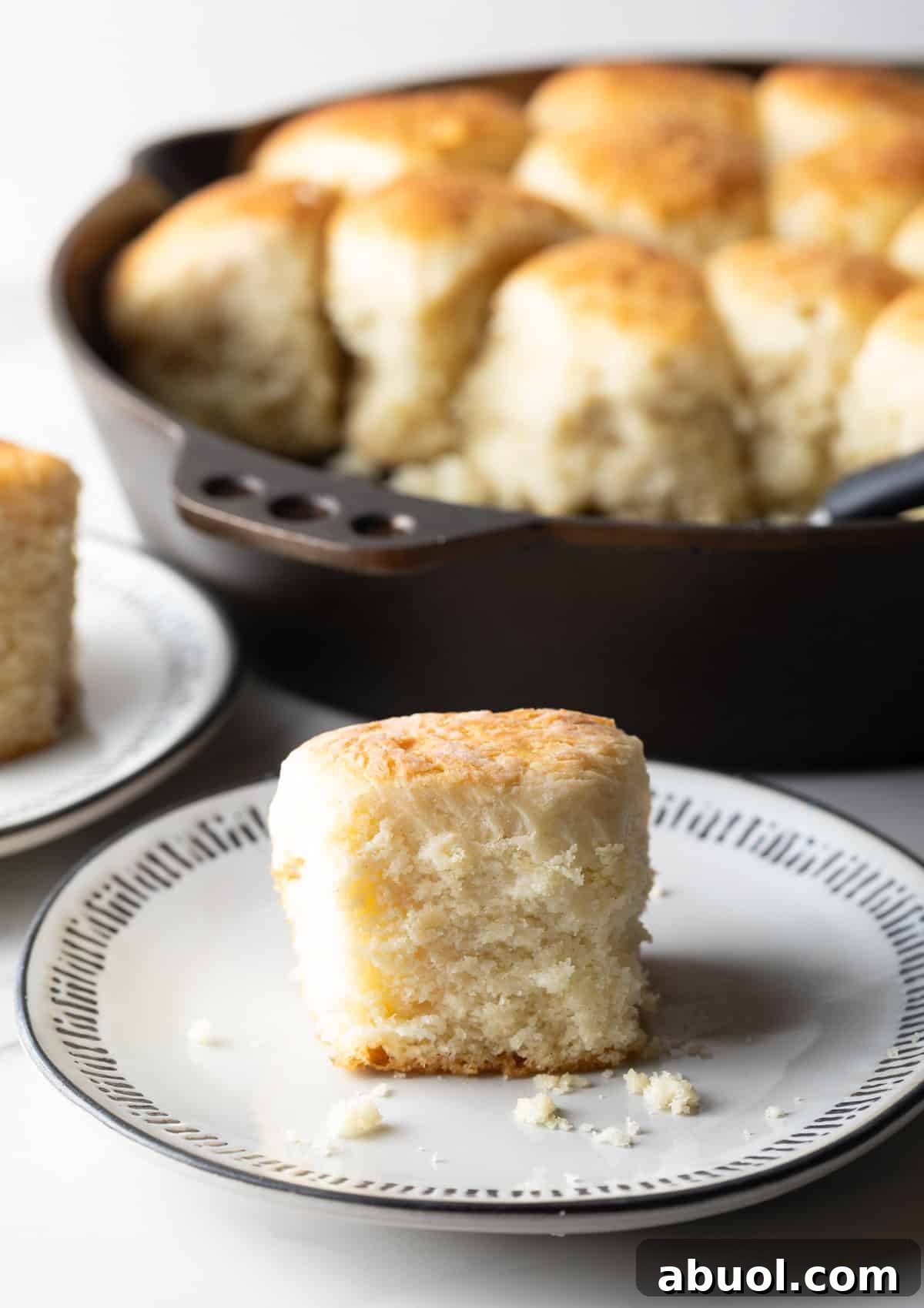
The secret to these incredibly fluffy angel biscuits is an ingredient you don’t usually see in biscuit recipes: yeast. Used with tangy buttermilk, yeast helps the dough rise higher while keeping the centers delicate and tender. Baked together in a cast-iron skillet, the biscuits pull apart easily and are perfect with butter, honey, or jam.
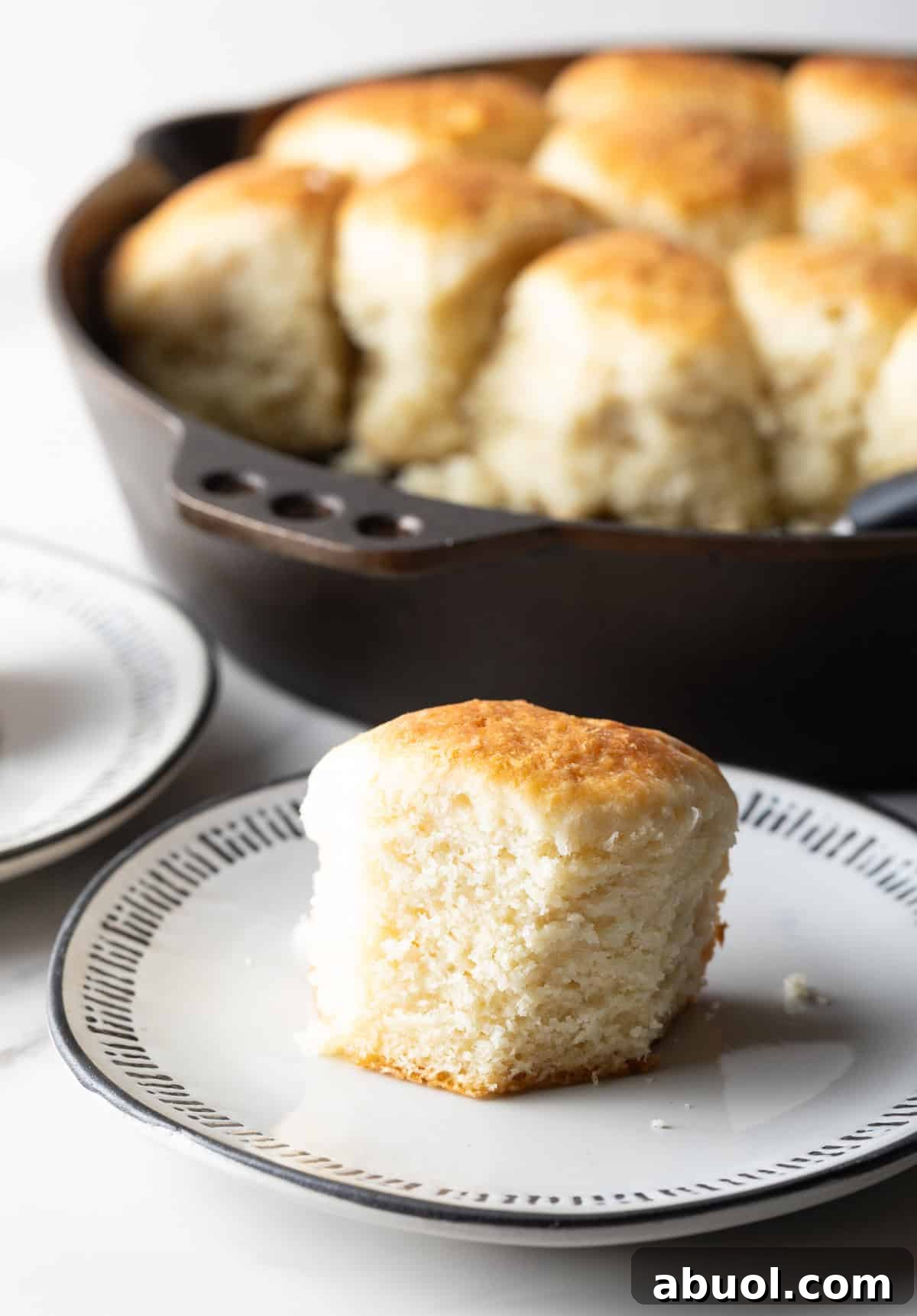
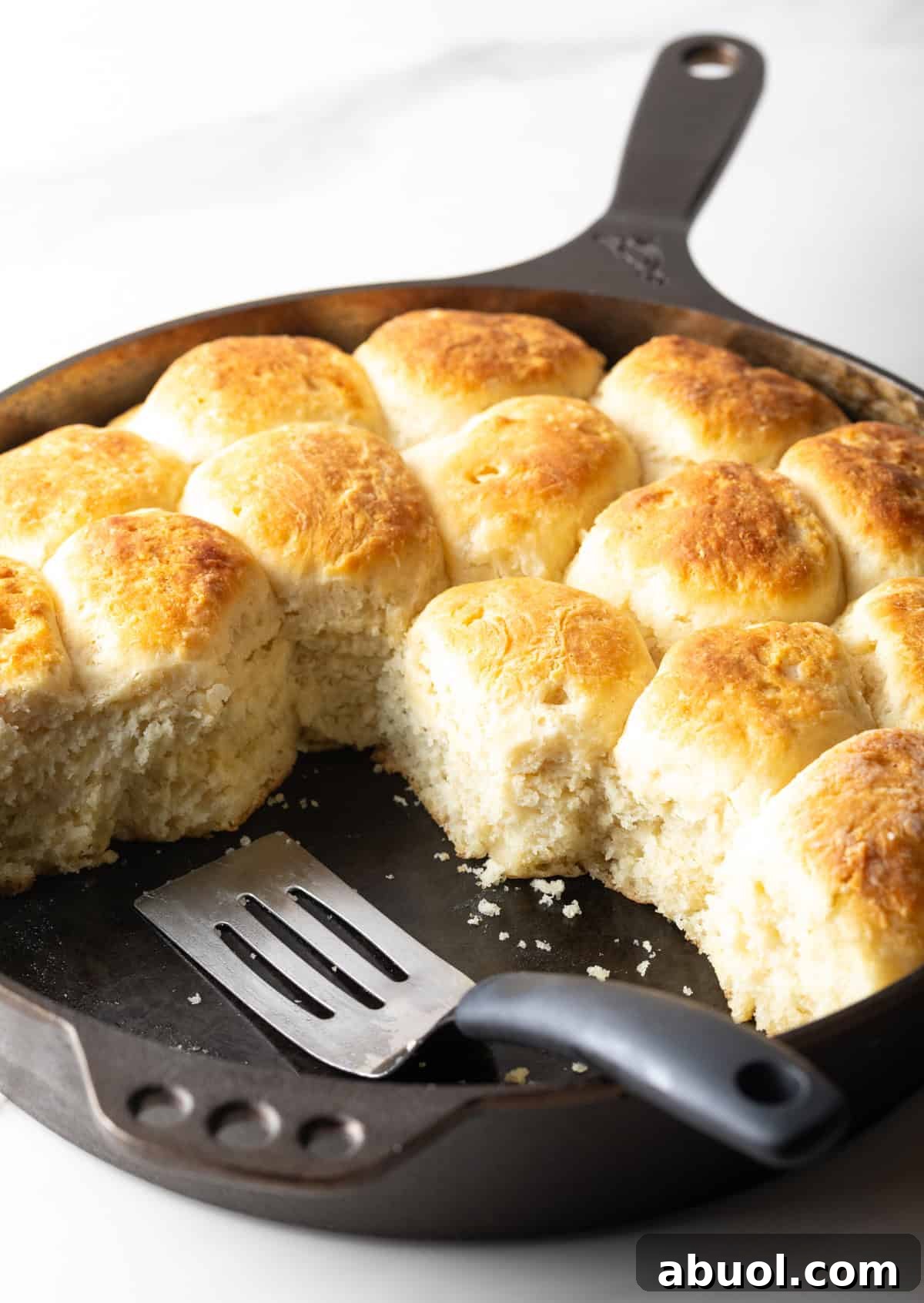
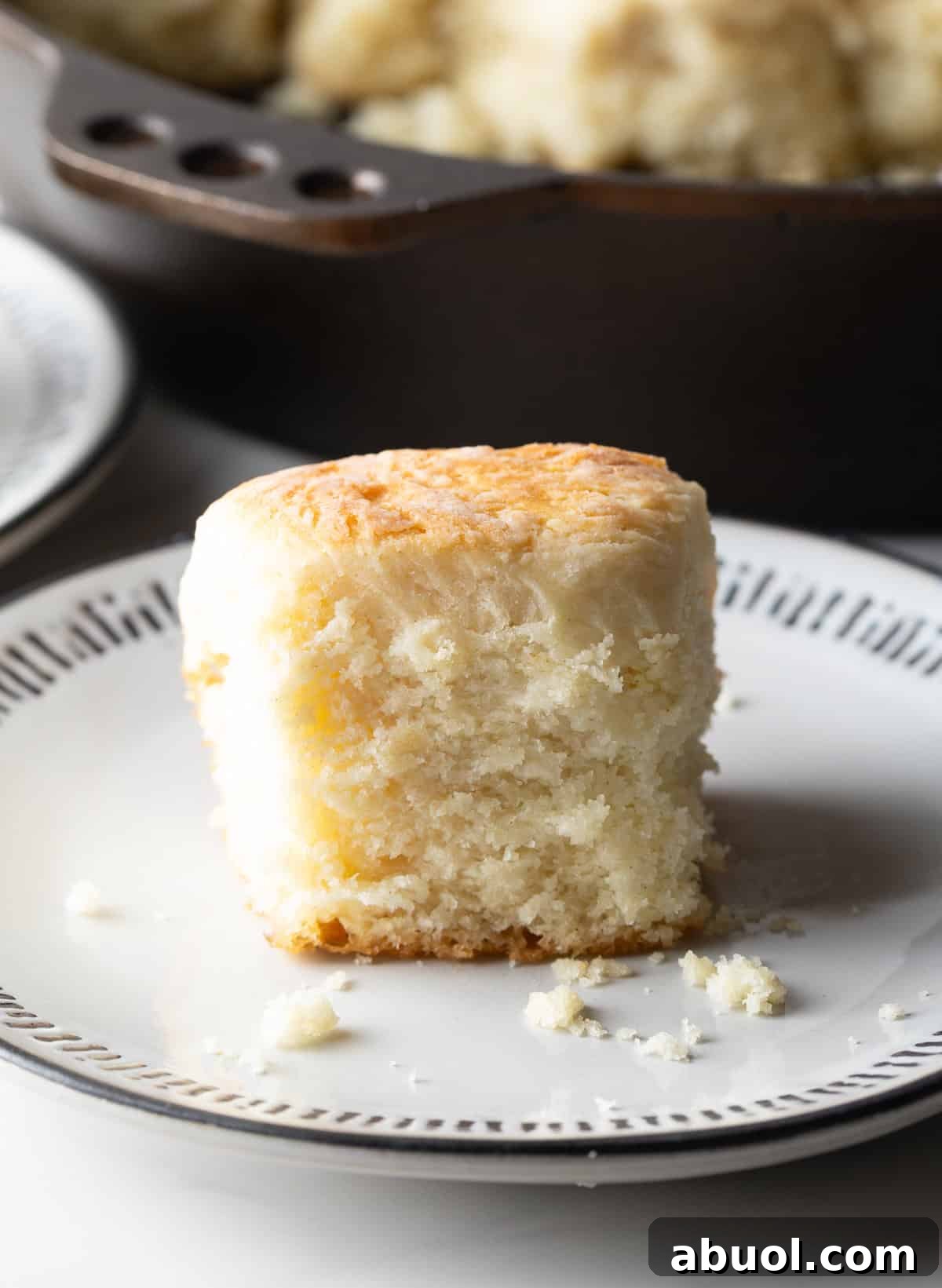
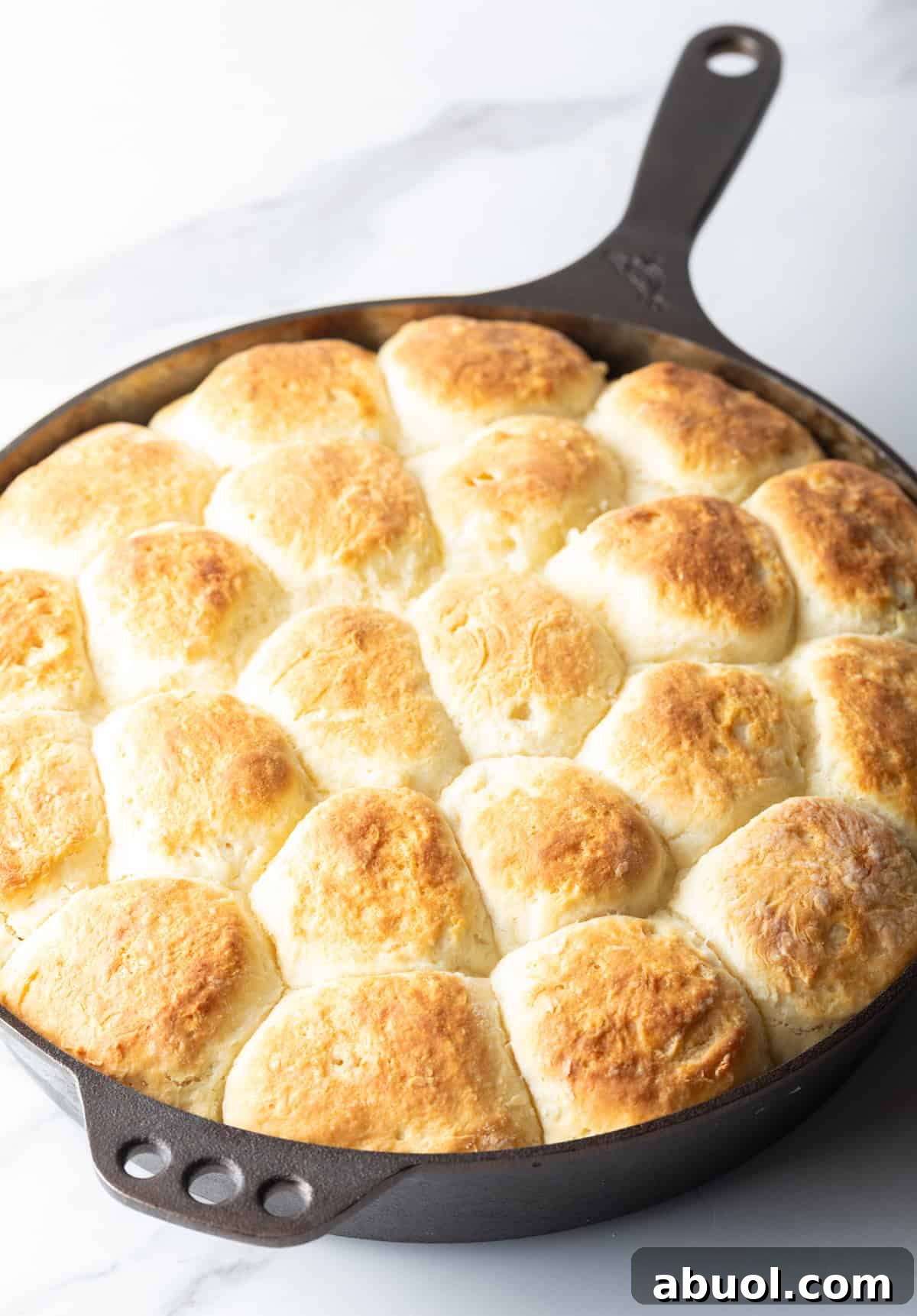
Sinking your teeth into a warm, tender angel biscuit is a small, heavenly moment. These differ from classic flaky Southern biscuits—typically quick breads leavened only with baking powder and baking soda—because this recipe uses dry active yeast in combination with the chemical leaveners. That yeast creates an airy, taller biscuit with a lightly yeasty baked flavor and an ultra-soft interior. Baking them snugly side-by-side in a cast-iron skillet supports the rise and produces beautifully golden tops and soft, pull-apart sides.

Sommer’s Recipe Highlights
Worth the Wait – These pillowy biscuits require a bit more time than a quick-bread biscuit because of the yeast rise, but the result is biscuits that are tall, soft, and cloud-like with golden tops. The extra rise time is well worth it for the texture.
Made to Share – The full recipe yields about 24 small biscuits. A typical serving is two biscuits, meaning the recipe serves roughly 12. If you don’t need all of them at once, freeze extras for later.
Enjoy Your Way – Warm from the oven, these are excellent with softened butter, honey butter, jam, or used as a base for classic Southern dishes like biscuits and gravy.
Key Ingredients and Tips
- Leaveners – This recipe combines dry active yeast with baking powder and baking soda to ensure a consistently high rise and light crumb.
- All-purpose flour – A softer all-purpose flour works best; measure properly by spooning and leveling to avoid dry, tough biscuits.
- Sugar – A small amount of granulated sugar feeds the yeast and contributes to a slightly richer rise.
- Cold butter and shortening – Using both fats helps create tender, pillowy biscuits. Keep fats cold until mixing so they produce flaky pockets as they bake.
- Buttermilk – The acidity in buttermilk interacts with the leaveners and helps produce a tender texture and pleasant tang.
How to Make
Find printable ingredient proportions and a video tutorial in the recipe card below.
Bloom the Yeast – Stir the dry active yeast into slightly warm water (about 105°F) and let it sit 10 minutes until foamy. If it fails to foam, the yeast is inactive and should be replaced.
Mix Dry Ingredients – Whisk together the measured flour, granulated sugar, baking powder, baking soda, and salt in a large bowl.
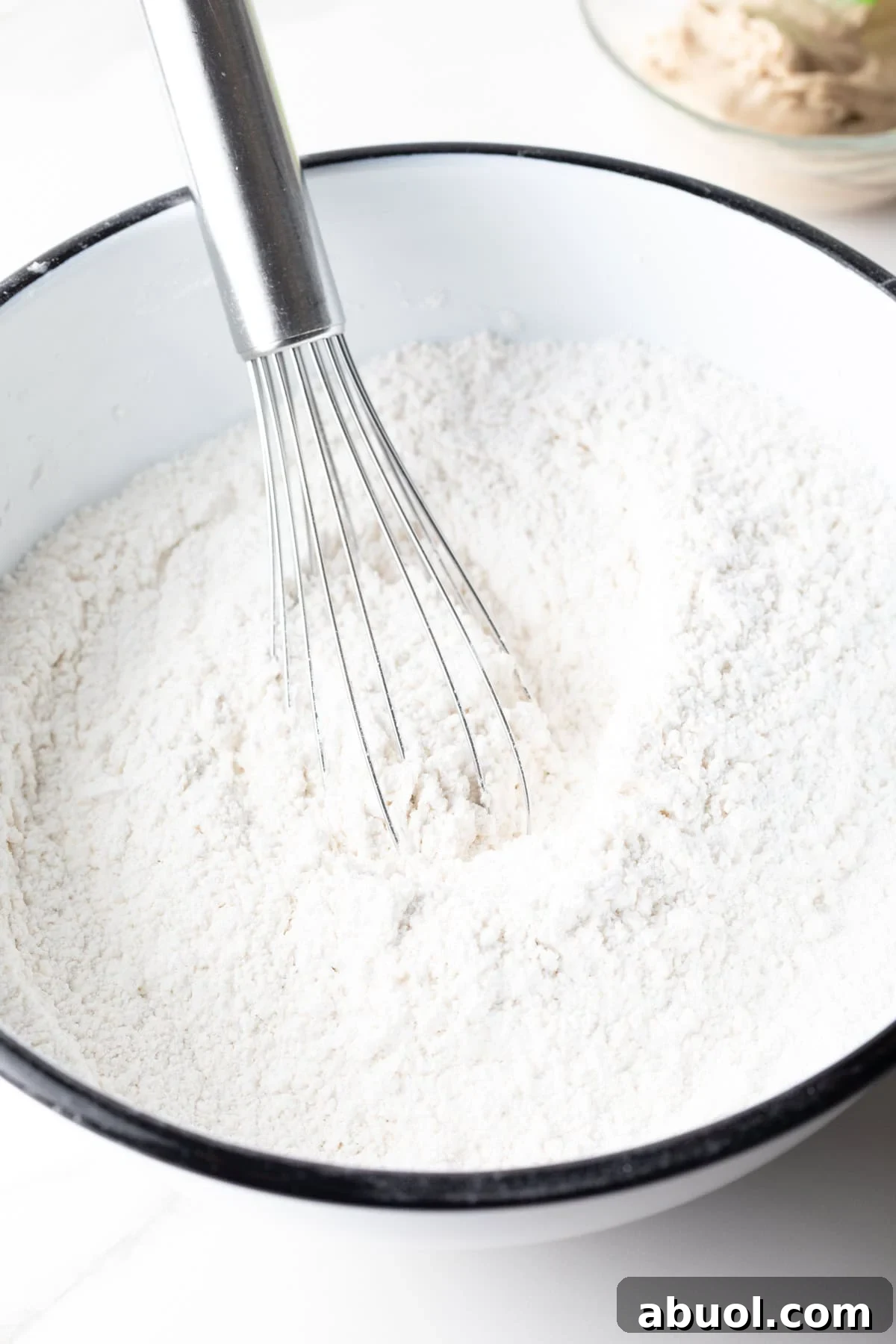
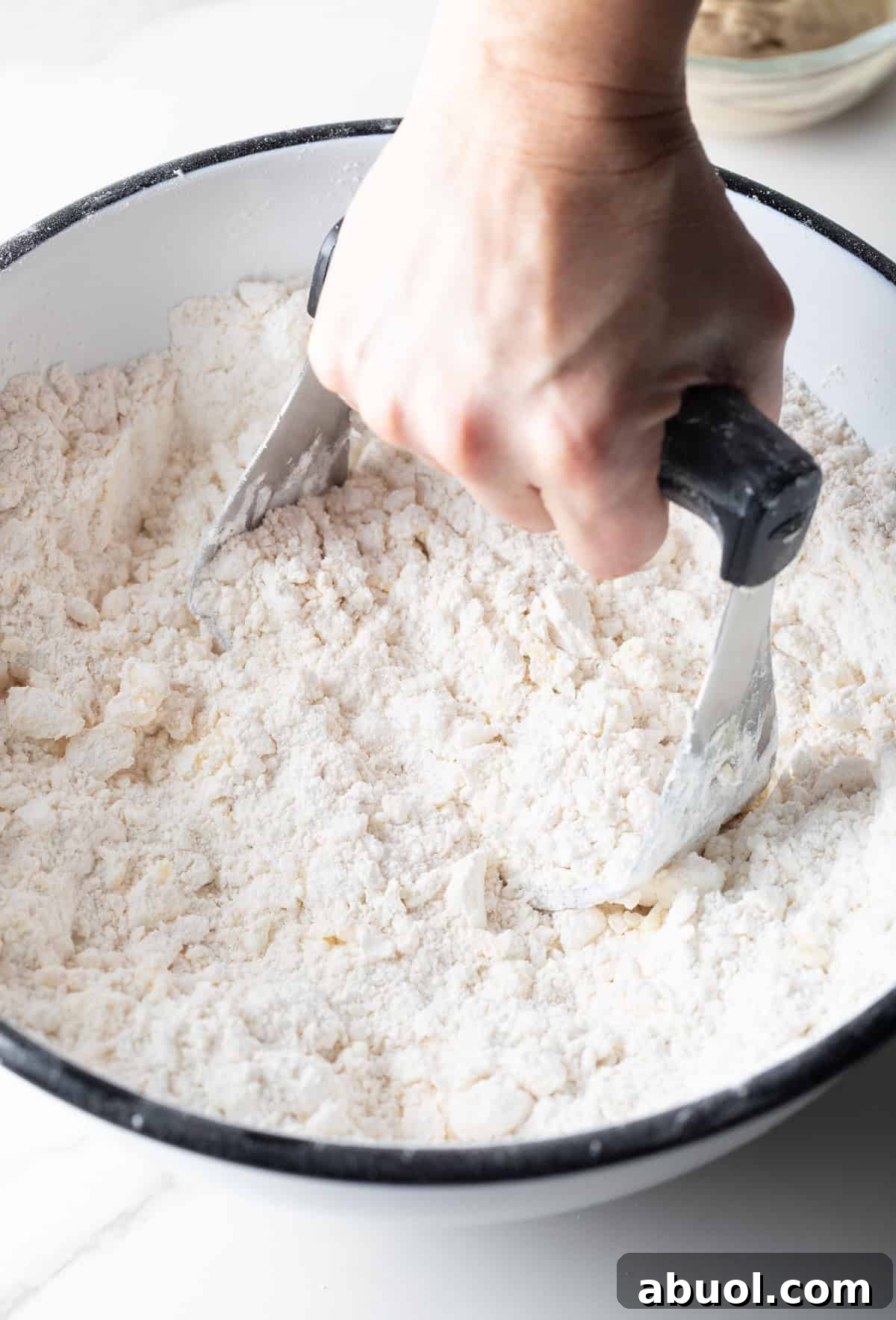
Cut in the Fats – Add cold cubed butter and shortening to the dry mix. Use a pastry cutter or your fingertips to work the fats into the flour until the texture resembles coarse crumbs with pea-sized bits of fat remaining.
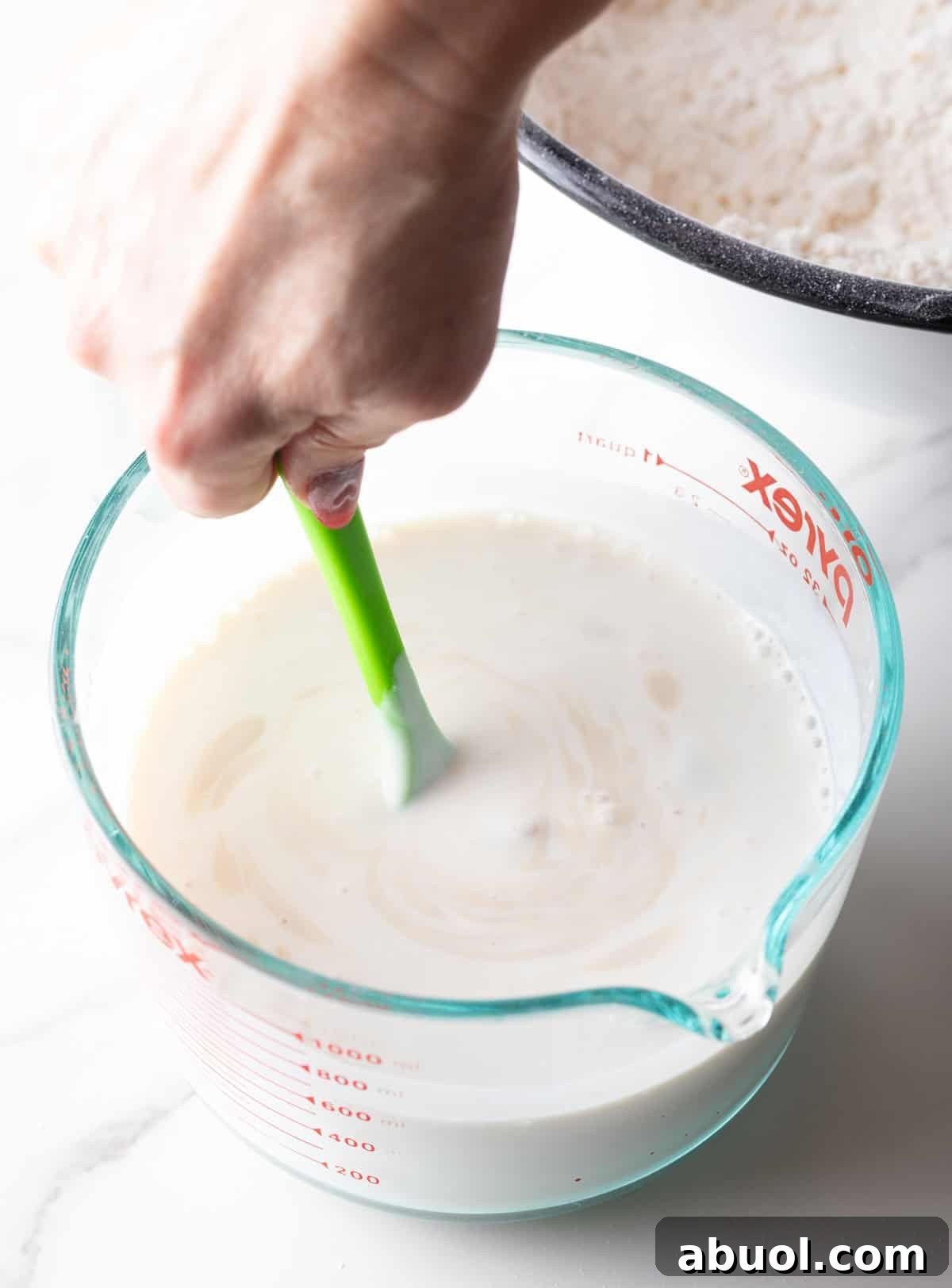
Combine Wet Ingredients – Stir the bloomed yeast into cold buttermilk, then pour the liquid into the flour mixture. Mix just until the dough holds together in a shaggy mass—overmixing will toughen the biscuits.
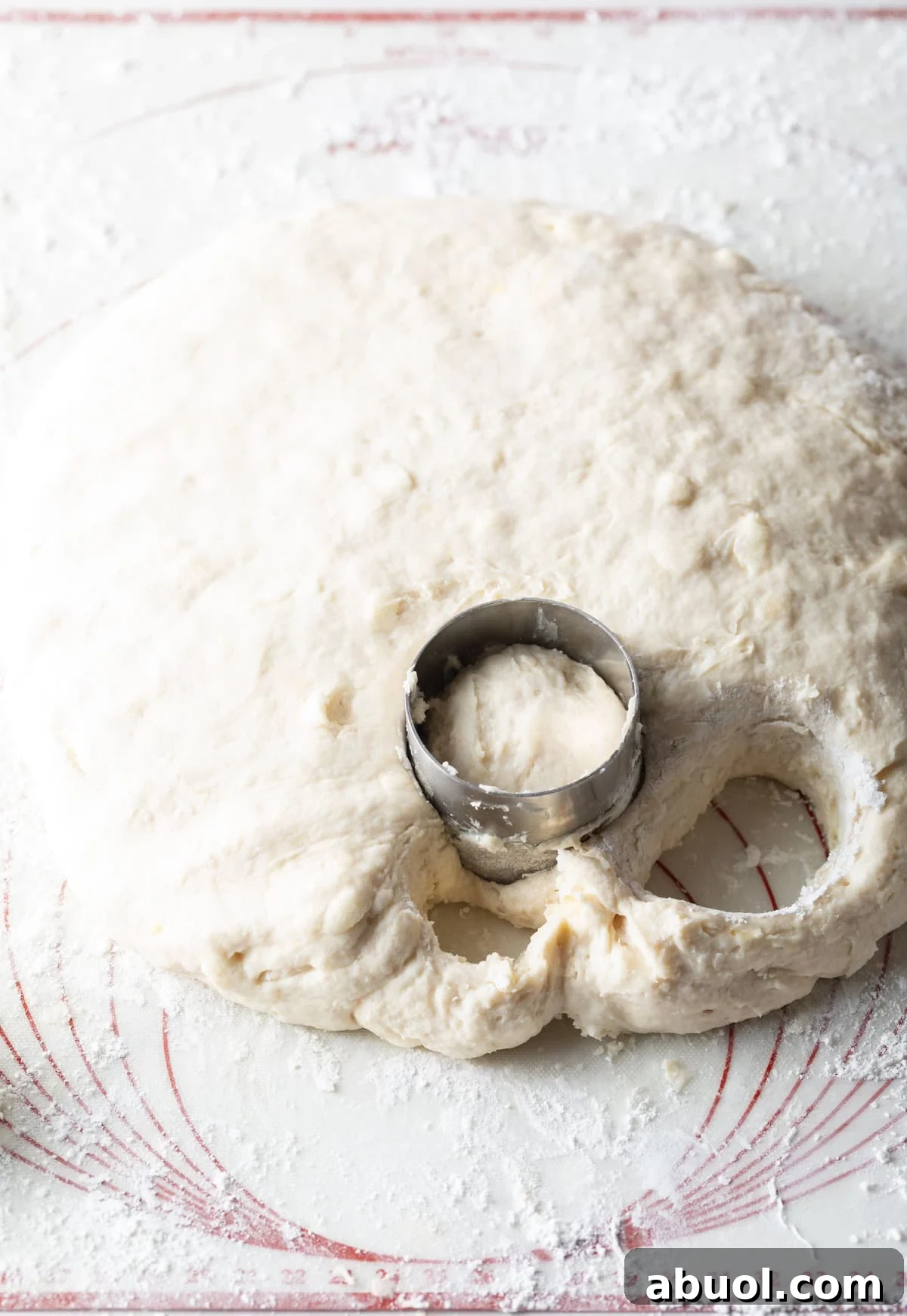
Shape and Cut – Turn the dough onto a lightly floured surface and gently press it together. Fold the dough over itself a few times to create light layers; avoid kneading. Pat to an even thickness and use a floured biscuit cutter to cut straight down. Don’t twist the cutter—twisting seals the edges and hinders rise. Place cut biscuits close together on the first pass to avoid reworking scraps.
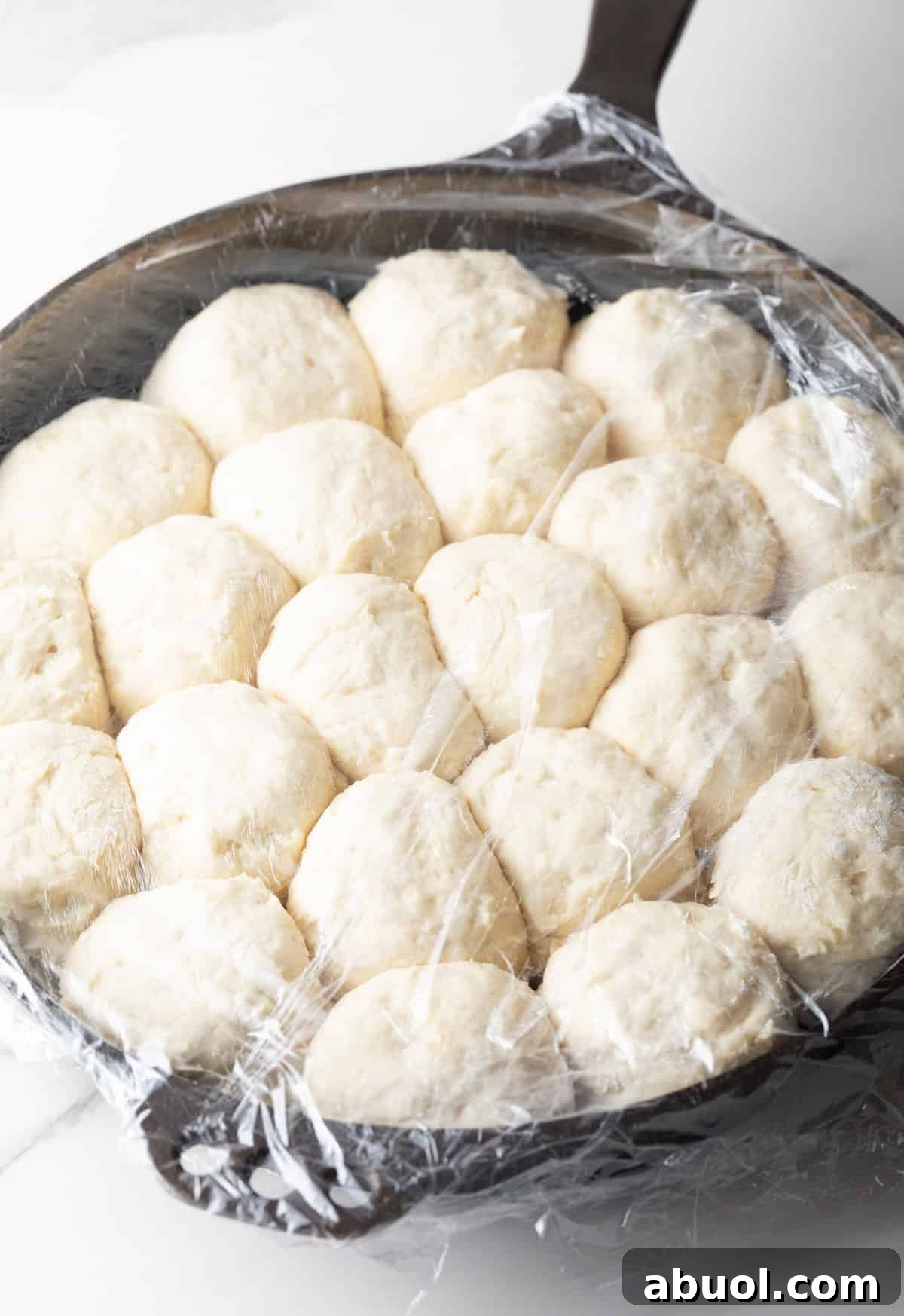
Arrange and Proof – Grease a 12-inch cast-iron skillet with softened butter and arrange the biscuits so they touch. Cover loosely and let rise in a warm place until noticeably puffy, about 45–60 minutes.
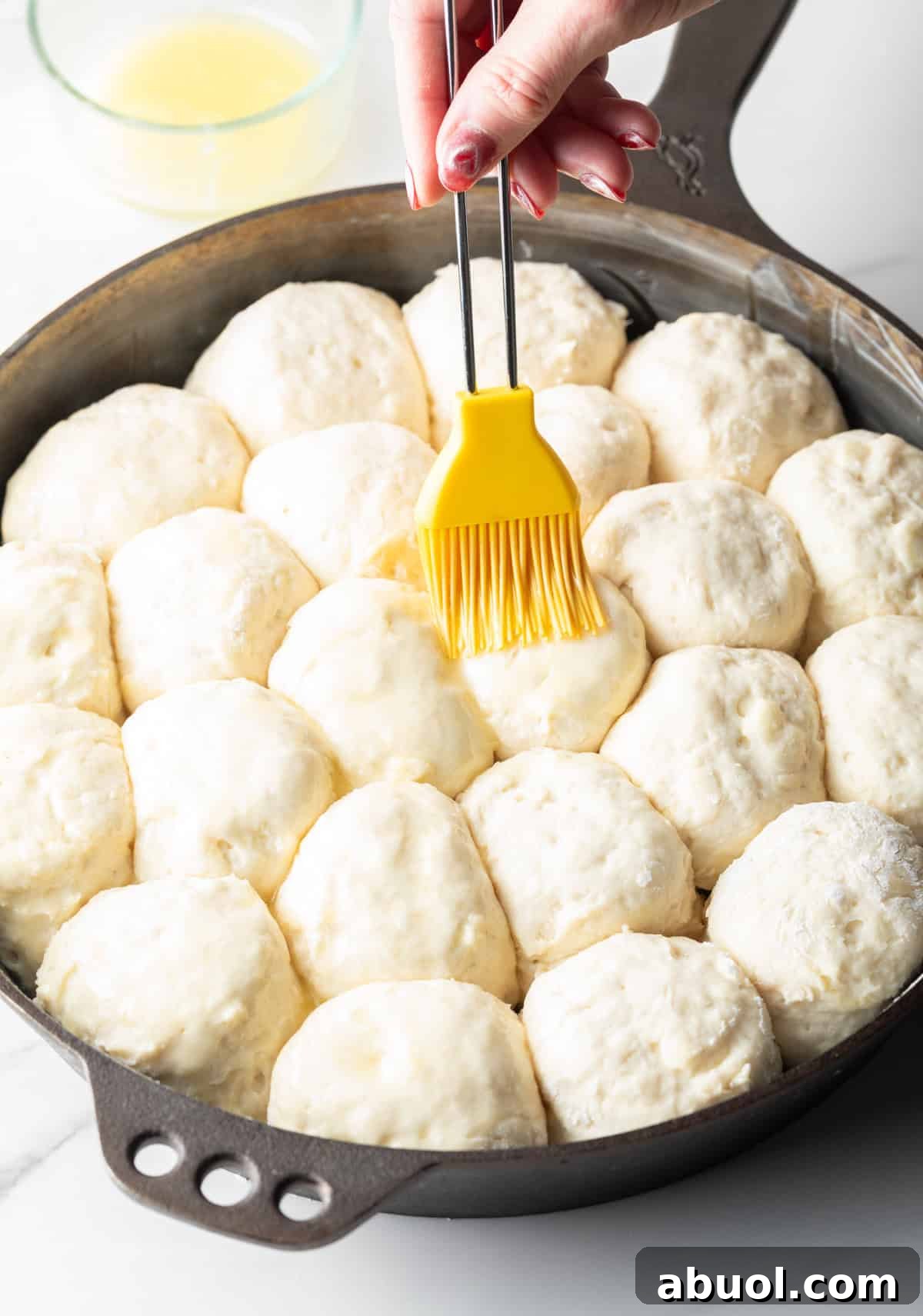
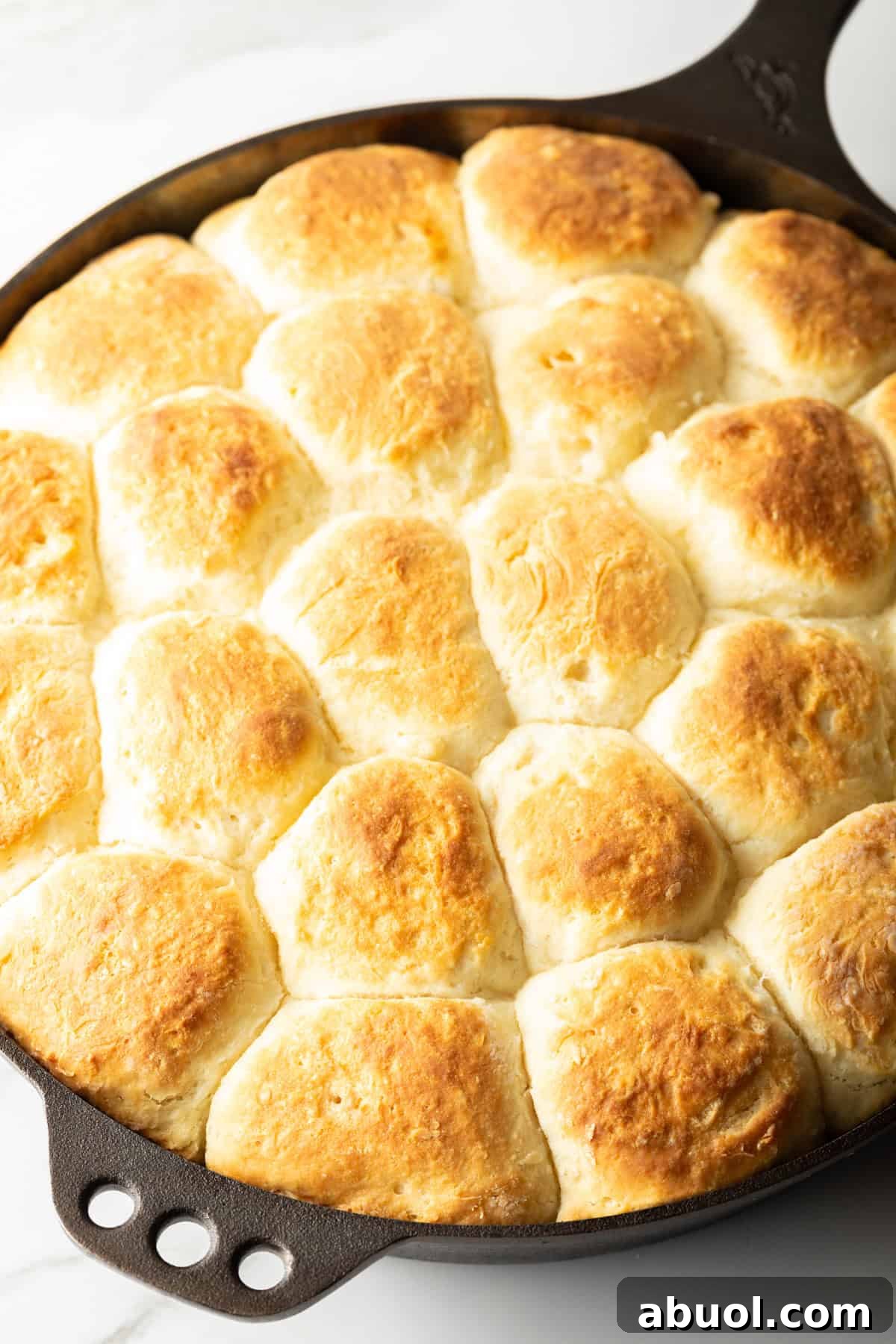
Brush with Butter & Bake – Preheat the oven to 400°F. Brush the tops lightly with melted butter and bake 15–20 minutes until the biscuits are evenly golden and the center biscuits are as tall as the edges. If in doubt, insert a sharp knife between two middle biscuits; it should come out clean when done.
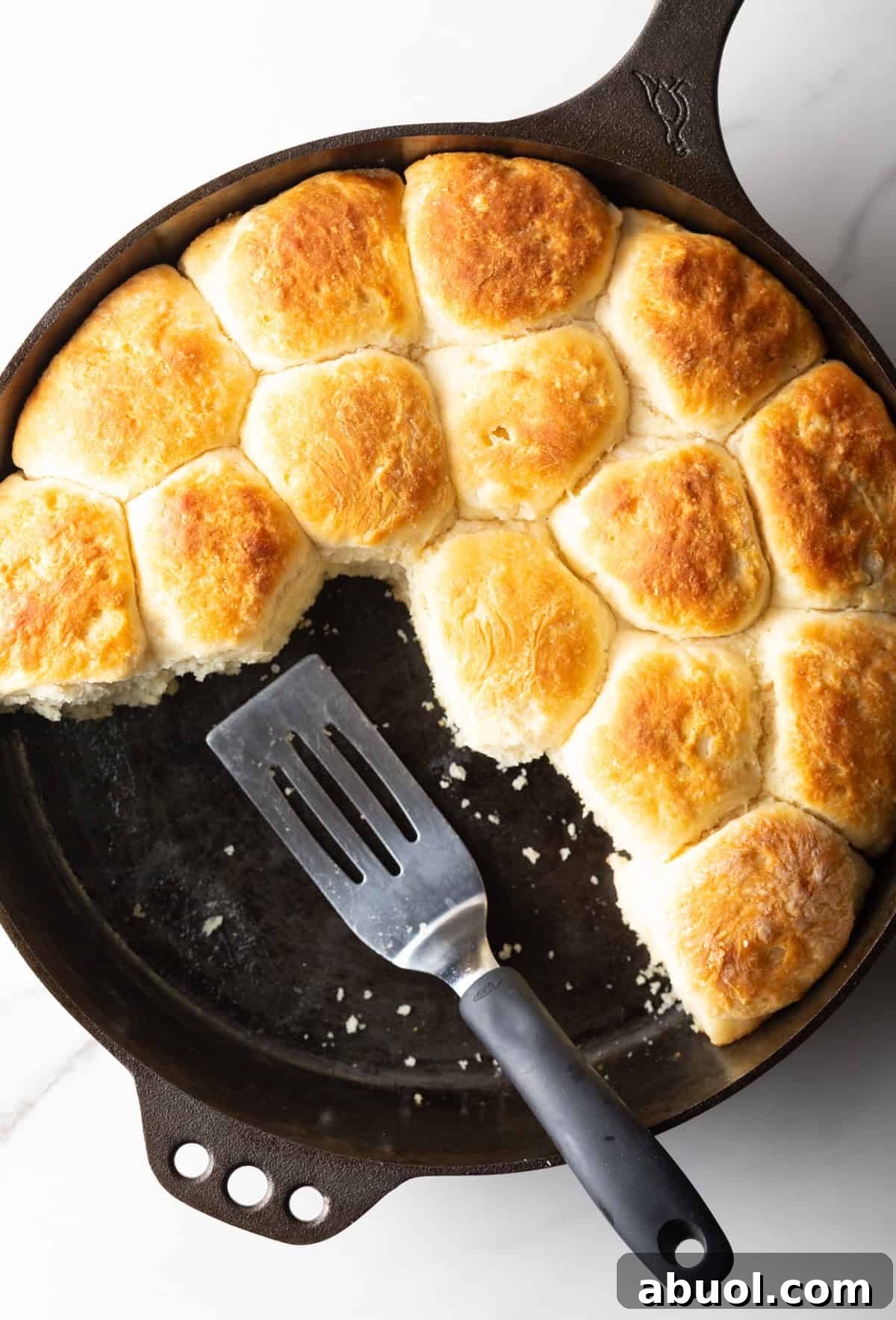
Finish and Serve – Once slightly cooled, use a flat metal spatula to separate the biscuits from the skillet without squashing them. Serve warm with butter, honey, or jam.
Expert Tips
Bloom the yeast at about 105°F; water hotter than 115°F can kill the yeast. Cut the butter and shortening into the flour until you have a crumbly texture—if it becomes too fine, the fats won’t create proper tender pockets. Use a sharp metal biscuit cutter for clean edges that allow maximum rise; a glass or blunt edge pinches the dough and produces dense sides. Check biscuits early in the bake: aim for a light golden top rather than deep brown to keep the centers tender.
Serving Suggestions
Serve these angel biscuits with softened butter, whipped honey butter, cinnamon-sweet butter, or your favorite jam. They also make an ideal base for biscuits and sausage gravy or can be split and filled with savory or sweet ingredients for sandwiches.
Storage Notes
Store leftovers at room temperature in an airtight container for up to three days. For longer storage, individually wrap biscuits and freeze up to three months. Thaw in the refrigerator overnight or on the counter for an hour, then reheat in a 350°F oven for 5–7 minutes to refresh their texture. Microwaving is possible—wrap loosely in a damp paper towel and heat at 50% power in short bursts—but this won’t restore a crisp top.
Frequently Asked Questions
Yes. The proofing step is crucial because the yeast creates the tall, airy structure that sets these biscuits apart. Shortening or skipping the rise will reduce height and softness.
Yes. After cutting the biscuits and arranging them in the skillet, you can cover and refrigerate overnight. Bring them to room temperature and allow time to puff before baking—about 60–90 minutes from cold.
Common causes are inactive yeast, insufficient rise time, a too-cold proofing environment, or an overly heavy dough from too much flour.
Hard biscuits usually result from overworking the dough, using too much flour, or letting fats warm up too much before baking. Handle the dough gently and keep fats cold.
More Bread Recipes

Buttermilk Drop Biscuits
Texas Roadhouse Rolls
Cornbread Muffins

Cheesy Garlic Pull Apart Bread
Angel Biscuits
Ingredients
- 2 packets (4 1/2 tsp) dry active yeast
- 3 tablespoons warm water
- 6 cups White Lily all-purpose flour (or about 5 1/2 cups of another brand)
- 1/3 cup granulated sugar
- 1 tablespoon baking powder
- 1 1/2 teaspoon salt
- 1 teaspoon baking soda
- 1/2 cup cold butter, cut into cubes (plus extra melted butter for brushing)
- 1/2 cup cold shortening, cut into cubes
- 2 cups buttermilk
Instructions
- Pour the yeast into a small bowl and add 3 tablespoons of slightly warm water. Let sit 10 minutes until foamy.
- In a large bowl, measure and spoon the flour, then level. Add sugar, baking powder, salt, and baking soda and whisk to combine.
- Add cubed cold butter and shortening to the flour. Use a pastry cutter to create a crumbly mixture with small clumps of fat.
- Measure the buttermilk, stir in the bloomed yeast, then pour into the flour mixture. Mix until a large sticky clump forms; avoid overmixing.
- Turn the dough onto a floured surface, fold gently up to four times to create light layers, and press to a 2-inch-thick disk. Cut with a well-floured 2-inch biscuit cutter straight down—no twisting.
- Grease a 12-inch cast-iron skillet and arrange biscuits touching. Cover loosely and let rise 45–60 minutes until noticeably puffy.
- Preheat oven to 400°F. Brush risen biscuits with melted butter and bake 15–20 minutes until evenly golden and center biscuits are puffed. A knife inserted between two center biscuits should come out clean.
- Use a flat metal spatula to separate and remove biscuits from the skillet. Serve warm.
Notes
Store leftovers at room temperature in an airtight container up to 3 days. Freeze individually wrapped biscuits up to 3 months. Reheat in a 350°F oven for 5–7 minutes for best texture. Microwaving is possible but won’t restore a crisp top.
Nutrition
Cuisine: American