
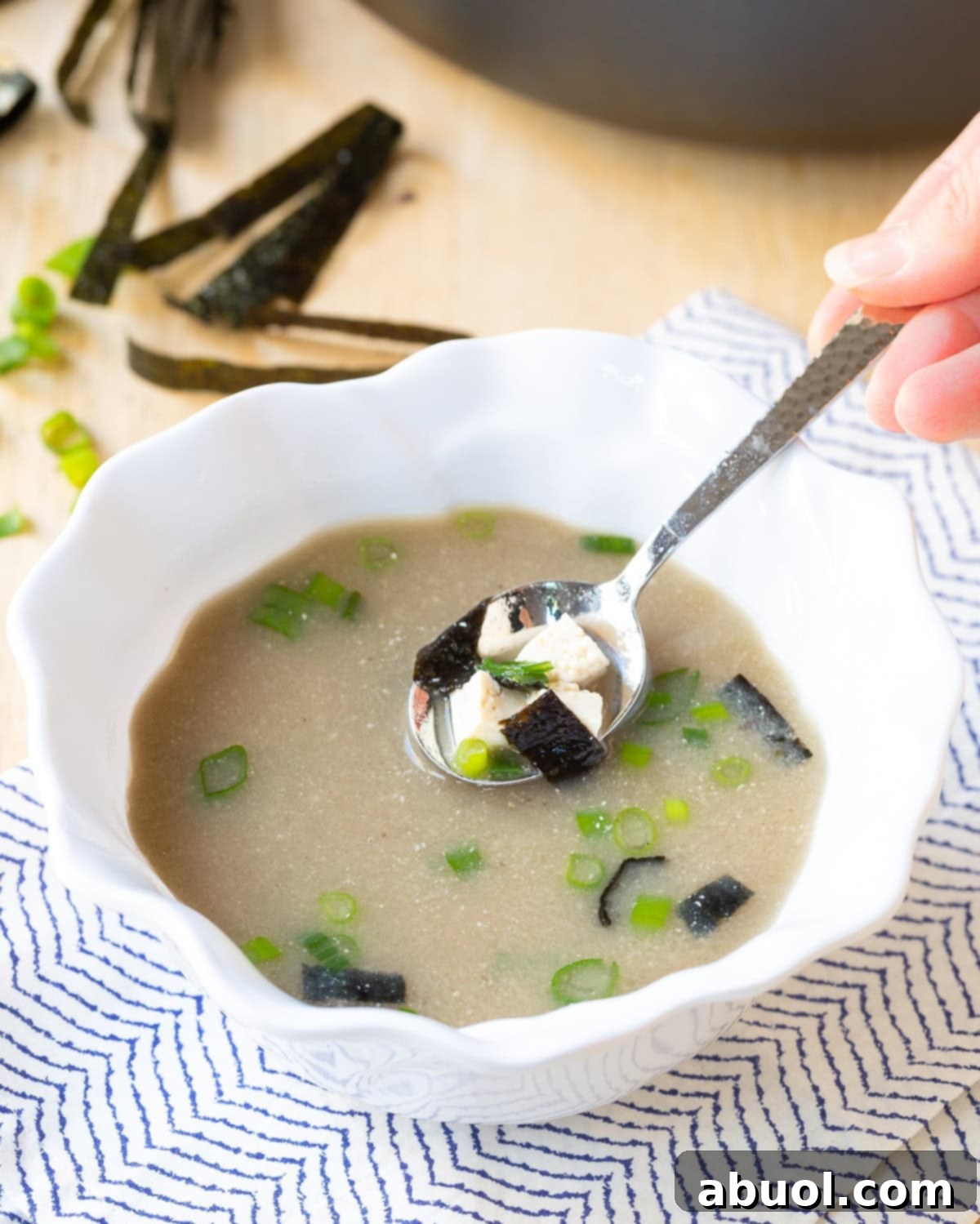
Experience Authentic Japanese Miso Soup at Home – A Quick 5-Minute Recipe – This savory homemade miso broth is not only light and comforting but also incredibly simple to prepare in just 5 minutes! Discover how easily you can craft a delicious, authentic, and even vegan miso soup from scratch.

Homemade Miso Broth: The Ultimate Comfort Food
There’s a reason why Japanese Miso Soup holds a special place in the hearts of many: it’s a profoundly comforting, savory, and wholesome dish that satisfies deeply. For me, it’s a craving I regularly indulge in – a guilt-free bowl of warmth boasting a distinct salty and umami-rich soy flavor that invigorates the senses.
For years, I associated “homemade” miso soup solely with tearing open a dry packet and stirring its contents into hot water. While convenient, this method often falls short of capturing the true depth and nuanced flavors of a freshly prepared bowl. It was a revelation when I discovered that crafting an authentic miso soup from scratch is barely more complicated than using those dry packets, yet the difference in taste is monumental – rich, robust, and truly something to experience.
Today, I am thrilled to share an incredibly easy and delightful 5-Ingredient Miso Soup Recipe that you can bring to life in as little as 5 minutes! Yes, you read that right. With just five simple ingredients and a mere five minutes of preparation time (assuming you have a high-heat burner), you can create a fresh, vibrant, and incredibly flavorful miso broth that’s impressive enough to serve to dinner guests or simply enjoy as a quick, healthy meal anytime.
What’s more, this versatile recipe can effortlessly be transformed into a completely vegan miso soup, ensuring that everyone can enjoy its deliciousness. Let’s dive into the world of Japanese cuisine and unlock the secrets to this essential, nourishing dish.

Essential Ingredients for Your 5-Minute Miso Soup
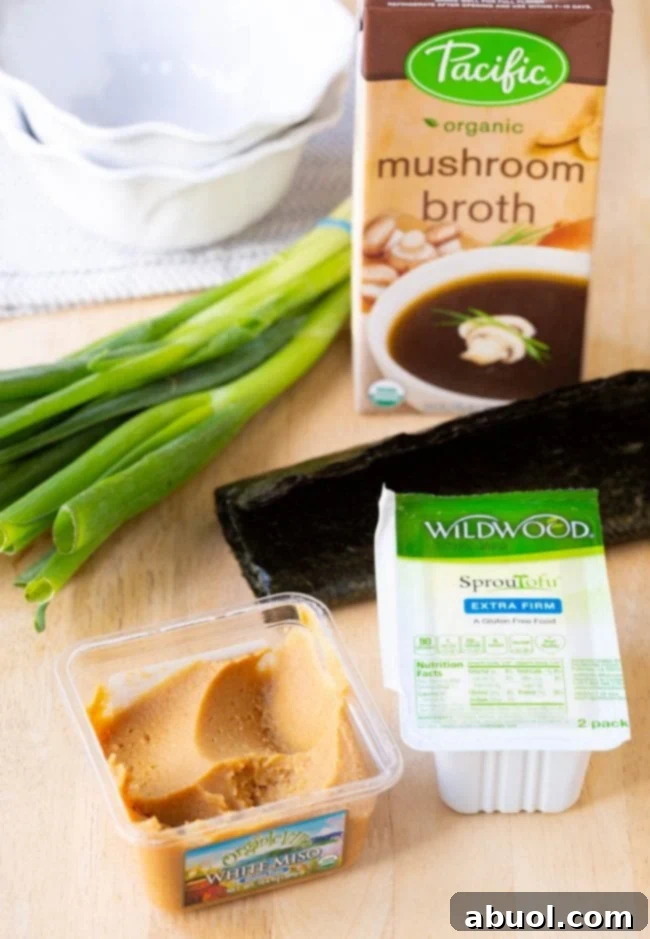
Creating an authentic and delicious miso soup doesn’t require an extensive list of ingredients. In fact, the magic happens with just five key components. Here’s what you’ll need, along with some helpful tips for sourcing and substitutions:
- Dashi Broth: The Foundation of Flavor
Dashi is the cornerstone of Japanese cuisine, a clear broth that provides the deep umami flavor essential to traditional miso soup. It’s typically made from kombu (dried kelp) and katsuobushi (dried bonito flakes). While dashi can sometimes be challenging to find in all grocery stores, many Asian markets or the international aisle of larger supermarkets will carry instant dashi granules or dried kombu and bonito flakes for homemade versions.
Vegan Alternative: If you’re aiming for a vegan miso soup or simply can’t find dashi, fear not! Unsweetened mushroom broth is an excellent substitute. Its earthy flavor profile closely mimics the depth of dashi without the dried fish. Alternatively, a high-quality vegetable broth can also work, though it may result in a slightly different flavor.
- White Miso Paste: The Heart of the Soup
Miso paste is a fermented soybean paste, and it’s what gives miso soup its distinctive salty, savory, and slightly sweet flavor. White miso, also known as Shiro Miso, is generally the mildest and sweetest variety, fermented for the shortest period. This makes it perfect for a light yet flavorful soup. You’ll typically find white miso paste in the refrigerated section of your produce department or at Asian grocery stores. Beyond soup, it’s fantastic for dressings, marinades, and glazes.
Pro Tip: There are other types of miso, such as red miso (Aka Miso) and yellow miso (Shinshu Miso), which offer stronger, more robust flavors due to longer fermentation times. While white miso is ideal for this quick recipe, feel free to experiment with other varieties once you’ve mastered the basic technique.
- Firm Tofu: The Protein Powerhouse
Tofu adds a wonderful texture and a healthy dose of plant-based protein to your miso soup. When selecting tofu, opt for a “firm” or “extra-firm” variety over silken tofu. This ensures that the tofu cubes maintain their shape and texture beautifully when simmered in the broth. Tofu is also typically found in the refrigerated section of the produce department.
- Nori Sheets: A Touch of the Ocean
Nori sheets are thin, dried seaweed pieces commonly used for rolling sushi. They contribute a unique oceanic flavor and a subtle textural contrast to the soup. You can find them in the international section of most major grocery chains or Asian food stores. If you’re using mushroom broth instead of dashi for a vegan version, do not skip the nori sheets – they are crucial for lifting and enhancing the umami profile of the soup.
- Scallions (Green Onions): Freshness and Garnish
Fresh scallions, also known as green onions, provide a crisp, slightly pungent finish that beautifully rounds out the warm, savory notes of miso soup. They can be stirred directly into the pot just before serving or, more commonly, used as a vibrant garnish, adding both flavor and visual appeal.
How to Make Homemade Miso Soup in 5 Minutes
You’ll be astounded by how remarkably simple and quick this low-carb Japanese miso broth recipe is. Forget complicated steps or lengthy simmering times. This recipe is designed for maximum flavor with minimal effort.
Seriously, all it takes is these straightforward steps:
- Prepare Your Broth: In a large stockpot, combine your dashi or mushroom broth (if making it vegan) with 1 quart of water. Cover the pot and bring the liquid to a rapid boil over high heat. While the broth is heating, quickly prepare your other ingredients.
- Ingredient Prep: Take your firm tofu and gently pat it dry with paper towels to remove excess moisture, then dice it into small, bite-sized cubes. Using kitchen shears, cut the nori sheets into small, approximately 1/4-inch pieces. Finally, chop your green onions (scallions) into thin rounds.
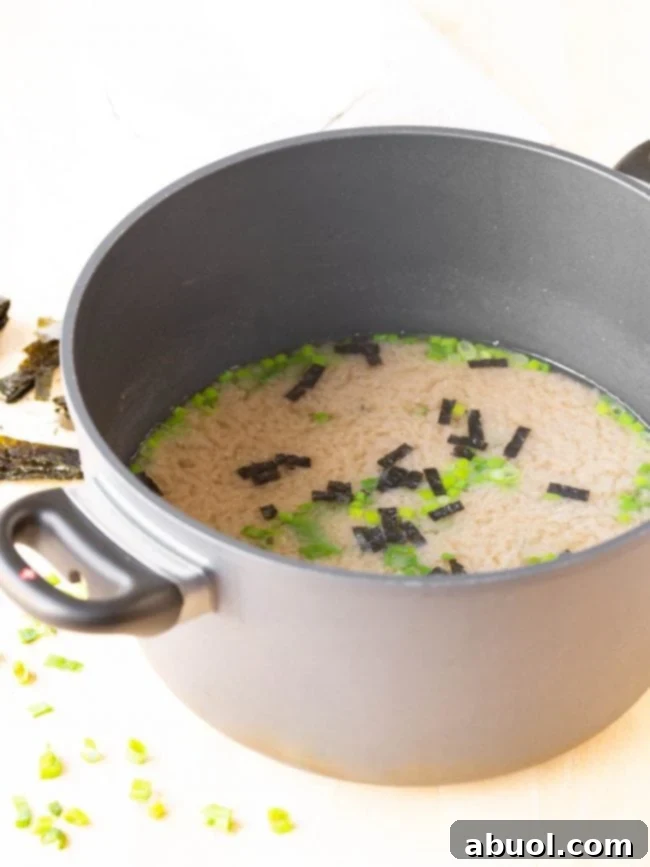
- Combine and Serve: Once the broth reaches a rolling boil, immediately turn off the heat. This is a crucial step for preserving the delicate flavor and beneficial probiotics of the miso paste. Add the white miso paste to the hot broth and whisk it thoroughly until it is completely dissolved.
- Final Touches: Once the miso paste has fully incorporated, add the diced tofu, cut nori, and chopped green onions to the pot. Give it a gentle stir to combine all the ingredients.
That’s it! Done. Your fresh, savory, and incredibly healthy miso soup is ready to be enjoyed.
This means you can savor this amazing and healthy miso soup recipe any time you desire – whether it’s a quick midnight snack, a fulfilling lunch, or even an unconventional yet delightful breakfast. Imagine the ease of serving this impressive yet simple dish to your family for dinner; I’m confident it will quickly become a regular favorite in your home!
Get the Complete 5-Minute Miso Soup Recipe Below. Enjoy!
Frequently Asked Questions About Miso Soup
Is Miso Soup Gluten-Free?
Miso soup can absolutely be gluten-free, but it’s essential to be mindful of your ingredients. Traditional miso paste is made from fermented soybeans and often rice koji, which are naturally gluten-free. However, some miso pastes might contain barley or other gluten-containing grains as part of the fermentation process. Additionally, restaurant-prepared miso soup might use dashi broth containing gluten. To ensure your homemade miso soup is gluten-free, check the labels of your miso paste and dashi (or broth substitute) for explicit “gluten-free” certification. This recipe, when made with gluten-free certified ingredients, is easily adapted to be gluten-free. While it is low-carb, please note that it is generally not considered paleo-friendly.
Can Miso Soup Be Made Vegan?
Yes, traditional miso soup uses dashi, which often contains bonito flakes (dried fish). However, making a delicious vegan miso broth is simple. The key is to substitute traditional dashi with a mushroom-based broth or a high-quality vegetable broth. Mushroom broth is highly recommended as it best replicates the rich, earthy umami flavor of dashi. If you opt for vegetable broth, ensure it’s unsweetened and savory. Enhancing the vegan broth with additional kombu (dried kelp) during preparation can also boost the umami. Our recipe specifically offers a vegan alternative by recommending mushroom broth in place of dashi.
How Long Do Miso Soup Leftovers Keep in The Fridge?
Miso broth, when stored in an airtight container, will keep wonderfully in the refrigerator for 3 to 5 days. For longer storage, you can freeze miso soup. To maintain the best texture, I recommend separating the tofu and freezing it in a separate freezer-safe bag. The broth can be stored in airtight containers for up to 6 months. When reheating, gently warm the broth on the stove, and add the thawed tofu (and fresh scallions) at the end.
What Are the Health Benefits of Miso Broth/Soup?
Miso soup is a powerhouse of essential nutrients. It’s rich in crucial minerals that your body needs, along with a beneficial array of vitamins, including B, K, and E. One of its most significant advantages comes from the fermented miso paste itself, which is packed with probiotics. These live beneficial bacteria are fantastic for gut health, aiding digestion, and potentially boosting your immune system. Miso soup is truly a nourishing and restorative dish.
What Are the Different Types of Miso?
Miso is a versatile soybean paste that has undergone a fermentation process, varying in length and ingredients, leading to a wide range of flavors and colors. The two most common types are:
- White Miso (Shiro Miso): This is the mildest and sweetest variety, fermented for the shortest period, often with a higher proportion of rice koji. It has a light yellow to beige color and is perfect for light soups, dressings, and delicate marinades.
- Red Miso (Aka Miso): Fermented for a much longer time, red miso has a stronger, more intense, and saltier flavor. It typically has a reddish-brown color due to the Maillard reaction during fermentation. It’s excellent for hearty soups, glazes for richer meats, and robust dishes.
Beyond these, you’ll find Yellow Miso (Shinshu Miso), which falls between white and red in terms of flavor and color, and other regional varieties like Hatcho Miso (pure soybean miso with a deep, dark, intense flavor). Each type offers a unique culinary experience.
Can I Add Any Other Additional Ingredients to This Miso Soup Recipe?
Absolutely! While this 5-ingredient recipe is perfect for a quick and simple meal, miso soup is highly adaptable. You can easily customize it by adding a variety of ingredients to enhance its flavor, texture, and nutritional value. Here are some popular additions:
- Shiitake Mushrooms: Sliced fresh or dried shiitake mushrooms add a deep, earthy umami flavor and a pleasant chewiness.
- Kombu or Wakame Seaweed: Beyond nori, adding small pieces of rehydrated kombu (kelp) or wakame seaweed can boost the oceanic flavor and provide additional nutrients.
- Leafy Greens: Fresh spinach, baby kale, or chopped bok choy can be stirred in at the very end to wilt, adding color, vitamins, and a fresh taste.
- Carrots: Thinly sliced or julienned carrots can add a touch of sweetness and vibrant color.
- Corn Kernels: A handful of corn kernels (fresh, frozen, or canned) can add a sweet pop and different texture.
- Bonito Flakes: For a more traditional, non-vegan dashi flavor boost, a sprinkle of bonito flakes can be added after the heat is turned off.
- Root Vegetables: Thinly sliced daikon radish or small cubes of sweet potato can add heartiness.
- Proteins: Besides tofu, consider adding thinly sliced chicken breast (cooked separately and added), shrimp, or even a soft-boiled egg.

Looking for More Quick and Hearty Soups?
- Chicken Detox Soup Recipe
- Vegetarian Navy Bean Soup Recipe
- Tom Yum Soup Recipe (Hot and Sour Soup)
- Beer Cheese Soup Recipe
- Japanese Clear Soup Recipe
- Greek Lemon Chicken Soup Recipe
- Best Chicken Noodle Soup Recipe
- Thai Khao Soi (Coconut Curry Soup)
- (Better Than) Olive Garden Minestrone Soup Recipe
- Spicy Shrimp Ramen Noodles Recipe
- Spicy Vegan Ramen Recipe
- New England Clam Chowder Recipe
- Brazilian Feijoada (Pork and Black Bean Stew)
- Japanese Enoki and Shiitake Mushroom Soup Recipe

5-Minute Miso Soup Recipe
Prep Time: 5 minutes
Cook Time: 5 minutes
Total Time: 10 minutes
Easy 5 ingredient Miso Soup Recipe – This savory homemade miso soup is light yet filling, and takes only 5 minutes to make! Also easily made as a vegan miso soup.
Servings: 8 cups
Ingredients
- 1 quart dashi broth (or mushroom broth for a vegan recipe)
- 1/2 cup white miso paste
- 3/4 cup firm tofu (diced)
- 2 nori sheets (dried seaweed sheets, cut into small pieces)
- 1/2 cup chopped green onions (scallions)
Instructions
- Place the dashi or mushroom broth in a large stockpot. Add 1 quart of water, cover, and bring to a boil.
- While the broth is coming to a boil, dry the tofu with paper towels and dice. Then cut the nori sheets into small 1/4-inch pieces with kitchen shears. Chop the green onions.
- Once the broth reaches a boil, turn off the heat and whisk in the miso paste. Once dissolved, add the tofu, nori, and green onions. Stir and serve.
Notes
Keep leftovers in an airtight container in the fridge for up to 3 days.
Nutrition
Serving: 1 cup, Calories: 75kcal, Carbohydrates: 6g, Protein: 7g, Fat: 3g, Saturated Fat: 1g, Sodium: 1019mg, Potassium: 155mg, Fiber: 1g, Sugar: 1g, Vitamin A: 110IU, Vitamin C: 1.4mg, Calcium: 79mg, Iron: 1mg
Course: Soup
Cuisine: American, Japanese
Author: Sommer Collier