
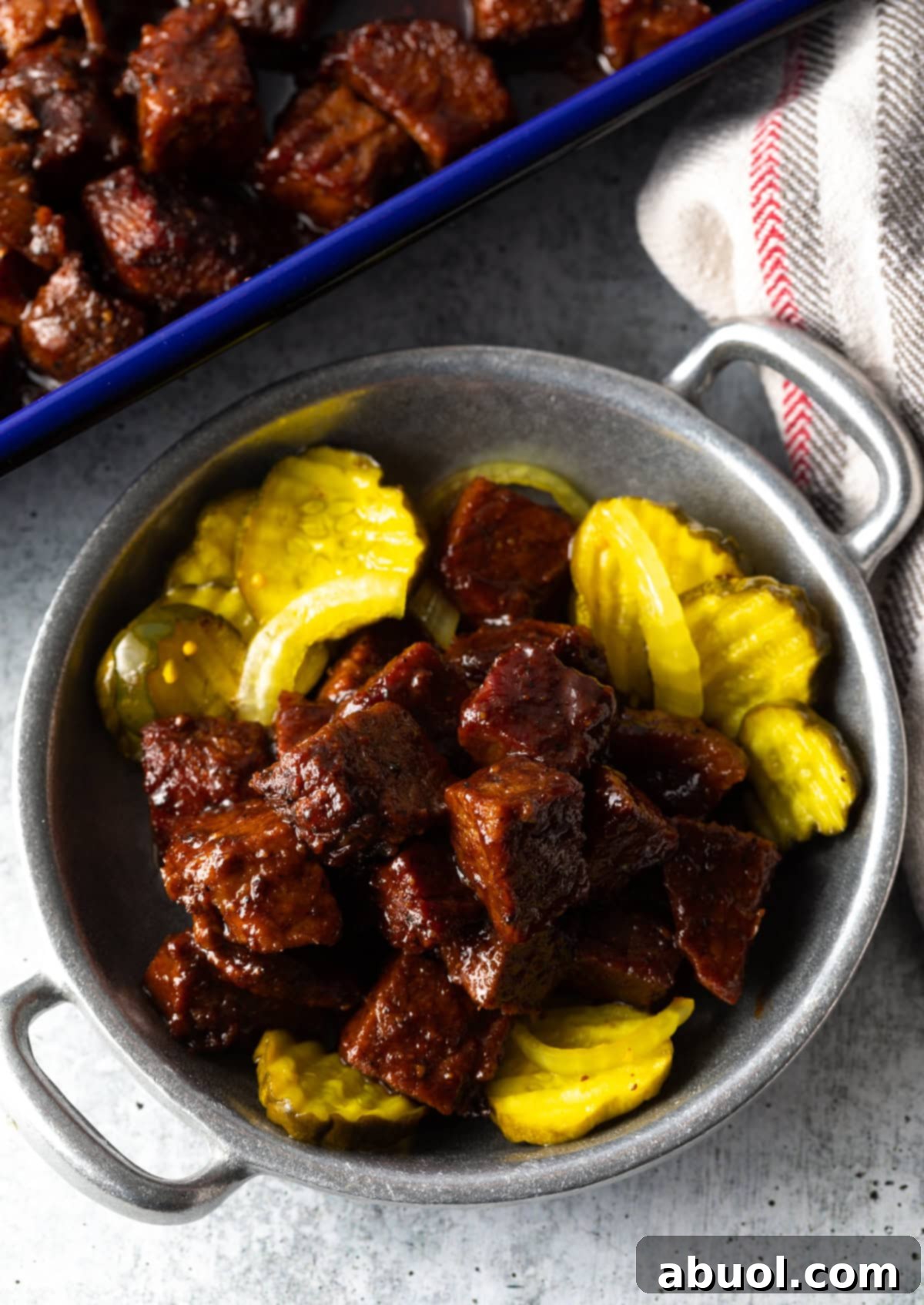
Brisket Burnt Ends – a beloved barbecue delicacy born from the savory, charred edges of perfectly smoked or oven-baked beef brisket. These delectable morsels are bathed in a rich barbecue sauce and a hint of Coca-Cola, creating an irresistible sweet and smoky symphony that perfectly complements any classic Southern side dish. Dive into this guide to master the art of crafting your own batch of these truly unforgettable burnt ends!
Unveiling the Magic: What Exactly Are Brisket Burnt Ends?
Often hailed as “meat candy,” burnt ends represent the pinnacle of barbecue perfection. Historically, this ingenious culinary creation is believed to have originated in the legendary barbecue joints of Kansas City. Pitmasters, reluctant to waste any part of their prized smoked briskets, discovered that the tougher, fattier ‘point’ end, when cubed and returned to the heat with a generous slathering of sauce, transformed into succulent, crispy, and deeply flavorful bites. What was once considered a mere scrap is now a highly coveted, melt-in-your-mouth delicacy that embodies the very essence of slow-cooked barbecue.
To embark on your own burnt ends journey, the foundation is a beautifully cooked beef brisket. While the traditional method utilizes the point end of a smoked brisket, this recipe offers the flexibility of preparing your brisket in the oven or on a smoker. Whether you start with a full packer brisket, meticulously separating the point from the flat, or opt for a smaller, pre-cut brisket point, the goal remains the same: to achieve a tender, smoky base that will later be transformed into those iconic, saucy cubes. This recipe provides comprehensive instructions for cooking the brisket from scratch, ensuring a phenomenal starting point for your burnt ends.
Essential Ingredients for Crafting Your Burnt Ends Masterpiece
Creating truly exceptional brisket burnt ends requires a thoughtful selection of ingredients. While the process is straightforward, the quality of your components significantly impacts the final flavor. Here’s what you’ll need for this full-bodied recipe, covering both the brisket preparation and the transformation into burnt ends:
- Beef Brisket: The heart of this dish. The ‘point end’ (also known as the ‘deckle’) is highly recommended due to its rich marbling and inherent tenderness, which renders beautifully during slow cooking. However, a ‘flat end’ brisket can also be used if the point is unavailable, or you can utilize both sections from a full brisket for a varied texture.
- Signature Spice Rub: A simple yet powerful blend of coarse kosher salt, robust coarse black pepper, aromatic garlic powder, and a touch of smoky ancho chile powder. This rub creates the foundational flavor and a delicious crust (or ‘bark’) on the brisket.
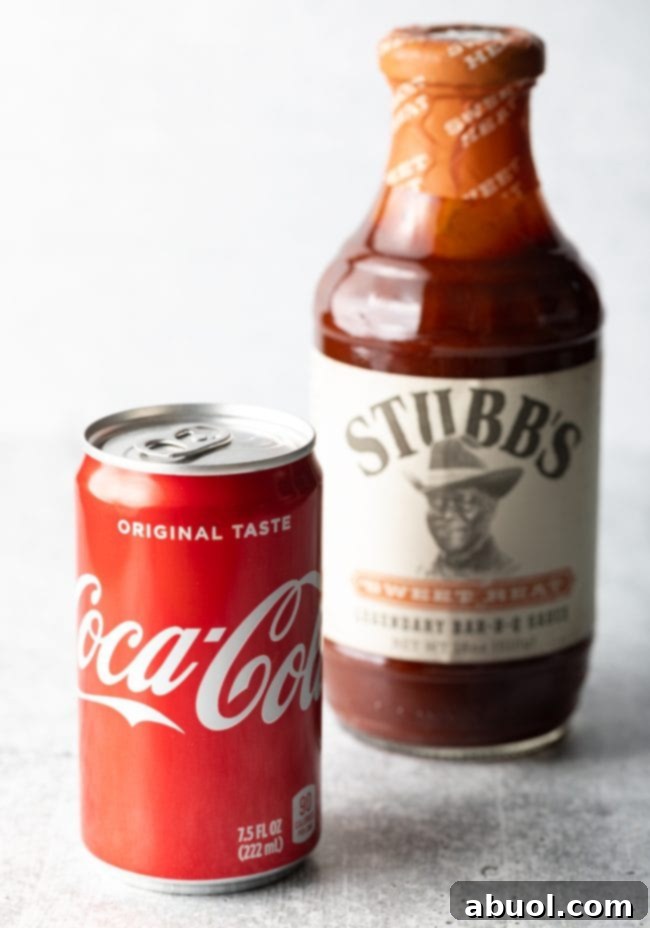
- Premium Barbecue Sauce: Your personal favorite barbecue sauce will shine here. We suggest a spicy-sweet variety to perfectly balance the richness of the beef and the sweetness from the cola. Don’t be shy about experimenting with different flavor profiles to find your ideal match!
- Coca-Cola (or similar cola): This unexpected ingredient is key to the signature sweet and slightly tangy glaze. The carbonation also helps tenderize the meat during the final braising stage, adding depth and a unique caramelization.
Choosing the right cut of brisket is crucial. The point end is naturally more fatty and forgiving, making it ideal for the long cooking process required to break down connective tissues and render fat into luscious tenderness. If you’re working with a full packer brisket, you’ll separate the point from the leaner flat after the initial cook. If you’re purchasing a smaller piece, explicitly look for a “brisket point” for the best results. However, don’t despair if only a flat is available; with proper technique, it too can yield fantastic burnt ends, albeit with a slightly different texture.
Preparing Your Brisket: The Foundation of Flavor
Regardless of whether you choose to smoke or oven-roast your brisket, the initial preparation steps are identical and paramount for developing incredible flavor and texture. This stage sets the stage for the deep, savory profile that defines exceptional burnt ends.
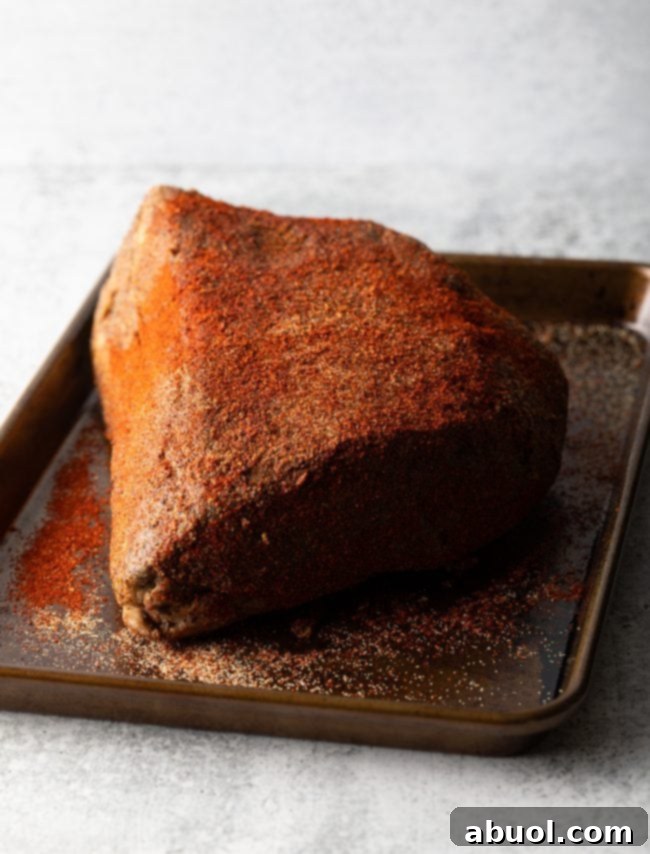
Begin by patting your brisket dry with paper towels. This step is vital for ensuring the spice rub adheres properly and for facilitating the formation of that desirable, crispy ‘bark.’ Place the brisket on a rimmed baking sheet or a large foil pan. In a small bowl, combine your chosen spices: kosher salt, coarse black pepper, garlic powder, and ancho chili powder. This blend offers a balanced foundation of savory, peppery, and subtly smoky heat. Liberally rub this spice mixture over the entire surface of the brisket, ensuring every inch is coated. Don’t be afraid to press the rub in firmly – this ensures maximum flavor penetration and a beautiful crust.
A Note on Cooking Time: Both smoking and oven-roasting methods for the initial brisket cook typically require 3.5 to 5 hours. This duration can vary based on the size and thickness of your brisket, so a reliable meat thermometer is your best friend for achieving perfect internal temperature.
Mastering the Smoker: Crafting Brisket in a Smoker
For those fortunate enough to own a smoker, this method imparts an unparalleled depth of flavor that is truly authentic to traditional barbecue. The slow, smoky environment tenderizes the brisket while infusing it with aromatic wood notes, creating a complex taste profile that’s hard to replicate.
Choosing Your Smoking Wood: The type of wood you select profoundly influences the final flavor. For beef brisket, robust woods like mesquite, hickory, and oak are excellent choices. They provide a savory, pronounced smoky flavor that complements the richness of the beef without overwhelming it. Avoid overly strong or resinous woods that can make the meat bitter.
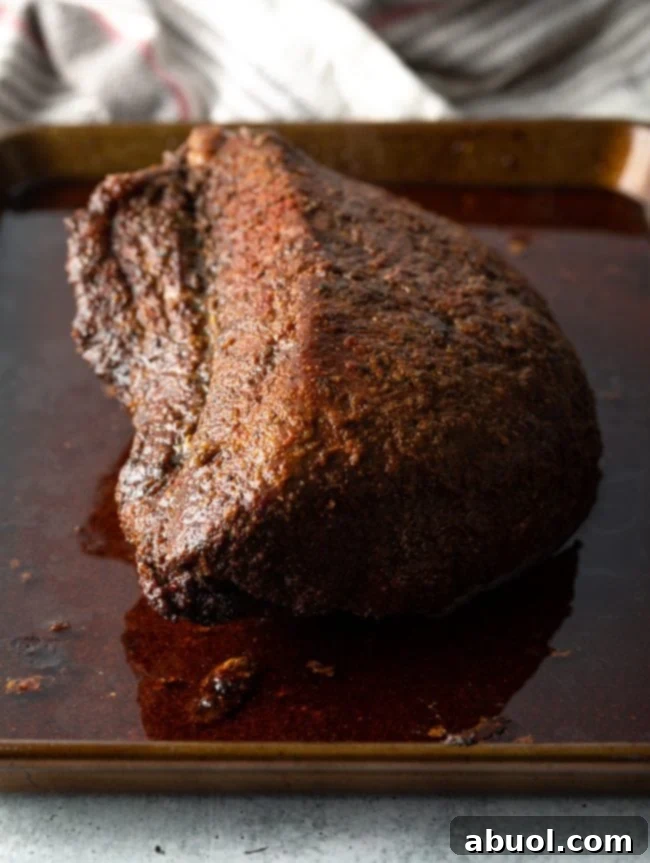
Smoking the Brisket for Burnt Ends: Preheat your smoker to a consistent 225°F (107°C). Once stable, place the seasoned brisket directly on the grates. Insert a reliable meat thermometer probe into the thickest part of the brisket point, away from any bones or large fat pockets. Smoke the brisket until its internal temperature reaches 195°F (91°C). This low and slow cooking process allows the connective tissues to break down, resulting in incredibly tender meat.
Pro Tip for Managing the Stall: Around 150-165°F (65-74°C), brisket often experiences a “stall” where its internal temperature plateaus. To push through this and maintain moisture, you can wrap the brisket tightly in aluminum foil or specialized butcher paper. This technique, known as the “Texas Crutch,” helps accelerate cooking and prevents the brisket from drying out, while still allowing the bark to set. Unwrap it for the final stages if you desire a crispier exterior on your burnt ends.
Oven Excellence: Crafting Brisket in the Oven
No smoker? No problem! You can still achieve wonderfully tender and flavorful brisket burnt ends using your oven. The key is a low and slow roasting process, mimicking the gentle heat of a smoker to break down the tough brisket fibers into fork-tender perfection.
Cooking Beef Brisket in the Oven: Begin by preheating your oven to 225°F (107°C). Place the seasoned brisket in a sturdy roasting pan, ideally with a rack to allow for even heat circulation. Insert a meat thermometer probe into the thickest part of the brisket point, ensuring it’s not touching any bone. Roast the brisket until its internal temperature reaches 195°F (91°C).
As with smoking, this oven method typically takes approximately 3 to 5 hours, depending on the size and thickness of your brisket. It’s wise to start checking the internal temperature around the 3-hour mark and then continue checking every 30 minutes thereafter until it reaches the desired 195°F. To ensure maximum moisture and tenderness, you can cover the roasting pan tightly with aluminum foil for most of the cooking time, especially if you notice the brisket starting to dry out. Removing the foil for the last hour can help create a nice crust.
The beauty of oven-roasting is its simplicity and consistency. While it won’t impart the distinct smoky flavor of a smoker, you can compensate by using liquid smoke in your rub or barbecue sauce if desired. The primary goal here is to achieve that fall-apart tender brisket, which is the perfect canvas for the next stage of burnt ends creation.
The Grand Finale: Transforming Brisket into Heavenly Burnt Ends
This is where the true magic happens – turning a perfectly cooked brisket into those irresistible, glazed, and crispy burnt ends. This final stage is a relatively quick process that concentrates flavors and creates the characteristic texture.
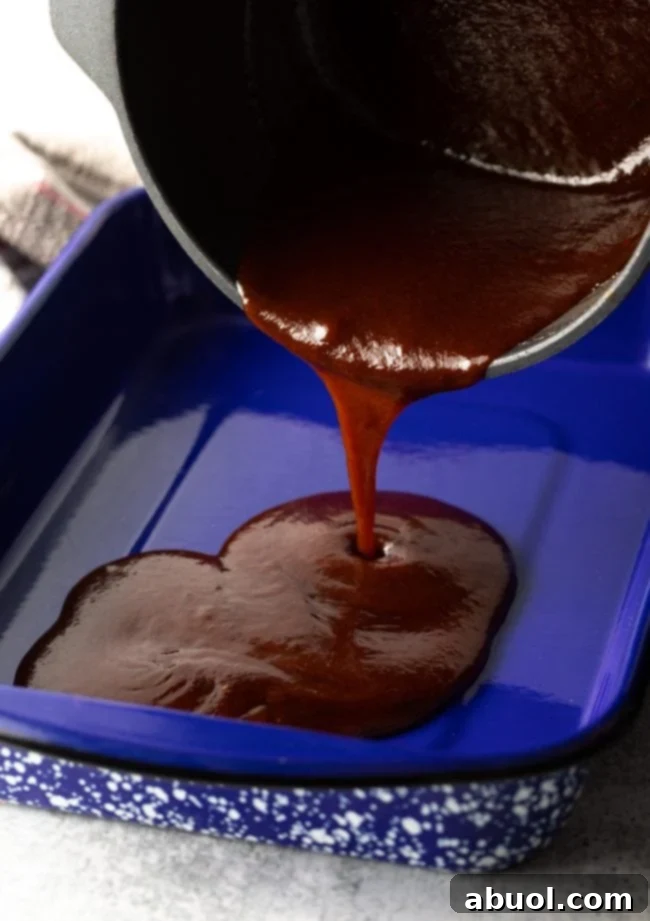
- Once your brisket’s internal temperature hovers around 190°F (88°C), it’s time to prepare the luscious sauce. Grab a 9×13 inch baking dish (or a disposable foil pan for easy cleanup). Pour your chosen barbecue sauce and the Coca-Cola into the dish. Whisk these two ingredients together until they are thoroughly combined, creating a sweet, tangy, and slightly bubbly base for your burnt ends.
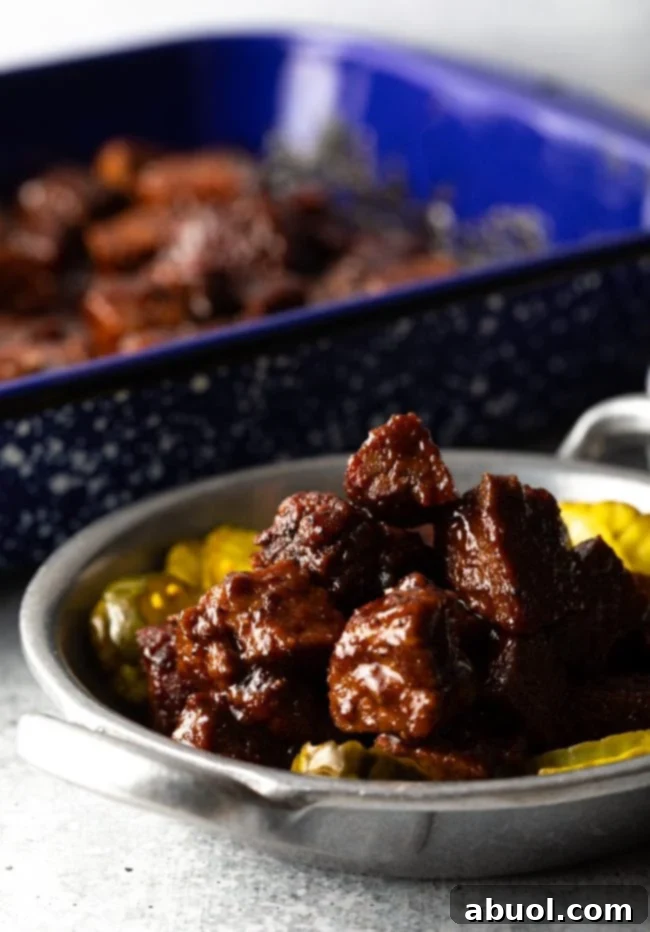
- When the brisket officially reaches 195°F (91°C), carefully remove it from the heat source (smoker or oven). Allow the brisket to rest for a few minutes. This brief rest helps redistribute the juices, ensuring maximum tenderness. Using a sharp serrated knife, cut the brisket into generous 1-inch chunks. Precision isn’t as critical here as when slicing brisket for sandwiches; irregular shapes add to the charm of burnt ends!
Pro Tip for Juicy Burnt Ends: As you cut the brisket into cubes, immediately transfer them into the baking dish with the sauce. Any delicious juices that release from the brisket will then mix directly into your barbecue sauce, adding an extra layer of beefy flavor to your burnt ends. This simple step ensures no flavor is wasted and contributes to a richer final product.
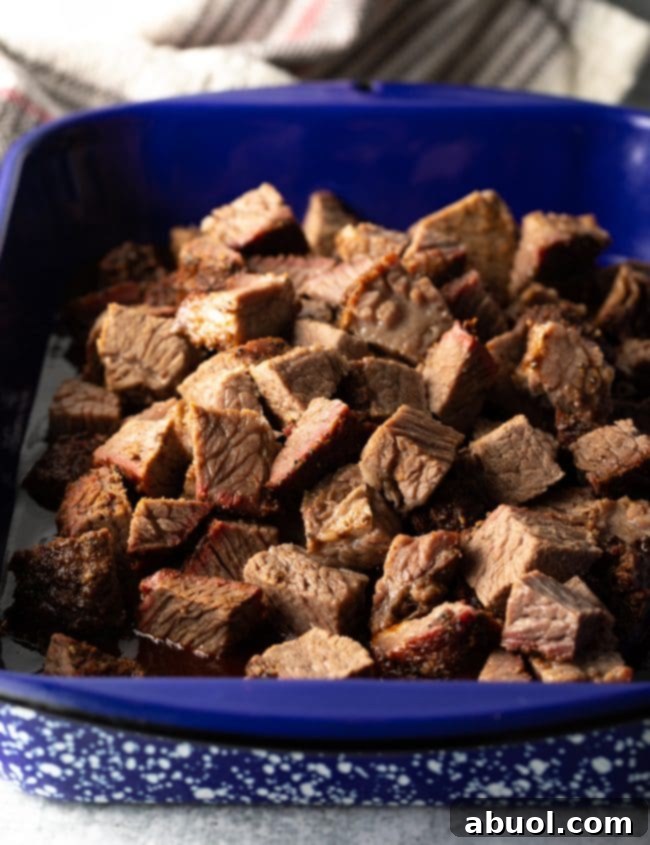
- Once all the brisket has been chopped and added to the dish, gently toss the cubes until each piece is thoroughly coated in the delectable barbecue and Coca-Cola sauce. You want every burnt end to be glistening and ready to absorb those incredible flavors during the final cook.
- Now, return the pan with the sauced brisket cubes back to the oven (or smoker). Continue cooking for an additional 1 hour. During this crucial hour, the sauce will thicken and caramelize, clinging beautifully to the meat. The exposed edges of the brisket cubes will develop a delightful crispiness, creating those sought-after “burnt” textures and concentrated flavors that give burnt ends their name. Stir occasionally to ensure even coating and caramelization. Serve warm and prepare for an explosion of flavor!
Get the Complete (Printable) Brisket Burnt Ends Recipe + VIDEO Below. Make Them in the Oven or on the Smoker!
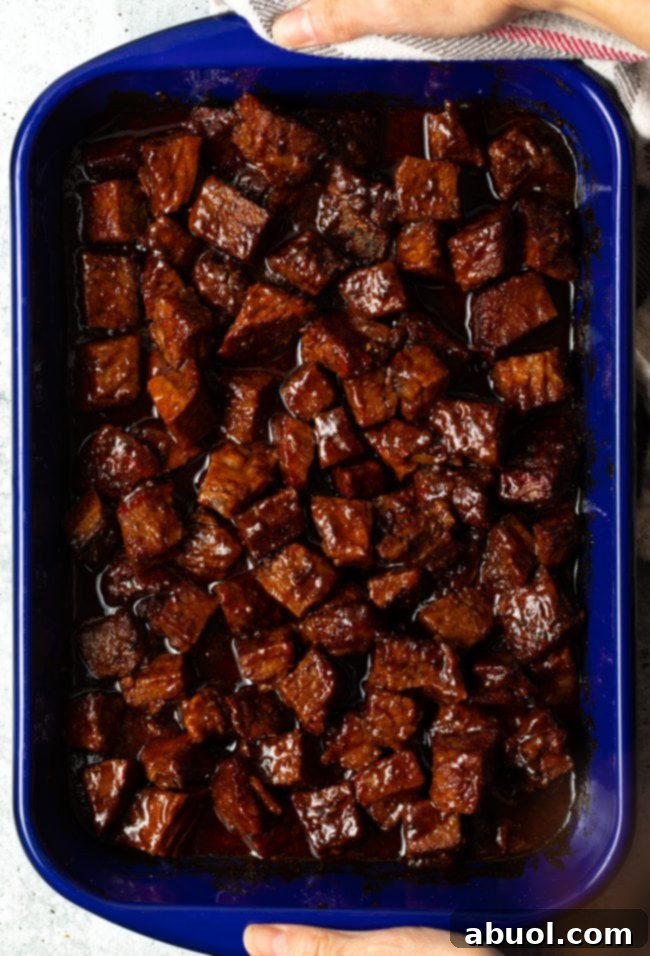
Serving Suggestions: What to Pair with Brisket Burnt Ends
Brisket burnt ends are incredibly versatile and can be enjoyed in a multitude of ways. At a classic barbecue joint, they often grace the table as a coveted appetizer, teasing the palate before the main course arrives. They fit perfectly on a Southern-inspired buffet alongside other delectable starters and snacks.
Consider serving them with:
- Crispy Fried Green Tomatoes: A tangy, crunchy contrast to the rich meat.
- Savory Cajun Shrimp Toast: For a touch of coastal Southern flair.
- Smoked Shotgun Shells: More meaty goodness for the ultimate BBQ feast.
Alternatively, burnt ends can proudly stand as the star of your barbecue plate, surrounded by an array of comforting Southern sides. Their rich flavor profile makes them an excellent centerpiece for any gathering. Try them with traditional accompaniments such as:
- Homemade Bread and Butter Pickles: Their sweet and tart crunch cuts through the richness.
- Hearty Baked Beans: A classic pairing that offers sweetness and texture.
- Creamy Potato Salad: A cooling and comforting side.
- Soulful Collard Greens: A touch of bitterness and savory depth.
- Sweet Corn Spoon Bread: A light, fluffy, and slightly sweet counterpoint.
- Crispy Fried Okra: A Southern staple with a unique texture.
- Cheesy Hominy Casserole: A rich and creamy side that complements the smoky meat.
And, of course, don’t forget a slice of classic white bread to soak up all those delicious juices and sauce!
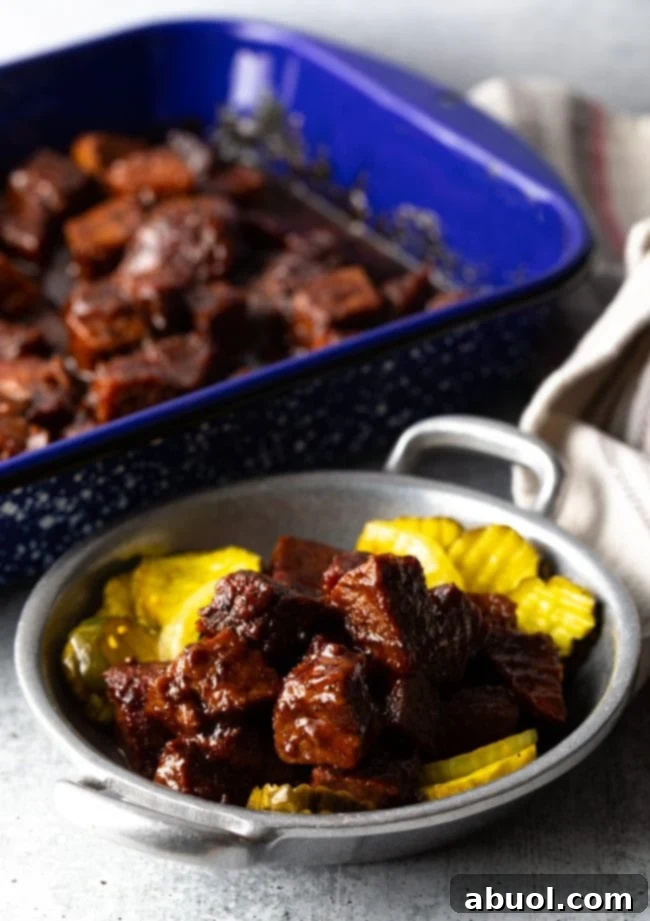
Storage and Reheating Best Practices
Leftover brisket burnt ends are an absolute treasure! They are equally delicious served cold, offering a quick and satisfying snack, or gently reheated as a main course. Proper storage ensures their flavor and texture are preserved for future enjoyment.
Refrigeration: Once the burnt ends have cooled completely to room temperature, transfer them to an airtight container. Store them in the refrigerator for up to 4 days. This allows you to savor the smoky goodness over several meals.
Freezing: For longer-term storage, burnt ends freeze exceptionally well. After they have cooled, place them in an airtight freezer-safe bag or container. They can be frozen for up to 3 months without significant loss of quality. Label your container with the date to keep track.
Reheating: To reheat frozen burnt ends, first defrost them in the refrigerator overnight. Once thawed (or if reheating from the fridge), you have a few options:
- Microwave: For a quick reheat, place a portion in a microwave-safe dish and heat in 30-second intervals, stirring in between, until warmed through. Add a splash of extra barbecue sauce to prevent drying.
- Stovetop: For a more even reheat, place the burnt ends in a saucepan or skillet over medium-low heat. Add a bit more barbecue sauce or a tablespoon of water/broth to create steam and prevent sticking. Stir gently until heated through.
- Oven: For larger batches, place them in an oven-safe dish, cover with foil, and reheat at 250-275°F (120-135°C) until warmed. Again, a little extra sauce can help maintain moisture.
These methods ensure your burnt ends remain tender and flavorful, ready to be enjoyed again!
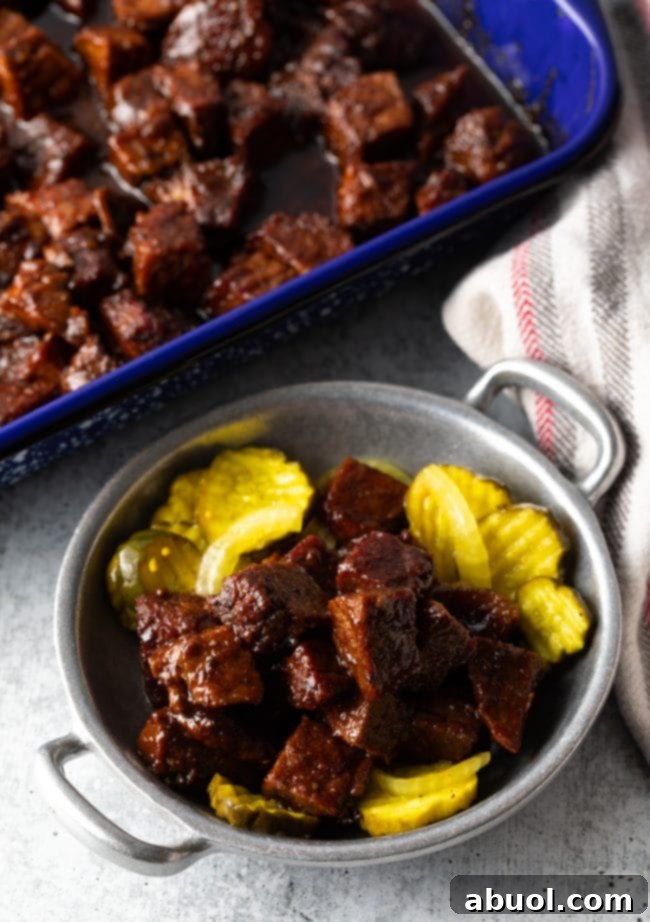
More Southern BBQ Favorites to Explore
If you’ve fallen in love with the rich flavors of brisket burnt ends, you’ll surely appreciate these other timeless Southern recipes. Each dish offers a unique taste of the region’s diverse culinary heritage, perfect for expanding your barbecue repertoire or simply enjoying comforting, home-cooked meals.
- Coffee Brushed Barbecue Ribs
- Grilled Pork Chops + Carolina BBQ Sauce
- Crock Pot Brisket Sandwich Recipe
- Hot Honey Chicken
- Orangeade Recipe
- Best Homemade Mac and Cheese
- The Ultimate Southern Chicken Salad Recipe
- Chicken and Sausage Gumbo
- Hummingbird Cupcakes
- Mind-Blowing Nashville Hot Chicken
- Grilled Ham Steaks with Southern Kale Salad
- Chopped Beef Brisket Sandwich
- Smoked Pork Belly Burnt Ends
Best Brisket Burnt Ends Recipe
Super meaty Burnt Ends are a classic BBQ dish made from the charred ends of an oven baked or smoked beef brisket. They’re tossed in barbecue sauce and Coca-Cola for the perfect sweet, smoky flavor that goes great with your favorite southern sides!
Prep Time: 10 minutes
Cook Time: 5 hours
Total Time: 5 hours 10 minutes
Servings: 6 servings
Ingredients
- 3-4 pounds beef brisket (point-end recommended)
- 1 ½ teaspoon kosher salt
- 1 ½ teaspoon coarse black pepper
- 1 ½ teaspoon garlic powder
- 1 teaspoon ancho chile powder
- 1 cup spicy-sweet barbecue sauce
- 1 cup Coca-Cola (or similar cola)
Instructions
- Set out a rimmed baking sheet and place the brisket on it. In a small bowl, mix the salt, pepper, garlic powder, and ancho chile. Rub the spice blend over the entire surface of the brisket.
- Smoker Method: Preheat your smoker to 225°F (107°C). Place the brisket in the smoker. Insert a meat thermometer probe and smoke the brisket until it reaches an internal temperature of 195°F (91°C). *To prevent the cooking process from stalling, you may wrap the brisket in aluminum foil or peach butcher paper once it hits 150°F (65°C).
- Oven Method: If using an oven, preheat it to 225°F (107°C). Place the seasoned brisket in the oven. Insert a meat thermometer probe and bake until it reaches an internal temperature of 195°F (91°C). Both methods typically take 3 ½ – 5 hours, depending on the size and shape of the brisket. *Similar to smoking, wrapping the brisket in foil or peach butcher paper at 150°F (65°C) can help prevent the cooking process from stalling and retain moisture.
- Once the internal temperature of the brisket is around 190°F (88°C), prepare the sauce. Set out a 9×13 inch baking dish. Pour the barbecue sauce and Coca-Cola into the dish and whisk to combine. When the brisket reaches 195°F (91°C), remove it from the heat.
- Let the brisket rest for a few minutes. Use a serrated knife to cut the brisket into 1-inch chunks. As you cut, quickly transfer the pieces to the baking dish to ensure any released juices mix into the sauce. Once all the brisket is chopped, gently stir the pieces to thoroughly coat them in the sauce.
- Return the pan with the sauced brisket cubes to the oven (or smoker) and continue cooking for 1 hour, or until the sauce thickens and the exposed pieces of brisket become delightfully crispy and caramelized. Stir occasionally. Serve warm and enjoy!
Notes
- The point-end of a brisket, also known as the Deckle, is preferred for burnt ends due to its tenderness and higher fat content. However, a flat brisket can be used as an alternative. For a whole brisket, both the point and flat can be utilized for burnt ends.
- Serving Suggestions: Traditionally, burnt ends are served as an appetizer at BBQ joints, or as the main course accompanied by classic Southern side dishes.
- Storage: Once cooled, store leftover burnt ends in an airtight container in the refrigerator for up to 4 days.
- Freezing: For extended storage, freeze the cooled burnt ends in an airtight freezer bag or container for up to 3 months.
- Reheating: Defrost frozen burnt ends in the refrigerator overnight. Reheat in the microwave or on the stovetop, adding a splash of extra barbecue sauce to restore moisture and flavor.
Nutrition
Serving: 1 cup, Calories: 453kcal, Carbohydrates: 24g, Protein: 48g, Fat: 17g, Saturated Fat: 6g, Polyunsaturated Fat: 1g, Monounsaturated Fat: 8g, Cholesterol: 141mg, Sodium: 1258mg, Potassium: 882mg, Fiber: 1g, Sugar: 19g, Vitamin A: 208IU, Vitamin C: 1mg, Calcium: 32mg, Iron: 5mg
Course: Appetizer, Main, Main Course, Snack
Cuisine: American, Southern, Texan
Author: Sommer Collier