
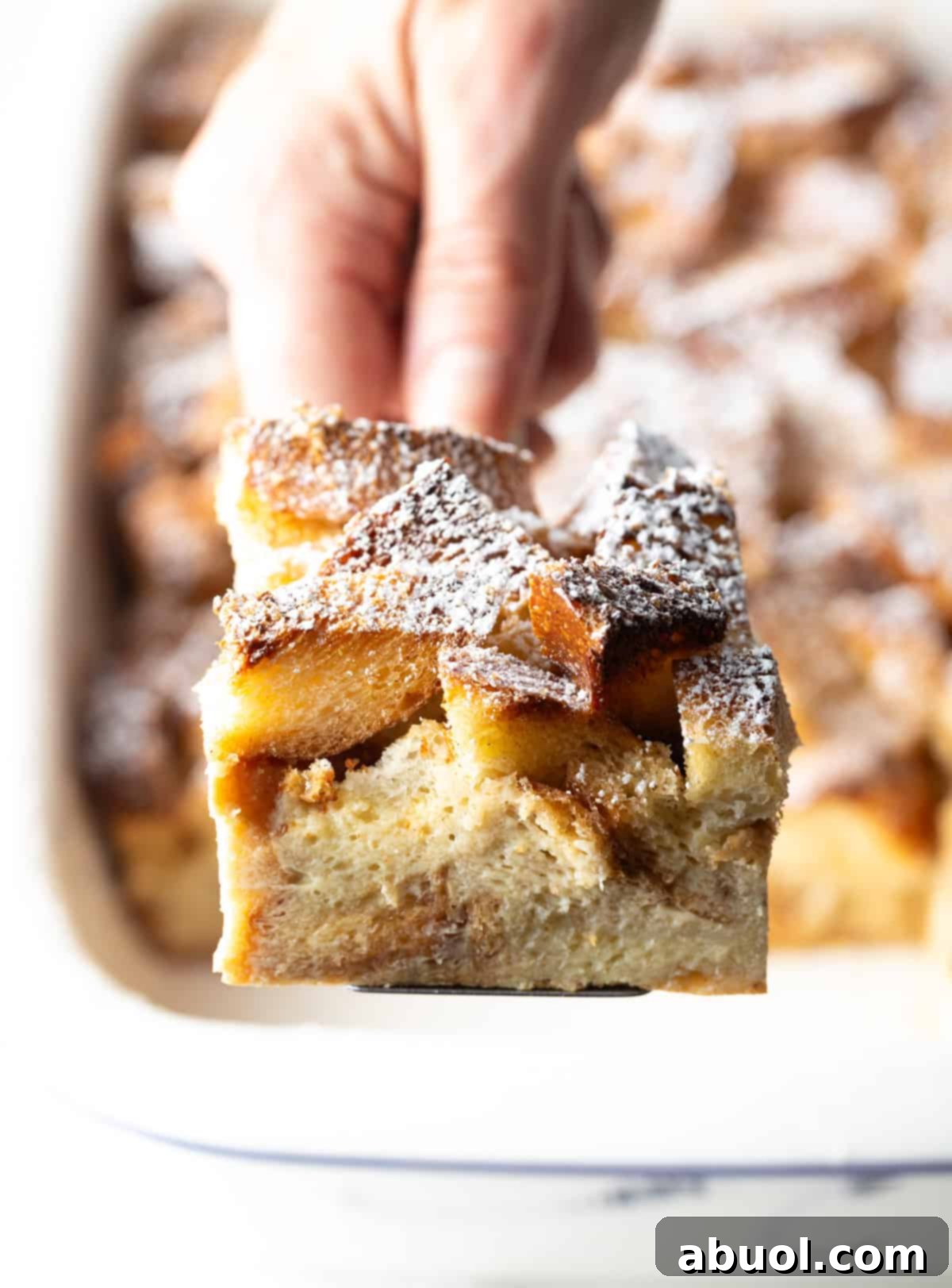
Easy Overnight French Toast Casserole: The Ultimate Brunch Recipe
Looking for a breakfast or brunch recipe that’s both impressive and incredibly easy? This overnight French toast casserole is the answer! With minimal effort and just a few simple ingredients, you can prepare this dish the night before, let it soak overnight, and bake it in the morning for a delightful treat. Imagine waking up to the aroma of cinnamon and warm bread, ready to serve thick slices of fluffy, custardy, and perfectly crisp French toast in under an hour. This recipe is a game-changer for busy mornings and special occasions alike.
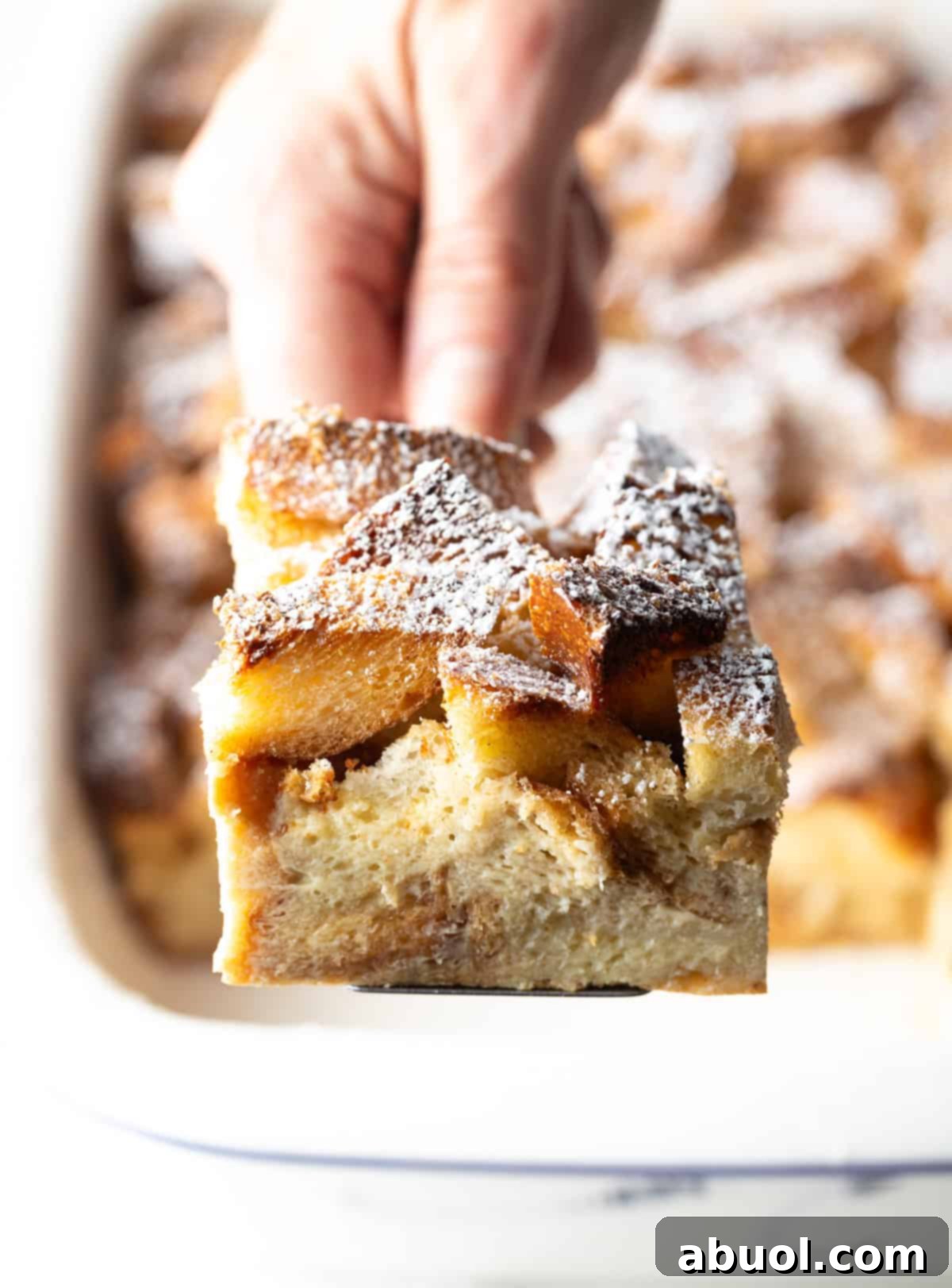
In many households, French toast is reserved for special occasions due to the perceived effort involved. The traditional method of dipping individual slices of bread in an egg and milk mixture and frying them one at a time can be time-consuming and require constant attention at the stove. Often, you end up spending more time cooking than enjoying breakfast with your family. If you’ve ever struggled with achieving the perfect custard texture in classic French toast and desire a stress-free way to enjoy this breakfast staple, this overnight French toast casserole is your perfect solution!
This recipe allows you to quickly and easily assemble the ingredients the night before, ensuring a seamless baking and serving experience in the morning. The beauty of this casserole is that all the pieces come out hot and ready at once, eliminating the need for guests to wait their turn for a freshly cooked slice. It’s the ideal solution for hosting brunch or simply enjoying a relaxing weekend breakfast.
Table of Contents
- Recipe Highlights
- Key Ingredients
- How to Make Overnight French Toast Casserole
- Expert Tips for the Best Casserole
- Serving Suggestions
- Storing and Reheating Leftovers
- Frequently Asked Questions
- More Delicious Breakfast Recipes
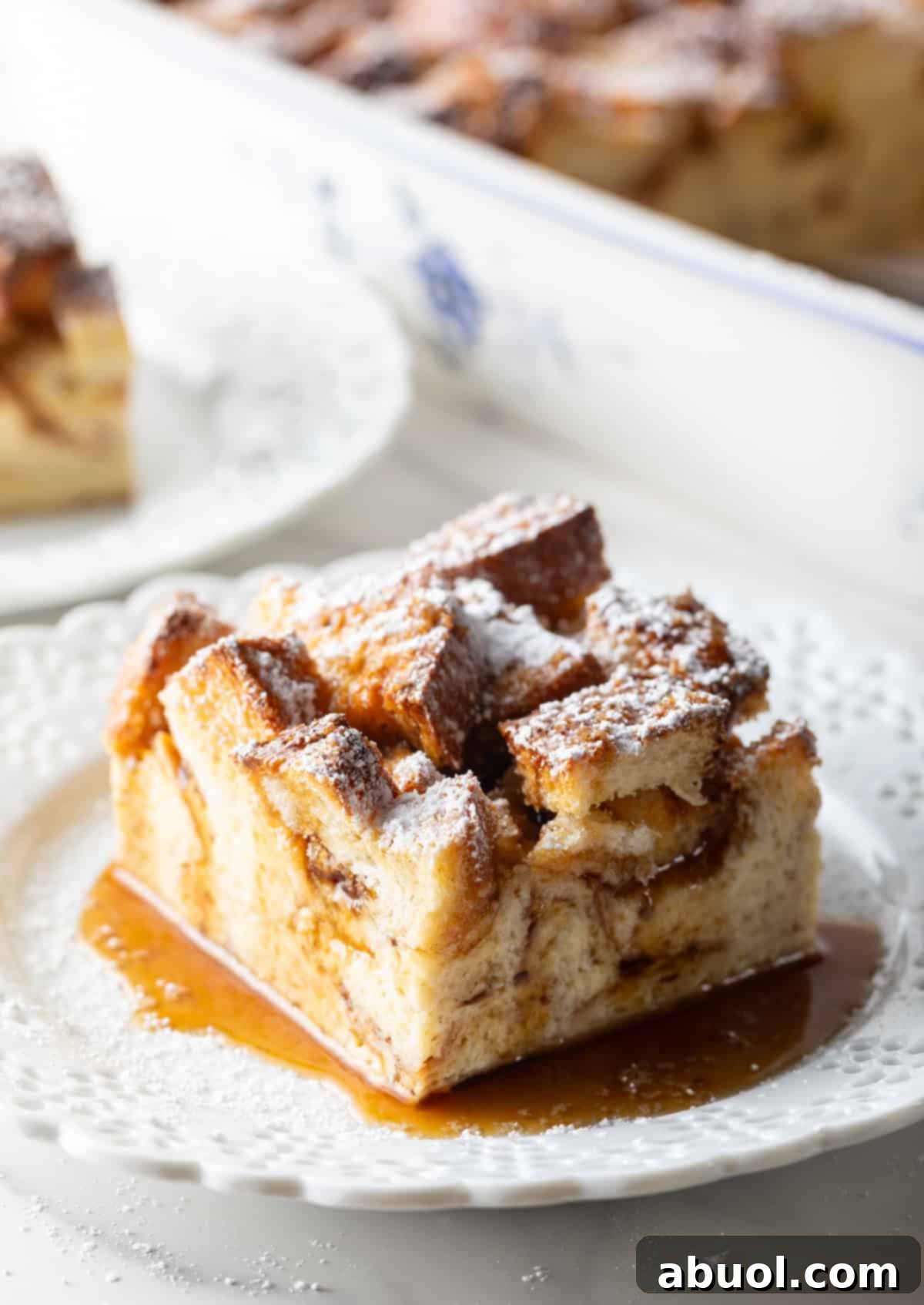
Recipe Highlights: Why You’ll Love This Casserole
Traditional French Toast, Elevated: Imagine the delightful flavors of French toast with a fraction of the effort. This recipe delivers fluffy, custardy, and perfectly sweet results with crispy edges. No need to juggle multiple bowls, dirty your stovetop, or worry about undercooked or overcooked slices. All the flavors and textures you adore, conveniently baked in one dish with a dusting of powdered sugar for that classic French toast touch.
Embrace Sustainability: This recipe is perfect for using up fresh or day-old bread, such as a bakery country loaf or a fluffy French loaf. Sliced or unsliced bread works equally well. Rather than tossing leftover bread into the freezer to be forgotten, transform it into a delectable French toast casserole.
The Ultimate Brunch Centerpiece: Breakfast casseroles are renowned for their ability to feed a crowd during holidays like Christmas and Easter, special occasions, or family gatherings. This French toast bake is not only easy to slice and serve at your leisure, but it also makes an excellent addition to a brunch buffet, remaining delicious both warm and at room temperature.
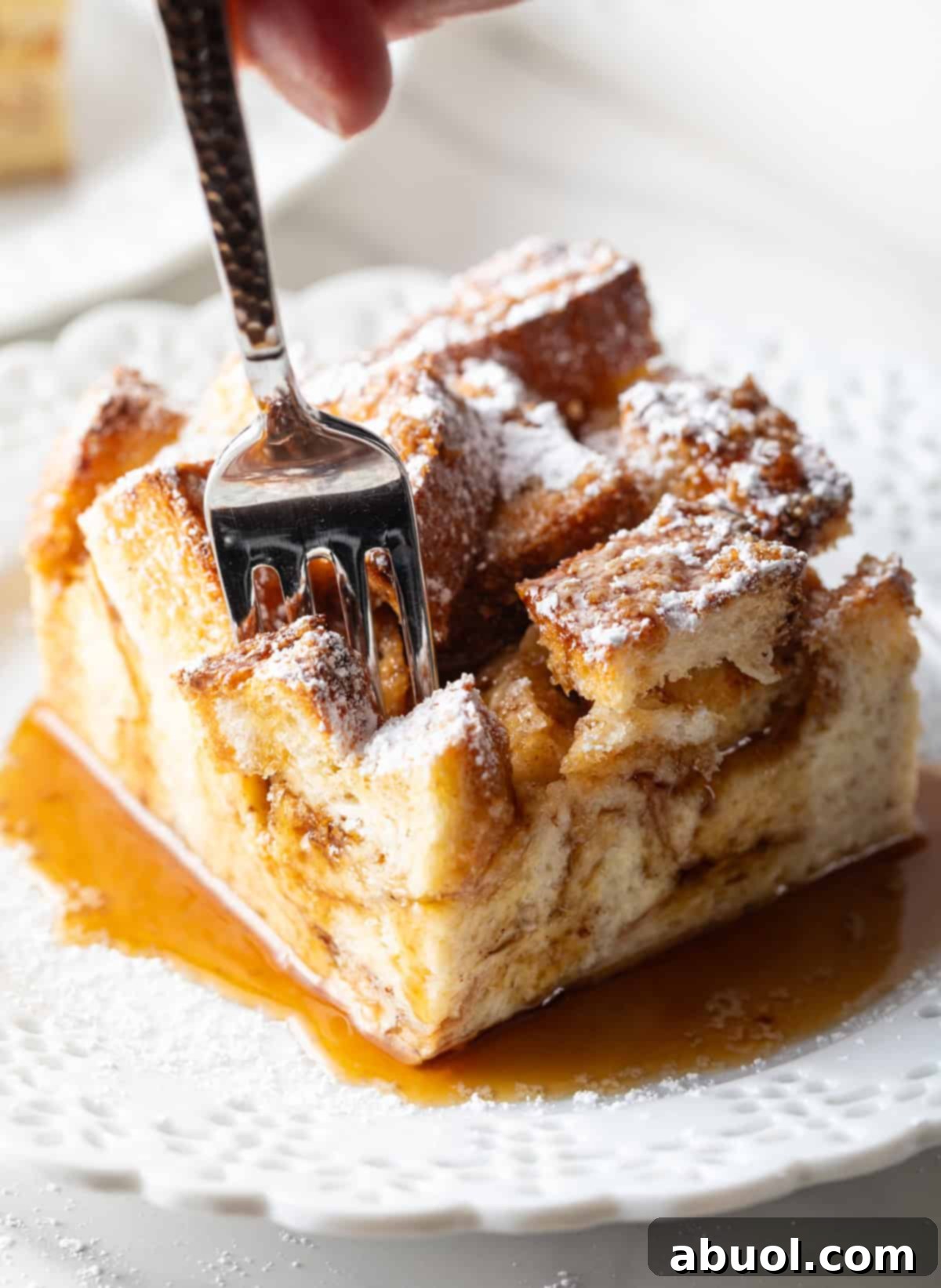
Key Ingredients for the Best French Toast Casserole
Let’s break down the key ingredients that make this overnight French toast casserole so irresistible:
- Bread: As mentioned earlier, this recipe is a fantastic way to use up any almost-stale bread you have on hand. However, for the best results, consider using a rustic country bread or a soft French loaf. The bread’s texture will significantly impact the final result.
- Half & Half: This ingredient is crucial for achieving the signature rich, custard-like texture and flavor that defines a great French toast casserole. While you can substitute milk, the half & half elevates the dish to a new level of indulgence.
- Eggs: Use large eggs and allow them to come to room temperature before incorporating them into the mixture. Room temperature eggs promote more even baking, ensuring a consistently cooked casserole.
- Brown Sugar: Opt for light brown sugar to impart a mellow sweetness with a subtle depth of flavor. The molasses notes in brown sugar complement the other ingredients beautifully.
- Vanilla Extract: Invest in a high-quality vanilla extract for the best possible flavor. The difference between quality vanilla and less expensive extracts is noticeable, and it’s a worthwhile investment for enhancing the overall taste of the casserole.
- Cinnamon: Similar to vanilla extract, splurge on high-quality ground cinnamon to truly elevate the aromatic profile of the dish. The warm, spicy notes of cinnamon are essential to the French toast flavor.
How to Make Easy Overnight French Toast Casserole
Now, let’s dive into the simple steps involved in creating this delicious casserole:
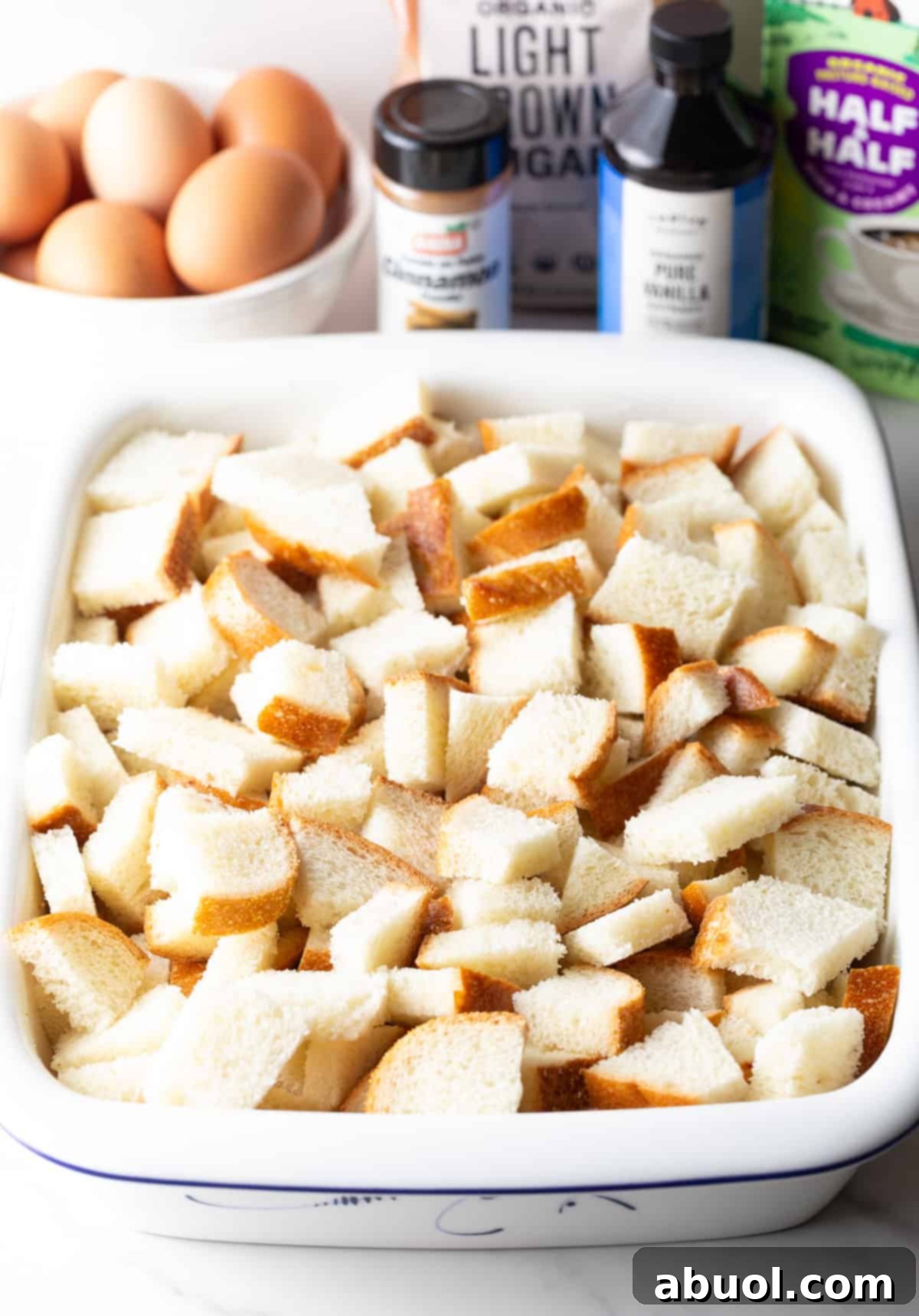
- Prep the Baking Dish: The first step is to prepare your baking dish. Smear a generous amount of butter around the inside of a 9 x 13-inch baking dish, ensuring every surface is well-coated to prevent the casserole from sticking.
- Prepare the Bread: Using a sharp knife or a serrated bread knife, chop the bread into 1 to 1 1/2 inch chunks. Uniformity in size is more important than aesthetics, so aim for consistency. Once chopped, evenly distribute the bread pieces in the prepared baking dish.
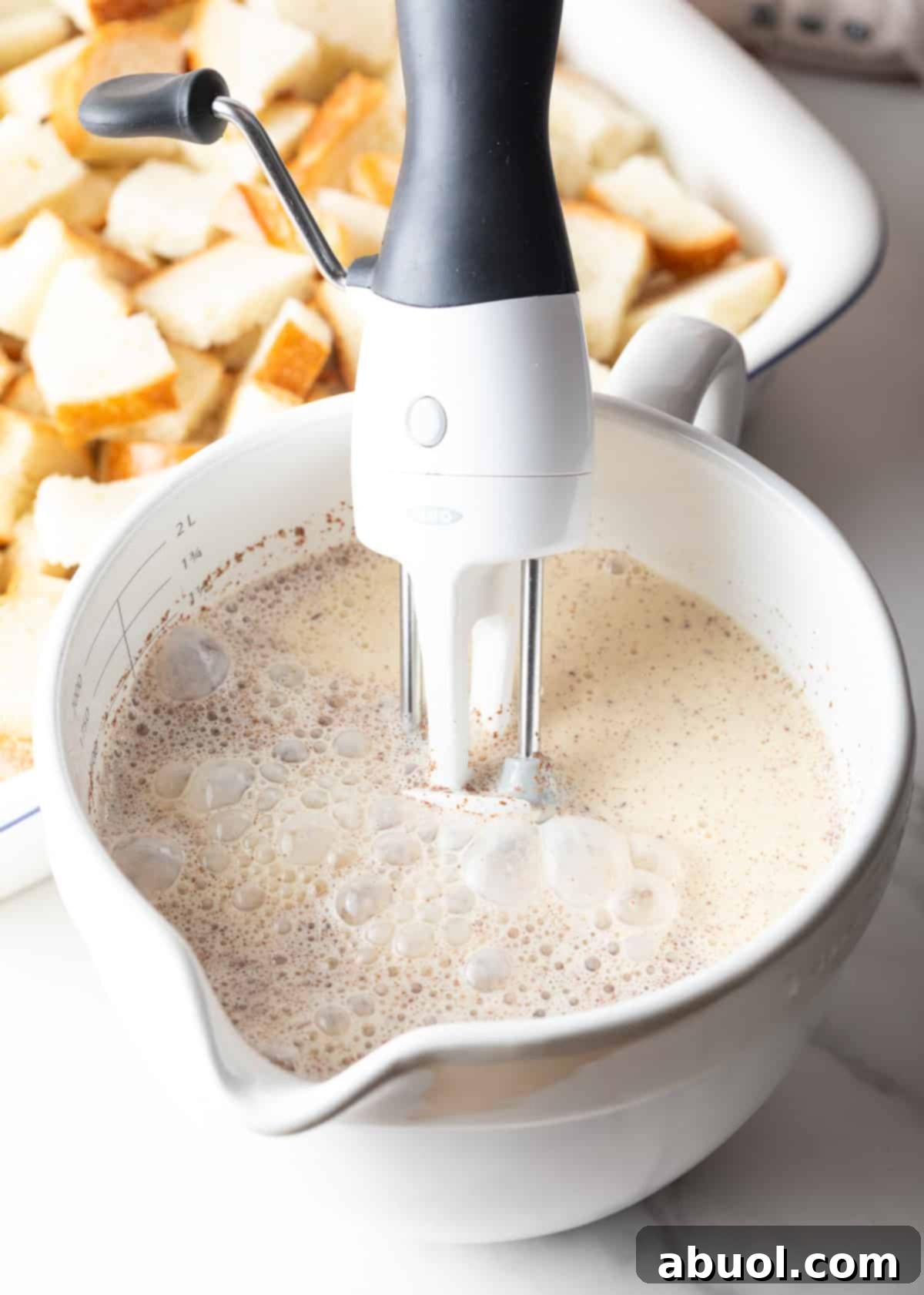
- Make the Cream Mixture: In a large mixing bowl or measuring pitcher, combine the half & half, eggs, brown sugar, vanilla extract, and cinnamon. Use an egg beater or a wire whisk to thoroughly blend the mixture until it’s smooth and consistent.
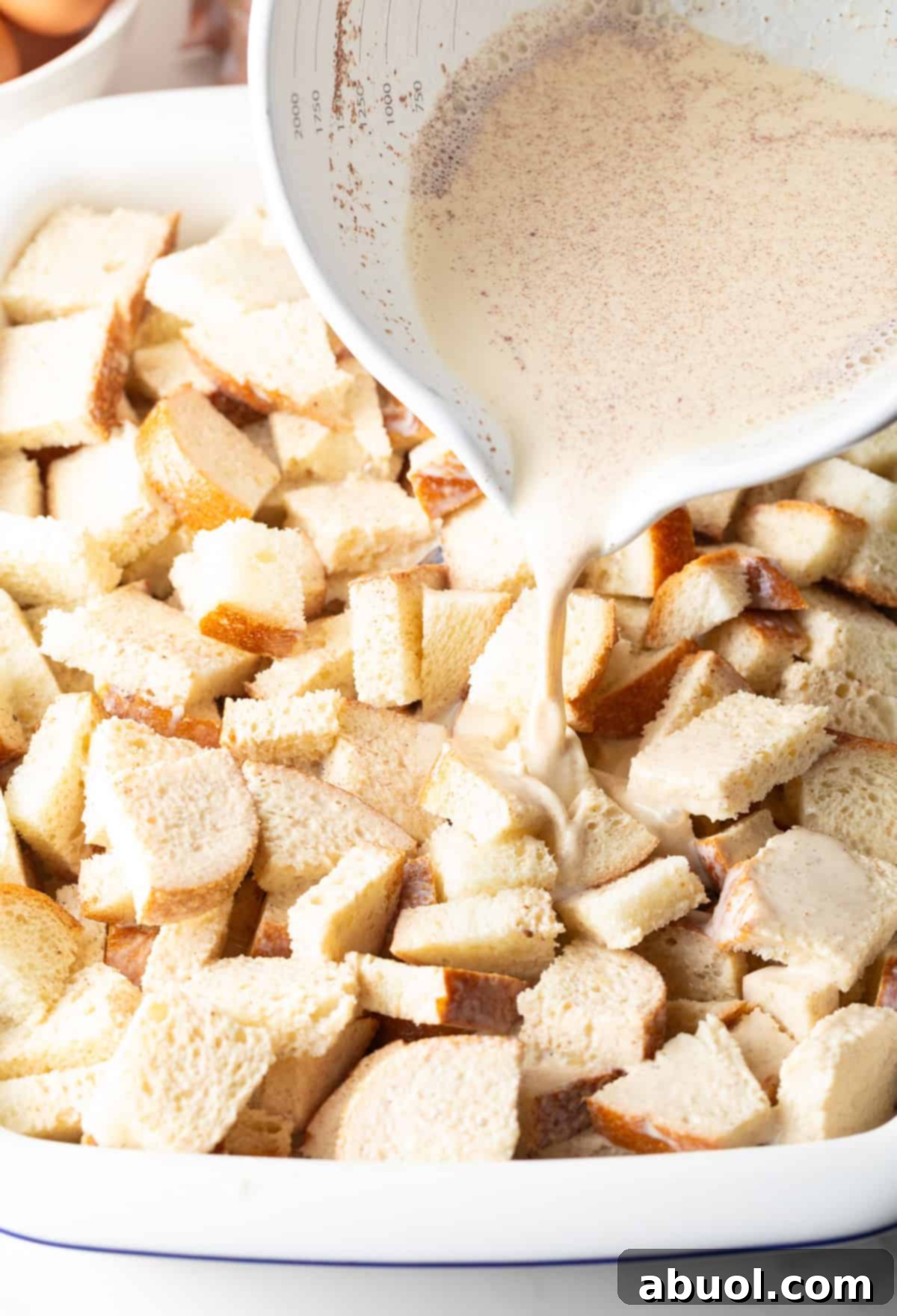
- Pour Mixture Over Bread: Slowly and evenly pour the cream and egg mixture over the bread cubes in the casserole dish. Ensure that every piece of bread is thoroughly coated; otherwise, some areas may become too dry and crunchy during baking. (We want crispy edges, not dry bread!)
- Cover and Refrigerate: Once the bread is well soaked, cover the casserole pan tightly with plastic wrap and place it in the refrigerator for at least 3 hours, ideally overnight. This allows the bread to fully absorb the custard mixture.
- Bake: In the morning, about 60-90 minutes before you plan to serve the French toast, remove the casserole from the refrigerator and allow it to come to room temperature. Avoid placing a cold dish directly into a hot oven, as this can cause some pans to crack. Allowing the egg mixture to warm up promotes more even baking.
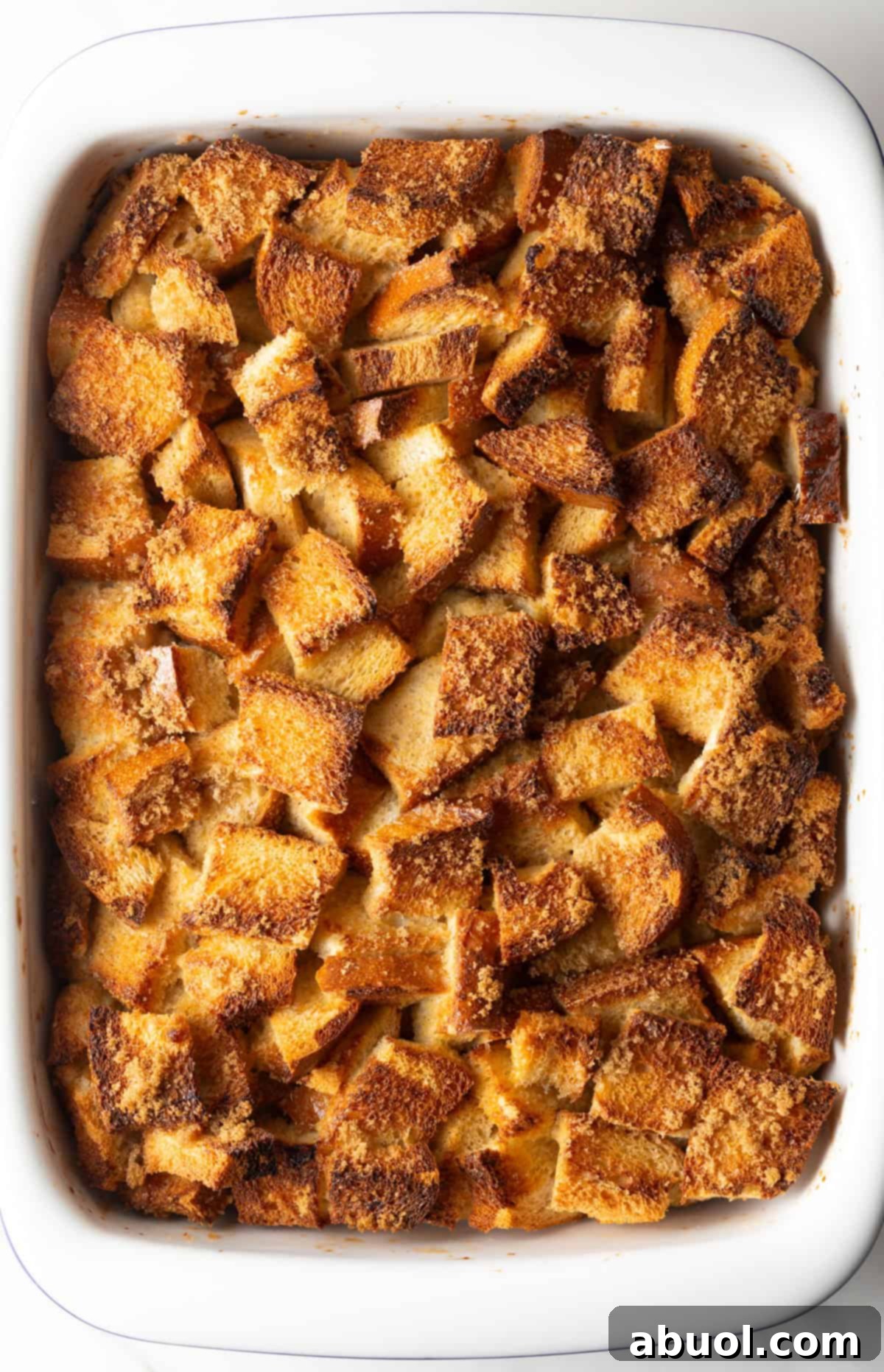
- Preheat and Bake: While the dish is sitting out, preheat your oven to 375 degrees F (190 degrees C). Once the oven is heated, remove the plastic wrap from the casserole, place it in the oven, and set a timer for 30 minutes. After 30 minutes, insert a paring knife into the center of the casserole to check for doneness. If the knife comes out clean or with just a few moist crumbs, the casserole is ready. If there’s still a significant amount of liquid clinging to the knife, return the casserole to the oven for another 5-10 minutes.
Expert Tips for the Best Overnight French Toast Casserole
So you want to know if you *really* need to prep this French toast casserole overnight. The answer is a resounding YES! The overnight soaking is crucial for achieving the perfect texture. This prolonged soaking allows the bread to fully absorb the cream and egg mixture, resulting in an ultra-rich and fluffy texture that puffs up beautifully during baking. The top becomes wonderfully crispy, while the interior remains silky-smooth like a custard – pure perfection!
Don’t rush the process! Trust the overnight soak.
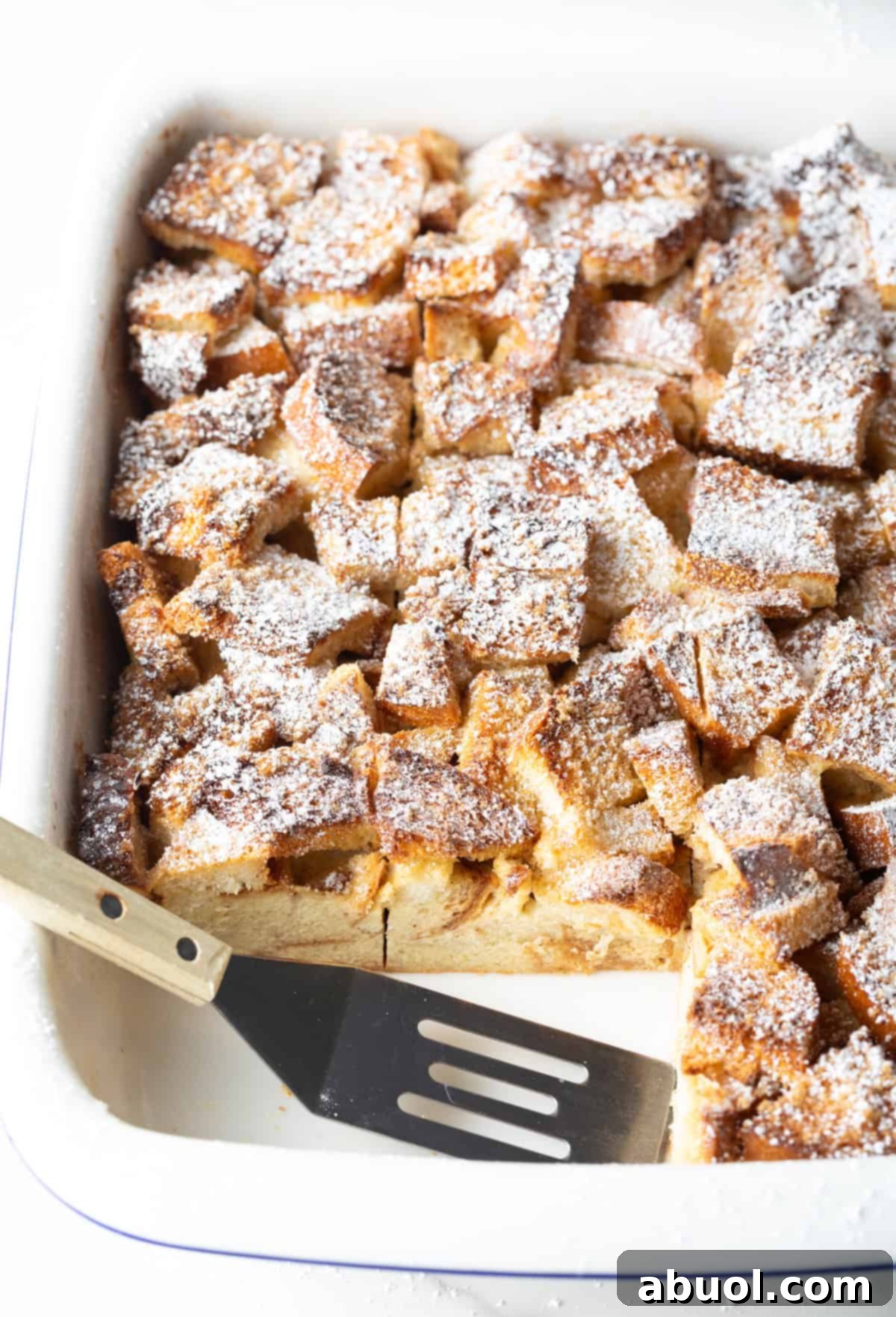
Serving Suggestions: Elevating Your Brunch Experience
Allow the casserole to cool slightly before dusting it with confectioner’s sugar. (Dusting while it’s too hot will cause the sugar to melt.) Then, slice it into squares and either plate the pieces individually or leave them in the pan for guests to serve themselves buffet-style.
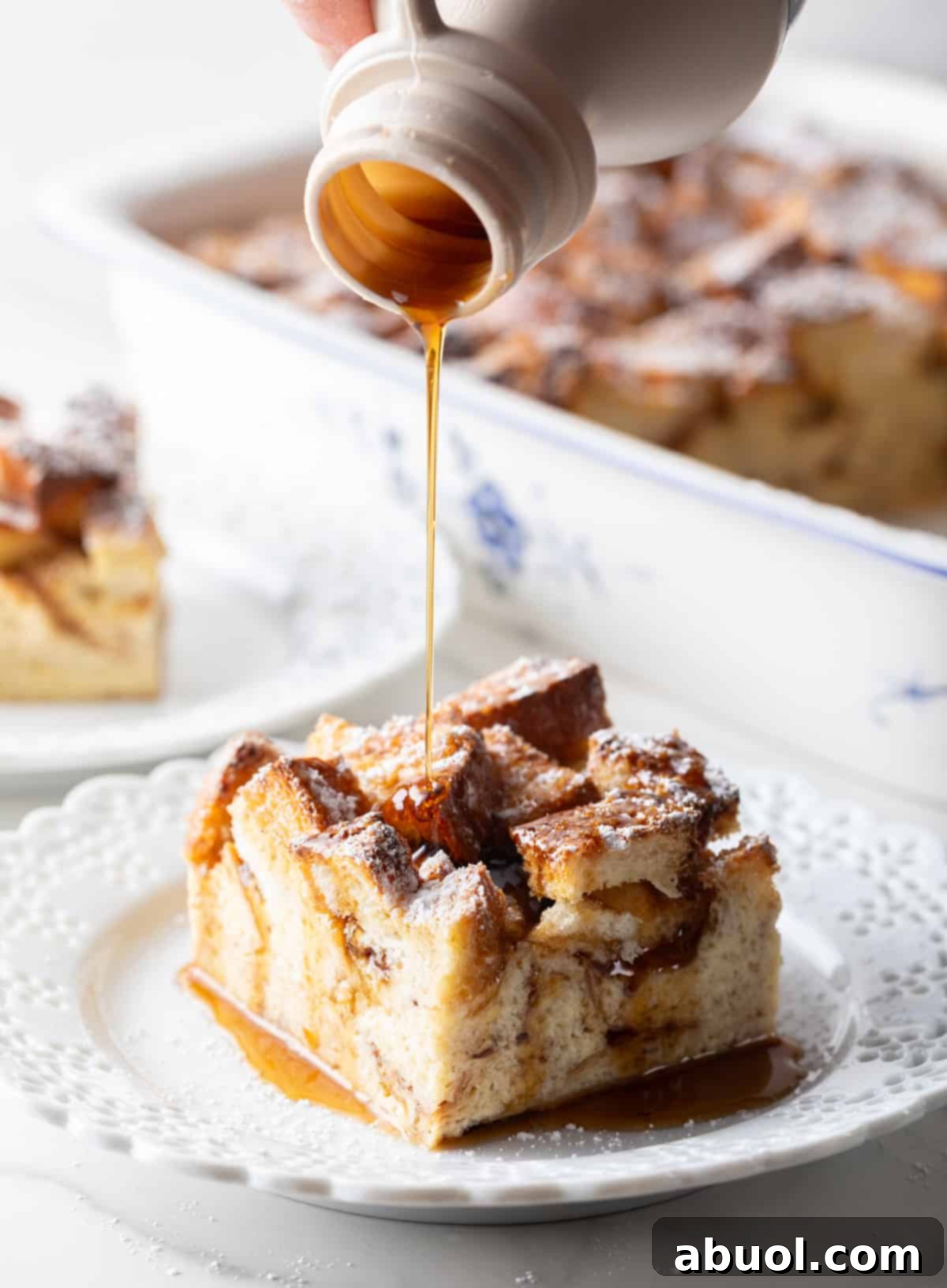
And of course, always, without exception, serve French toast casserole with maple syrup on the side. And make sure it’s *real* maple syrup, none of that artificial pancake syrup from a squeeze bottle.
To balance the sweetness of the casserole, consider pairing it with savory or spicy breakfast sausage or crispy bacon. For an extra boost of protein, whip up a batch of fluffy scrambled eggs or some perfectly cooked over-easy eggs if you’re hosting a smaller gathering.
Fresh fruit is also a delightful addition, either on top of the casserole or served as a side. A bowl of assorted berries – blueberries, raspberries, strawberries, and more – adds a burst of freshness and color. And for the ultimate brunch experience, mix up a batch of mimosas. After all, it is for the vitamin C!
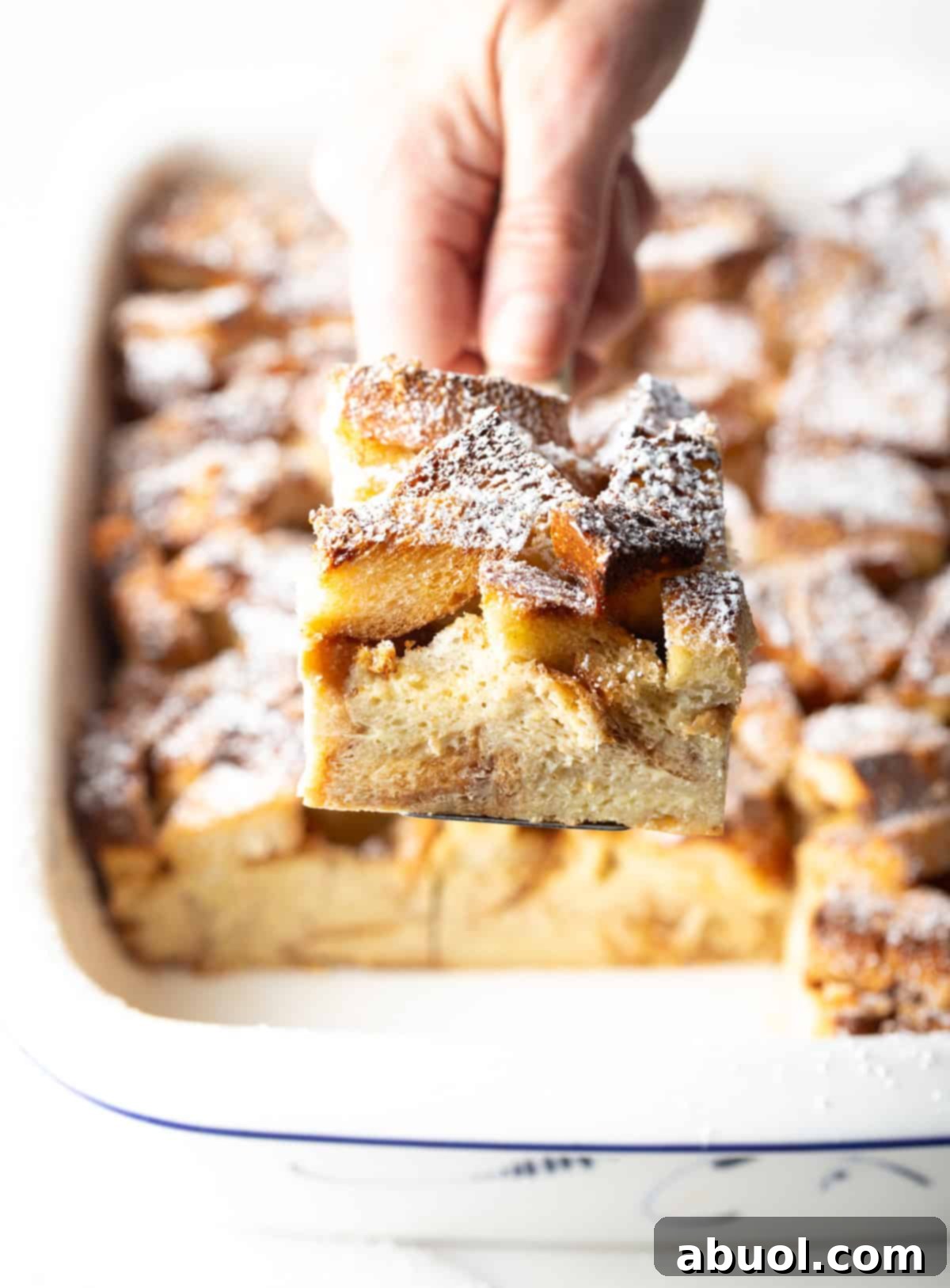
Storing and Reheating: Keeping the Deliciousness Alive
Transfer any leftover French toast casserole to an airtight container and store it in the refrigerator for up to 3-4 days.
For longer storage, the casserole freezes exceptionally well for up to a month! Wrap individual portions tightly in a layer of plastic wrap, followed by aluminum foil. Then, place the wrapped portions together in a plastic Ziploc bag for added freezer burn protection. Thaw portions in the refrigerator overnight before reheating.
You can reheat leftovers in the microwave in short, 20-second bursts at 50% power. However, for the best texture, reheating in the oven is recommended to restore the top’s crispness. Bake at 350 degrees F (175 degrees C) for 10-15 minutes, keeping a close watch to prevent it from drying out.
Frequently Asked Questions
How do I prevent it from being soggy?
Using stale bread, or at least very dry bread, is key for making overnight French toast casserole. If the bread is too fresh, the moisture can cause it to break down into mush before baking. It will still bake, but you won’t see distinct pieces of bread when it’s cut.
Can I make it ahead and freeze it?
Yes, but it’s best to bake it before freezing. If you plan to freeze it, prepare the casserole in a disposable aluminum baking pan. After baking, cool it completely, wrap it well in plastic wrap and foil, and freeze for up to 2 months. Thaw it in the fridge overnight, unwrap it, and bake at 350 degrees F for 20-25 minutes until warmed through.
Can I halve the recipe?
Absolutely! This recipe makes 12 servings in a 9 x 13-inch pan. Halve the ingredients and use an 8 x 8-inch or 9 x 9-inch pan for approximately 6 servings.
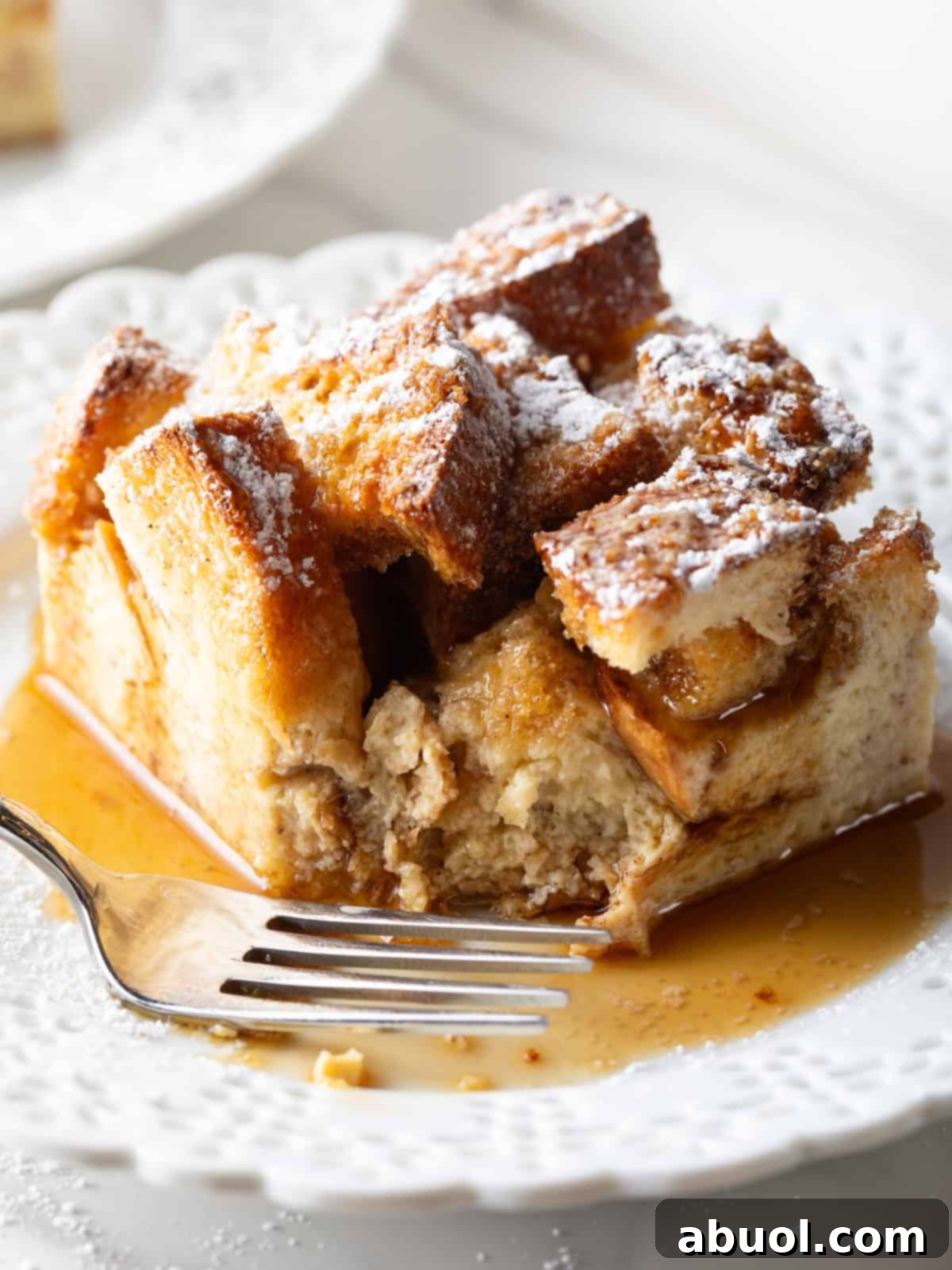
More Delicious Breakfast Recipes
Craving more delectable breakfast ideas? Explore these other fantastic recipes:
- Croissant Breakfast Casserole
- Amish Breakfast Casserole
- Easy Sheet Pan Pancakes
- Sausage Breakfast Casserole