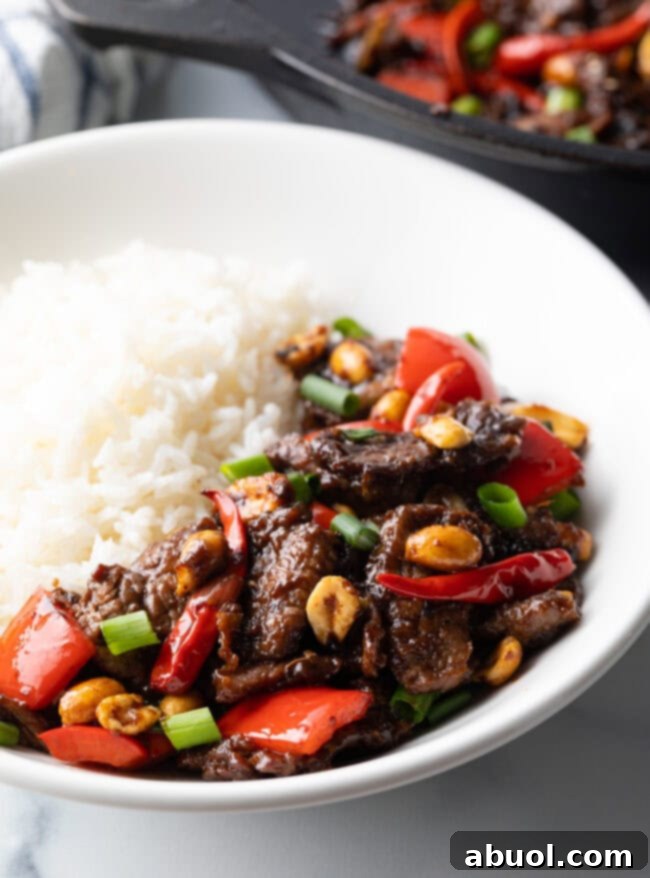
Homemade Kung Pao Beef Stir Fry: Your New Favorite Takeout Fakeout Recipe
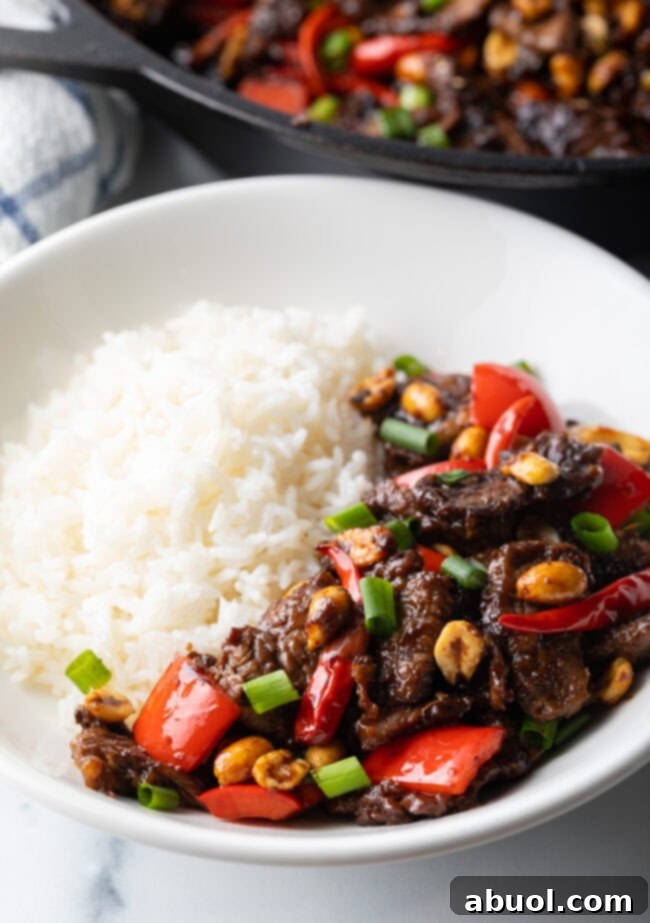
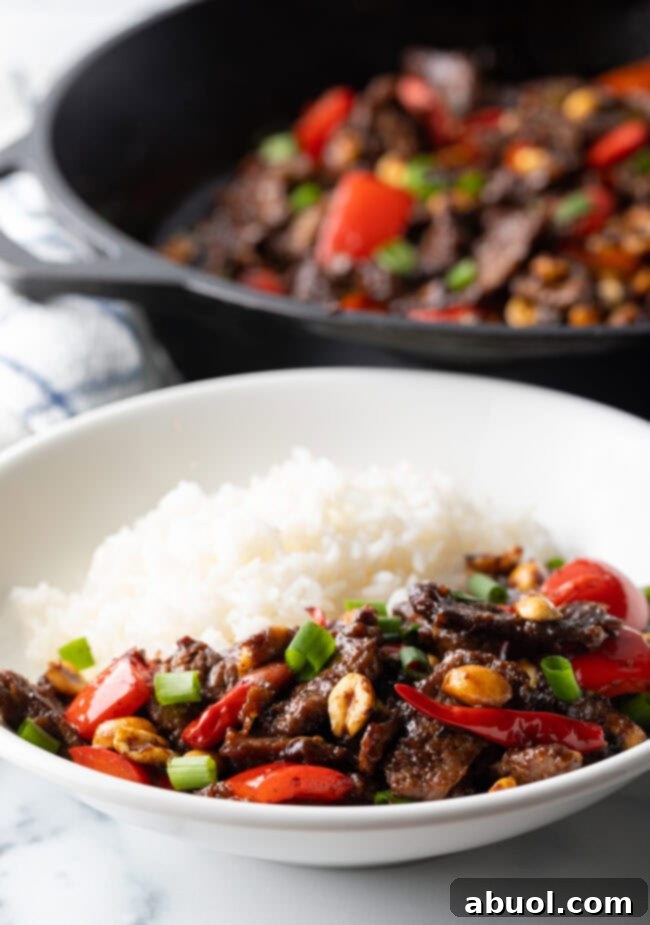
Elevate your weeknight meals with this irresistible homemade stir-fried Kung Pao Beef, packed with tender bell peppers and crunchy peanuts. It’s a savory, spicy, and utterly satisfying dish that rivals your favorite Chinese takeout restaurant!

Why This Homemade Kung Pao Beef Will Be Your New Favorite
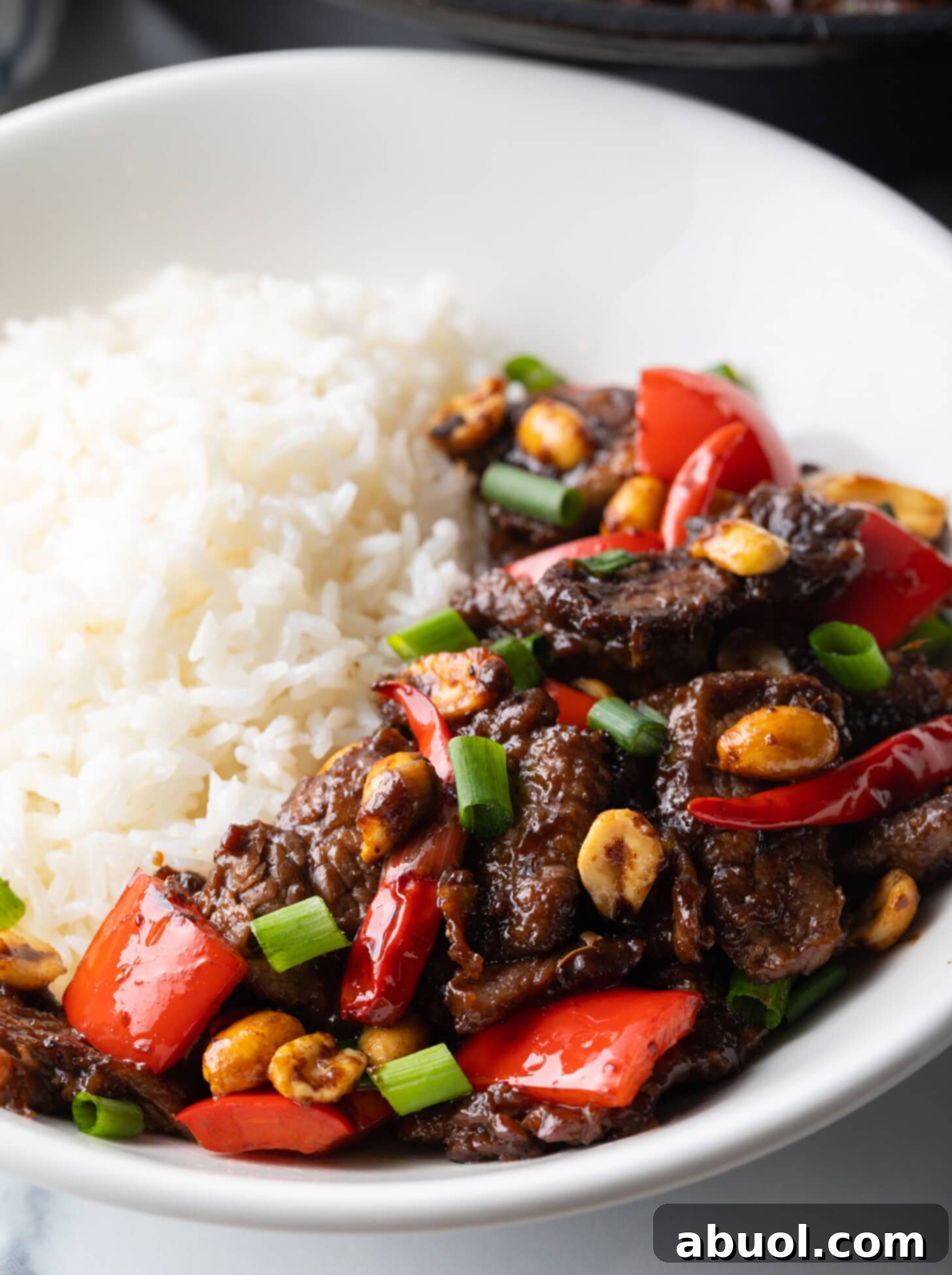
If you’re a fan of the classic Kung Pao Chicken, prepare to be captivated by our robust and incredibly flavorful Kung Pao Beef Stir Fry Recipe! This dish masterfully combines the rich, savory depth of premium beef with the distinctive spicy “POW” that defines authentic Kung Pao cuisine from China’s Sichuan province. It’s an explosion of taste that will transport your palate straight to your favorite Asian eatery, all from the comfort of your own kitchen.
The signature spicy kick comes from a dynamic duo: pungent Szechuan peppercorns and fiery Chinese red peppers (like Tien Tsin chilies or bird’s eye chilies). This combination creates a unique heat that’s both vibrant and numbing, a hallmark of Sichuan cooking. For those who prefer a milder experience, simply adjust or omit these spicy elements to your liking. Remember, the Kung Pao chilies are often included for their beautiful visual appeal and intense aroma, rather than necessarily being eaten directly – unless you dare!
The Irresistible Appeal of Kung Pao Beef
- Superior to Takeout – Forget greasy, overly processed restaurant versions. Our homemade Kung Pao Beef is crafted with fresh, wholesome, and nutritious ingredients, offering a healthier and more satisfying alternative that’s bursting with flavor. You control the quality and the spice!
- Meal-Prep Perfection – This recipe is a meal-prepping dream. Prepare a generous batch at the start of your week, and enjoy delicious, ready-to-eat leftovers for days. It heats beautifully, making busy weeknights a breeze.
- Bold, Unforgettable Flavors – Experience a symphony of tastes and textures: melt-in-your-mouth tender beef, the delightful crunch of roasted peanuts, and vibrant, crisp vegetables, all coated in a rich, savory, and spicy sauce. Every bite is an adventure for your taste buds.
One of the greatest advantages of making this dish at home is the complete control it offers over the ingredients and flavor profile. Unlike many restaurant preparations, you can easily tweak the spiciness, adjust the sweetness, or swap out vegetables to perfectly match your family’s preferences. It’s truly a personalized culinary experience that tastes gourmet yet is surprisingly simple to achieve.
Essential Ingredients for Authentic Kung Pao Beef
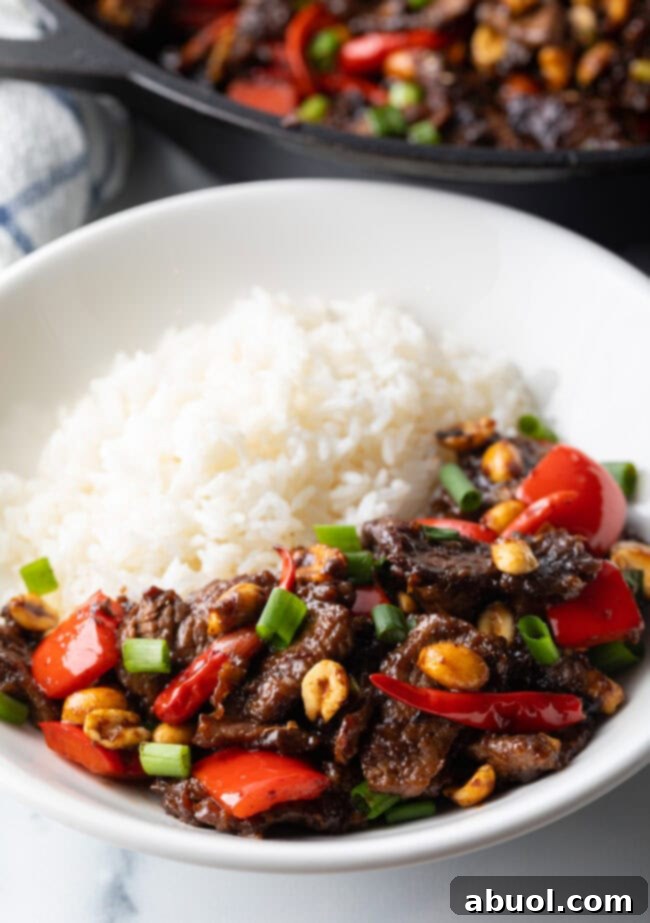
Crafting the perfect Kung Pao Beef begins with selecting the right ingredients. Here’s a breakdown of what you’ll need to create this tantalizing stir-fry:
- Flank Steak – This lean, flavorful, and economical cut of beef is absolutely ideal for stir-frying. Its fibrous texture, when sliced correctly against the grain, becomes wonderfully tender and absorbs marinades beautifully, ensuring every bite is succulent.
- Cornstarch – A kitchen essential for Asian cooking, cornstarch plays a dual role here. It tenderizes the beef (a technique known as velveting) and, more importantly, creates that luscious, thick, and glossy sauce without the need for flour, giving the dish its signature takeout consistency.
- Fresh Vegetables – We use finely chopped scallions (whites and greens separated for staggered cooking), vibrant red bell peppers (seeded and chopped into 1-inch pieces for texture and color), aromatic grated ginger, pungent minced garlic, and the star of the spice show: Chinese Tien Tsin chilies (or fiery Thai bird’s eye chilies). These fresh elements provide crucial flavor, aroma, and appealing crunch.
- Cooking Sherry – This ingredient is key to building a deep, complex flavor profile in your sauce, adding a distinctive umami note and a subtle sweetness that elevates the dish beyond ordinary stir-fries. Alternatively, a good quality dry rice wine can be used.
- Soy Sauce – For optimal flavor control and to prevent the dish from becoming overly salty, we highly recommend using low sodium soy sauce. This allows you to season the dish precisely without overwhelming other delicate flavors.
- Szechuan Peppercorns – These unique peppercorns are not just spicy; they deliver a fascinating citrusy, almost floral note, followed by a signature tingling and numbing sensation on the tongue. They are absolutely essential for that authentic Sichuan “ma la” (numb and spicy) experience.
- Roasted Peanuts – Whether salted or unsalted, roasted peanuts are an iconic garnish for Kung Pao dishes. They provide a delightful nutty flavor and a crucial textural contrast, adding a satisfying crunch that complements the tender beef and vegetables.
Customizing Your Kung Pao Beef: Variations & Dietary Adaptations
One of the beauties of a stir-fry recipe is its versatility. Feel free to adapt this Kung Pao Beef to suit your dietary needs, personal preferences, or whatever ingredients you have on hand. Here are some fantastic ideas to get you started:
- For a Mild Experience – If you or your family prefer less heat, simply reduce the number of spicy chile peppers or omit them entirely. You can also lessen the amount of Szechuan peppercorns for a more gentle tingle, or leave them out for a purely savory dish.
- Bell Pepper Rainbow – While traditional Kung Pao often features red bell peppers for their sweetness and vibrant color, don’t hesitate to experiment! Incorporate green, yellow, or orange bell peppers for a beautiful visual array and slightly different flavor nuances.
- Alternative Sauces – If black bean garlic sauce isn’t readily available, you can achieve a similar depth of flavor by substituting with an equal amount of hoisin sauce or oyster sauce. Each will lend its own unique character to the dish, so choose based on your preference.
- Vinegar Swaps – Chinese black vinegar offers a distinct rich, slightly smoky, and tangy flavor. If you can’t find it, white rice vinegar is an excellent substitute, providing a clean acidity. For a deeper, more complex tang, a small splash of good quality balsamic vinegar can also work in a pinch.
- Alcohol-Free Option – To make this a stir-fry recipe without alcohol, simply omit the cooking sherry. You can replace it with an equal amount of rich chicken broth, vegetable broth, or even water to maintain the sauce consistency without compromising too much on moisture.
- Peanut-Free Version – For those with peanut allergies or simply a dislike for them, feel free to leave out the peanuts entirely. Alternatively, serve them on the side, allowing individual diners to add them as desired. To maintain a crunchy element, consider toasted cashews or sesame seeds.
- Add More Veggies – Boost the nutritional value and visual appeal by tossing in a medley of your favorite stir-fry friendly vegetables. Sliced zucchini, julienned carrots, crisp green beans, or sweet snap peas would all be delicious additions, adding more color, fiber, and texture.
- Protein Power – This recipe is incredibly adaptable! If you’re not in the mood for beef, or want to try something different, easily swap the flank steak for other proteins. Chicken breast or thighs, tender pork loin, succulent shrimp, or even firm tofu for a vegetarian/vegan option would all work wonderfully with this flavorful sauce.
Step-by-Step Guide: Crafting Your Perfect Kung Pao Beef Stir Fry
Get ready to unleash the sizzling aromas of an authentic Chinese kitchen in your home! With your skillet or wok heated to perfection, you’re just minutes away from enjoying tender, flavorful beef and vibrant, crisp vegetables coated in an unforgettable sauce. This delicious and dazzling Kung Pao Beef stir-fry comes together surprisingly fast, making it an ideal choice for a quick yet impressive meal.
For your convenience, find the complete Kung Pao Beef recipe with detailed measurements, preparation instructions, and helpful storage tips in the printable recipe card below!
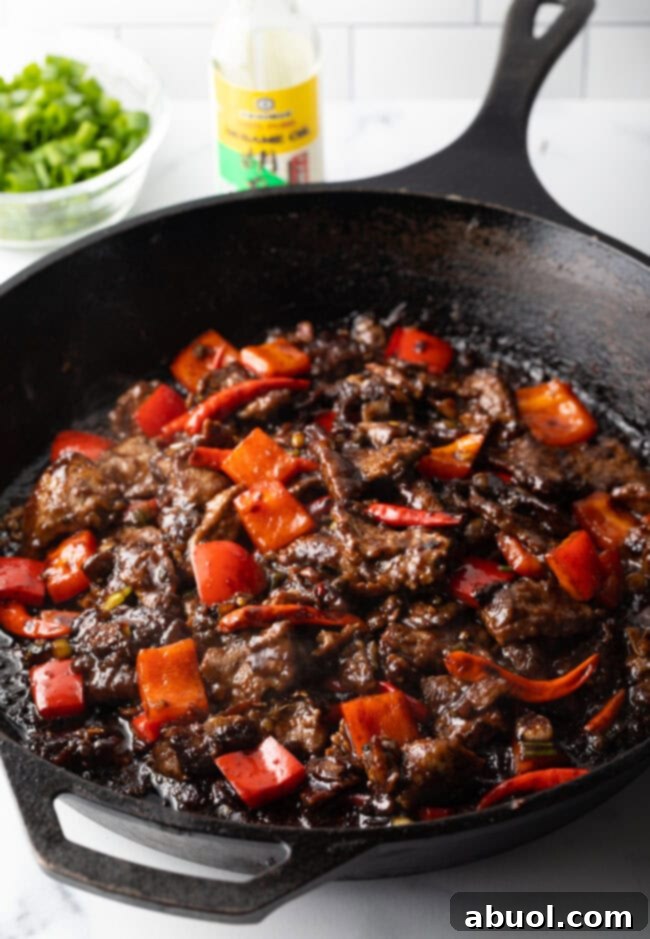
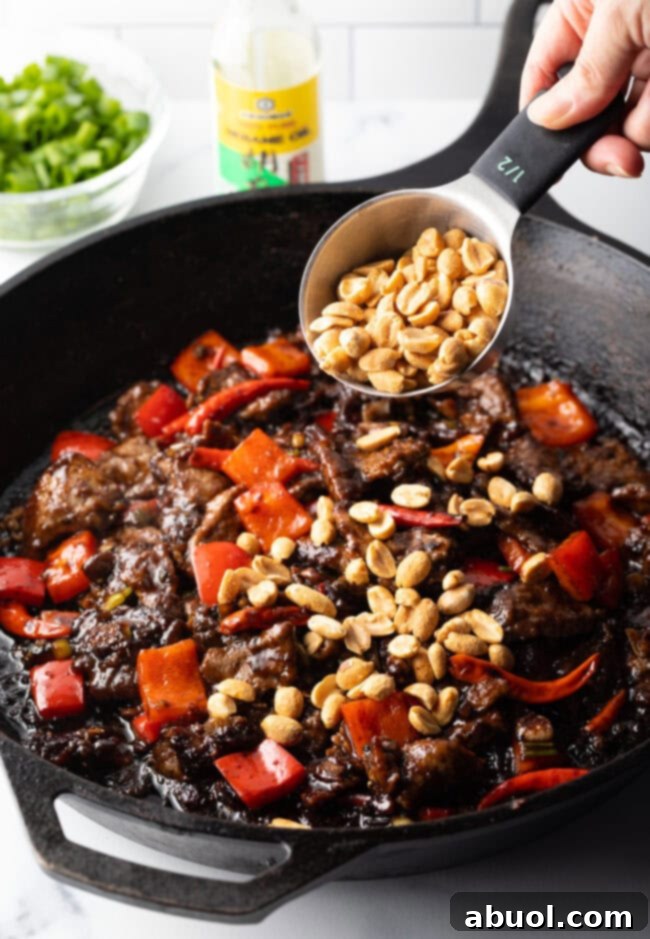
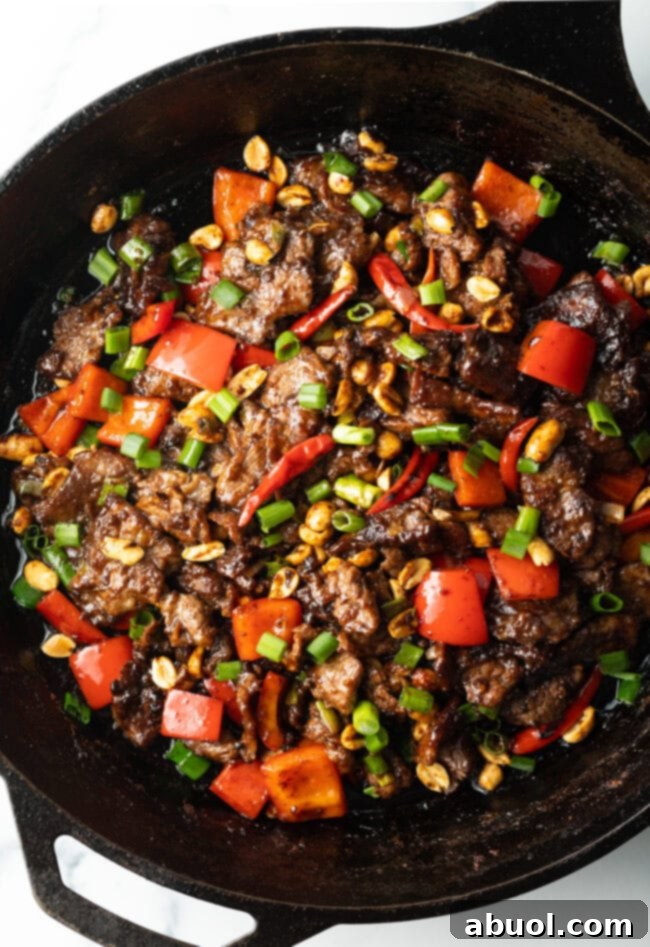
Kung Pao Beef Recipe
This homemade stir-fried Kung Pao Beef with bell pepper and peanuts is savory, spicy, and just as delicious as your favorite takeout restaurant dish!
Prep Time: 35 minutes
Cook Time: 15 minutes
Total Time: 50 minutes
Yields: 4 – 6 servings
Rating: 5 stars (2 reviews)
Ingredients
- 4 tablespoons sesame oil, divided
- 1 ½ pounds flank steak
- 2 tablespoons cornstarch
- 1 bunch scallions, divided (whites and greens)
- 1 large red bell pepper, seeded and chopped into 1-inch pieces
- 10-15 Chinese Tien Tsin chilies (or Thai bird’s eye chilies)
- 3 cloves garlic, minced
- 2 tablespoons grated ginger
- ¼ cup cooking sherry
- 3 tablespoons low sodium soy sauce
- 2 tablespoons black bean garlic sauce
- 1 tablespoon Chinese black vinegar
- 1 tablespoon Szechuan peppercorns
- ½ cup roasted peanuts
Instructions
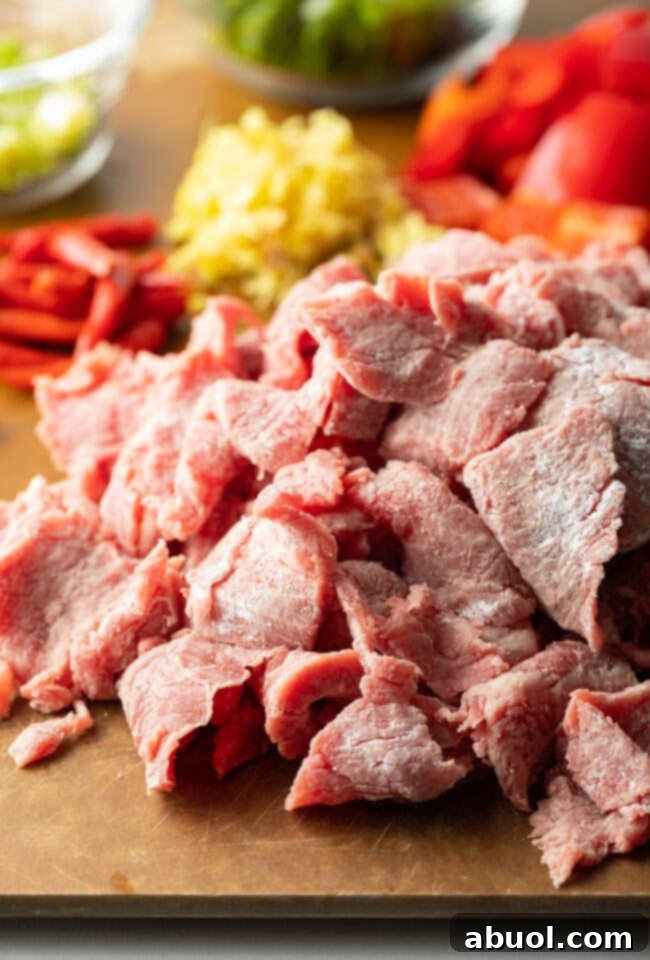
- Prepare the steak: Slice the flank steak in half lengthwise, then cut each half against the grain into very thin slivers. For easier slicing, flash freeze the steak for about 30 minutes until firm. This helps achieve uniform, thin pieces.
- Velvet the beef: In a medium bowl, toss the thinly sliced flank steak strips with 2 tablespoons of cornstarch until each piece is lightly coated. Set aside to marinate slightly.
- Chop vegetables: Prepare your aromatics and vegetables. Chop the scallions, separating the white parts from the green parts. Dice the red bell pepper, mince the garlic cloves, and grate the fresh ginger.
- Heat your pan: Place an extra-large skillet or a wok over high heat. Add 2 tablespoons of sesame oil to the hot pan and swirl to ensure the entire surface is coated. The oil should be shimmering.
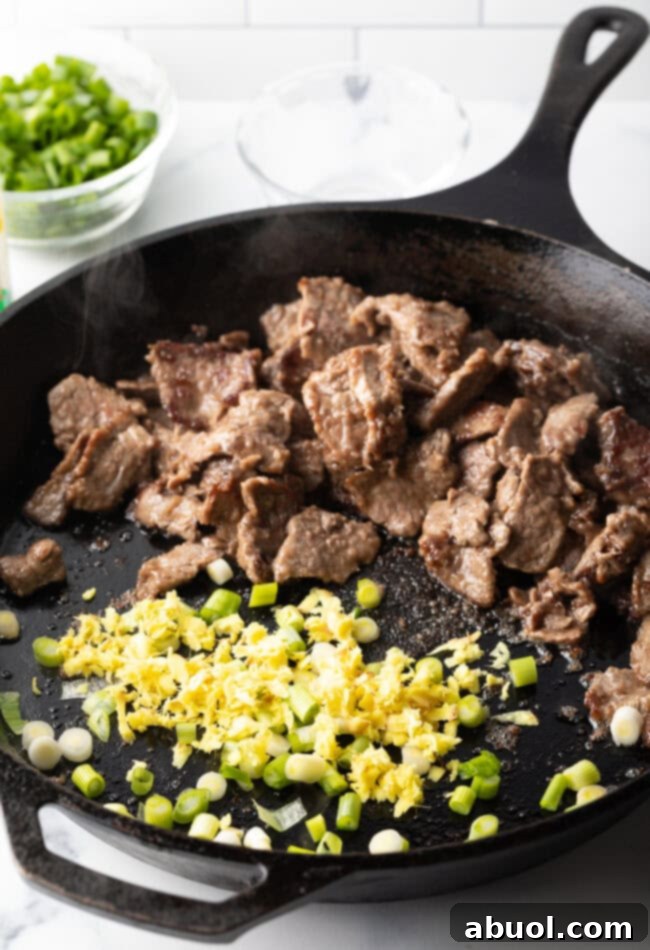
- Sear the beef: Once the skillet is smoking hot, add the cornstarch-coated beef slices in a single layer (cook in batches if necessary to avoid overcrowding). Stir-fry quickly until the beef is beautifully seared and browned on all sides, about 2-3 minutes. Remove beef from the pan and set aside.
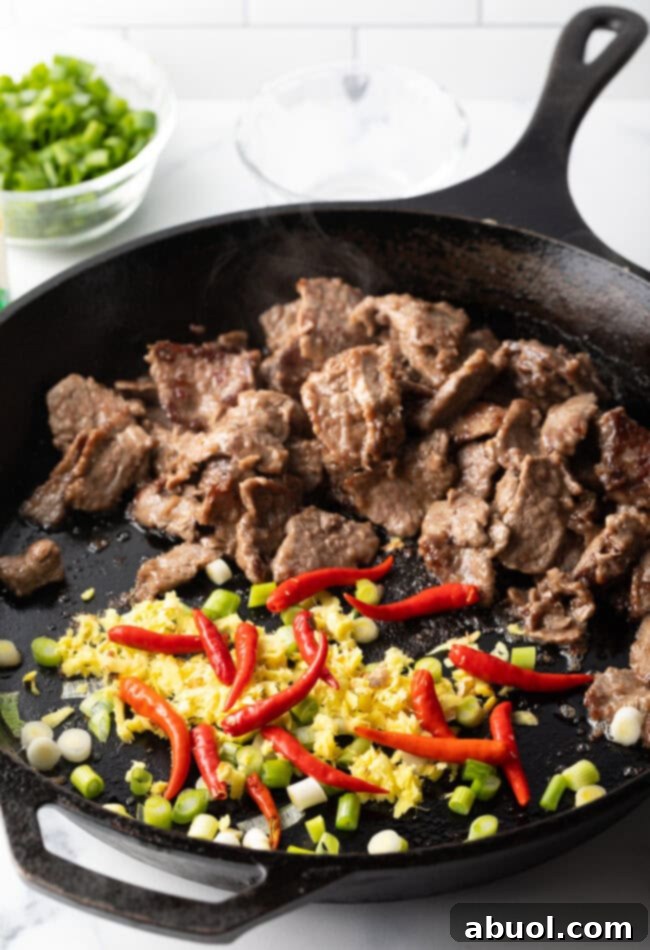
- Sauté the aromatics and vegetables: Push the beef slices to one side of the pan (or remove them temporarily). Pour the remaining 2 tablespoons of sesame oil into the empty side. Add the scallion whites, red bell peppers, Chinese chilies, minced garlic, and grated ginger. Stir-fry these vegetables for 3 to 4 minutes until they begin to soften and become fragrant.
- Build the sauce: Pour the cooking sherry over the vegetables, allowing it to deglaze the pan and release all the delicious fond. Follow with the low sodium soy sauce, black bean garlic sauce, Chinese black vinegar, and Szechuan peppercorns. Stir everything together, incorporating the sauce and vegetables with the seared beef, ensuring all ingredients are well coated. If the sauce becomes too thick, add 2 to 4 tablespoons of water or chicken broth to achieve your desired consistency.
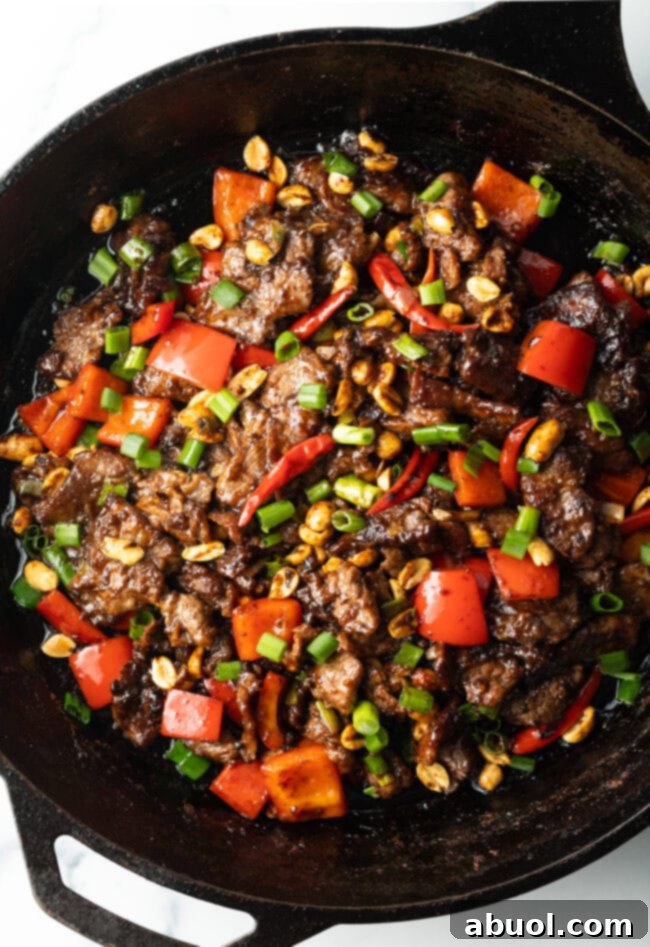
- Finish and serve: Once the sauce has reached your preferred thickness and clings beautifully to the ingredients, stir in the roasted peanuts and the reserved scallion greens. Cook for another minute to warm through. Serve immediately and piping hot over freshly steamed white rice, brown rice, or a lower-carb option like cauliflower rice.
Notes
This Kung Pao Beef stir-fry is fantastic for meal prepping! Allow the dish to cool completely to room temperature before transferring it to an airtight container. Store in the refrigerator for up to 3-4 days. Reheat gently in a skillet over medium heat or in the microwave in short bursts until warmed through.
Nutrition
Serving: 1 cup, Calories: 524 kcal, Carbohydrates: 14g, Protein: 44g, Fat: 32g, Saturated Fat: 7g, Polyunsaturated Fat: 9g, Monounsaturated Fat: 13g, Cholesterol: 102mg, Sodium: 606mg, Potassium: 919mg, Fiber: 3g, Sugar: 2g, Vitamin A: 976IU, Vitamin C: 41mg, Calcium: 88mg, Iron: 4mg
Course: Main, Main Course
Cuisine: Asian, Chinese, Indo-Chinese
Author: Sommer Collier
Pro Tips for a Flawless Kung Pao Beef
Achieving restaurant-quality Kung Pao Beef at home is easier than you think with a few expert tips. Follow these guidelines to ensure your stir-fry is nothing short of spectacular every time:
- Mind the Salt Levels – Key ingredients like black bean garlic sauce, Chinese black vinegar, and especially soy sauce are naturally very salty. To prevent an overly seasoned dish, it’s crucial to use low-sodium soy sauce. More importantly, we strongly advise against adding any additional salt to the recipe. Taste and adjust only at the very end if absolutely necessary, but typically, the existing sauces provide ample seasoning.
- Effortless Slicing with a Freezer Trick – Achieving those thin, even slivers of flank steak is vital for quick cooking and tender results. To make this task significantly easier, place your flank steak in the freezer for about 30 minutes before you begin slicing. The slight firmness of the partially frozen meat will allow your knife to glide through, creating perfect, consistent pieces.
- Always Cut Against the Grain – This is a golden rule for stir-frying beef! Flank steak has prominent muscle fibers. By cutting the steak against the grain (perpendicular to these fibers), you shorten them, which breaks down the tough connective tissue. This simple technique is the secret to ensuring your beef remains incredibly tender and easy to chew, rather than tough and stringy.
- High Heat is Your Friend – Stir-frying requires intense heat to quickly cook the ingredients and achieve that desirable “wok hei” (breath of the wok) flavor. Make sure your wok or skillet is screaming hot before adding oil and ingredients. This ensures a quick sear, locking in juices and preventing the meat and vegetables from steaming.
- Don’t Overcrowd the Pan – When searing the beef or stir-frying the vegetables, resist the urge to load too much into the pan at once. Overcrowding lowers the pan’s temperature, causing ingredients to steam instead of sear. Cook in batches if necessary, allowing each component to cook perfectly before combining.
Storage & Meal Prep Made Easy
This Kung Pao Beef recipe is a meal-prepping superstar! It holds up beautifully in the refrigerator, making it perfect for enjoying delicious, home-cooked meals throughout the week. Here’s how to best store and reheat your leftovers:
- Storing Leftovers – Once your Kung Pao Beef has cooled completely to room temperature (this is important to prevent condensation and bacterial growth), transfer it to an airtight container. Store it securely in the refrigerator for 3 to 4 days. For optimal freshness, consider storing the stir-fry and any accompanying rice or noodles separately.
- Reheating Leftovers – To bring your delicious Kung Pao Beef back to life, you have a couple of great options. For the best texture, reheat in a skillet over medium heat, stirring occasionally, until thoroughly warmed through. Add a splash of water or broth if the sauce has thickened too much. Alternatively, you can reheat portions in the microwave in short bursts, stirring in between, until heated evenly.
Serving Suggestions to Complete Your Feast
The tender, spicy, savory, and perfectly saucy Kung Pao Beef stir-fry is a meal in itself, but pairing it with the right accompaniments can transform it into a truly unforgettable Asian-inspired feast. Here are some fantastic serving suggestions:
The classic choice is to serve your Kung Pao Beef with a generous mound of fluffy white rice or nutritious brown rice. The rice perfectly absorbs the flavorful sauce, providing a comforting and balanced base for the rich beef and vegetables.
For those mindful of carbohydrate intake, consider lighter alternatives that still offer great texture and absorbency. Pair your Kung Pao Beef with light and fluffy Roasted Cauliflower Rice or a vibrant Broccoli Rice. These options provide a healthy and low-carb foundation without sacrificing flavor.
To create a complete, family-style Chinese banquet right at home, complement your Kung Pao Beef with an array of delectable side dishes. Consider homemade Veggie Lo Mein for a noodle option, savory Chinese Dumplings (potstickers) for a delightful appetizer, a refreshing side of Panda Express Super Greens, and a comforting bowl of Egg Drop Soup. Serve everything in individual dishes and let everyone dig in, creating a vibrant and interactive dining experience!
Frequently Asked Questions (FAQ)
Yes, absolutely! Authentic Kung Pao Beef, like this recipe, features a delightful kick from both spicy Chinese chilies and aromatic Szechuan peppercorns. This combination delivers a unique “ma la” (numb and spicy) sensation. However, you have full control: you can easily reduce or even completely omit these spicy elements to create a milder dish that suits your palate.
Kung Pao Beef offers a complex and exhilarating flavor profile. The stir-fried beef is incredibly tender with a satisfying slight chewiness. Each succulent piece of meat and every crisp, sweet bell pepper is coated in a rich, thick, savory, and spicy sauce. The overall dish presents a delicious punch of heat, a distinctive tingling sensation from the Szechuan peppercorns, and a harmonious balance of umami, subtle sweetness, and tangy notes. It’s a truly dynamic and addictive combination!
While both are popular Chinese beef dishes, they have distinct flavor profiles. Mongolian Beef is characterized by its sweeter, richer sauce, typically made with brown sugar, soy sauce, and ginger. It is generally not a spicy dish (unless red pepper flakes are explicitly added), making it a fantastic option for those who prefer milder flavors or aren’t keen on the heat of Kung Pao. Kung Pao Beef, on the other hand, is known for its signature spicy and numbing “ma la” sensation from chilies and Szechuan peppercorns, combined with a savory, tangy sauce.