

The Ultimate Guide to Authentic French Toast (Pain Perdu): Experience Crispy-on-the-Outside, Custard-Like-on-the-Inside Perfection with Our Easy Recipe!

Unveiling the Secret to the Best French Toast: Authentic Pain Perdu
For years, I believed I had mastered the art of making French toast. That was until a series of unforgettable trips to France completely transformed my understanding of this beloved breakfast classic. Immersing myself in Parisian culinary culture, including a couple of enlightening cooking classes, revealed a world beyond the typical American rendition. The French approach, encapsulated in their exquisite “Pain Perdu,” showed me that there was still much to learn. Now, after considerable experimentation and a deep dive into traditional techniques, I can proudly say my homemade French toast rivals the incredible Pain Perdu I savored in Paris.
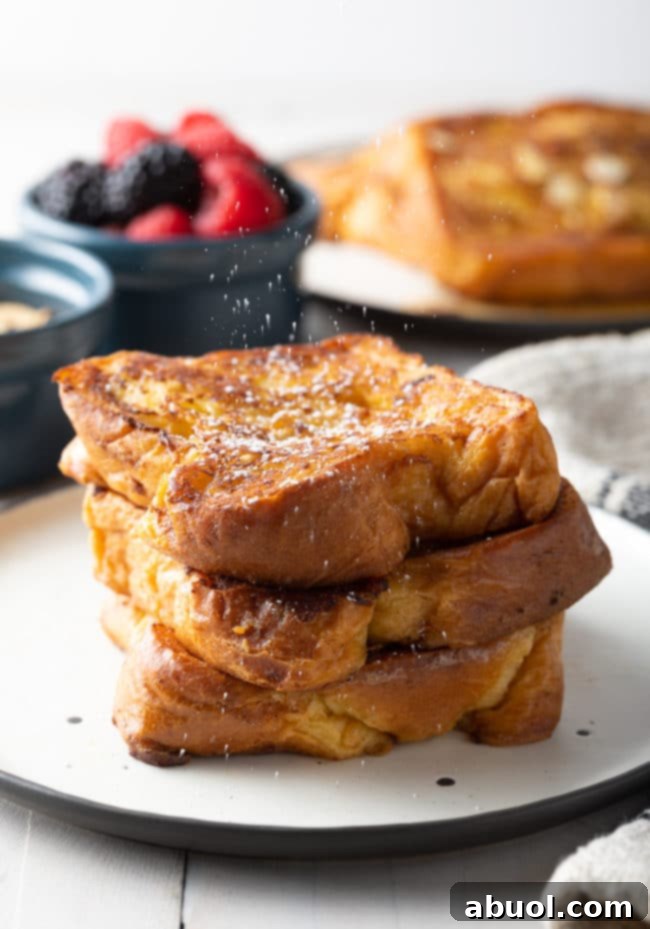
Let’s delve into the fundamental distinctions that separate ordinary French toast from the extraordinary Pain Perdu. American-style French toast often suffers from common pitfalls: it can be overly eggy, excessively spiced, and thin due to the use of standard sandwich bread. If not properly soaked, it risks being dry and “bready” in the center, or conversely, soggy if the liquid ratio is off. In stark contrast, authentic Pain Perdu is a revelation. It features thick slices of bread, boasting a gloriously crispy, golden-brown exterior that gives way to an impossibly soft, rich, and custard-like interior. Its inherent sweetness and delicate vanilla custard flavor are so perfectly balanced that it stands proudly on its own, requiring no additional syrup or elaborate toppings. This subtle sophistication is precisely why, once you experience the true Pain Perdu, you’ll find it hard to return to any other version.
Essential Ingredients for Perfect Pain Perdu
Crafting the best French toast starts with selecting the right high-quality ingredients. Here’s what you’ll need to achieve that authentic, custard-like texture and rich flavor:
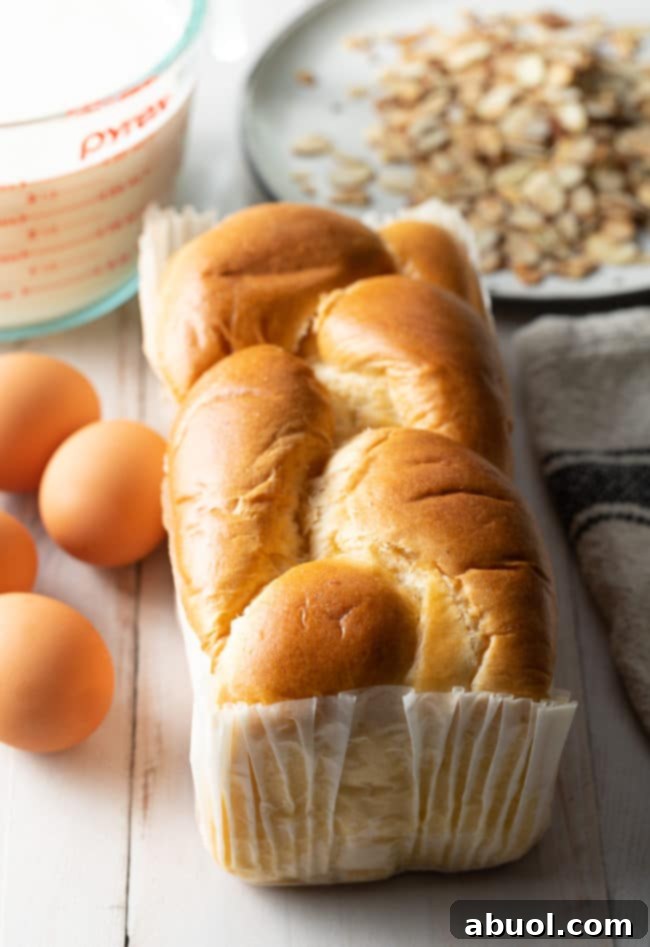
- Brioche Bread Loaf: The cornerstone of authentic Pain Perdu is unsliced brioche bread. Its rich, buttery, and slightly sweet nature provides the perfect foundation for soaking up the custard. Slicing it yourself ensures you get thick, generous pieces (approximately 1 inch) that will maintain their structure and achieve that sought-after pillowy interior. If brioche is unavailable, challah bread is an excellent alternative due offering a similar rich, dense crumb. Avoid thin sandwich bread, as it often results in a flimsy, less satisfying texture.
- Half & Half: For a truly decadent and custard-like French toast, full-fat half & half is non-negotiable. While some recipes suggest a blend of whole milk and heavy cream, half & half offers the perfect fat content and richness in a single, convenient carton, saving both time and money. This richness is key to preventing a dry or eggy interior and creating a velvety mouthfeel.
- Egg Yolks: This is a crucial secret to avoiding an “eggy” Pain Perdu. By using only egg yolks, we eliminate the whites, which can contribute to a rubbery texture. The pure, silky quality of the yolks is what creates that ideal, creamy custard consistency that distinguishes true Pain Perdu. Don’t worry about the leftover egg whites; they can be saved for another recipe like meringues or an egg white omelet!
- Granulated Sugar: A measured amount of sugar sweetens the French toast just enough to make it a delicious stand-alone dish, without needing an overwhelming amount of syrup. The sugar also aids in achieving that beautiful caramelized crust during cooking.
- Vanilla Extract: Just a generous splash of pure vanilla extract infuses the custard with a delicate, aromatic flavor that is central to authentic Pain Perdu. This simple addition elevates the overall taste profile significantly.
- Salt: A small pinch of salt works wonders in balancing and enhancing all the other flavors. It prevents the dish from tasting flat and brings out the subtle sweetness and richness of the brioche and custard.
- Unsalted Butter: You’ll need butter to fry the Pain Perdu. Using unsalted butter allows you to control the overall saltiness of the dish, and it contributes to the irresistible golden-brown crust and rich flavor.
Crafting the Perfect Pain Perdu: A Step-by-Step Guide
Ready to create a truly unforgettable breakfast or brunch experience? Let’s walk through the simple steps to making the best French toast:
- Preheat Your Oven: Begin by preheating your oven to a low temperature, around 275°F (135°C). This crucial step serves two purposes: it keeps your first batches of French toast warm while you continue cooking, and it gently “finishes off” the cooking process, ensuring the interior is perfectly set and pillowy without being raw. Lay a large baking sheet with parchment paper to prevent sticking.
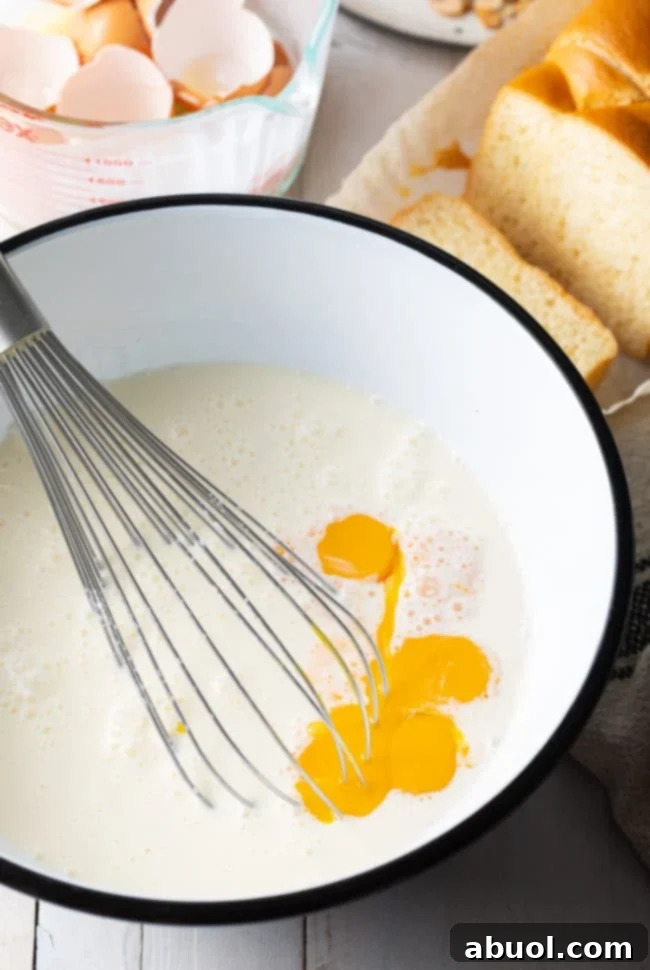
- Whisk the Custard Mixture: In a shallow dish or a wide bowl, combine the half & half, egg yolks, granulated sugar, vanilla extract, and a pinch of salt. Whisk vigorously until all ingredients are thoroughly combined and the sugar has completely dissolved. The mixture should be smooth and uniform, forming a rich custard base for your bread.
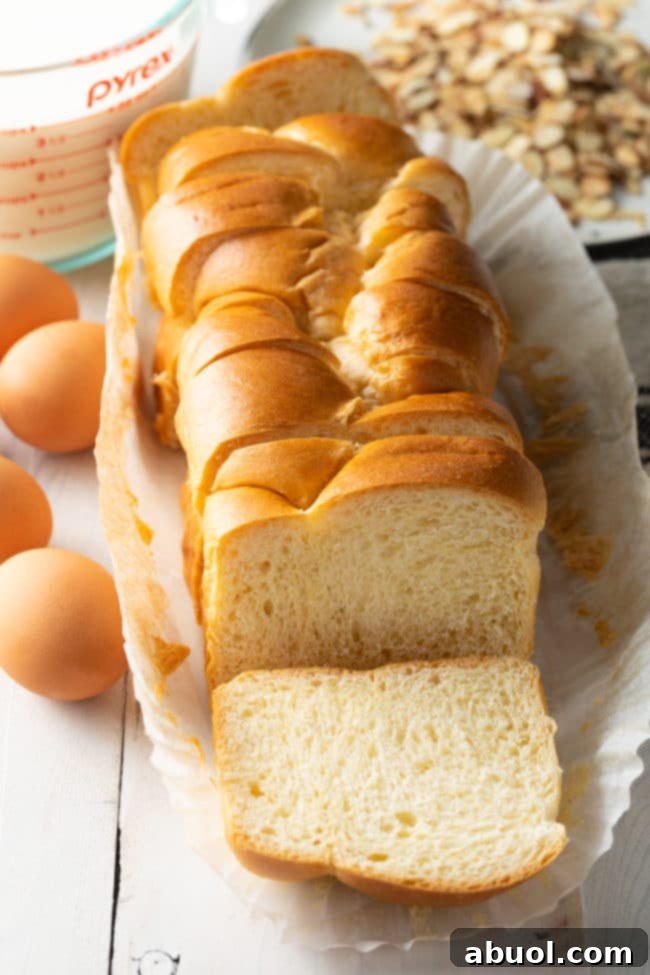
- Slice the Brioche: Using a sharp serrated knife, slice your unsliced brioche loaf into thick pieces, ideally about 1 inch (2.5 cm) in thickness. These substantial slices are key to achieving the desired crispy exterior and moist, custard-like interior. Contrary to popular belief, you don’t necessarily need day-old bread for Pain Perdu; fresh brioche works wonderfully as long as it’s thick enough to hold its shape after soaking.
- Prepare the Skillet: Place a large skillet, preferably a heavy-bottomed cast iron or non-stick pan, over medium heat. Allow it to heat up for a minute or two, then add 1-2 tablespoons of butter, depending on the size of your skillet. Swirl the butter to coat the bottom of the pan evenly as it melts and begins to lightly foam.
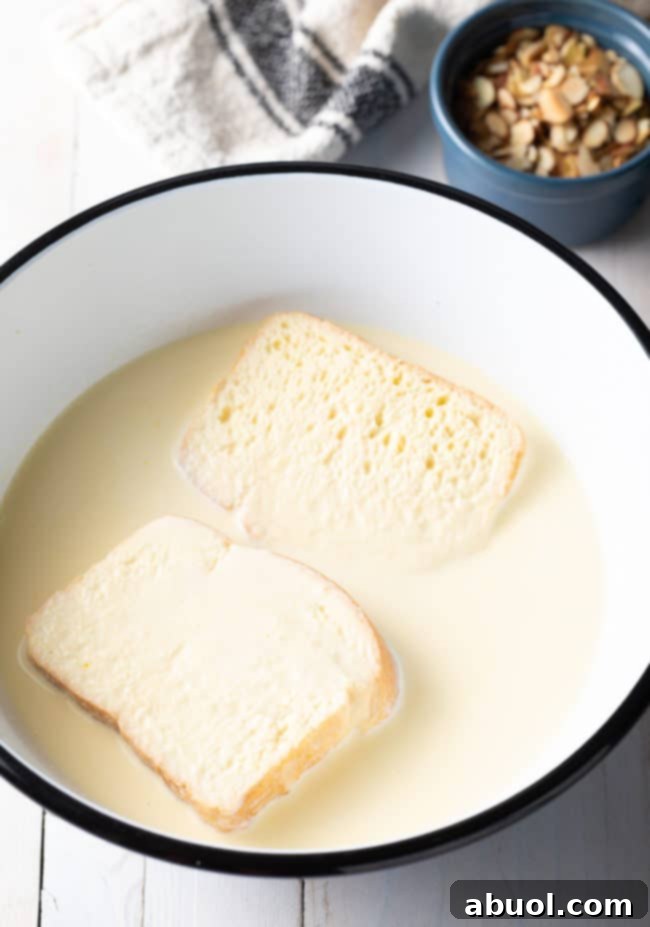
- Soak the Brioche: Submerge 2-3 slices of brioche (or as many as comfortably fit without overcrowding your skillet) into the prepared egg custard mixture. Let them soak for approximately 30-60 seconds per side, flipping to ensure even saturation. The bread should absorb enough liquid to feel heavy and fully saturated but not so much that it starts to fall apart. This balanced soaking time is key to achieving that desirable custard-like center.
- Fry to Golden Perfection: Gently transfer the soaked bread slices from the custard mixture to the hot, buttered skillet. Fry the French toast for 2-3 minutes per side, or until each side is beautifully golden brown and crispy. Keep a close eye on the heat; if the exterior is browning too quickly, reduce the heat slightly to medium-low. This allows the heat to penetrate and cook the interior thoroughly without burning the outside.
Pro Tip for French Toast Perfection: The hallmark of truly exceptional Pain Perdu is a beautifully golden and crispy exterior that encases a soft, pillowy, custard-like center. It should be moist and rich, but never raw or soggy. Achieving this balance requires careful heat management and adequate soaking. Trust the process, and don’t rush the frying!

- Keep Warm in the Oven: As each batch of French toast is cooked to golden perfection, transfer it to the prepared baking sheet in the preheated oven. This low heat helps to keep the pieces warm and also allows them to gently puff up, preventing any potential sogginess and ensuring the center continues to cook to that ideal custard consistency.
- Repeat the Process: Add a fresh pat of butter to the skillet, and if there’s any dark residue from previous batches, quickly wipe the skillet clean with a paper towel before adding new butter. Continue soaking and frying the remaining thick slices of brioche until all the bread is cooked. Place each new batch in the oven to join the others, keeping everything warm and perfectly prepared for serving.
Advanced Pro Tip: The oven step is paramount and should never be skipped. Placing your Pain Perdu in the oven under low heat not only ensures warmth but also acts as a gentle finishing oven. This subtle heat continues to cook the interior, transforming it into an even more pronounced “custard cloud” and giving it a delightful puffy texture. It’s your insurance against an undercooked center and guarantees every bite is melt-in-your-mouth delicious.
Experience the unparalleled delight of this authentic Pain Perdu recipe. Dive into the full printable recipe below!

Elevate Your Pain Perdu: Delicious Topping Ideas
One of the beauties of this authentic Pain Perdu recipe is that its balanced sweetness and rich flavor mean it truly needs no adornment. It’s absolutely delightful served plain, allowing the exquisite brioche and vanilla custard notes to shine.
However, if you wish to add an extra layer of indulgence or a touch of personal flair, feel free to complement your perfect French toast with any of these delicious additions:
- Maple Syrup: A classic choice, pure maple syrup adds a touch of natural sweetness and earthy warmth.
- Powdered Sugar: A delicate dusting provides an elegant finish and a subtle extra sweetness.
- Whipped Cream: Light and airy, a dollop of fresh whipped cream adds a creamy texture contrast.
- Toasted Nuts: Almonds, pecans, or walnuts, lightly toasted, offer a delightful crunch and nutty flavor.
- Fresh Fruit: Seasonal berries like blueberries, raspberries, and blackberries, or sliced peaches and strawberries, introduce a burst of freshness and vibrant color.
- Caramel Sauce: A drizzle of rich, buttery caramel sauce takes this decadent dish to another level of sweetness.
- Chocolate Shavings: For the chocolate lovers, a sprinkle of fine chocolate shavings adds a sophisticated touch.

Frequently Asked Questions About Pain Perdu
The primary distinction between standard French toast (often American-style) and authentic Pain Perdu lies in their foundational philosophy, preparation, and resulting texture. American French toast typically uses thinner sandwich bread and a simpler egg-and-milk batter, sometimes heavily spiced with cinnamon and nutmeg. While delicious, it can often be inconsistent, ranging from overly eggy to dry, and almost always requires generous toppings like syrup to enhance its flavor.
Pain Perdu, meaning “lost bread,” is a French culinary tradition focused on transforming stale or rich bread into something exquisite. It uses thick slices of brioche or challah, deeply soaked in a luxurious, vanilla-infused custard made predominantly with egg yolks and half & half (or cream). The result is a truly remarkable dish with a deeply caramelized, crispy exterior and an incredibly soft, moist, and pillowy custard-like interior that truly melts in your mouth. Its inherent sweetness and delicate flavors are perfectly balanced, making it a standalone indulgence that often needs no additional embellishments.
Absolutely not! A perfectly executed Pain Perdu should never be soggy. The ideal texture is a deeply saturated, pillowy, and tender custard interior that is wonderfully moist, but not wet or undercooked. This texture is indeed moister and richer than many traditional American French toast recipes, which can sometimes be “bready” in the middle. The key is in the cooking technique: ensuring the heat is just right to allow the exterior to caramelize beautifully while the interior slowly transforms into that soft, cloud-like custard. If you find your French toast leaning towards soggy, it might be due to insufficient cooking time at the right temperature or not allowing it to finish in the oven.
The indication of perfectly cooked Pain Perdu is a visual and textural harmony: a golden-brown, crispy crust on the outside, and a soft, pillowy, custard-like interior that is cooked through, not raw. If your French toast is browning too quickly on the outside, it’s a sign that your skillet heat is too high. Reduce it to medium-low to allow the interior more time to cook evenly. A crucial step for achieving this balance is placing the cooked pieces on a baking sheet in a low oven (around 275°F or 135°C). This low, gentle heat allows the internal temperature to rise slowly, ensuring the custard sets perfectly and preventing sogginess, while also keeping your French toast delightfully warm.
The purpose of placing the Pain Perdu in the oven is primarily to keep it warm and allow the internal custard to fully set and puff up slightly. A few minutes of “dry time” in the oven as you finish cooking subsequent batches is generally sufficient. Aim for about 5-10 minutes, or up to 20 minutes if you prefer a slightly puffier texture and need to ensure the centers are thoroughly cooked. This is a very important step for achieving the ideal final texture and shouldn’t be overlooked.
Absolutely! To make this Pain Perdu lactose-free while maintaining its rich, custard-like consistency, I highly recommend using thick, full-fat canned coconut milk. Its creamy texture closely mimics that of half & half, making it an ideal dairy-free substitute. Avoid thinner dairy-free milks like almond milk or oat milk, as they typically won’t provide the necessary richness for that signature custard interior. Pair the coconut milk with a plant-based butter alternative for frying, and you’ll have a delicious lactose-free Pain Perdu that doesn’t compromise on flavor or texture.
While Pain Perdu is undeniably at its peak when enjoyed fresh from the skillet and oven, leftovers can be stored. Place any extra French toast slices in an airtight container in the refrigerator for up to 3 days. To reheat, avoid the microwave if possible, as it can make the French toast rubbery or soggy. The best method is to reheat the slices in a toaster oven or a regular oven at 300°F (150°C) for about 10-15 minutes, or until warmed through and the exterior crispness returns. You can also briefly warm them in a lightly buttered skillet over medium-low heat until heated through.

Explore More Delightful Breakfast & Brunch Recipes!
If you’ve enjoyed mastering the art of Pain Perdu, you’ll love exploring these other fantastic breakfast and brunch ideas from our collection. Expand your morning repertoire with these delicious and easy-to-follow recipes:
- Best Air Fryer French Toast Sticks
- Easy Almond Flour Pancakes
- Hearty Sweet Potato Hash
- Tropical Breakfast Muffins
- Savory Egg White Frittata with Spinach and Peppers
- Creamy Budwig Cheese Spreads
- Fluffy Spinach Scrambled Egg Muffins
- Classic Corned Beef Hash with Horseradish Cream
- Delightful Cinnamon Twist Recipe
- Wholesome Ginger Blackberry Muffins
- Easy Cheater Kouign Amann
- Elegant Bruleed Grapefruit
- Flavorful Greek Omelette Casserole
Ready to make the best breakfast ever? Get the full printable recipe for Pain Perdu below!

Print Recipe
Leave a Review »
How To Make French Toast (Pain Perdu)
Cook Time: 24 minutes
This recipe guides you to make the BEST French Toast (authentic Pain Perdu) with an incredibly crispy exterior and a lush, custard-like interior. An easy recipe that will truly amaze you!
Ingredients
- 1 loaf brioche bread, unsliced (for 1-inch thick slices)
- 3 cups half & half (full-fat for best results)
- 5 large egg yolks (separate from whites)
- 1/2 cup granulated sugar
- 1 teaspoon pure vanilla extract
- 2 pinches fine sea salt
- 6 tablespoons unsalted butter, divided
- Possible Toppings: Toasted almonds, fresh berries, powdered sugar, maple syrup, caramel sauce, chocolate shavings
Instructions
- Preheat your oven to 275°F (135°C). Line a large baking sheet with parchment paper to keep the cooked French toast warm.
- In a shallow bowl or dish, whisk together the half & half, egg yolks, sugar, vanilla extract, and salt. Continue whisking until the sugar is fully dissolved and the mixture is well combined.
- Using a serrated knife, slice the brioche loaf into ten 1-inch (2.5 cm) thick slices.
- Place a large skillet (cast iron or heavy-bottomed non-stick recommended) over medium heat. Once hot, add 1-2 tablespoons of butter and allow it to melt and lightly foam, coating the pan evenly.
- Submerge 2-3 brioche slices into the custard mixture for 30-60 seconds per side, ensuring they are fully saturated but not falling apart. The bread should feel heavy from absorbing the custard.
- Carefully transfer the soaked brioche slices to the hot skillet. Fry for 2-3 minutes per side, until golden brown and crispy. If they brown too quickly, reduce the heat to medium-low to ensure the interior cooks thoroughly.
- Move the cooked French toast slices to the prepared baking sheet in the preheated oven to keep warm and allow them to gently puff up.
- If necessary, wipe out any dark residue from the skillet with a paper towel and add more butter before cooking the next batch.
- Repeat the soaking and frying process with the remaining brioche slices, placing each finished batch in the oven to keep warm with the others.
- Serve your authentic Pain Perdu warm, either plain or with your preferred toppings like fresh berries, a light dusting of powdered sugar, or a drizzle of maple syrup. Enjoy!
Notes
The goal for perfect Pain Perdu is a golden, crispy exterior with a moist, custard-like, and pillowy interior that is cooked through, never raw. Adjust heat as needed to prevent burning.
Do not skip the oven step! Placing the cooked French toast in a low oven not only keeps it warm but also helps it to puff up and ensures the custard-like center fully sets, preventing any sogginess over time. It’s an essential part of achieving that irresistible texture.
Nutrition
Calories: 369 kcal,
Carbohydrates: 29 g,
Protein: 8 g,
Fat: 25 g,
Saturated Fat: 15 g,
Cholesterol: 201 mg,
Sodium: 327 mg,
Potassium: 104 mg,
Sugar: 10 g,
Vitamin A: 888 IU,
Vitamin C: 1 mg,
Calcium: 109 mg,
Iron: 1 mg
Cuisine: French
Cook It? Love It? Rate It!YOU can help this recipe RANK on Google – TAP 5 STARS so other hungry people can find it. Thank you!