
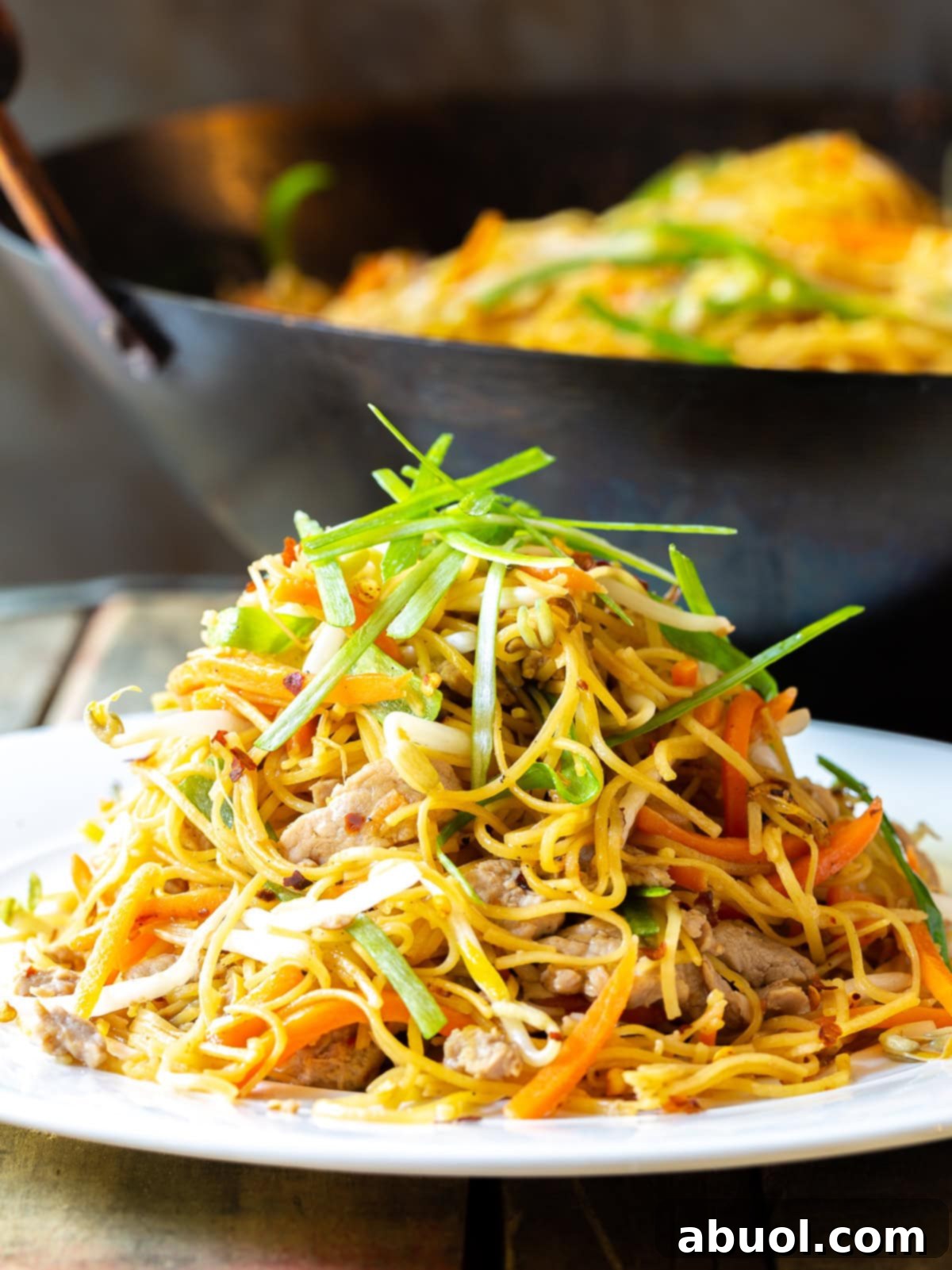
Pork Lo Mein (Cantonese Noodles) – Discover the ultimate pan-fried noodle experience with our savory, slightly spicy, and incredibly flavorful Pork Lo Mein recipe. Bursting with fresh vegetables and succulent stir-fried pork, this light yet satisfying dish comes together effortlessly in just 30 minutes, making it perfect for any weeknight meal!
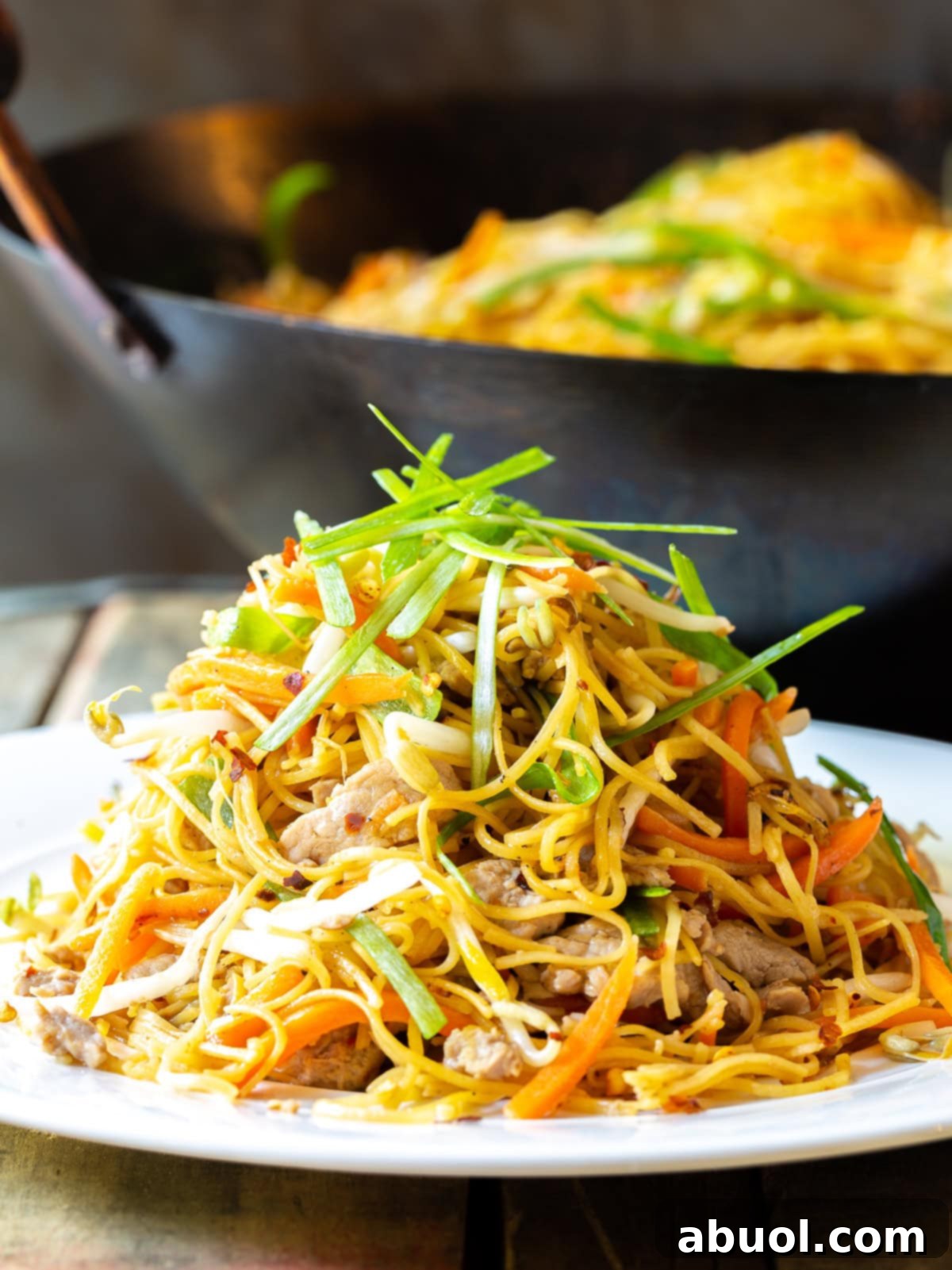
Pork Lo Mein (Cantonese Noodles): Your New Weeknight Favorite
Do you ever find yourself stuck in a dinner rut, cycling through the same few dishes week after week? It’s easy to gravitate towards quick, healthy options that help cut calories, or familiar comfort foods that guarantee no complaints from the kids. While having a repertoire of staple meals you can whip up without a recipe is certainly convenient, sometimes you crave something more exciting, a culinary adventure that breaks the monotony of everyday American comfort foods.
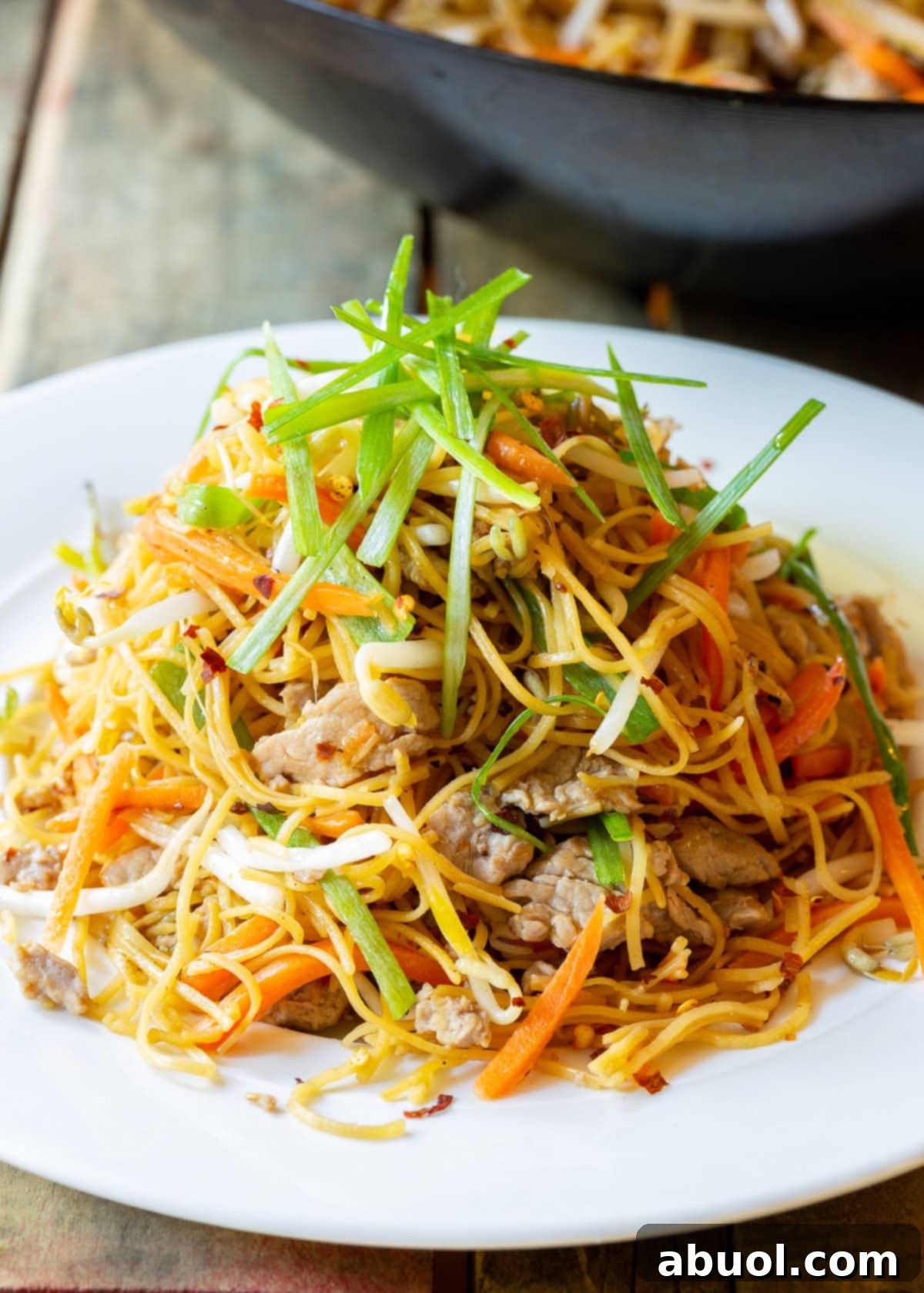
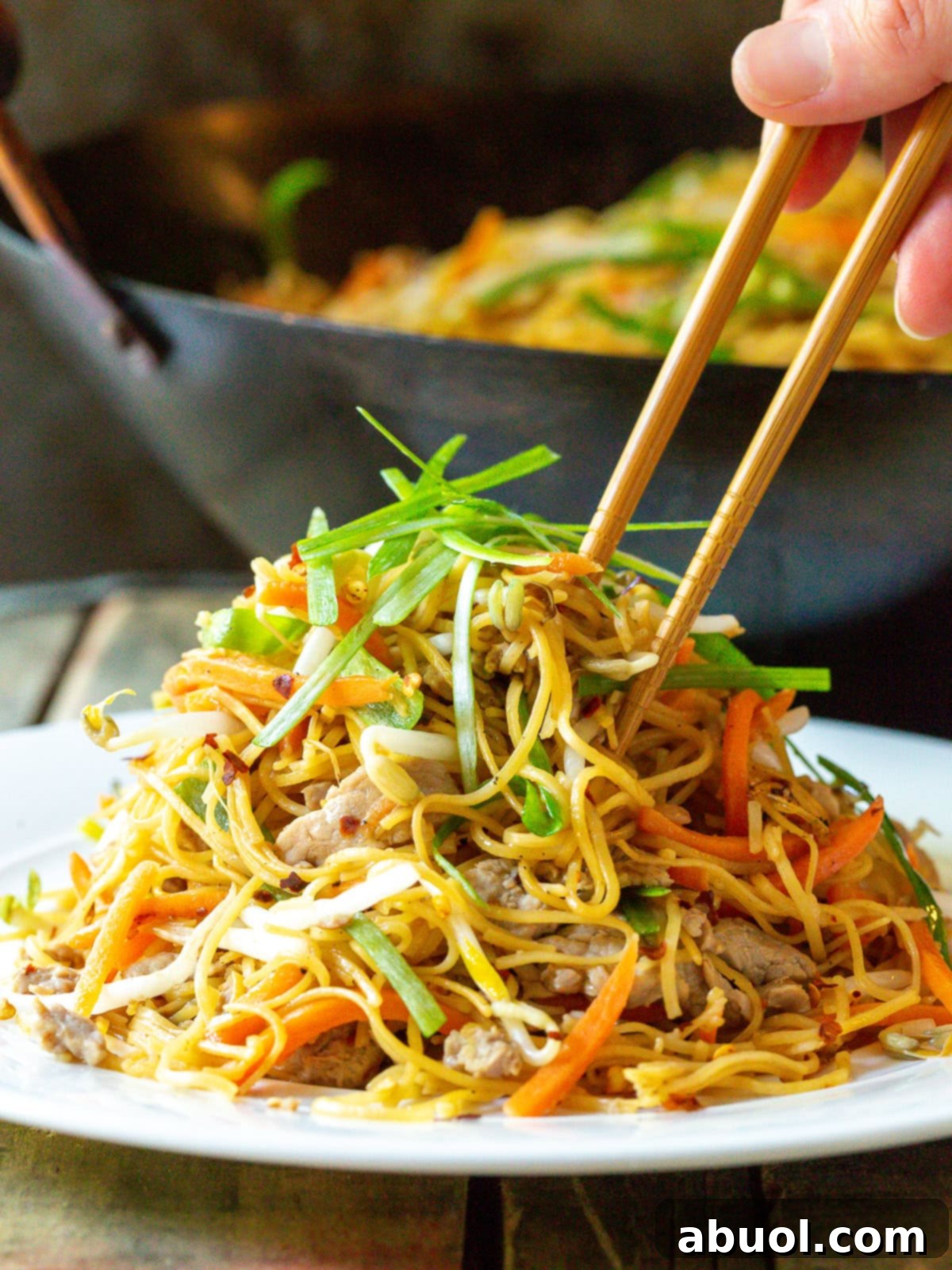
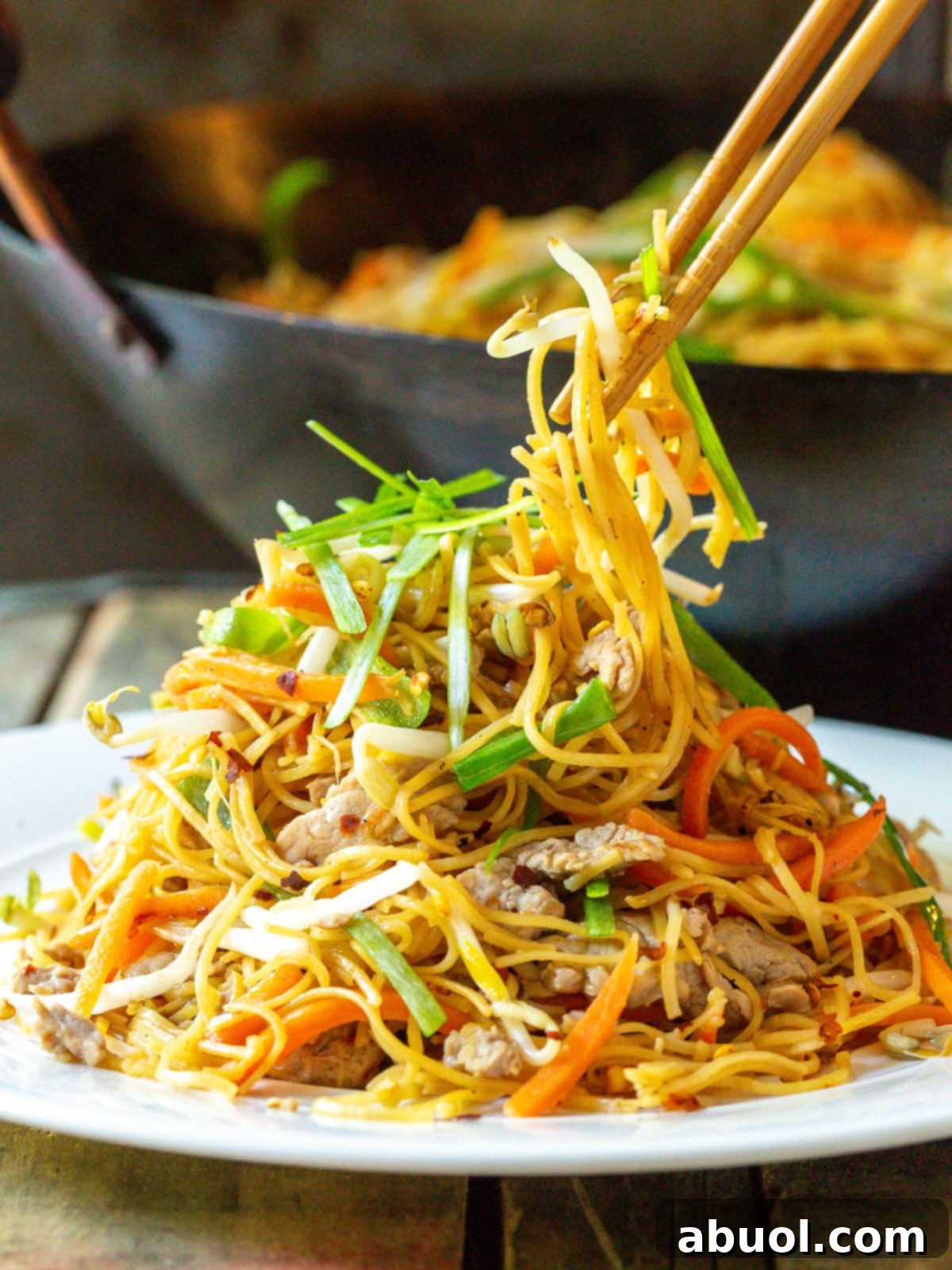
Today, we’re bringing you an authentic and vibrant solution: our Cantonese Pan-Fried Noodles, widely known as Pork Lo Mein. This dish is a delightful departure from predictable dinner options, offering a harmonious blend of textures and tastes. Imagine tender, stir-fried pork loin mingling with crisp scallions, sweet shredded carrots, and refreshing mung bean sprouts, all coated in a rich, savory, and slightly spicy sauce, intertwined with oodles of perfectly pan-fried egg noodles. It’s a complete meal that feels gourmet but is surprisingly simple to prepare!
What Makes Cantonese Pan-Fried Noodles So Special?
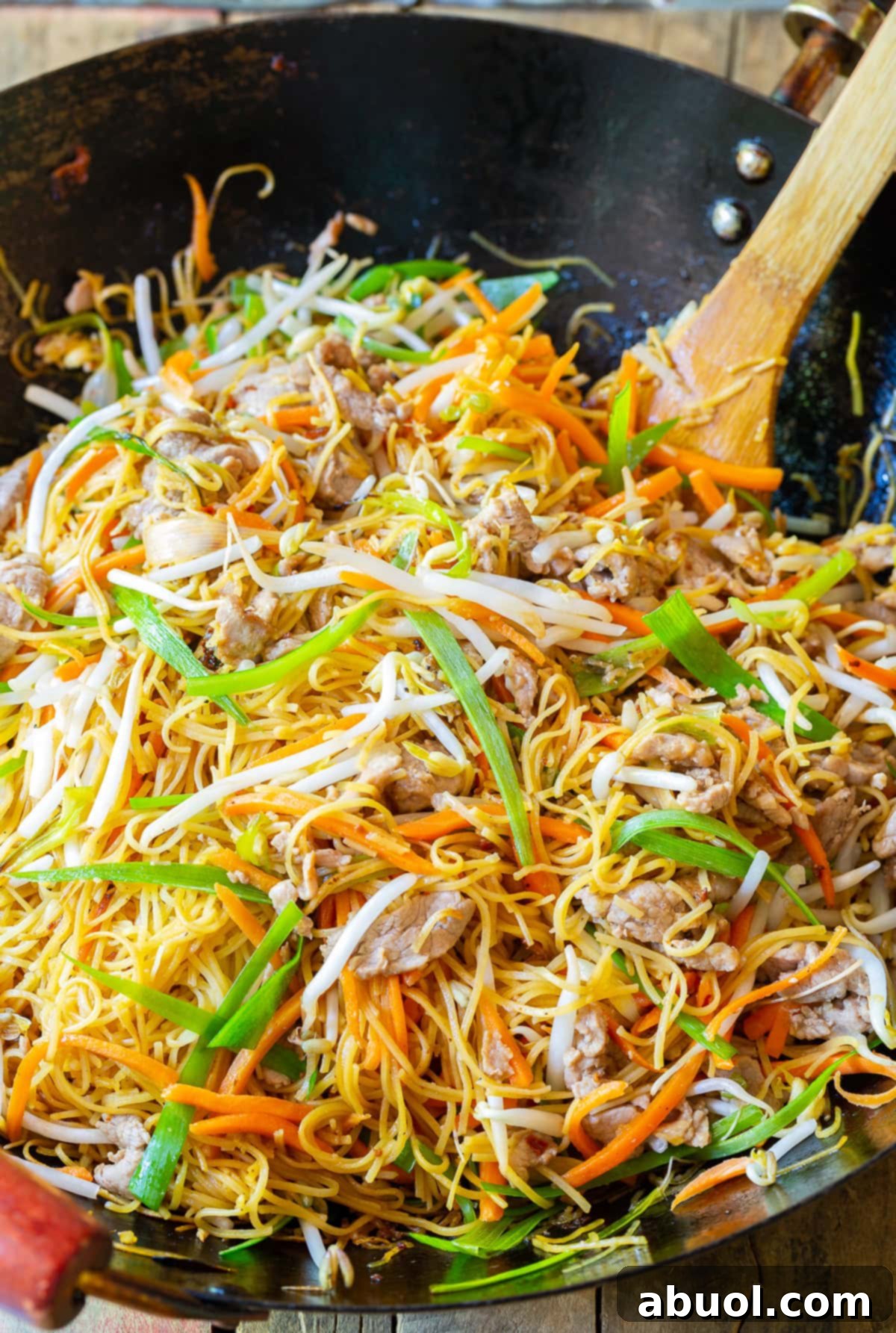
Cantonese Pan-Fried Noodles are more than just a meal; they’re an experience. Known for their distinct texture and robust flavor profile, these noodles are a staple in Chinese cuisine, particularly in the Guangdong province (Canton). Unlike some other noodle dishes where the noodles remain soft and simply tossed, pan-fried Cantonese noodles are first boiled until al dente, then briefly stir-fried in a hot wok. This dual cooking method gives them a wonderfully delicate yet slightly chewy texture with caramelized edges, allowing them to truly shine and absorb every drop of the flavorful sauce.
This recipe is designed to be a quick, satisfying meal that effortlessly feeds a hungry crowd, consistently earning rave reviews. It has the power to transform any ordinary weeknight into an exotic celebration, right in your own kitchen. Each thinly sliced piece of juicy pork tenderloin and every crisp-tender vegetable is perfectly balanced with the noodles, creating a symphony of flavors and textures. The magic happens as they perfectly absorb and hold onto all the spicy, salty, and utterly crave-able saucy goodness, making every bite an unforgettable delight. The fresh bean sprouts, added just before serving, provide a delightful, refreshing crunch that adds another layer of complexity you won’t be able to get enough of.
Essential Ingredients for the Best Pork Lo Mein
One of the beauties of this pan-fried noodles recipe is its versatility. While we love the classic pork version, it’s incredibly forgiving and adaptable to whatever protein or fresh produce you have on hand. Feel free to unleash your culinary creativity and mix it up with different meats or an array of colorful vegetables.
Traditionally, I prepare these Cantonese Noodles with tender pork, which offers a fantastic savory base. However, you can effortlessly swap it out for thinly sliced chicken breast, succulent shrimp, or even firm tofu for a vegetarian option. The key is to slice your chosen protein thinly to ensure quick and even cooking, allowing it to meld beautifully with the other ingredients.
Here’s a breakdown of the core ingredients that make our Pork Lo Mein truly exceptional:
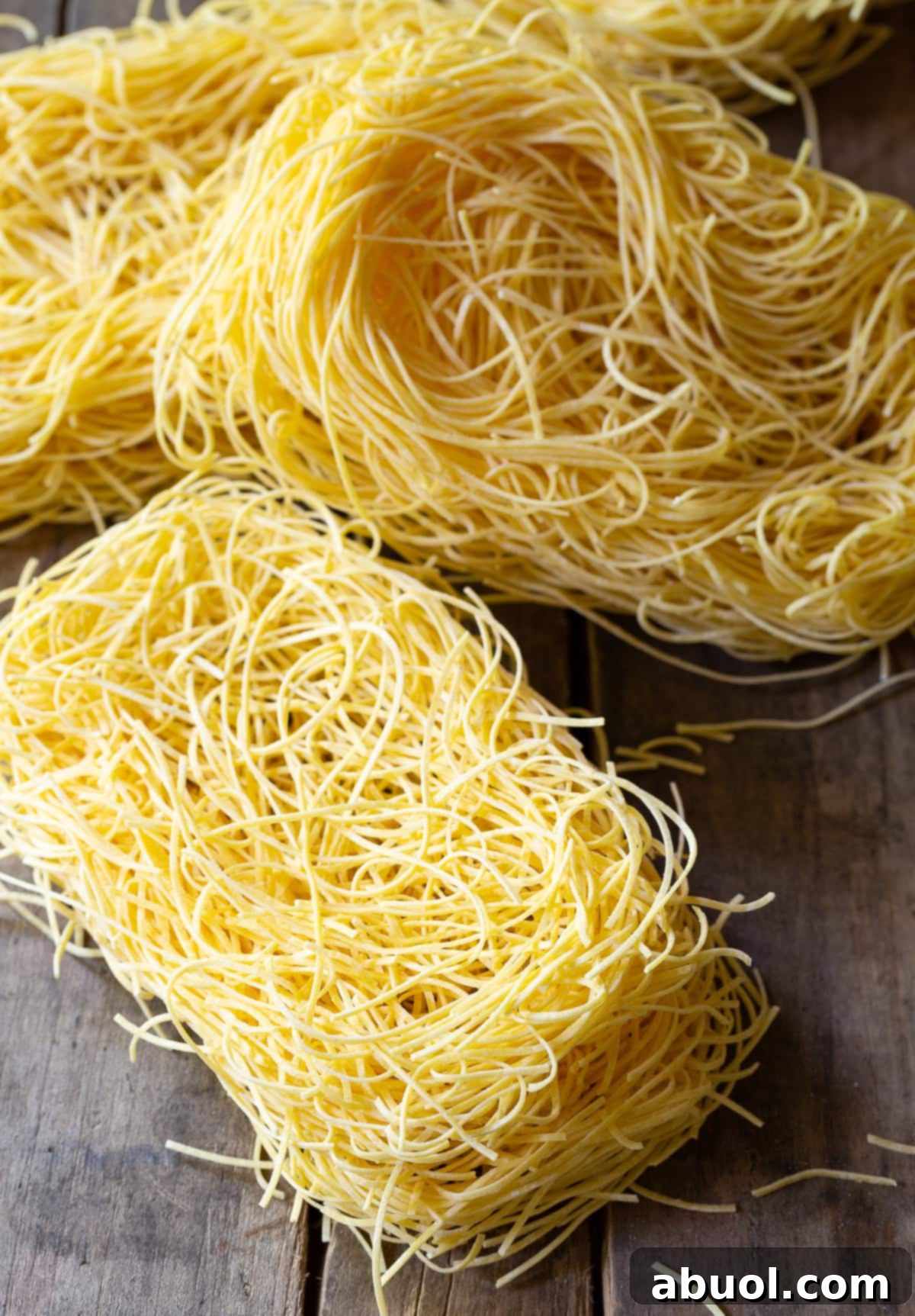
- Long Thin Egg Noodles: These are the backbone of any good Lo Mein. Opt for Hong Kong-style pan-fried noodles if possible for that authentic texture.
- Pork Loin: Lean, tender, and quick-cooking, pork loin thinly sliced is perfect for stir-frying.
- Mung Bean Sprouts: Adds a fresh, crisp texture and subtle sweetness when added at the very end.
- Shredded Carrots: Provides vibrant color, natural sweetness, and a lovely crunch.
- Scallions (Green Onions): Both the white and green parts are used, adding pungent aromatics and a fresh finish.
- Cornstarch: Used to tenderize the pork and thicken the sauce slightly, ensuring it clings beautifully to the noodles.
- Dark Soy Sauce: Essential for that deep, umami flavor and rich color characteristic of Lo Mein.
- Rice Wine: Adds a delicate tang and depth of flavor to the sauce. Shao Hsing wine is ideal.
- Sesame Oil: A finishing oil that imparts a distinctive nutty aroma and flavor.
- Oyster Sauce: Contributes a savory, slightly sweet, and incredibly complex umami profile. Don’t skip this for authentic flavor!
- Garlic: Freshly minced garlic is crucial for aromatic depth in any stir-fry.
- Crushed Red Pepper: Adds a gentle kick, allowing you to adjust the spice level to your preference.
- Coconut Oil: A high-heat oil suitable for stir-frying, adding a subtle tropical note, though any neutral high-smoke-point oil works.
Crafting Your Perfect Pork Lo Mein: A Step-by-Step Guide
Creating fabulous Pork Lo Mein is all about smart preparation and strategic stir-frying. The secret lies in mixing your soy-sauce-based dressing ahead of time, ensuring all the flavors have a chance to meld. Then, you’ll stir-fry the pork and vegetables separately, giving each ingredient the precise amount of attention and heat it needs to achieve perfection. Finally, everything comes together in a grand toss, ready to be served hot and fresh!
From start to finish, this incredibly satisfying dish takes approximately 30 minutes to prepare, making it a dream for busy weeknights. Here’s how to create the BEST Easy Cantonese Lo Mein Recipe in your own kitchen:
Preparation is Key: Before you even turn on the heat, gather and prepare all your ingredients. This is the golden rule of stir-frying, often called “mise en place,” and it will make the cooking process smooth and enjoyable.
Here’s a detailed step-by-step guide:
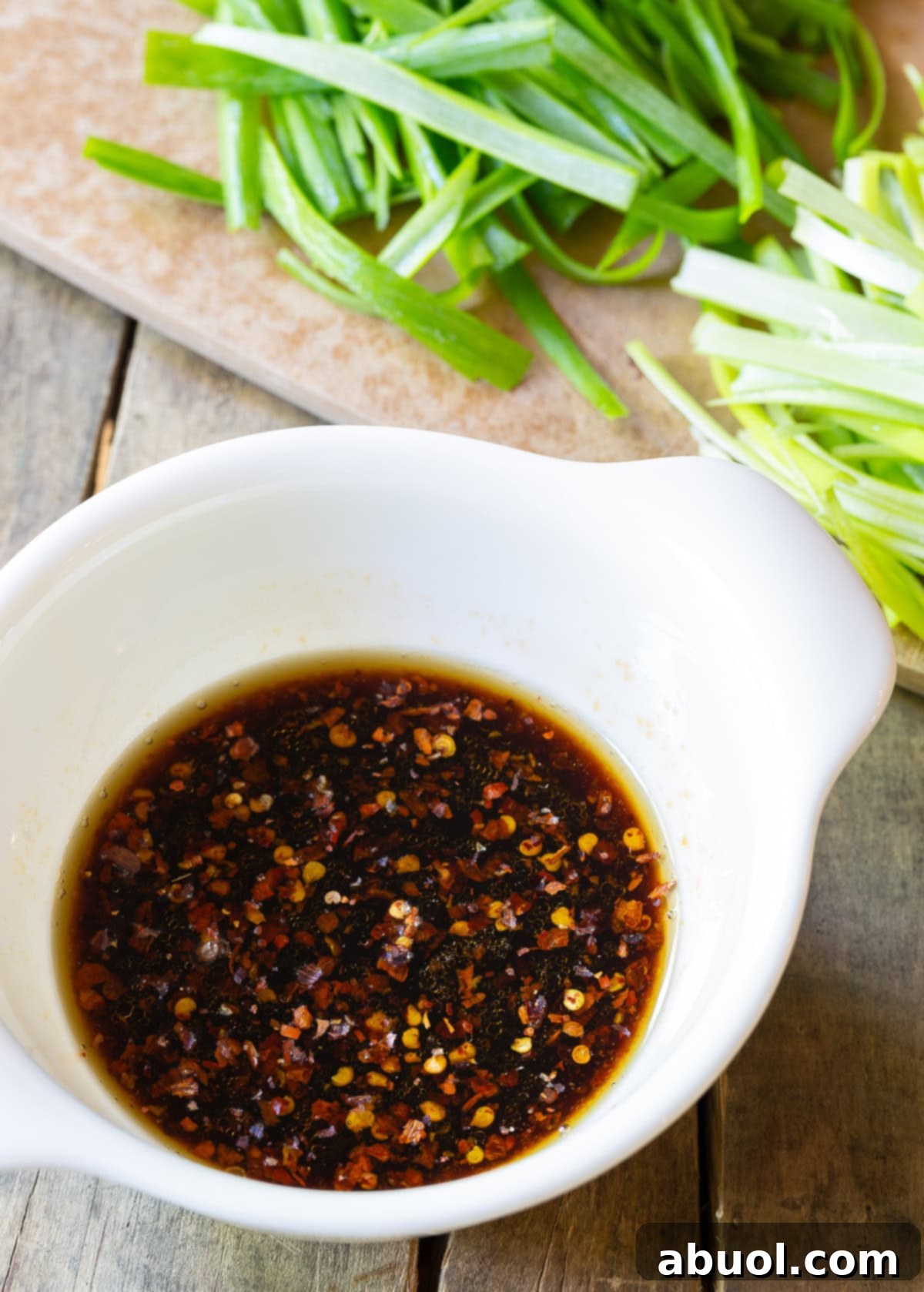
- Prep the Pork and Sauce: Begin by slicing your pork loin into paper-thin strips. The thinner the strips, the quicker and more evenly they will cook. In a medium bowl, sprinkle 1 tablespoon of soy sauce and 1 tablespoon of cornstarch over the pork. Toss thoroughly to ensure each strip is lightly coated; this velvets the pork, making it incredibly tender. Next, prepare your flavorful sauce. In a separate small bowl, whisk together the remaining soy sauce, rice wine, sesame oil, oyster sauce, minced garlic, and crushed red pepper. Whisk until well combined and set aside; this sauce is the heart of your Lo Mein.
- Prepare the Veggies: Cut the scallions into 1.5-inch sections, separating the white and green parts. The whites will be stir-fried with the carrots, while the greens will be added at the end for freshness. Ensure your carrots are shredded or cut into thin matchsticks for quick cooking.
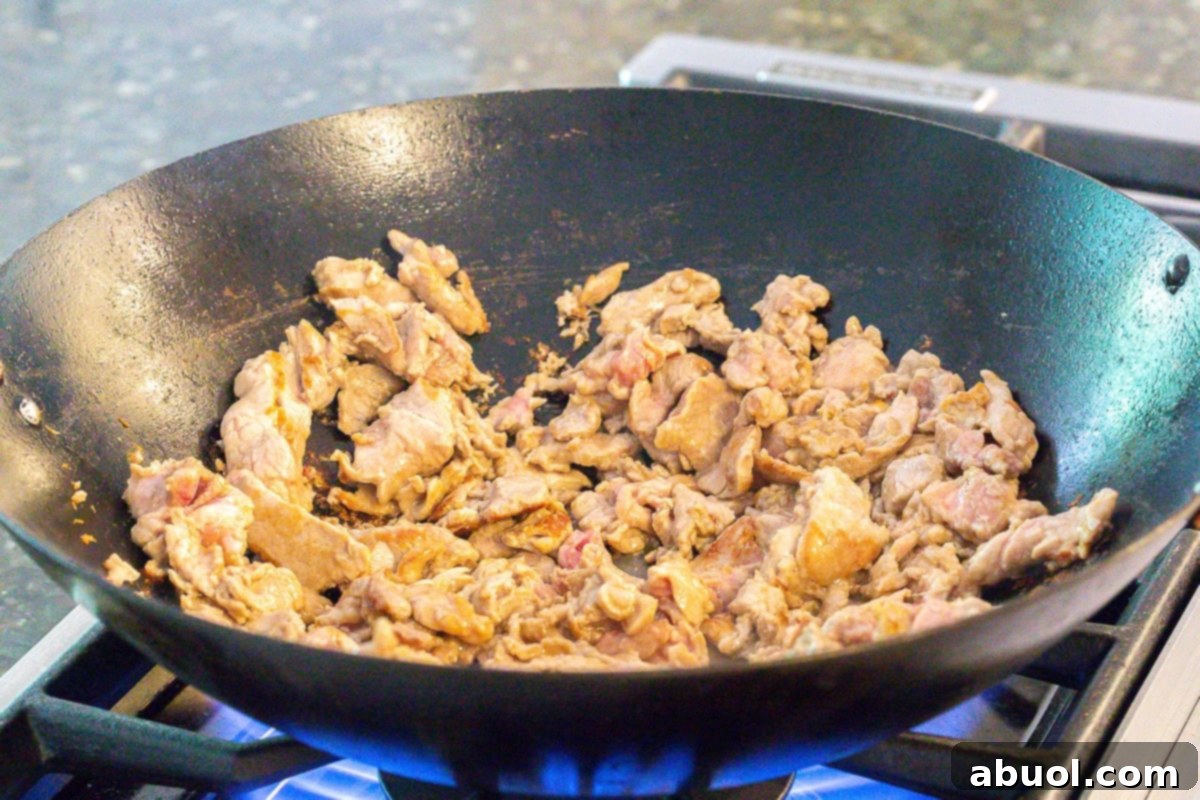
- Sear the Pork: Place a large pot of water on the stove and bring it to a rolling boil for the egg noodles. While the water heats, warm 1 tablespoon of coconut oil (or another high-smoke-point oil) in a wok or large skillet over medium-high heat until shimmering. Add the seasoned pork and stir-fry for just 2-3 minutes, until it’s cooked through and lightly browned. Avoid overcrowding the wok; cook in batches if necessary to ensure a good sear. Once cooked, transfer the pork to a clean plate or bowl and set aside.
- Cook the Egg Noodles: As the pork cooks, drop the long thin egg noodles into the boiling water. Cook them according to the package instructions, typically 2-3 minutes, until they are al dente. Drain them thoroughly and rinse quickly with cold water to prevent sticking, then set aside.
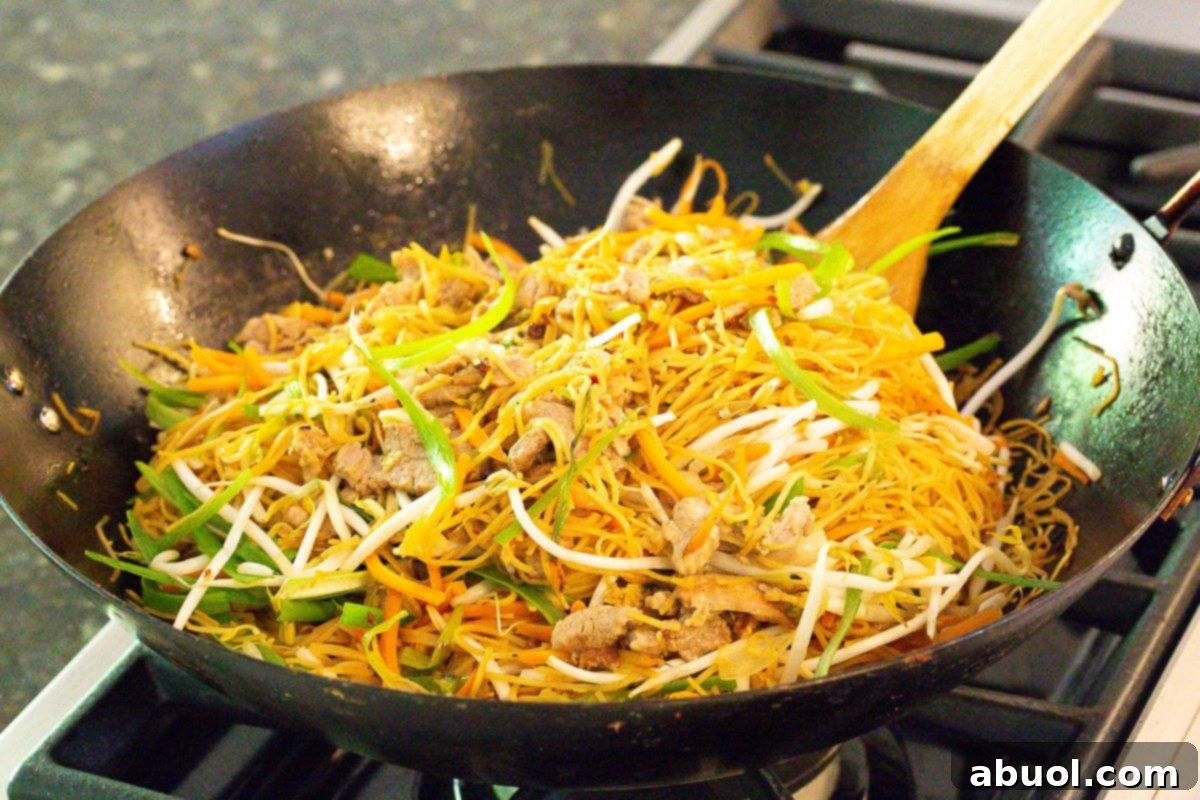
- Stir-Fry the Vegetables and Noodles: With the pork removed, add the remaining 1.5 tablespoons of coconut oil to the hot wok. Once it’s shimmering again, add the shredded carrots and the white parts of the scallions. Stir-fry for a quick minute, ensuring they remain crisp-tender. Now, add the cooked and drained egg noodles to the wok. Continue to stir-fry for another 2 minutes, allowing the noodles to get lightly golden and slightly crispy in places. Be sure to maintain a hot flame throughout the stir-frying process so the ingredients sizzle immediately upon contact with the wok, which helps develop that desirable smoky “wok hei” flavor.
- Combine and Finish: Return the cooked pork to the wok with the noodles and vegetables. Pour in your prepared soy sauce mixture. Continue to stir-fry for an additional 2-3 minutes, tossing everything together until all ingredients are hot and thoroughly coated in the rich, glossy sauce. Turn off the heat. Finally, stir in the green parts of the scallions and the fresh mung bean sprouts just before serving. This ensures they retain their vibrant color and delightful crunch, adding a fresh contrast to the warm noodles.
- Serve Warm: Transfer your glorious Pork Lo Mein to serving plates or a large platter immediately and enjoy!
This method ensures every component is cooked to perfection, resulting in a dish that’s far superior to any takeout and surprisingly simple to master. Enjoy the incredible flavors and textures of homemade Cantonese Pan-Fried Noodles!
Get the Complete Printable Cantonese Pan Fried Noodles (Pork Lo Mein) Recipe Below. Enjoy!
Meal Prep & Leftovers: Enjoying Your Cantonese Noodles for Days
One of the fantastic benefits of Cantonese Pan-Fried Noodles is how wonderfully they hold up as leftovers. This dish is a dream come true for meal prepping. In under 30 minutes, you can whip up a large batch, savor a delicious serving for dinner that night, and set yourself up with several healthy and utterly yummy weekday lunches. It’s a convenient way to ensure you have flavorful, home-cooked meals ready to go, saving you time and effort during busy workdays.
To store, simply transfer any leftover Pork Lo Mein into an airtight container and refrigerate. It will keep beautifully for up to 4 days. For the best experience, hold off on adding the fresh bean sprouts and scallion greens to the portions you plan to save until you’re ready to reheat and enjoy them. This way, they’ll maintain their crispness and fresh flavor, making your reheated meal taste almost as good as freshly made.
Cantonese Noodles Serving Suggestions
Pork Lo Mein is a complete and satisfying meal on its own, packed with protein, carbohydrates, and vegetables. However, if you’re looking to create a more elaborate feast, it pairs beautifully with a variety of classic Asian appetizers and side dishes. Here are some of my favorite suggestions to complement your Cantonese Noodles:
- Egg Drop Soup: A light, comforting, and quick-to-make soup that serves as a perfect starter.
- Wonton Soup: Hearty and flavorful, packed with delicious wontons.
- Keto Egg Rolls: A healthier twist on a classic, offering all the flavor without the carbs.
- Potstickers (Chinese Dumplings): Pan-fried to crispy perfection, these dumplings are always a crowd-pleaser.
- Steamed Vegetables: A simple side of steamed broccoli, bok choy, or snap peas can add extra freshness.
- Light Salad with Asian Dressing: A crisp green salad with a sesame-ginger vinaigrette offers a refreshing contrast.
Frequently Asked Questions About Pork Lo Mein
Are Cantonese Pan-Fried Noodles Gluten-Free?
The traditional version of this recipe, which calls for egg noodles, does contain gluten. However, making this dish gluten-free is quite simple! You can easily swap the egg noodles for rice noodles, which are naturally gluten-free. Additionally, ensure you purchase a certified gluten-free soy sauce (like tamari) to replace regular soy sauce. With these two substitutions, you can enjoy a deliciously tasty and completely gluten-friendly dish without compromising on flavor.
What Other Ingredients Could I Include or Substitute?
This recipe is wonderfully adaptable! You can significantly expand the variety of vegetables to enhance both nutrition and flavor. Sliced celery, earthy mushrooms, crunchy water chestnuts, tender baby corn, bell peppers, snow peas, or even bok choy are just a few examples of the many different vegetables you could add or swap into this easy recipe. For protein variations, use thinly sliced chicken breasts or whole peeled and deveined shrimp for a delicious pork-free version. If you’re aiming for a vegetarian or vegan-friendly dish, simply substitute thinly sliced extra-firm tofu (ensure it’s well-pressed first to remove excess water) in place of the pork, and use a vegetarian oyster sauce alternative if needed.
What Kind of Noodles Do You Use for Pork Lo Mein?
For the most authentic and delicious Pork Lo Mein, the best noodles to use are Hong Kong-style pan-fried noodles. These are specifically designed for stir-frying. You can find them dried or fresh in most Asian supermarkets, and either will work beautifully. What makes these noodles ideal is their thinner consistency compared to traditional thick lo mein noodles. This allows them to achieve a fantastic crisp texture when stir-fried in a hot wok, creating a delightful contrast with the tender interior and ensuring they perfectly absorb the savory sauce. While other egg noodles can work, these thin, Hong Kong-style varieties truly elevate the dish.
What’s the Difference Between Lo Mein and Chow Mein?
While often confused, Lo Mein and Chow Mein are distinct Chinese noodle dishes, primarily differing in how the noodles are prepared. Lo Mein (meaning “tossed noodles”) involves boiling the noodles until tender, then tossing them with the sauce, protein, and vegetables, often without much additional stir-frying of the noodles themselves. The noodles remain soft and supple. Chow Mein (meaning “fried noodles”), on the other hand, typically involves pan-frying or deep-frying the boiled noodles until they are crispy, either as a cake or individual strands, before or after combining them with other ingredients. Our Cantonese Pan-Fried Noodles lean more towards a Chow Mein style preparation due to the pan-frying step, which gives the noodles their signature delicate crispness.
Looking for More Delicious Asian-Inspired Dishes?
If you’ve enjoyed the flavors of our Pork Lo Mein, you’re in for a treat! Our collection of Asian-inspired recipes offers a wide array of options to satisfy your cravings, from classic stir-fries to comforting soups and delightful appetizers. Explore these other fantastic dishes:
- Potstickers (Chinese Dumplings)
- Easy Szechuan Beef
- Chicken Chop Suey
- Instant Pot Kung Pao Chicken
- Thai Baked Turkey Meatballs
- Panda Express Orange Chicken
- Instant Pot Chinese Sesame Chicken
- Homemade Lo Mein Recipe with Vegetables
- Black Pepper Chicken Stir Fry
- Chinese Hot Pot Recipe
Print Recipe
Leave a Review »
Pork Lo Mein (Cantonese Noodles)
Ingredients
- 10 ounces long thin egg noodles (Hong Kong Noodles)
- 1 pound pork loin
- 2 cups mung bean sprouts
- 1 1/2 cups shredded carrots
- 1 bunch scallions
- 1 tablespoons cornstarch
- 4 tablespoons dark soy sauce (divided)
- 1 1/2 tablespoons rice wine
- 1 1/2 tablespoons sesame oil
- 1 1/2 tablespoons oyster sauce
- 1-2 cloves garlic (minced)
- 1/2 teaspoon crushed red pepper
- 2 1/2 tablespoons coconut oil (for cooking)
Instructions
- Cut the pork loin into paper-thin pieces. Sprinkle 1 tablespoon soy sauce and 1 tablespoon cornstarch over the pork. Toss to coat. Cut the scallions into 1 1/2-inch sections, then slice into thin strips. In a small bowl mix the remaining soy sauce with the rice wine, sesame oil, oyster sauce, minced garlic and crushed red pepper. Whisk well.
- Place a large pot of water over high heat and bring to a boil. Place a wok (or deep skillet) over medium-high heat. Add 1 tablespoon of coconut oil to the wok. Add the pork and stir fry for 2-3 minutes until just cooked through. Remove the pork and set aside.
- Meanwhile drop the egg noodles into the boiling water and cook according to the package instructions, usually 2-3 minutes. Drain well.
- Add the remaining 1 1/2 tablespoons coconut oil to the wok. Once hot, add the shredded carrots and scallions whites. Stir fry for one minute, then add the noodles to the wok and stir fry for 2 more minutes.
- Add the pork and soy sauce mixture to the wok. Stir fry another 2-3 minutes. Then turn off the heat and mix in the scallions greens and mung bean sprouts. Serve warm.