
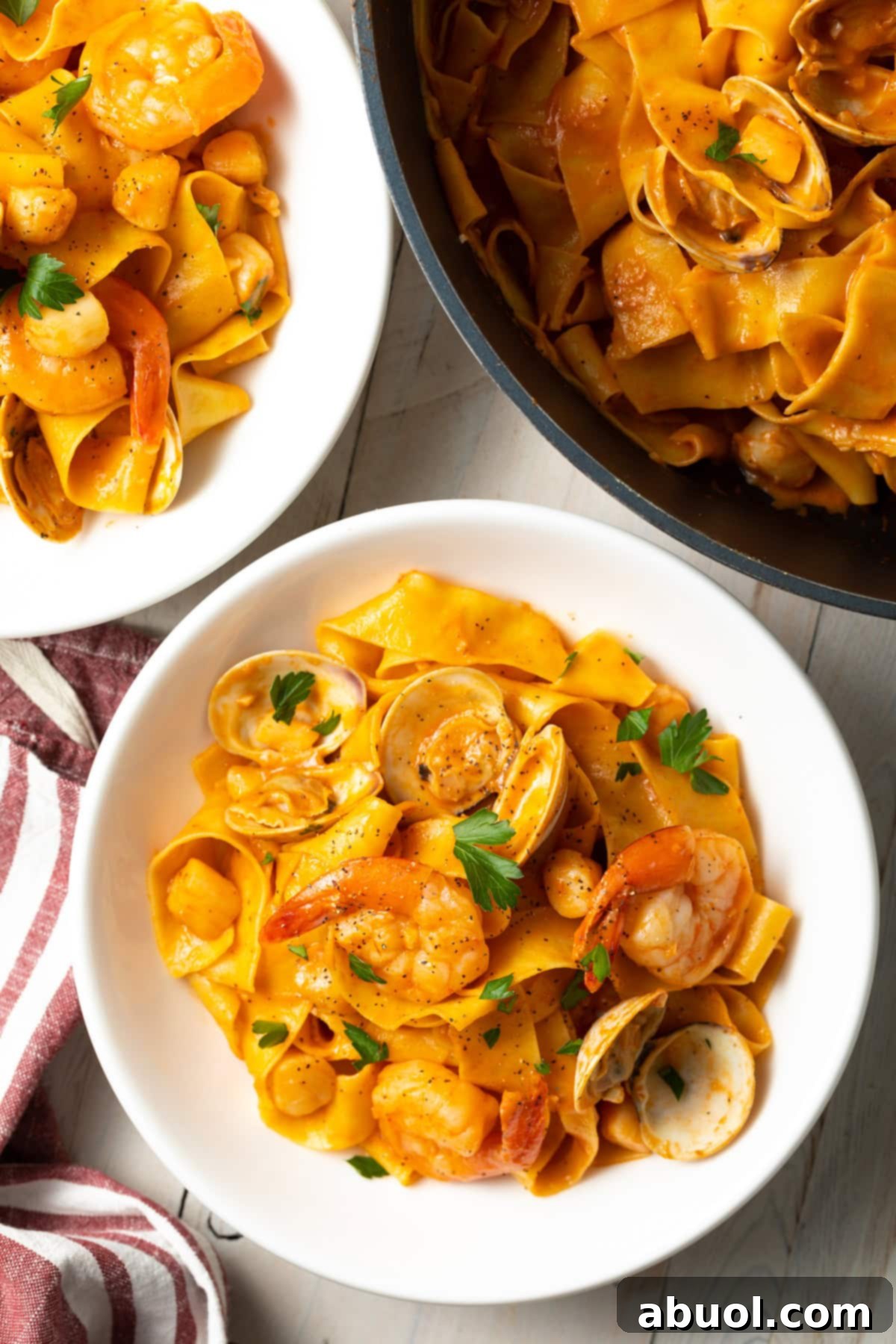
Easy & Delicious Seafood Pappardelle Pasta: Your Go-To Summer Recipe
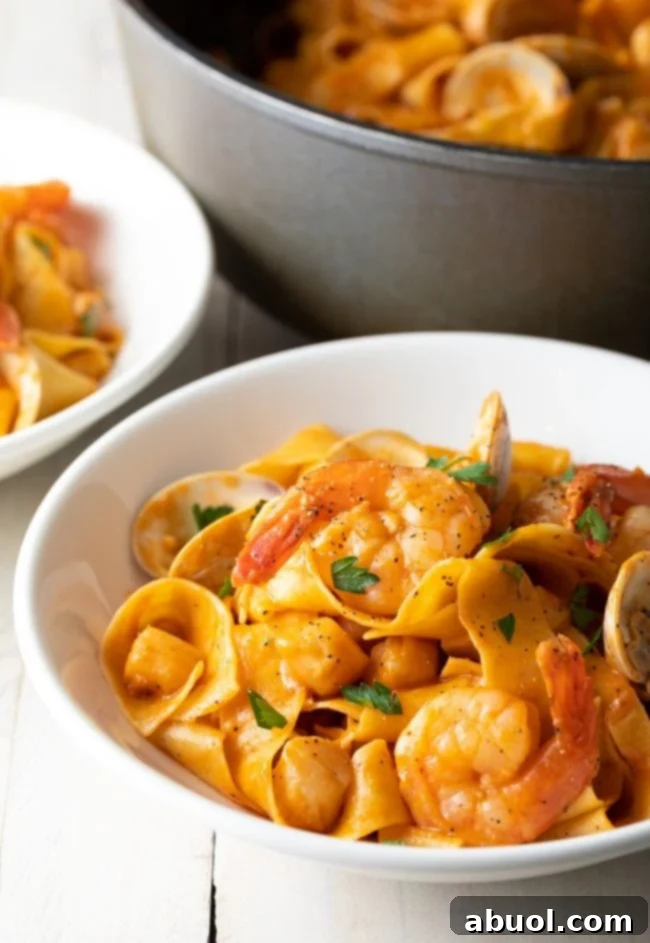
Imagine a dish that’s both effortlessly elegant and incredibly quick to prepare – a true culinary gem. Our Seafood Pappardelle recipe perfectly embodies this, offering a vibrant, easy, and utterly delicious pasta experience. This dish features luscious, wide egg noodles generously coated in a rich, creamy tomato sauce, brimming with the freshest shrimp, tender scallops, and succulent clams. It’s the ideal choice for a sophisticated yet speedy summer dinner, bringing the taste of a seaside Italian restaurant right to your kitchen table. With its fresh ingredients and delightful flavors, this recipe promises to be a staple for quick, impressive meals.
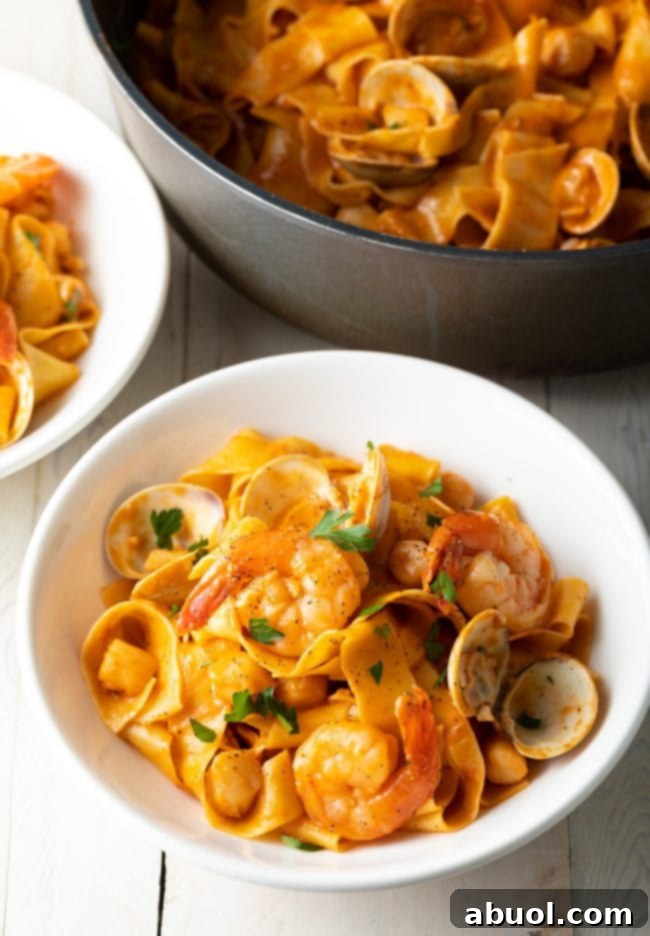
Why This Easy Seafood Pappardelle Recipe Will Become Your New Favorite
Before diving into the recipe, you might be curious: What exactly is pappardelle? Derived from the Italian verb pappare, meaning “to gobble up,” pappardelle noodles are a type of wide, flat egg pasta, originating from Tuscany. They are significantly broader than fettuccine, boasting a luxurious, slightly chewy texture that makes them an exceptional canvas for robust and creamy sauces. Unlike thinner pasta, their broad surface area is perfect for catching and holding every drop of a rich sauce, ensuring a symphony of flavor in every bite. Once you experience the delightful mouthfeel and superior flavor absorption of pappardelle, it’s destined to become a beloved staple in your pasta repertoire, much like our creamy Alfredo recipe.
This recipe distinguishes itself from typical seafood dishes that use simple dipping sauces. Instead, we create a light yet profoundly flavorful creamy tomato sauce, enhanced with dry white wine and infused with the delicate essence of fresh seafood. The combination of plump shrimp, tender scallops, and savory clams elevates the sauce, creating a harmonious blend that’s both comforting and bright. Despite its wonderfully vibrant and luxurious taste, reminiscent of a dish slow-simmered all day in a high-end restaurant, this Pappardelle Pasta with Seafood Sauce remarkably comes together in just about 15-20 minutes from start to finish. It’s the ultimate solution for a quick weeknight dinner that feels incredibly special and impresses guests with minimal effort.
Our goal with this recipe is to demystify gourmet cooking, proving that exquisite meals don’t require hours in the kitchen. The secret lies in fresh, high-quality ingredients and a few simple techniques that unlock immense flavor. This dish is particularly suited for warmer months, offering a satisfying yet not overly heavy meal that feels indulgent without being cumbersome. The bright acidity of the tomatoes, the fresh herbs, and the delicate sweetness of the seafood create a perfect balance that’s both refreshing and deeply satisfying. Prepare to impress your family and friends with this deceptively simple, utterly captivating seafood pasta that celebrates the best of summer flavors.
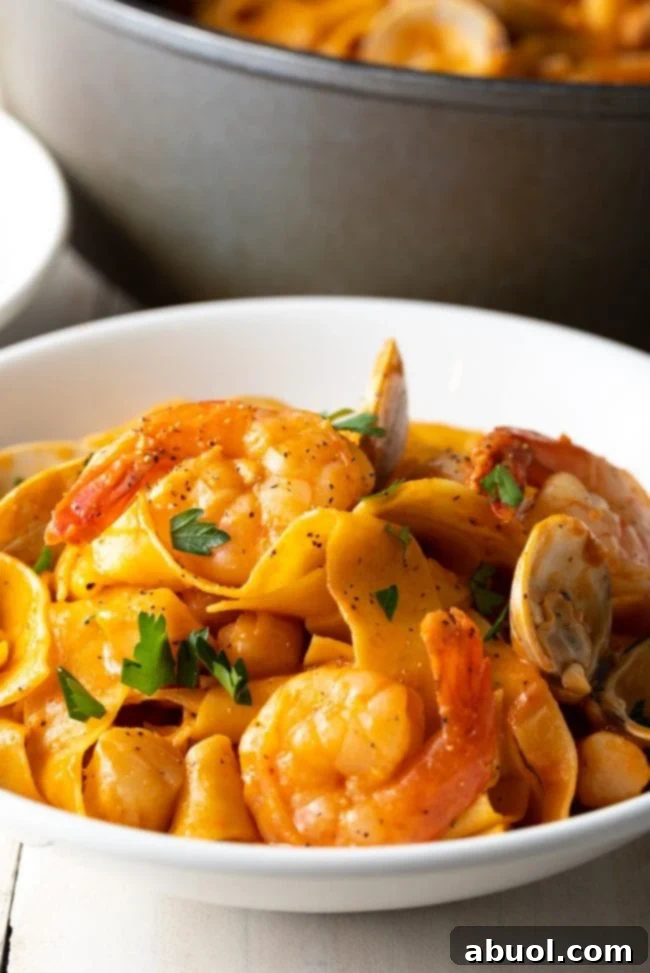
Essential Ingredients for Your Perfect Seafood Pappardelle
Crafting an incredible seafood pasta begins with selecting fresh, simple, and wholesome ingredients that come together to create an explosion of bright flavors. Here’s a detailed look at what you’ll need to make the most memorable Seafood Pappardelle Pasta with Creamy Tomato Sauce:
- Pappardelle Noodles: The star of our pasta dish! These wide, flat egg noodles are truly the perfect vessel for absorbing and showcasing the rich, comforting seafood tomato sauce. While dried pappardelle is widely available and works wonderfully, if you can find fresh pappardelle, it will elevate the dish even further with its tender texture and quicker cooking time. Look for good quality Italian brands for the best results, ensuring the noodles are thick enough to stand up to the hearty sauce.
- Unsalted Butter: We opt for unsalted butter to give you complete control over the seasoning of your dish. Butter forms the flavorful base for sautéing the aromatics and seafood, imparting a rich, luxurious taste and a beautiful golden color that olive oil alone can’t quite match.
- Fresh Garlic: Minced fresh garlic is indispensable for building the aromatic foundation of this sauce. Its pungent, sweet flavor becomes mellow and fragrant when sautéed, providing a crucial depth that complements the seafood beautifully. Always choose fresh garlic over pre-minced jarred versions for the most vibrant and authentic taste.
- Mixed Seafood: For an exquisite flavor profile, we recommend a trio of fresh shrimp, tender scallops, and delicate littleneck clams.
- Shrimp: Choose medium to large raw shrimp, peeled and deveined. Fresh shrimp offers a sweet, succulent bite and turns pink when perfectly cooked.
- Scallops: Opt for small sea scallops or bay scallops for quick cooking and a naturally sweet, tender texture. Ensure they are dry before cooking to get a good sear.
- Clams: Littleneck clams add a briny, oceanic depth and release their delicious juices into the sauce as they open, enhancing the overall seafood flavor. Ensure they are scrubbed clean before cooking to remove any grit.
- Variations: Feel free to customize your seafood selection. Mussels, firm white fish (like cod or snapper), or even calamari rings can be excellent additions or substitutions, just adjust cooking times accordingly.
- Canned Tomato Sauce: A good quality canned or jarred tomato sauce forms the backbone of our creamy base. Look for pure, unsweetened tomato sauce or passata (strained tomatoes) for the cleanest flavor and smoothest texture. Crushed tomatoes can also work if you prefer a chunkier, more rustic sauce.
- Dry White Wine: A dry white wine, such as Sauvignon Blanc or Pinot Grigio, adds a wonderful layer of acidity and complexity to the sauce. It helps to deglaze the pan, unlocking deeper flavors, and its alcohol cooks out during simmering, leaving behind a nuanced taste. If you prefer to avoid alcohol, a good quality chicken or vegetable broth can be used as a substitute, though the flavor profile will be slightly different and less complex.
- Heavy Cream: Essential for achieving that velvety, luxurious texture in our seafood sauce. Heavy cream adds richness and balances the acidity of the tomatoes and wine, creating a beautifully smooth and comforting consistency that coats the pappardelle perfectly.
- Salt and Freshly Ground Black Pepper: These fundamental seasonings are crucial for enhancing all the flavors in the dish. Always taste and adjust seasoning as you cook and right before serving for optimal results. A good quality sea salt and freshly ground black pepper make a noticeable difference.
For an extra touch of freshness and vibrant color, I highly recommend including a generous sprinkle of freshly chopped parsley as a garnish. While optional, it adds a bright, herbaceous note that beautifully complements the rich seafood and tomato flavors, lifting the entire dish.
Mastering Our Easy & Delicious Pappardelle Pasta with Seafood Sauce Recipe
Creating this gourmet-quality seafood pasta is surprisingly straightforward and incredibly rewarding. Follow these detailed steps to achieve a perfectly cooked dish that will impress every time:
- Prepare Your Stations: Begin by bringing a large pot of generously salted water to a rolling boil over high heat. This water is for your pappardelle, and salting it properly is crucial as it seasons the pasta from within. Simultaneously, place a large skillet or deep sauté pan over medium heat. This allows both components of your dish to cook efficiently and simultaneously, cutting down on total preparation time.
- Sauté the Aromatics: Add the butter to your preheated sauté pan. Once the butter is melted and shimmering, add the minced garlic, along with 1 teaspoon of salt and ½ teaspoon of freshly ground black pepper. Sauté gently for about 2 minutes, stirring frequently, until the garlic is fragrant and softened but not browned. Browning the garlic can make it bitter, so keep a watchful eye. This step releases the garlic’s sweet aroma and builds a foundational layer of flavor for your sauce.
- Cook the Pappardelle: As soon as your salted water reaches a vigorous boil, add the pappardelle pasta. Stir immediately and thoroughly to prevent the wide noodles from sticking together. Boil the pasta for 3-4 minutes, or until it is mostly cooked through but still slightly firm (what Italians call al dente). Pappardelle, being an egg pasta, cooks faster than conventional durum wheat pasta, so keep a close eye on the clock and the texture.
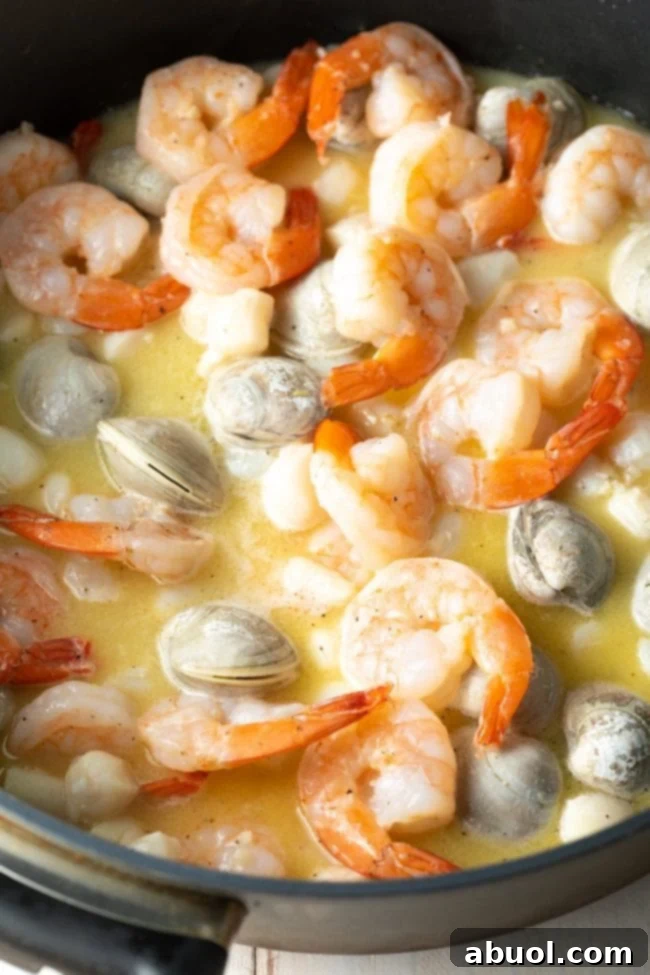
- Introduce the Seafood and Build the Sauce: While the pasta boils, add the fresh shrimp, scallops, and scrubbed littleneck clams to the butter and garlic in the sauté pan. Sauté for about 3 minutes, stirring occasionally. The shrimp should begin to turn pink, and the scallops should firm up slightly. The clams should also begin to open during this time. Once the seafood is mostly cooked through, pour in the canned tomato sauce and the dry white wine. Increase the heat slightly to bring the mixture to a gentle simmer. Allow it to simmer for a few minutes; this process helps to thicken the sauce naturally as liquids reduce and allows the complex flavors of the wine and seafood to meld beautifully with the tomato.
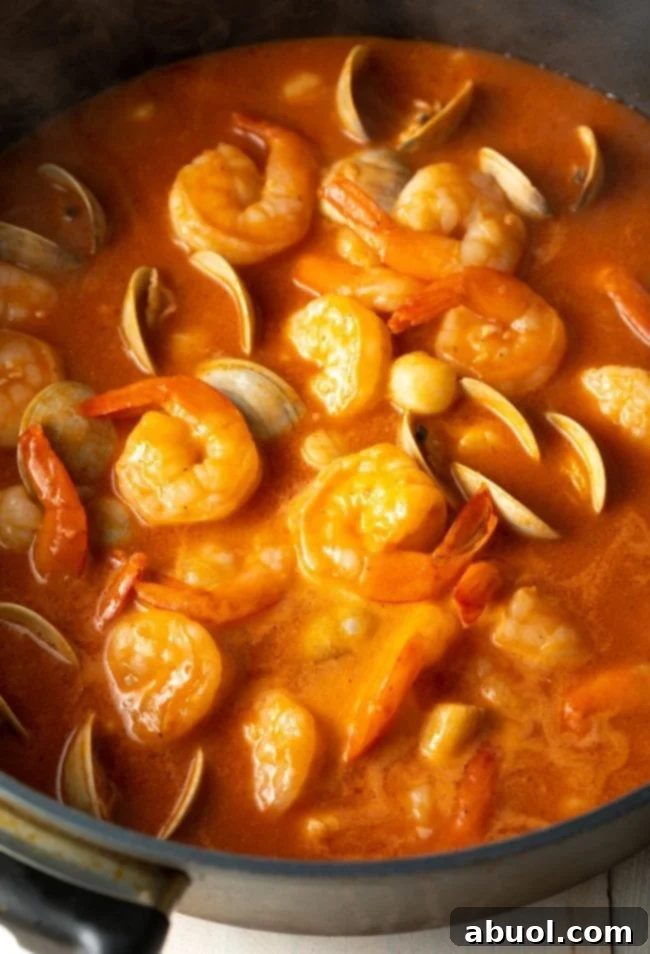
- Combine Pasta with Sauce: After the pappardelle has cooked for 3-4 minutes and is still slightly firm, use tongs or a pasta fork to transfer the pasta directly from the boiling water into the simmering seafood sauce in the sauté pan. It’s perfectly fine if a small amount of the starchy pasta water drips into the sauce; this starchy liquid acts as a natural emulsifier, helping the sauce cling better to the pasta and adding a silky texture. However, try not to water down the sauce too much.
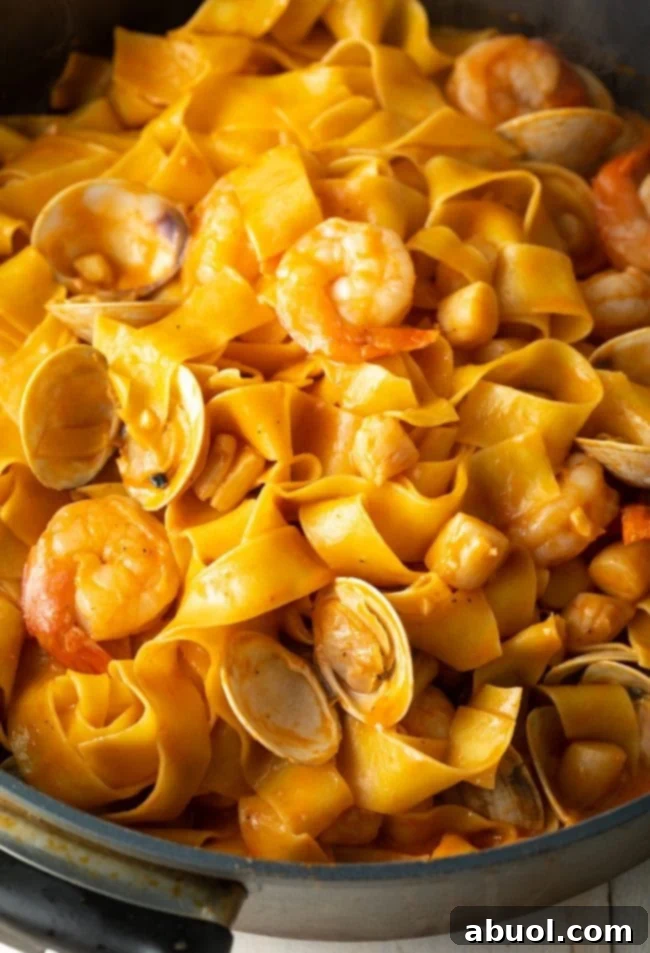
- Finish Cooking Together: Continue to cook the pasta and sauce together in the pan for another 2-4 minutes, stirring gently. This final cooking step allows the pappardelle to absorb the incredible flavors of the seafood sauce, ensuring every strand is perfectly coated and the pasta reaches its ideal al dente texture. Any clams that haven’t opened yet should fully open during this time. For safety, discard any clams that remain closed after cooking.
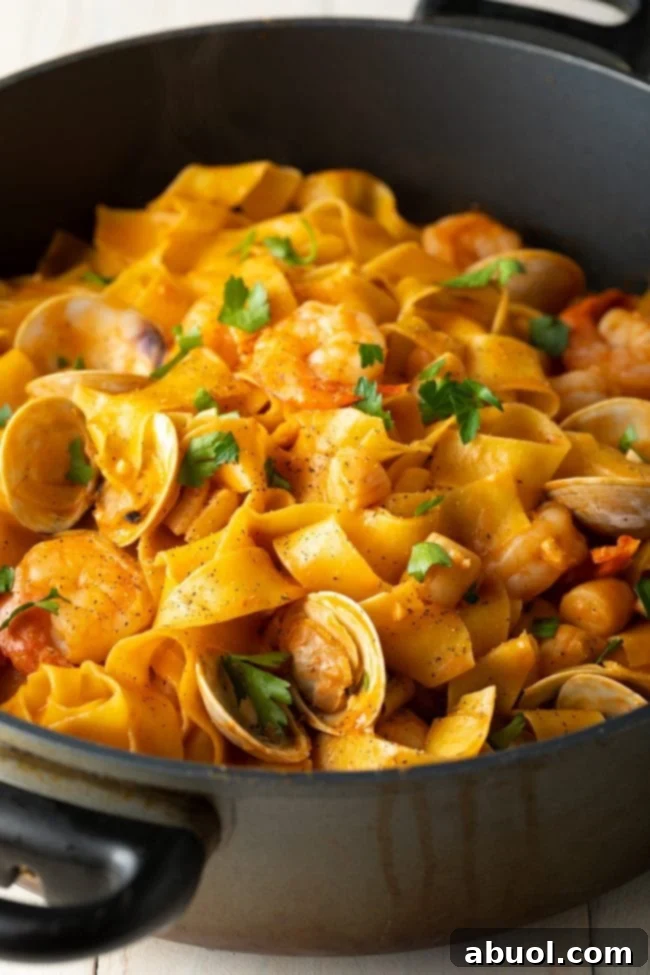
- Enrich with Cream and Season: Turn off the heat before stirring in the heavy cream. Adding cream off the heat prevents it from curdling and ensures a smooth, luscious finish. Give the entire dish a taste and adjust the seasoning with additional salt and pepper as needed. You might also add a pinch of red pepper flakes for a subtle kick if desired. Serve immediately, garnished with fresh parsley for a burst of color and herbaceous flavor.
Below, you’ll find the complete, printable recipe for this exquisite Seafood Pappardelle. Get ready to enjoy!
Exciting Recipe Variations & Customization Tips
One of the beauties of this Pappardelle with Seafood Sauce recipe is its incredible versatility. Feel free to experiment and customize it to suit your taste preferences, dietary needs, or what fresh ingredients you have on hand. Here are some inspiring variations to get you started:
- Gluten-Free Adaptation: For those with gluten sensitivities, simply swap traditional pappardelle for your favorite gluten-free wide noodle pasta. Many excellent brands now offer high-quality gluten-free egg pasta options that maintain a great texture and absorb sauce beautifully. Ensure the GF pasta you choose is designed for creamy sauces.
- Alcohol-Free Version: While the alcohol in the wine cooks out during the simmering process, if you prefer to omit it entirely, a good quality chicken or vegetable broth makes an excellent substitute. Use the same quantity (1 cup), and you’ll still achieve a delicious depth of flavor, though it will be slightly less acidic and nuanced than the wine-infused version.
- Diverse Seafood Choices: This vibrant sauce is incredibly adaptable to almost any fresh seafood you enjoy! Don’t feel limited to shrimp, scallops, and clams. Consider adding or substituting with:
- Mussels: Treat them exactly like clams; scrub them clean and add them to the sauce to steam open.
- Firm White Fish: Cubed firm white fish like cod, haddock, or snapper can be gently poached in the sauce for the last few minutes of cooking.
- Calamari: Sliced calamari rings cook quickly and add a delightful chewiness. Add them in the last 2-3 minutes to avoid toughness.
- Lobster or Crab: For an extra luxurious touch, add cooked lobster meat or fresh lump crab meat at the very end, just before stirring in the cream, to warm through.
- Razor Clams: A unique and intensely flavorful alternative to littleneck clams.
- Alternative Pasta Shapes: While pappardelle is fantastic, this rich seafood sauce pairs wonderfully with many other pasta types. Try tossing it with tagliatelle, fettuccine, linguine, or even spaghetti for a classic long pasta experience. Shorter, heartier pasta shapes like penne, rigatoni, or orecchiette can also work beautifully, especially if you prefer a bite-sized, scoopable dish.
- Add a Spicy Kick: If you love a bit of heat, easily transform this dish into a spicy seafood pasta. Simply add a pinch or two of red pepper flakes to the garlic and butter at the beginning of the cooking process, or stir them in with the tomato sauce. For a bolder, smoky heat, a dash of your favorite chili oil or a finely diced fresh red chili pepper just before serving can also be delightful.
- Incorporate Fresh Vegetables: Boost the nutritional value and add more texture and color by incorporating fresh vegetables. Sauté halved cherry tomatoes, tender spinach (add at the very end to wilt), finely diced zucchini, or blanched asparagus spears along with the seafood. These additions can make the dish even more vibrant and seasonal.
- Herb Enhancements: Beyond parsley, consider fresh basil, oregano, or a hint of thyme to complement the tomato and seafood flavors. Add fresh herbs at the end of cooking for maximum aroma and brightness. A sprinkle of fresh dill can also be surprisingly delicious with seafood.
- Cheesy Finish (Optional): While traditional Italian seafood pasta often skips cheese to let the seafood shine, a light sprinkle of finely grated Parmesan or Pecorino Romano can add an extra layer of savory depth if you desire. Use sparingly to avoid overpowering the delicate seafood flavors.
Perfect Serving Suggestions for Your Seafood Pappardelle
This exquisite Seafood Pappardelle is a complete and satisfying meal in itself, but a few thoughtful accompaniments can elevate your dining experience to a truly memorable occasion. Here are some ideas to perfectly complement your pasta dish:
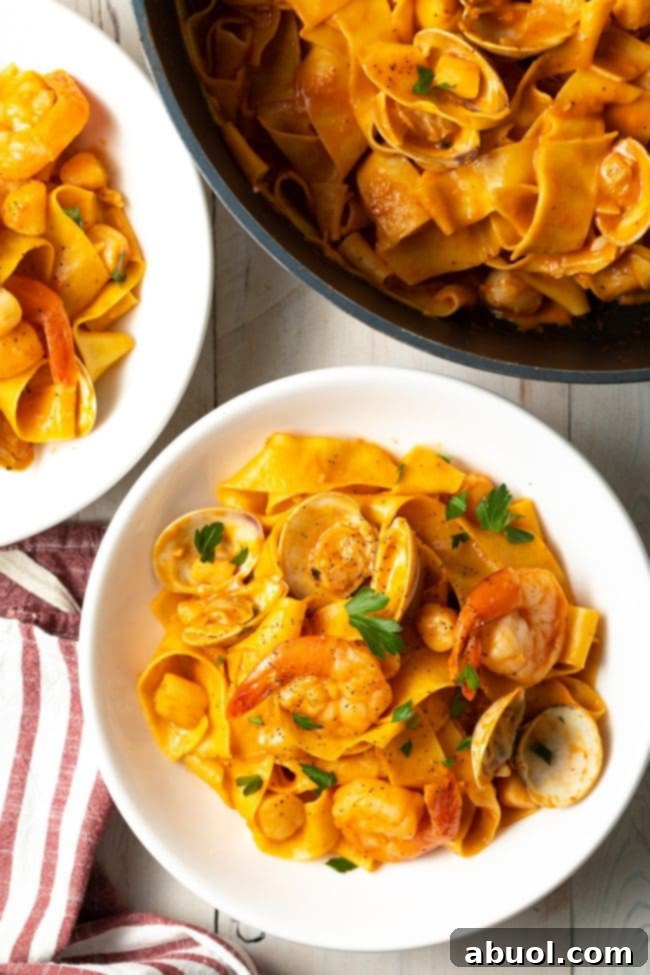
- Fresh Garnish: Always finish your dish with a generous sprinkle of freshly chopped parsley. Its bright, herbaceous notes provide a beautiful contrast to the rich sauce and add a pop of color. A final squeeze of fresh lemon juice just before serving can also brighten all the flavors, cutting through the richness of the cream and highlighting the seafood.
- Crusty Bread: Pair this pasta with slices of thick, crusty bread to soak up every last drop of the delicious sauce. Our Easy Garlic Bread or Homemade Breadsticks are perfect choices. A simple artisan baguette, ciabatta, or focaccia would also be delightful.
- Light Green Salad: Balance the richness of the pasta with a fresh, crisp garden salad dressed with a light vinaigrette. A simple mixed greens salad with cherry tomatoes and cucumber, a classic Caprese salad with fresh mozzarella and basil, or even a light Caesar salad would complement the flavors beautifully without overwhelming them.
- Wine Pairing: To perfectly match this dish, choose a crisp, dry white wine. The same Sauvignon Blanc or Pinot Grigio you used in the sauce would be an ideal pairing. Its acidity cuts through the richness of the cream and enhances the delicate seafood flavors. A light-bodied rosé or even a dry sparkling wine (like Prosecco) could also be a lovely choice for a celebratory summer meal.
- Appetizer Options: If you’re hosting a dinner, consider starting with light Italian-inspired appetizers such as bruschetta with fresh tomatoes, marinated olives, a simple antipasto platter, or fried zucchini flowers to set the mood.
Serve this dish warm, allowing the enticing aromas to fill your dining space and beckon everyone to the table. It’s a meal designed for enjoyment, whether for a casual weeknight family dinner or a special gathering with loved ones, promising a taste of coastal Italy in every bite.
Frequently Asked Questions About Seafood Pappardelle
How do you thicken seafood pasta sauce?
Our seafood pasta sauce naturally thickens a good bit while it simmers, as the liquids reduce and the flavors concentrate. It will also continue to thicken slightly as it cools off the heat. If you prefer an even thicker sauce, there are a few reliable methods:
- Reduction: The simplest method is to allow the sauce to simmer for a longer period over low to medium heat, uncovered, until it reaches your desired consistency. This not only thickens the sauce but also intensifies its flavors.
- Cornstarch Slurry: For a quick and effective thickening, combine 1 tablespoon of cornstarch with 1 tablespoon of cold water in a small bowl, stirring until smooth and lump-free. Slowly whisk this slurry into the simmering sauce, stirring frequently until it thickens to your liking. Start with a small amount and add more if needed, as cornstarch provides significant thickening power.
- Flour Roux: For a richer thickener, melt a tablespoon of butter in a separate small pan, whisk in a tablespoon of all-purpose flour, and cook for 1-2 minutes until a paste (roux) forms. Gradually whisk this warm roux into your simmering sauce until it reaches the desired consistency.
- Pasta Water: As mentioned in the instructions, the starchy pasta water itself is a natural thickener and emulsifier. Don’t be afraid to let a little extra pasta water drip into your sauce when transferring the noodles.
How long will Pappardelle Pasta with Seafood Sauce leftovers keep well?
Leftovers of this delightful dish will keep well for up to 3 days when stored in a sealed airtight container in the refrigerator. However, for the absolute best flavor and texture, we highly recommend enjoying this dish when it’s freshly made or within a day or so. Reheating pasta with seafood can sometimes alter the texture of the seafood, making it slightly tougher or rubbery, and the pasta can become softer and lose its ideal al dente bite. When reheating, gently warm on the stovetop over low heat, adding a splash of broth, water, or even a bit more cream if the sauce has become too thick, or in the microwave in short intervals, stirring often.
Can you freeze seafood pasta sauce?
We generally do not recommend freezing the complete seafood pasta sauce, especially one that contains both pasta and cream. Seafood tends to lose its delicate texture and can become rubbery or dry after freezing, thawing, and reheating. The creamy sauce, due to its dairy content, may also separate or become grainy once frozen and defrosted, affecting the overall texture and appeal of the dish. If you wish to prepare components in advance, you could potentially freeze a plain tomato-wine base (without seafood or cream), but for the best culinary experience, this full dish is unequivocally best enjoyed fresh.
Can I use frozen seafood for this recipe?
Absolutely! While fresh seafood is always preferred for optimal taste and texture, high-quality frozen shrimp, scallops, and even clams (if available) can be used successfully. The key is proper thawing and preparation. Ensure you thaw the seafood completely in the refrigerator overnight or under cold running water before cooking. It’s crucial to pat the thawed seafood dry thoroughly with paper towels to prevent excess water from diluting your sauce and to ensure it sears properly, leading to better flavor and texture.
What’s the best way to clean clams?
To ensure your clams are grit-free and enjoyable, clean them thoroughly before cooking. Start by discarding any clams that are open and don’t close firmly when tapped, or those with broken shells – these are likely dead. Then, place the live clams in a bowl of cold, salted water (about 1 tablespoon of salt per liter of water) for 20-30 minutes. The clams will naturally filter the water and expel any internal sand. You can also add a tablespoon of cornmeal to the water, which encourages them to purge grit. After soaking, scrub the outside of the shells under cold running water with a stiff brush to remove any external dirt or debris.
How can I prevent overcooking the seafood?
The key to perfectly tender and juicy seafood is quick cooking and mindful timing. Shrimp and scallops cook very rapidly, often in just a few minutes. For this recipe, we add them to the pan just until they are mostly cooked through and opaque (shrimp turning pink, scallops firming up) before adding the tomato sauce and wine. They will finish cooking gently as the sauce simmers and when tossed with the hot pasta. Clams are done as soon as their shells open. Overcooked seafood becomes tough, rubbery, and less flavorful, so it’s always better to slightly undercook it initially, knowing it will continue to cook in the residual heat of the sauce and pasta.
Explore More Delicious Pasta Recipes!
If you’ve enjoyed the rich flavors and effortless preparation of our Seafood Pappardelle, you’ll love exploring these other fantastic pasta dishes that promise comfort, flavor, and culinary delight. Expand your pasta repertoire with these tempting options, each offering a unique and delicious experience:
- Creamy Tuscan Chicken Pasta (One-Pot!)
- Ricotta Stuffed Shells
- Shrimp Scampi Greek Pasta
- Baked Ziti with Sausage
- Chicken Cacciatore
- Basil Pesto Chicken Pasta
- Cilantro Lime Shrimp Pasta
- Clam Pasta (Pasta Alle Vongole)
- Lobster Fra Diavolo
Ready to cook? Get the complete, printable Seafood Pappardelle Recipe below and savor every exquisite bite!
Seafood Pappardelle Pasta Recipe
This Pappardelle Pasta with Seafood Sauce recipe includes wide pappardelle noodles in a rich tomato seafood sauce. It’s quick, easy, and perfect for summer!

Ingredients
- 16 ounces pappardelle pasta
- ½ cup butter (unsalted preferred)
- 5-6 cloves garlic, minced
- 16 ounces raw shrimp, cleaned and deveined
- 16 ounces small scallops
- 16 ounces littleneck clams, scrubbed clean
- 15 ounce can tomato sauce
- 1 cup dry white wine (e.g., Sauvignon Blanc)
- ⅓ cup heavy cream
- Salt and pepper, to taste
- Freshly chopped parsley, for garnish (optional)
Instructions
- Set a large pot of generously salted water over high heat and bring to a rolling boil. Simultaneously, place a large sauté pan or skillet over medium heat.
- Add the butter to the sauté pan. Once melted and shimmering, add the minced garlic, 1 teaspoon salt, and ½ teaspoon black pepper. Sauté for 2 minutes, stirring, until fragrant.
- Once the water is boiling, add the pappardelle pasta and stir to prevent sticking. Boil for 3-4 minutes, or until mostly cooked through but still slightly firm.
- Meanwhile, add the raw shrimp, scallops, and scrubbed littleneck clams to the butter and garlic in the sauté pan. Sauté for 3 minutes. Once the seafood is mostly cooked and clams begin to open, pour in the tomato sauce and white wine. Bring to a gentle simmer to begin thickening the sauce.
- After the pasta has cooked for 3-4 minutes, use tongs or a pasta fork to transfer the pappardelle directly from the boiling water into the simmering seafood sauce. A little pasta water dripping in is fine and helps emulsify the sauce.
- Continue to cook the pasta and sauce together for another 2-4 minutes, stirring gently, until the pasta is perfectly al dente and coated in the sauce. Discard any clams that did not open.
- Turn off the heat. Stir in the heavy cream until well combined. Taste and adjust seasoning with additional salt and pepper as needed. Serve warm, garnished with fresh parsley.
Notes
- Feel free to swap any of the suggested seafood options for ingredients you prefer or have readily available, such as mussels, firm white fish, or razor clams.
- Leftovers will keep well for up to 3 days in an airtight container in the fridge. For the best flavor and texture, enjoy this dish fresh. Reheating on the stovetop over low heat with a splash of broth or water is recommended.
Nutrition Information
Calories: 994 kcal,
Carbohydrates: 94 g,
Protein: 58 g,
Fat: 38 g,
Saturated Fat: 21 g,
Trans Fat: 1 g,
Cholesterol: 502 mg,
Sodium: 2223 mg,
Potassium: 1039 mg,
Fiber: 5 g,
Sugar: 7 g,
Vitamin A: 1586 IU,
Vitamin C: 13 mg,
Calcium: 263 mg,
Iron: 7 mg