
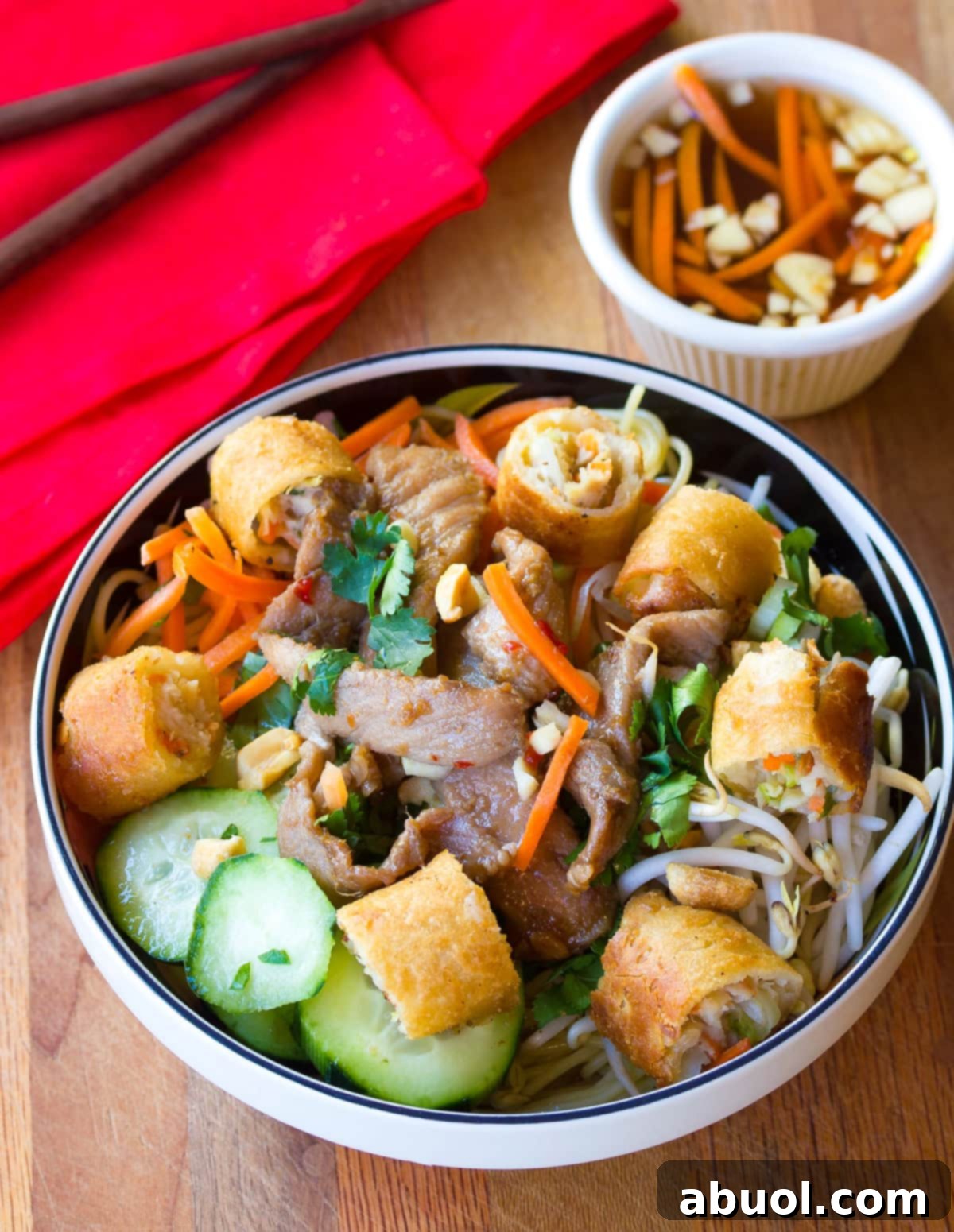
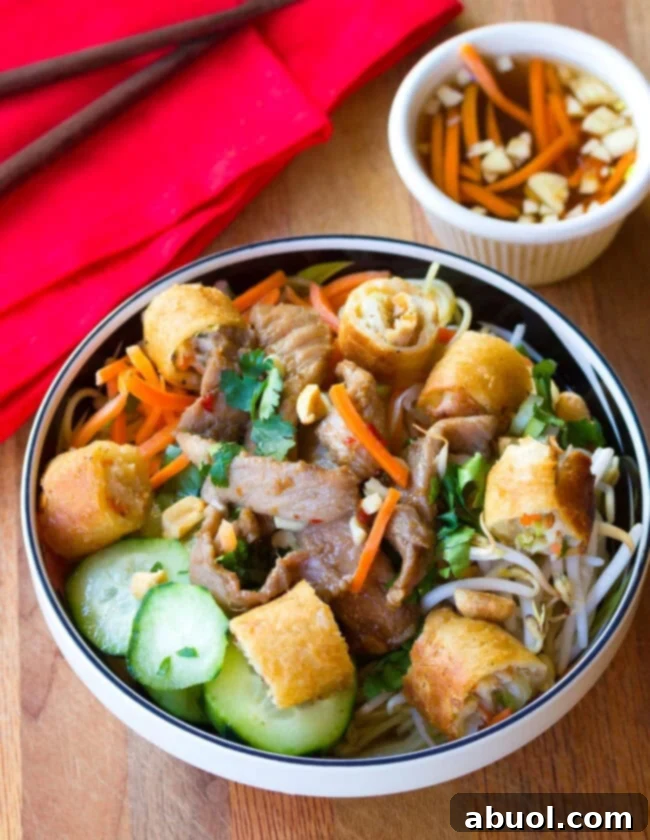
Vietnamese Bun Cha Gio: A vibrant, fresh, and irresistibly crunchy classic Vietnamese noodle salad bowl. This wholesome dish is a symphony of flavors and textures, generously loaded with delicate rice vermicelli noodles, crisp vegetables, succulent grilled pork, and crispy fried spring rolls, all brought together by a zesty, savory dressing.
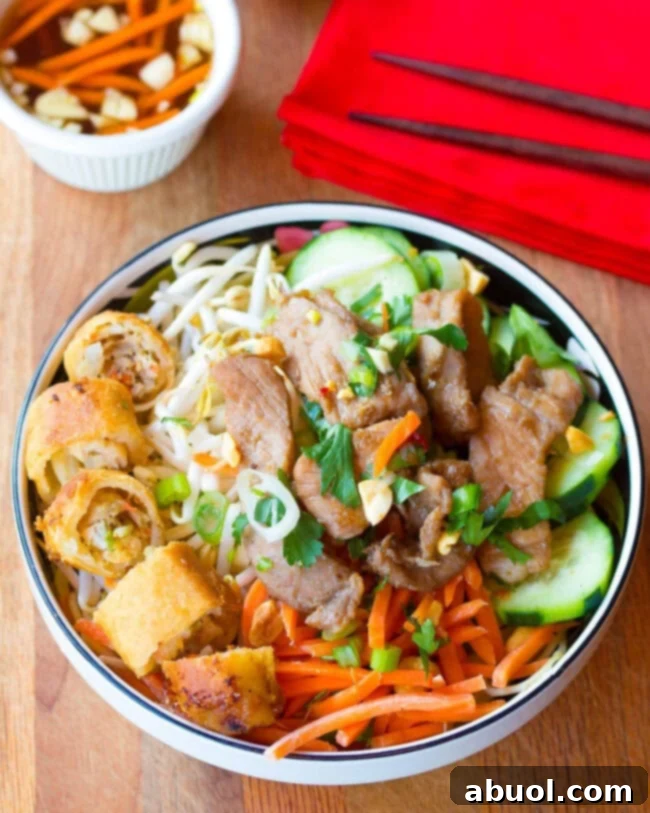
Discovering the World of Vietnamese Cuisine with Bun Cha Gio
Vietnamese cuisine is renowned worldwide for its incredible freshness, aromatic herbs, and a harmonious balance of sweet, sour, salty, and spicy flavors. Among its many culinary treasures, Bun Cha Gio stands out as a beloved noodle salad that perfectly embodies these characteristics. It’s not just a meal; it’s an experience, a delightful journey through the vibrant tastes of Vietnam.
My own deep appreciation for Vietnamese food blossomed during my college years. Many lunch dates with one of my dearest friends were spent at our favorite local Vietnamese restaurant. The atmosphere was always lively, filled with the enticing aromas of lemongrass and mint, and the comforting clatter of chopsticks.
I distinctly recall one particular visit, etched in my memory. A young, enthusiastic Vietnamese waiter, still perfecting his English, greeted us with a warm smile. He guided us to our table, diligently trying to engage in conversation despite the language barrier. He hovered with a charm that was both endearing and slightly embarrassing, keen to ensure our dining experience was exceptional.
When it was my turn to order, he asked about my preferred spice level. “Spicy, please,” I replied without hesitation. His eyes twinkled, and with a smooth wink, he quipped, “Ahhhh, spicy food for a spicy personality!” It was a moment that transcended cultural differences, proving that a little bit of “game” truly is universal. Even two decades later, my friend and I still find joy in playfully exchanging that memorable line, a testament to the unforgettable charm of Vietnamese hospitality and its delicious cuisine.
Growing up in a town blessed with a significant Vietnamese population, I’ve had the privilege of exploring an array of incredible restaurants and vast Asian markets. These markets, with their kaleidoscope of fresh produce, exotic spices, and diverse meat counters, are a feast for the senses, offering endless inspiration for authentic Vietnamese cooking.
Essential Ingredients for Authentic Bun Cha Gio
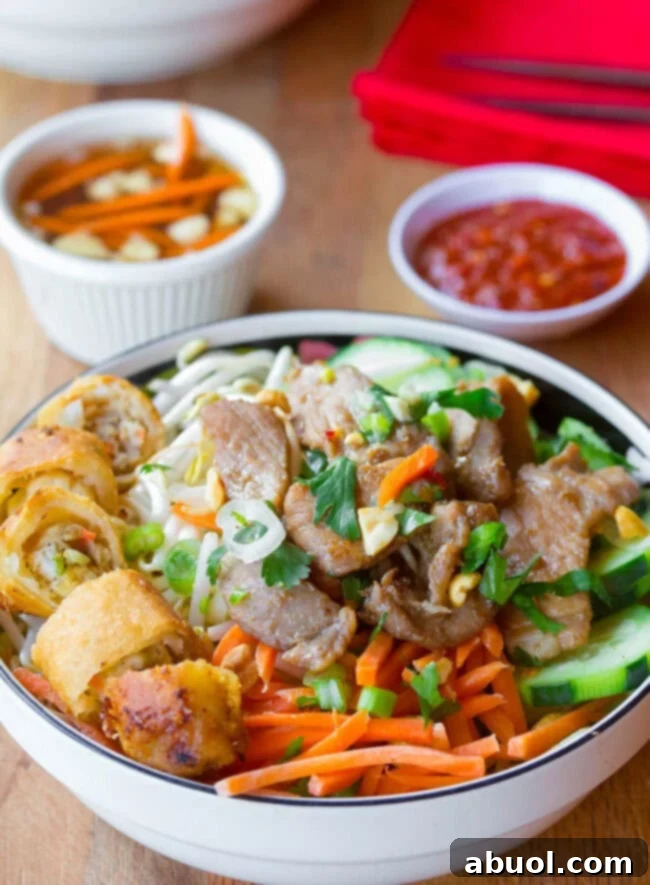
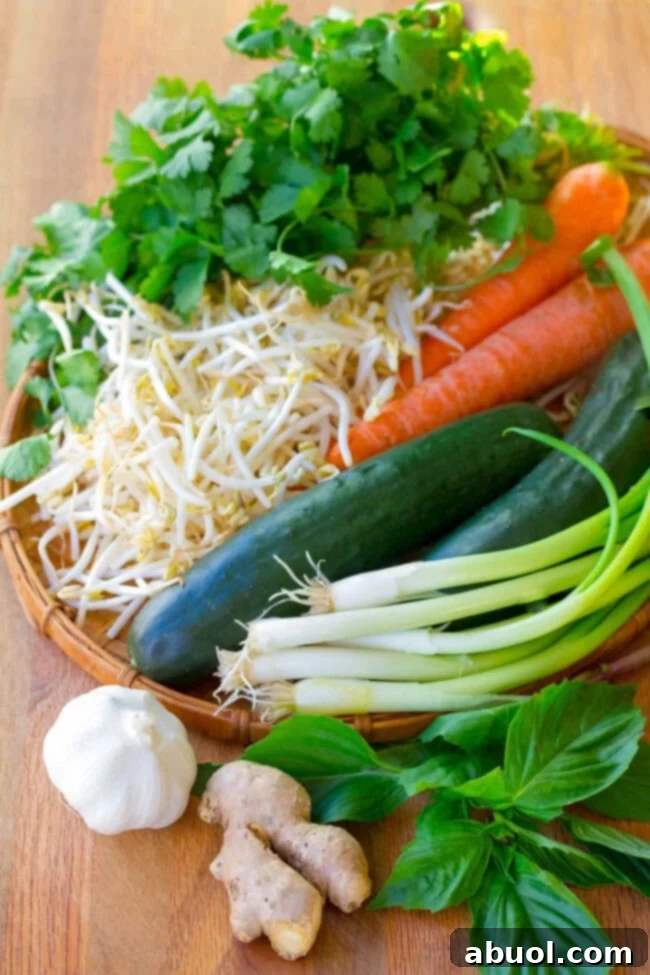
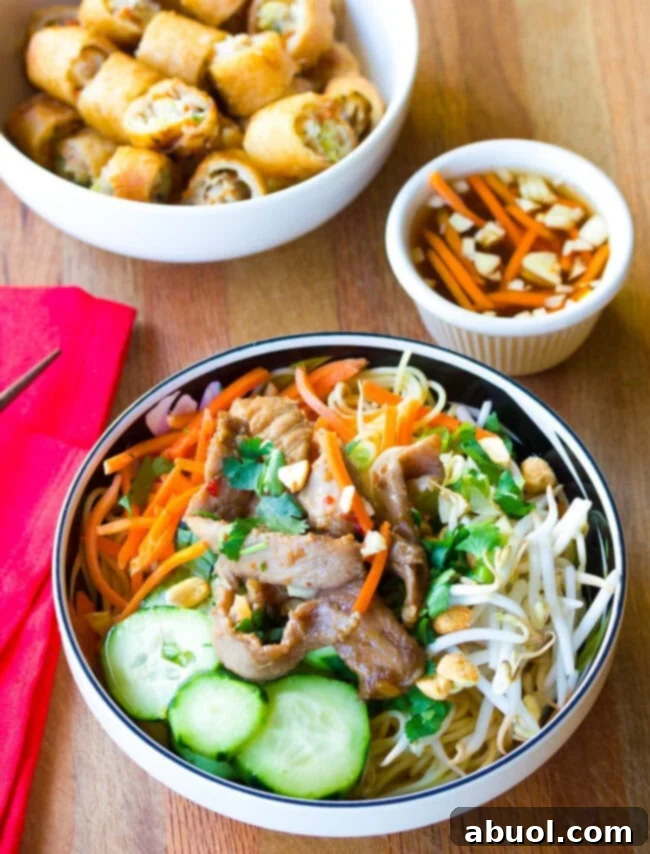
Vietnamese Bun Cha Gio, a traditional pork noodle salad, is celebrated for its fresh, vibrant components. Served artfully in a bowl, it features tender rice noodles, an abundance of fresh vegetables and herbs, savory grilled pork, and crispy fried spring rolls, all generously dressed with the iconic Nuoc Cham. Crafting this delightful dish requires a thoughtful selection of ingredients, each playing a crucial role in achieving its signature flavor profile.
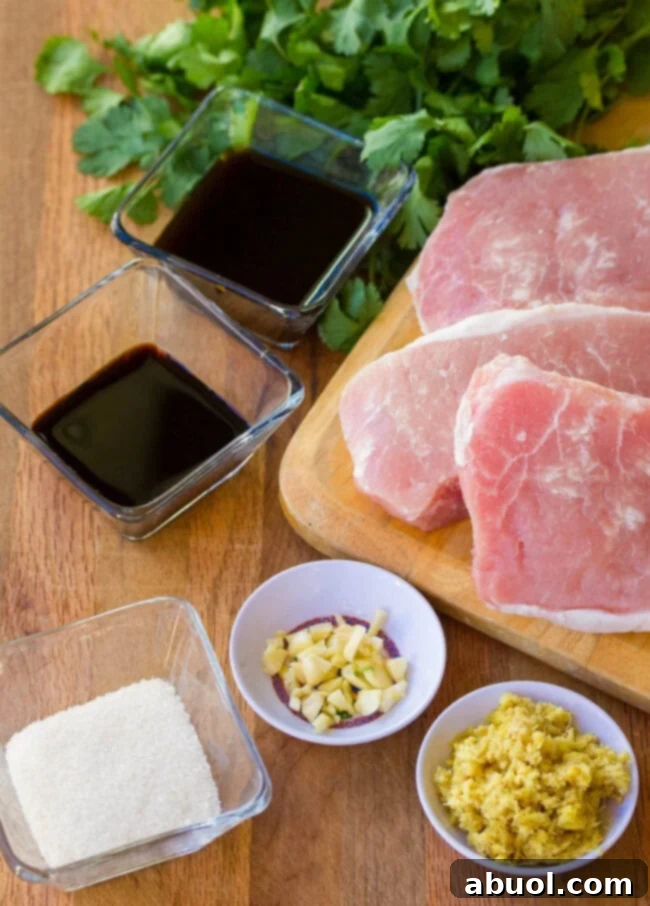
For the Irresistible Grilled Pork Marinade
- Boneless Pork Chops: The lean and tender base of our protein.
- Fresh Grated Ginger: Adds a warm, pungent zing and aromatic depth.
- Minced Garlic Cloves: Provides a foundational savory flavor.
- Fish Sauce: Essential for that distinct umami and salty Vietnamese taste.
- Soy Sauce (gluten-free option available): Contributes richness and seasoning.
- Sugar: Balances the savory elements and aids in caramelization during grilling.
For the Signature Nuoc Cham Dressing
- Warm Water: Helps dissolve the sugar and meld flavors.
- Sugar: Creates the essential sweetness that balances the tang and spice.
- Rice Vinegar or White Vinegar: Delivers the characteristic acidity and a clean tang.
- Fish Sauce: Infuses the dressing with savory depth.
- Minced Garlic Clove: Adds a pungent, aromatic kick.
- Chili-Garlic Sauce: The primary source of heat, adjustable to your preference.
- Salt: Enhances overall flavor.
- Shredded Carrot: Offers a subtle sweetness and a pleasant textural crunch within the dressing.
For the Fresh & Crunchy Salad Bowl
- Cooked Rice Vermicelli Noodles: The light, delicate foundation of the salad.
- Mung Bean Sprouts: Provides a fresh, crisp texture.
- Shredded Carrots: Adds natural sweetness and vibrant color.
- Sliced Cucumbers: Offers a refreshing, cool crunch.
- Chopped Cilantro, Basil, or Mint: A medley of fresh herbs is vital for authentic Vietnamese flavor.
- Chopped Peanuts: Contributes a nutty flavor and satisfying crunch.
- Chopped Green Onions: Adds a mild, oniony bite and visual appeal.
- Frozen Spring Rolls (gluten-free option available): “Cha Gio,” for that essential crispy element.
Crafting the Perfect Bun Cha: Grilling the Flavorful Pork
The grilled pork is undoubtedly the star protein of this Bun Cha Gio salad bowl. Achieving perfectly thin, flavorful slices of pork is key to the dish’s success. Here’s how to prepare it, along with some invaluable tips:
- Prepare the Pork for Slicing: To achieve those delicate, thin slices, freeze your boneless pork chops for about 30 minutes. This firms up the meat, making it much easier to slice precisely. Once firm, cut each chop in half lengthwise, then thinly slice them against the grain into 1mm pieces. If your pork is already frozen, simply thaw it halfway before slicing. This step is crucial for both texture and how well the pork absorbs the marinade.
- Marinate for Maximum Flavor: In a bowl, combine the fresh grated ginger, minced garlic, fish sauce, soy sauce (ensure it’s gluten-free if needed), and sugar. Add the thinly sliced pork and toss everything together until each piece is well-coated. Allow the pork to marinate for at least 30 minutes. For an even deeper flavor, you can marinate it for up to a few hours in the refrigerator. The marinade infuses the pork with a complex sweet, savory, and aromatic profile that is characteristic of Vietnamese grilled meats.
- Stir-Fry to Perfection: Heat a large wok or skillet over high heat. It’s important for the pan to be very hot to achieve a good sear and quick cooking. Drain the excess marinade from the pork before cooking to prevent steaming. Add about 1 tablespoon of peanut or a neutral vegetable oil to the hot wok. Stir-fry the marinated pork for 1-3 minutes until it’s beautifully caramelized and cooked through. Avoid overcrowding the pan; cook in batches if necessary to ensure the pork stir-fries rather than steams. The high heat seals in the juices and creates those irresistible crispy edges, making this component incredibly flavorful and aromatic.
Remember, the quality of your ingredients and the marinating time directly impact the depth of flavor in your grilled pork. Using gluten-free soy sauce ensures this recipe is accessible to everyone, without compromising on taste.
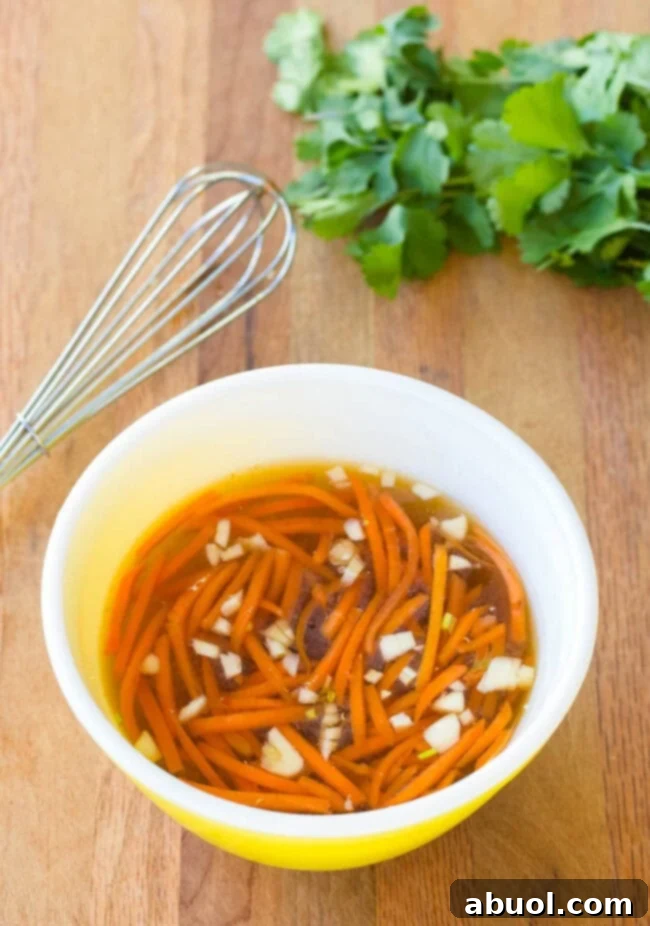
The Soul of the Dish: Nuoc Cham Dipping Sauce
Nuoc Cham is more than just a dressing; it is the vibrant soul of Vietnamese cuisine, offering an exquisite balance of sweet, sour, salty, and often spicy notes. While many traditional recipes call for lime juice, I’ve found that many authentic Vietnamese restaurants opt for rice vinegar, a method I personally prefer as it imparts a slightly milder, less aggressive acidity, creating a smoother, more rounded flavor profile. This versatility allows for customization to suit individual palates.
- Dissolve the Sugar: Begin by combining warm water and sugar in a small bowl. Stir diligently until the sugar is completely dissolved. This ensures the dressing has a smooth, consistent sweetness without any grainy texture.
- Combine Ingredients: To the sweetened water, add the rice vinegar, fish sauce, minced garlic, chili-garlic sauce, salt, and finely shredded carrots. Whisk all the ingredients together until thoroughly combined. The shredded carrots not only add a touch of color and sweetness but also a slight texture to the sauce. Once prepared, set the Nuoc Cham aside to allow the flavors to meld and deepen while you prepare the other components of your Bun Cha Gio.
Nuoc Cham is traditionally the sole source of spicy heat in many Vietnamese dishes like Bun Cha Gio, providing a customizable kick to your noodle salad. Feel free to adjust the amount of chili-garlic sauce to your liking – add more for an extra fiery punch, or less for a milder, family-friendly version. Its refreshing, complex flavor perfectly complements the richness of the pork and the freshness of the vegetables, making every bite a delight.
The Crispy Companion: Vietnamese Gio (Fried Spring Rolls)
In Vietnamese, “Gio” (or “Cha Gio” as it’s often more completely called) refers to the delicious, crispy fried spring rolls that are a beloved accompaniment to many noodle dishes, including Bun Cha Gio. These golden, crunchy morsels add a delightful textural contrast and an extra layer of savory flavor to the fresh salad bowl. While making spring rolls from scratch can be a rewarding culinary adventure, it can also be quite time-consuming. To streamline the preparation and make this healthy meal achievable on a weeknight, I often opt for high-quality frozen spring rolls. This allows for all the fantastic flavor and satisfying crunch without turning dinner into an hours-long affair.
- Preheat Your Oven: Start by preheating your oven to the temperature specified on your chosen frozen spring roll package. Proper oven temperature is crucial for achieving that desired crispiness.
- Prepare for Baking: Drizzle a small amount of oil onto a baking sheet. Gently roll the frozen spring rolls in the oil to ensure an even coating. This helps them crisp up beautifully in the oven and develop a golden-brown exterior.
- Bake Until Golden: Cook the spring rolls according to the instructions provided on the package. Baking is a healthier alternative to deep-frying and still yields deliciously crunchy results. Keep an eye on them to ensure they don’t overcook.
- Chop for Serving: Once baked to golden perfection, remove the spring rolls from the oven and let them cool slightly. Then, chop them into bite-sized 1/2-inch pieces. This makes them easier to incorporate into the noodle salad and ensures you get a piece of crispy goodness with every forkful.
Of course, if you have the time and desire to make your spring rolls from scratch, please do! Homemade spring rolls offer their own unique satisfaction and can be an excellent way to further personalize your Bun Cha Gio.
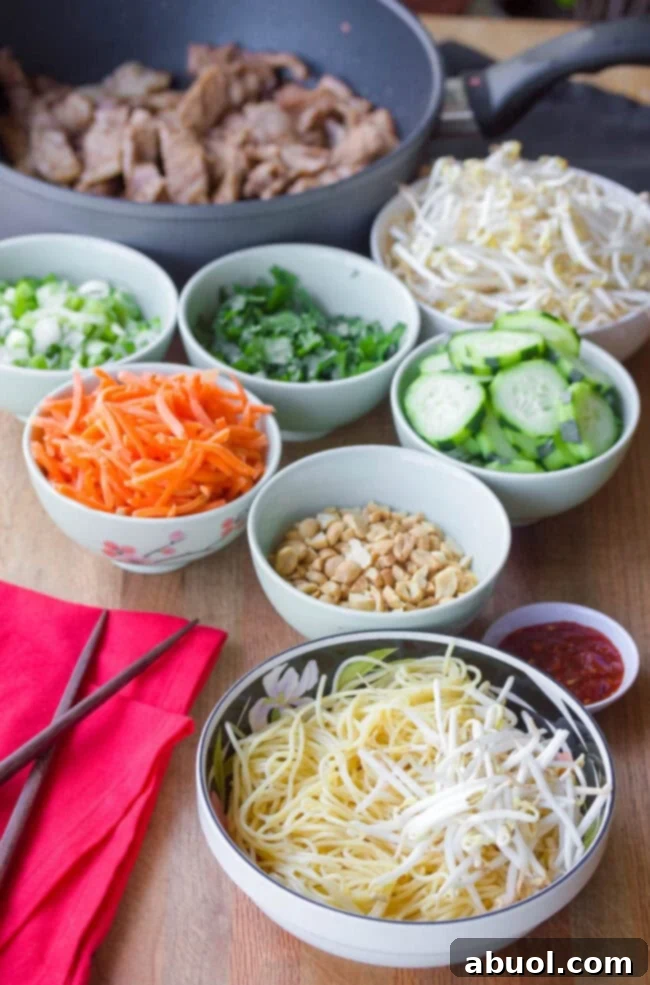
Assembling Your Vibrant Vietnamese Noodle Salad Bowl
Now comes the most exciting part: assembling your beautiful Bun Cha Gio noodle salad bowl! This dish is surprisingly simple to put together, creating a visually stunning and incredibly satisfying meal that’s perfect for a fresh lunch or a light dinner. The layering of ingredients is key, ensuring a delightful mix of flavors and textures in every bite.
- Build the Noodle Base: Begin by placing a generous handful of cooked rice vermicelli noodles into the bottom of each of four individual serving bowls. The soft, delicate noodles will absorb the flavors of the dressing and other ingredients.
- Layer the Fresh Vegetables: On top of the noodles, artfully arrange the fresh ingredients. Distribute the mung bean sprouts, shredded carrots, and sliced cucumbers evenly among the bowls. These add essential crunch, refreshing coolness, and vibrant color.
- Add the Aromatic Herbs and Onions: Sprinkle a generous amount of fresh chopped cilantro, basil, or mint over the vegetables. These aromatic herbs are critical for imparting the authentic, fresh Vietnamese flavor. Follow with the chopped green onions for a mild, savory lift.
- Top with Protein and Crunch: Next, arrange the flavorful grilled pork and the crispy chopped spring rolls over the salad. The warm pork and crunchy spring rolls provide a wonderful contrast to the cool, fresh vegetables and noodles.
- Garnish and Serve: Finish each bowl with a sprinkle of chopped peanuts. The peanuts add a final touch of nutty flavor and satisfying crunch. Serve the Bun Cha Gio with the Nuoc Cham dressing on the side, allowing each person to add as much or as little as they desire, customizing the intensity of the sweet, sour, salty, and spicy notes to their personal preference.
This bold and healthy Vietnamese Bun Cha Gio is a dish that I find myself craving regularly. It’s incredibly popular with my kids, and I’m confident it will be a hit with your family too! Its widespread appeal and undeniable deliciousness are so well-recognized that even culinary legend Anthony Bourdain famously introduced President Obama to this iconic Vietnamese street food recipe during their visit to Hanoi, further cementing its status as a must-try dish.
Delicious Recipe Variations to Explore
One of the beauties of Bun Cha Gio is its adaptability. While the classic version is undeniably delicious, don’t hesitate to experiment with different proteins, herbs, and vegetables to make it truly your own. These variations allow you to customize the dish to your taste preferences or to utilize ingredients you have on hand.
- Protein Power: While pork is traditional, feel free to substitute or combine it with other proteins. Thinly sliced beef, grilled chicken, or succulent shrimp would all be fantastic additions. You could even use crispy tofu or tempeh for a vegetarian-friendly option, ensuring everyone can enjoy this delightful noodle salad.
- Herbaceous Harmony: Fresh herbs are paramount in Vietnamese cuisine. In addition to cilantro, don’t shy away from adding more Thai basil, fresh mint, or even perilla leaves. The more diverse your herb selection, the more complex and authentic the flavors of your Bun Cha Gio will be. Each herb contributes a unique aromatic note that brightens the entire dish.
- Vegetable Medley: The vegetable component is highly flexible. Feel free to add or omit vegetables based on your preferences or what’s in season. Shredded lettuce, thinly sliced bell peppers, bean sprouts, or even finely julienned daikon radish can provide extra crunch and freshness. The goal is a vibrant and diverse mix of textures and colors.
Frequently Asked Questions About Bun Cha Gio
Here are some common questions to help you master your Bun Cha Gio and ensure a fantastic culinary experience:
Can This Be Made Using Pork Shoulder?
Absolutely! Pork shoulder is an excellent cut for Bun Cha Gio due to its rich flavor and tenderness when properly prepared. You can use it following the same instructions for slicing and cooking. Just make sure to slice it very thinly against the grain to ensure it cooks quickly and remains tender, absorbing the marinade beautifully.
Could I Substitute The Vinegar in Nuoc Cham?
Yes, you can certainly adjust the acidity in the Nuoc Cham. If you are sensitive to vinegar or prefer a different flavor profile, you can swap half or all of the rice vinegar for fresh lime juice. The lime juice will impart a brighter, more citrusy tang. A combination of half rice vinegar and half lime juice often provides a wonderful balance.
How Should I Store Leftover Bun Cha Gio Noodle Salad Bowl?
To keep your Bun Cha Gio fresh and prevent the noodles from becoming soggy, it’s best to store the components separately. Place the leftover grilled pork and fried spring rolls in an airtight container in the refrigerator. They will stay fresh for 2-3 days. When you’re ready to enjoy more, gently reheat the pork and spring rolls (a microwave or air fryer works well for the spring rolls to regain crispness), then serve them with fresh noodles, vegetables, and a fresh batch of Nuoc Cham for the best experience.
Explore More Vietnamese Delights!
If you’ve enjoyed the fresh and vibrant flavors of Bun Cha Gio, you’ll love exploring other incredible dishes from Vietnamese cuisine. Here are a few more recipes to inspire your culinary journey:
- Low Carb Vietnamese Chicken Pho Recipe
- Vietnamese Coffee Bread Pudding
- Banh Mi (Vietnamese Sandwich)
- Vietnamese Egg Coffee
- Som Tum Green Papaya Salad
- Bun Cha Hanoi by Carolines Cooking
- Banh Xeo Recipe from Hungry Huy
Bun Cha Gio Recipe
Prep Time: 15 minutes
Marinating Time: 30 minutes
Total Time: 45 minutes
Servings: 4
Vietnamese Bun Cha Gio: A fresh, crunchy classic Vietnamese noodle salad bowl. This healthy dish is loaded with noodles, vegetables, and protein!
Video

Ingredients
For the Pork:
- 1 pound boneless pork chops
- 1 1/2 tablespoon fresh grated ginger
- 1 clove garlic, minced
- 1/4 cup fish sauce
- 2 tablespoons soy sauce (gluten-free)
- 2 tablespoons sugar
For the Nuoc Cham Dressing:
- 1/2 cup warm water
- 3 tablespoons sugar
- 1/2 cup rice vinegar
- 1 tablespoon fish sauce
- 1 clove garlic, minced
- 1 teaspoon chili-garlic sauce
- 1/4 teaspoon salt
- 1/8 cup shredded carrots
For the Salad:
- 1 package cooked rice vermicelli noodles
- 2 cups mung bean sprouts
- 1 cup shredded carrots
- 1 cup sliced cucumbers
- 1/2 cup chopped cilantro or basil
- 1/2 cup chopped peanuts
- 1/2 cup chopped green onions
- 1 package frozen spring rolls (gluten-free)
Instructions
- Freeze the pork for 30 minutes to firm it up. Then cut each chop in half length-wise and thinly slice (1 mm). If already frozen, thaw halfway before slicing. Mix the ginger, garlic, fish sauce, soy sauce, and sugar together. Then toss with pork in a bowl. Allow the pork to marinate for 30 minutes.
- For the Nuoc Cham: Mix the warm water and sugar in a small bowl. Stir until the sugar is dissolved. Then add the rice vinegar, fish sauce, garlic, chili garlic sauce, salt, and shredded carrots. Set aside the nuoc cham.
- Preheat the oven to the necessary temperature provided on the spring roll package. Drizzle a little oil on a cookie sheet and roll the frozen spring rolls in it. Cook the spring rolls according to the provided instructions.
- Heat a large wok or skillet to high heat. Drain the pork well from the marinade. Add 1 tablespoon of peanut or vegetable oil to the wok. Stir-fry the pork for 1-3 minutes until cooked through and slightly caramelized. Chop the cooked spring rolls into 1/2-inch pieces.
- To plate: Place a large handful of noodles in the bottom of four bowls. Top each with sprouts, shredded carrots, cucumbers, cilantro, and green onions. Place the cooked pork and chopped spring rolls on top, and sprinkle with chopped peanuts. Serve with nuoc cham on the side, so each person can add as much as they desire!
Nutrition
Serving: 1 bowl, Calories: 605kcal, Carbohydrates: 75g, Protein: 36g, Fat: 18g, Saturated Fat: 4g, Cholesterol: 76mg, Sodium: 2335mg, Potassium: 942mg, Fiber: 5g, Sugar: 21g, Vitamin A: 6320IU, Vitamin C: 15.2mg, Calcium: 80mg, Iron: 2.9mg
Course: Main Course
Cuisine: Vietnamese
Author: Sommer Collier